Self-funded test sees F-22 Raptor control MQ-20 Avenger at Nellis AFB

November 25, 2025

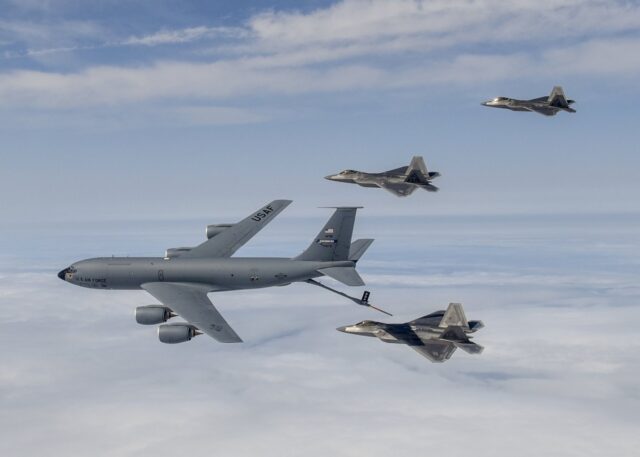
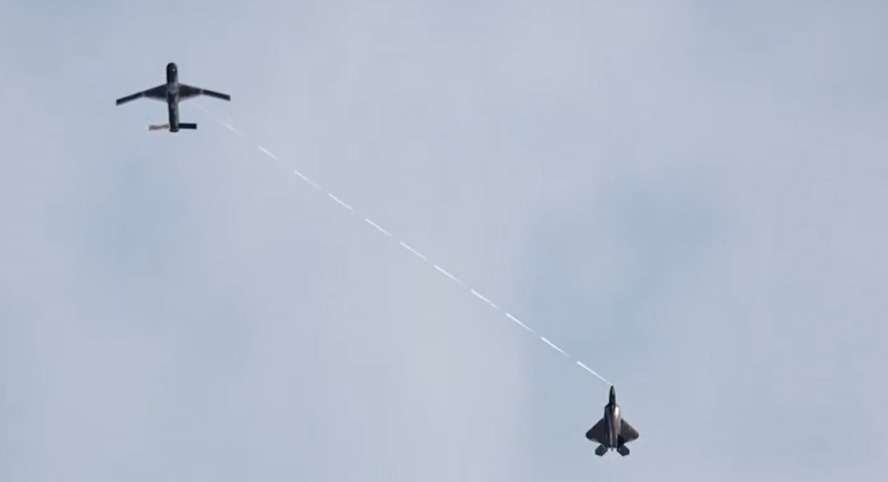
Last week, Lockheed Martin Skunk Works announced that it had controlled an uncrewed aerial system (UAS) General Atomics MQ-20 Avenger from the cockpit of a 5th-generation F-22.
F-22 controls General Atomics MQ-20 drone
Lockheed Martin’s news release did not disclose the names of those other industry partners or the specific drone the F-22 controlled. However, General Atomics Aeronautical Systems (GA-ASI) reported it was its MQ-20 Avenger drone.
General Atomics also stated L3Harris took part and that the “effort integrated L3Harris’ BANSHEE Advanced Tactical Datalinks with its Pantera software-defined radios (SDRs) via Lockheed Martin’s open radio architectures, all integrated and shared from an F-22 Raptor.”
The demonstration was supported by two L3Harris Software-Defined Radios (SDRs). One was installed in the F-22, and the other in the MQ-20, and the PVI tablet allowed the F-22 to control the MQ-20 in flight.
A Lockheed Martin F-22 pilot used a pilot vehicle interface (PVI) to command the drone to execute specific missions. The F-22 is slated to be the first US Air Force aircraft to be paired with loyal wingman drones (called Collaborative Combat Aircraft) by the end of the decade.
Recent GA-ASI flight test demos crewed-uncrewed teaming with F-22 Raptor and MQ-20 #AvengerUAS.
— General Atomics Aeronautical Systems, Inc (GA-ASI) (@GenAtomics_ASI) November 17, 2025
Read the news: https://t.co/L1KHkx6P6U#UCAV #DubaiAirshow #DAS25 pic.twitter.com/cgBlzNNKjI
The test took place at Nellis Air Force Base in Nevada. Lockheed said the F-22 “successfully used an open interface in the cockpit to send control directions to another airborne UAS.”
Self-funded demo of the “art of the possible”
General Atomics said the ongoing series of demonstrations and test flights is to showcase “the art of the possible” between manned and unmanned teaming. The demonstration took place in October and was internally funded by General Atomics.
O.J. Sanchez, Vice President and General Manager, Lockheed Martin Skunk Works, stated, “This effort represents Skunk Works driving a breakthrough in air combat capability, where single-seat aircraft command and control drones with simple and intuitive interfaces in the cockpit.”
According to reporting by The War Zone, the pairing was possible through the F-22’s Government Reference Architecture Compute Environment (GRACE), which is designed to facilitate new software backages on the F-22.
Another breakthrough by Skunk Works®. 🦨
— Lockheed Martin (@LockheedMartin) November 19, 2025
Our technology enabled an F-22 pilot to control an uncrewed system in flight, advancing integrated teaming. pic.twitter.com/x82rmeCNGb
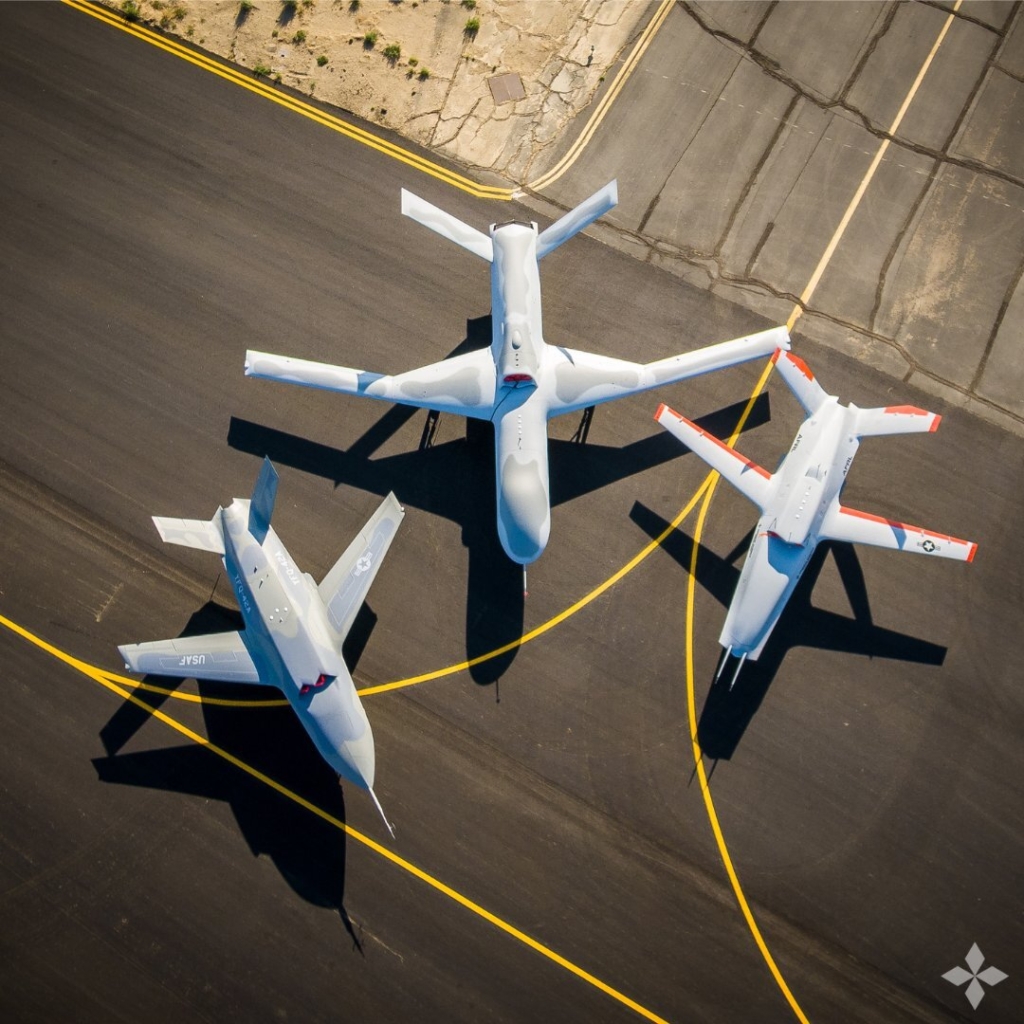
Seperately, General Atomics also achieved the first flight of its prototype CCA YFQ-42A ‘loyal wingman’ drone last August.
Get the latest aerospace defence news here on AGN.
F-22 to be first to receive loyal wingman drones
While the Air Force is designing the 6th-generation F-47 from the ground up to be a ‘system-of-systems’ command advanced combat drones, the US is also focused on integrating autonomous drones with its advanced F-22 and F-35 fighter jets.

The War Zone cited an unclassified government report saying “F-22 remains the threshold platform for CCA but integration with F-16, F-35A, F-15E, and F-15EX is an emerging consideration… Ultimately, CCA will be paired with F-47 to meet highly contested mission demands.”
The US Air Force currently has a combat fleet of 143 combat-capable F-22s out of a total fleet of around 185. The remaining are used for training, testing, and evaluation duties.
Future air combat is expected to feature AI-enabled operations mixing crewed and uncrewed systems. US F-16s and F-15s have already controlled multiple Kratos XQ-58A Valkyrie drones in tests.
YFQ-42A Collaborative Combat Aircraft is now conducting flight testing. GA-ASI's newest uncrewed jet is the future of air dominance. https://t.co/T3Y0g5ZXvp#YFQ42A #Airpower pic.twitter.com/um5hu3Y9Ps
— General Atomics Aeronautical Systems, Inc (GA-ASI) (@GenAtomics_ASI) August 28, 2025
Numerous companies are currently working to develop combat drones of varying capabilities for the USAF and export partners. Other companies producing autonomous combat aircraft include Lockheed Martin, Boeing, Northrop Grumman, Anduril, and others.
Featured Image: United States Air Force