No bones about it: EU’s top court says pets are ‘baggage’ under airline liability law

October 17, 2025

The Court of Justice of the European Union (CJEU) has confirmed that pets travelling by air are legally classified as “baggage” under the Montreal Convention, meaning compensation limits for lost or damaged luggage also apply to lost animals.
The ruling, however, does not change existing law, but rather clarifies how the rules should be interpreted across EU member states.
For passengers, this means that airlines’ liability for lost or injured pets remains capped unless a special declaration of interest is made before departure, reinforcing the importance of understanding compensation options when flying with animals.
The case of Mona: the missing dog in Buenos Aires
The judgment, published under Case C-218/24 – Iberia Líneas Aéreas de España (Concept of ‘baggage’), stemmed from a 2019 incident in which a passenger travelling from Buenos Aires to Barcelona with Iberia lost her dog after it escaped while being transported to the aircraft.

The dog, Mona, was in a pet carrier being carried to the aircraft’s cargo hold, but she got out of the carrier before reaching the aircraft. The mother of Grisel Ortiz, Mona’s owner, watched from inside the cabin as the dog ran across the airport runway, chased by three vans.
“Many people laugh because they don’t understand what Mona means to me,” Ortiz said during an interview published in Argentine daily Clarin in January 2020, as reported by AFP. “Since she went missing, all I do is cry and stay glued to my phone, waiting for a miracle.”
Looking for Mona
Ortiz created a Facebook page, ‘Looking for Mona,’ asking for help to find her lost dog and offering a cash reward for Mona’s safe return. According to an update posted on the page, Mona was first recovered at the airport, but she was placed in a wildlife kennel with no roof, from which she “easily escaped” and vanished.

Ortiz blamed Iberia and the ground handling company for the distress that caused Mona to run away, and sought €5,000 in non-material damages from Iberia.
Iberia accepted liability but argued that compensation should be limited to the standard amount established under the Montreal Convention for checked baggage. A Spanish court referred the matter to the Court of Justice of the European Union (CJEU) for clarification.
Airline compensation limits and passenger responsibilities
Under the Montreal Convention, airlines’ liability for lost baggage—including pets—is capped unless a passenger makes a special declaration of interest in delivery at destination and pays an additional fee. Without such a declaration, the standard limit applies, and this cap includes both material and non-material damages.
If passengers believe the standard limit is insufficient, they can request an increased level of protection before departure, subject to airline approval and payment of any applicable surcharge.
Court finds that pets are not excluded from the concept of baggage
The CJEU ruled in its decision that although “baggage” normally refers to objects, pets are included in that definition under the Montreal Convention. According to the Court, international air transport distinguishes only between passengers, baggage, and cargo. Pets are not passengers, the court determined.
“Consequently, for the purposes of air travel, a pet falls within the concept of ‘baggage,’ and compensation for the damage resulting from the loss of a pet is subject to the liability rules for baggage,” the judgment stated.
Animal welfare is still protected, despite the liability limit
Air France lost a dog named Sombra during a stopover in Paris in 2024 while transporting the animal from Argentina to Morocco. Sombra’s owner published a petition to hold Air France accountable for his loss, which garnered over 5,000 signatures. James Middleton expressed his support for the petition, getting media attention.
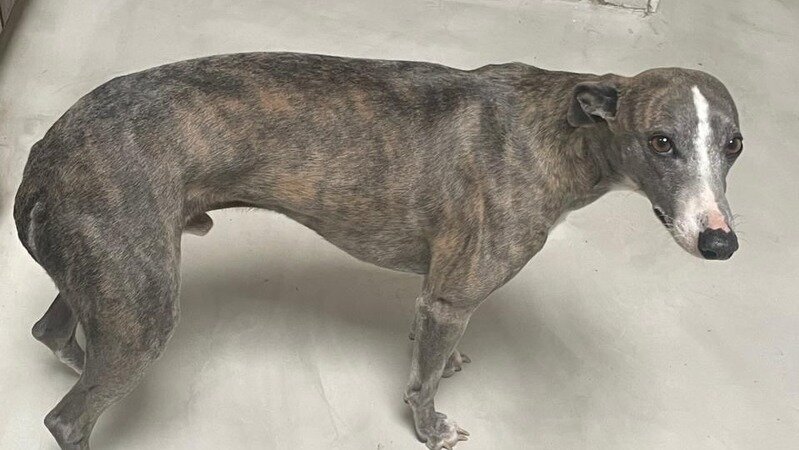
While distressing for pet owners, these incidents are rare. The EU does not track animal incident reports on airlines in the same manner as the US Department of Transportation.
However, based on data from the US Department of Transportation, in 2024, air carriers “reported 10 animal deaths, injuries to three other animals, and zero lost animals, for a total of 13 incidents, up from nine incident reports filed in calendar year 2023.”
In 2024, the USDOT recorded 161,335 animals transported by airlines, resulting in a rate of 0.81 incidents per 10,000 animals transported. In 2023, airlines transported 124,593 animals, resulting in a rate of 0.72 incidents per 10,000 animals transported.
The Court emphasised that the EU’s commitment to animal welfare does not conflict with treating pets as baggage for liability purposes. Airlines must still ensure “full regard is paid to animal welfare requirements while they are transported.”
In practical terms, the ruling limits airline liability to passengers travelling with pets in the hold. It may prompt more pet owners to make special declarations when transporting animals by air, though those are subject to airline approval.
Featured Image: Anna Averianova/ stock.adobe.com