Right plane, right time: How Embraer is reshaping the narrowbody market

December 9, 2025
It has been a boom year for airlines. In the race for stronger margins, improved passenger experience and greener operations, carriers have placed orders for thousands of new-generation aircraft.
In this business, having the right product at the right time is often the difference between market traction and missed opportunity, particularly when customer expectations and traffic patterns can shift quickly.
Airlines are now placing orders for aircraft they may not receive for more than a decade. Choosing a type that will remain profitable and relevant 20 to 30 years from now is no small task.
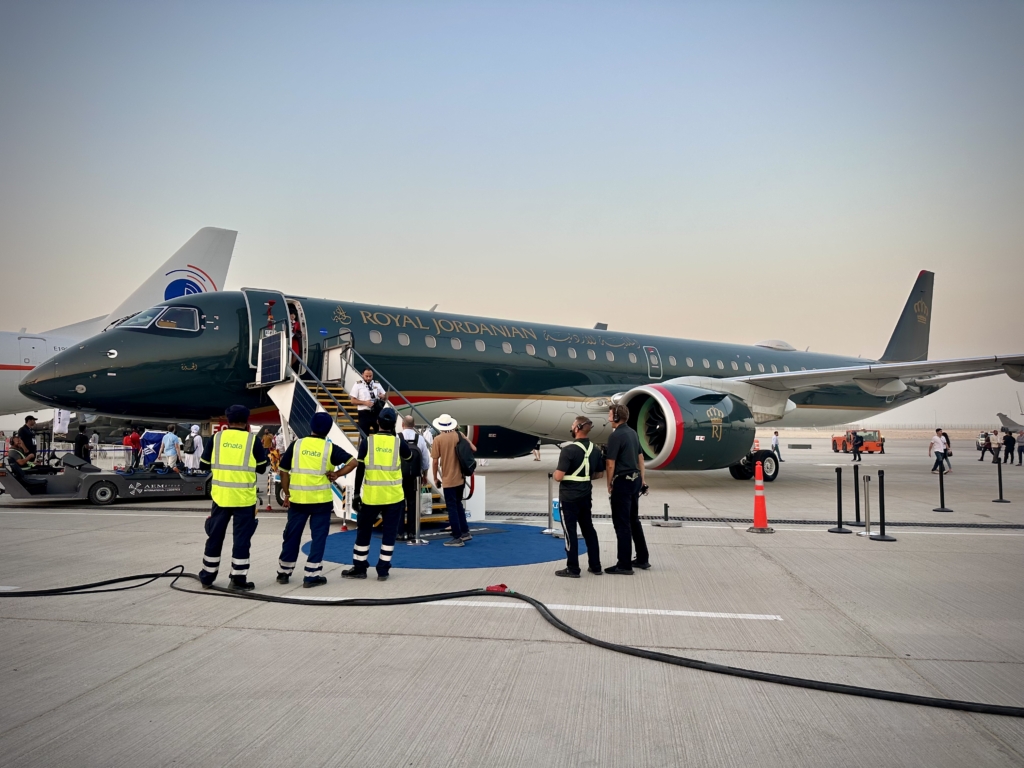
Embraer Commercial Aviation CEO Arjan Meijer argues this is “a pivotal moment for Embraer and its customers”, adding that the E2 family introduces a new business model as the narrowbody sector evolves.
Across Airbus, Boeing and Embraer, the combined commercial backlog now exceeds 15,000 aircraft, with more than 12,000 of those, 82%, falling into the single-aisle category. In the up-to-150-seat segment, Embraer held 490 orders for its E2 and E175 families at the end of September, while Airbus had secured 475 A220 orders by November.
A pivotal moment for Embraer in the small narrowbody market
Speaking to AGN on the sidelines of the Association of Asia Pacific Airlines Presidents’ Assembly in Bangkok, Meijer emphasised that although the E190/E195-E2s are often labelled “regional jets”, they are more accurately small narrowbodies.
“What we are preaching very clearly is that this segment has changed and we’re bringing a product that brings something different than there was ever before,” he says. “We are in a pivotal moment, and the success we have had in the market means there are 24 customers speaking on behalf of the product and telling the world how great it is.”

Embraer projects global demand for 10,500 new aircraft up to 150 seats over the next two decades, split between 52% replacements and 48% growth. The total includes 1,780 turboprops, 2,335 jets up to 100 seats and 6,385 jets in the 100–150 seat range.
Why airlines are rethinking fleet mix with Embraer’s E2 jets
The company believes new-generation small narrowbodies will accelerate a shift toward more mixed-fleet strategies.
Rather than relying on a homogeneous fleet of A320s or 737s, Embraer argues operators will increasingly use a blend of capacities to match uneven demand, rising short-haul frequency and the need for more scheduling agility.
Meijer points to the E2’s combined advantage of lower trip costs and competitive seat costs, a pairing he says is driving interest from new operators worldwide.
This economic step-change allows airlines to profitably open thinner routes with higher frequencies, then step up to larger jets as demand matures.
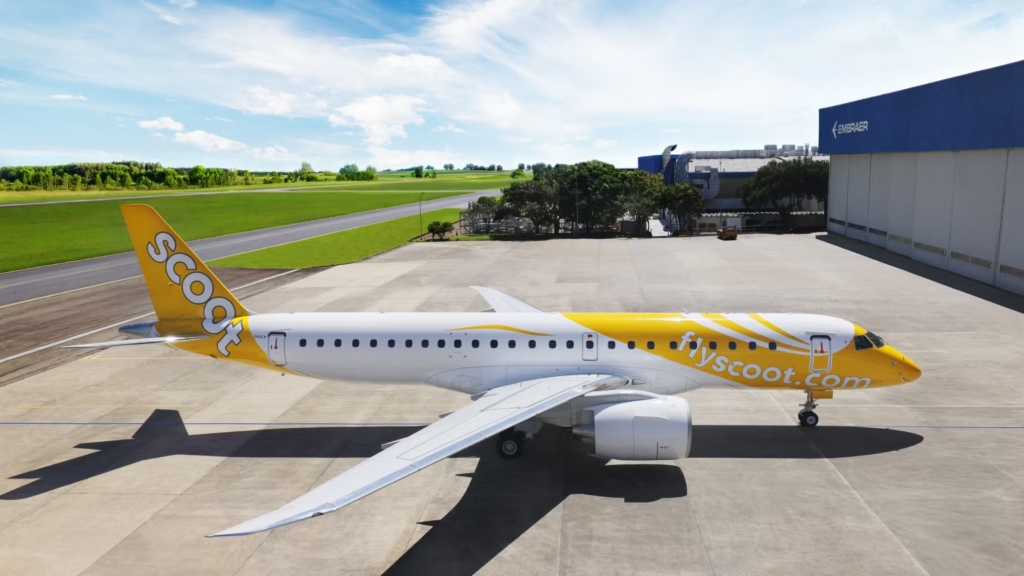
Scoot, Singapore Airlines’ low-cost subsidiary, illustrates this well. The carrier has deployed the E190-E2 to launch regional routes that could not sustain larger narrowbodies. These point-to-point services also feed the Singapore Airlines network, expanding connectivity without compromising profitability.
Meijer says this is the first time operators have a product that maintains significantly lower trip costs while achieving seat costs comparable with larger narrowbodies.
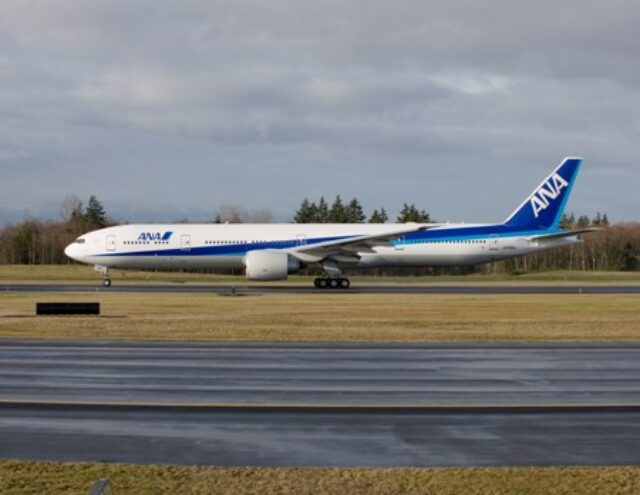
“There’s no coincidence that airlines want to talk to us here because they see what Scoot is doing, they see Virgin Australia jumping in with the E2 and now ANA has taken the decision,” he tells AGN. “Qantas is flying a big number under the QantasLink brand, so we see all the main operators embracing the Embraer product and becoming part of the Embraer family.”
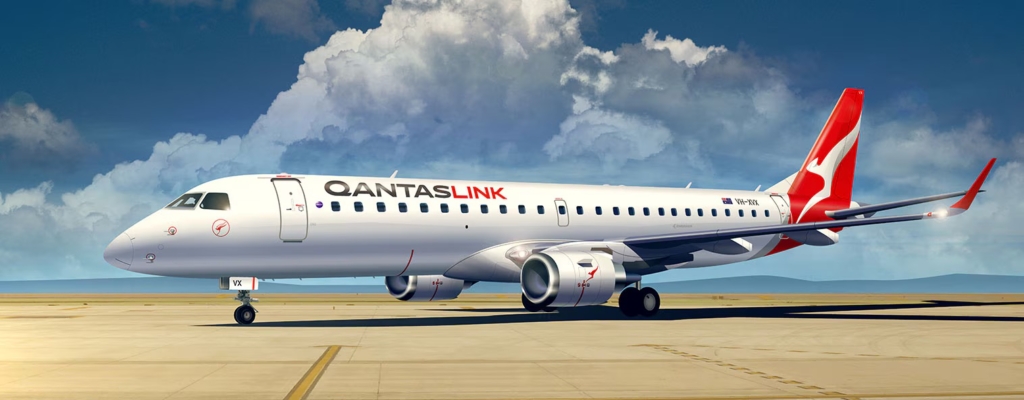
Over the past year, Embraer has secured commitments for 250 E190/E195-E2s from eight new customers, including SAS, Airlink, Hunnu Air, ANA, Virgin Australia, Avelo, LATAM and lessor TrueNoord.
Why the US regional market still needs the E175-E1
Of the 10,500 new aircraft forecast between 2024 and 2044, almost 3,000 are expected to go to North America, many to replace ageing regional jets.
Regional aviation remains the foundation of the US domestic network, with small narrowbodies enabling connectivity that would otherwise be impossible with mainline fleets.
In 2024, 90% of US cities relied on some form of regional service and 41% were served exclusively by regional carriers. Moreover, 82% of Origin–Destination markets had fewer than 100 daily passengers each way, underscoring the need for right-sized aircraft.
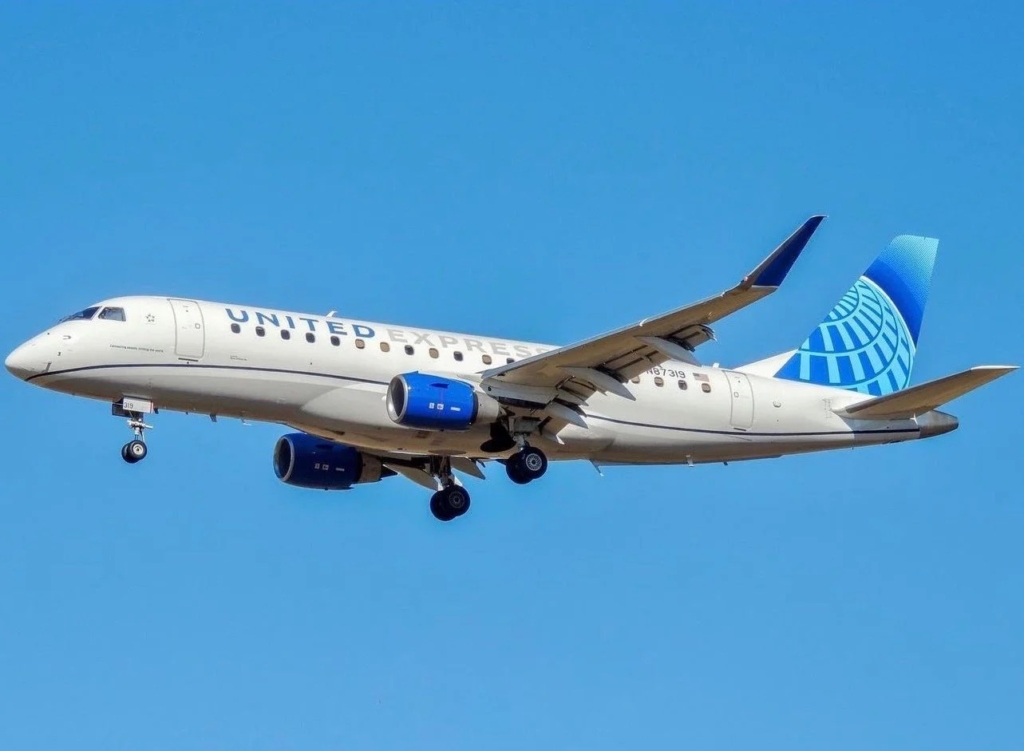
This sits alongside scope clause constraints and an ageing CRJ fleet. Embraer continues to see strong demand for the E175-E1, which Meijer calls “a route developer” ideally suited to US requirements.
“The airlines really love the aircraft, and the customers love the product,” he says, highlighting its 2-2 seat layout and three-class configuration. Upgrades, including mood lighting, larger bins and cockpit technology, are underway.
As of September, Embraer’s E175 backlog stood at 200 aircraft, largely for US operators: American Airlines (86), SkyWest (74), Republic Airlines (32) and Horizon Air (3).
Featured image: Embraer