How US Navy EA-18G Growlers dismantled Venezuela’s air defences in Operation Absolute Resolve

January 16, 2026

A force of US Navy-operated EA-18G Growler electronic attack (EA) aircraft played a critical role in Operation Absolute Resolve in the early hours of 2 January, during which the carrier-based jets unleashed a silent storm over Venezuela to disable the nation’s air defence network and military communication channels in support of a brief ground forces incursion.
The US military’s controversial mission into Venezuela under Operation Absolute Resolve centred around a bold, high-risk low-level helicopter incursion into the nation that led to the capture of President Nicolás Maduro and his wife, Cilia, destabilising the Venezuelan dictator’s long-standing regime.
Maduro and his wife were swiftly captured by ground forces before being brought to the US, where the Venezuelan leader has since been indicted on drug-related charges in New York City.
It seems like U.S. has struck venezuela.
— Defence Matrix (@Defencematrix1) January 3, 2026
3 spots are reported being hit
Fuerte Tiuna, La Carlota airbase and A communications center in El Hatillo.
This is Caracas, Venezuela.
Chinook can be seeing flying. Is this invasion? pic.twitter.com/QizABiThfa
How Operation Absolute Resolve unfolded over Venezuela
Operation Absolute Resolve is the culmination of the pressure that has been mounting on Maduro since President Donald Trump began his second term in office last January. Since then, the Trump administration has accused Maduro’s regime of flooding the US with an influx of narcotics – specifically fentanyl and cocaine – and hundreds of thousands of migrants.
In September, Washington ordered US forces to deploy to the Caribbean to target small vessels it accused of smuggling drugs into the US. More than 30 strikes on these alleged drug trafficking vessels have taken place, killing more than 110 people.
However, these strikes have been heavily scrutinised by legal experts, who argue that the attacks are not against ‘lawful military targets’, with the US also providing little to no evidence that the vessels it has targeted have been carrying narcotics.
A large-scale joint air operation over the Caribbean
From September, the US steadily built up its military presence in the Caribbean, which included the deployment of the US Navy’s Wasp-class amphibious assault ship, USS Iwo Jima (LHD-7), and the retasking of America’s latest and largest aircraft carrier to date, USS Gerald R Ford (CVN-78), from operations in Europe.
On January 2, Trump ordered US forces in the region to proceed with the mission to capture Maduro, with more than 150 aircraft – including bombers, fighters, intelligence, surveillance and reconnaissance (ISR) aircraft, helicopters and unmanned aerial vehicles (UAVs) – launching from 20 different land and sea bases to support the task.
According to Gen Dan Caine, Chairman of the Joint Chiefs of Staff, this force “included F-22s, F-35s, F-18s, EA-18s, E-2s and B-1 bombers, and other support aircraft, as well as numerous remotely piloted drones.”
These aircraft were deployed to protect a force of special forces helicopters – operated by the US Army’s venerable 160th Special Operations Aviation Regiment (Airborne), also known as the 160th SOAR(A) or simply the ‘Night Stalkers’ – which is headquartered at Fort Campbell in Kentucky.
These helicopters flew at low-level to Maduro’s compound and extracted him and his wife to the waiting USS Iwo Jima, where they remained until their transfer to the Continental US (CONUS).
While the US helicopters came under fire – with one reportedly being hit during the mission – no aircraft or personnel were lost during this mission. This comes despite Venezuela’s somewhat sophisticated air defence network, which was rendered useless during the incursion by the US military’s large airborne presence over the region, and more specifically, the electronic attack (EA) prowess of the Navy’s EA-18G Growler.
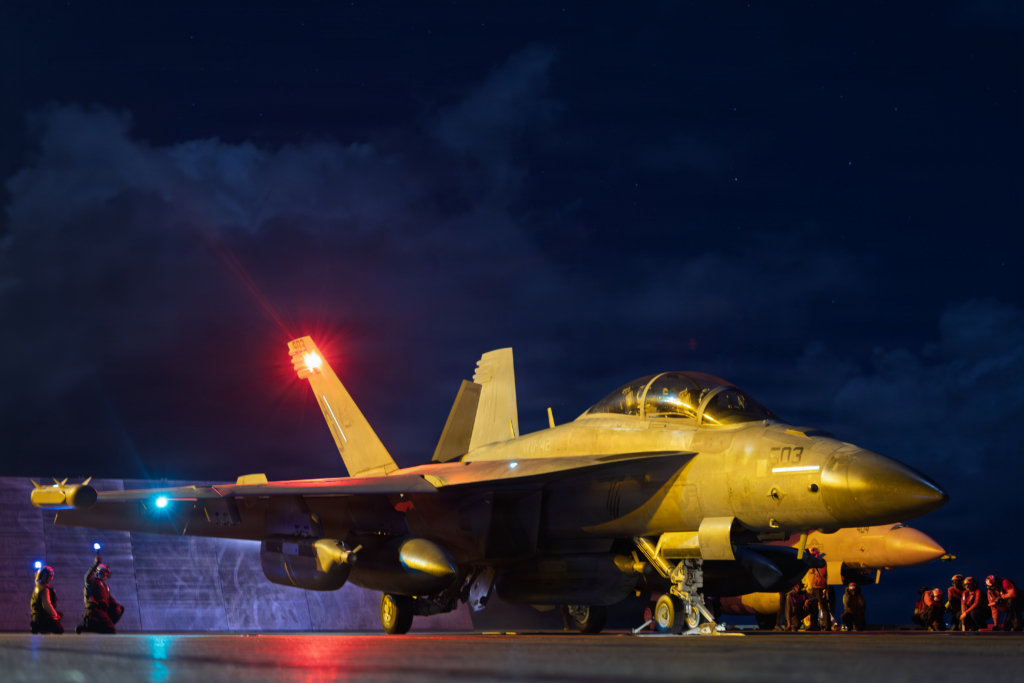
EA-18G Growlers lead SEAD and electronic attack operations
The Growler played a key role during Absolute Resolve, as Caine highlighted: “As the force began to approach Caracas, the joint air component began dismantling and disabling the air defence systems in Venezuela, employing weapons to ensure the safe passage of the helicopters into the target area.”
These EA-18Gs were likely deployed aboard Gerald R Ford as part of Electronic Attack Squadron 142 (VAQ-142) ‘Gray Wolves’ – a unit that is assigned to Carrier Air Wing 8 (CVW-8) and headquartered at NAS Whidbey Island, Washington, with the rest of the Navy’s more than 160-strong Growler fleet.
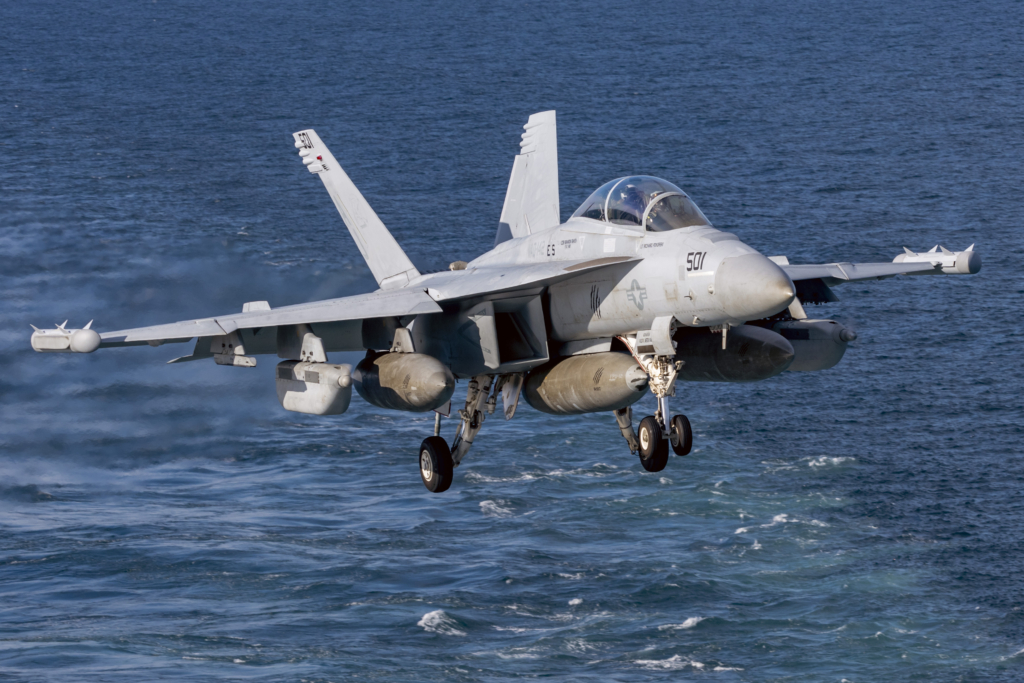
These jets will have been key to suppressing and neutralising the Russian-built surface-to-air missile (SAM) systems, such as the Buk and S-300 platforms employed by the Venezuelan military.
Such a mission, known as Suppression/Destruction of Enemy Air Defences (SEAD/DEAD), is exactly the kind of tasking that the EA-18G was designed for, given its ability to jam, spoof and disrupt enemy radar systems and communications systems to help neutralise SAM systems and allow allied aircraft to penetrate deeper into hostile territory.
Flying high above the combat zone, these Growlers became invisible hands that helped guide this operation to a swift and successful end. In an era where control of the electromagnetic spectrum has become as crucial as air superiority itself, the EA-18G once again proved why it is a key asset to both the US military inventory and modern warfare as a whole.
From EA-6B Prowler to EA-18G Growler
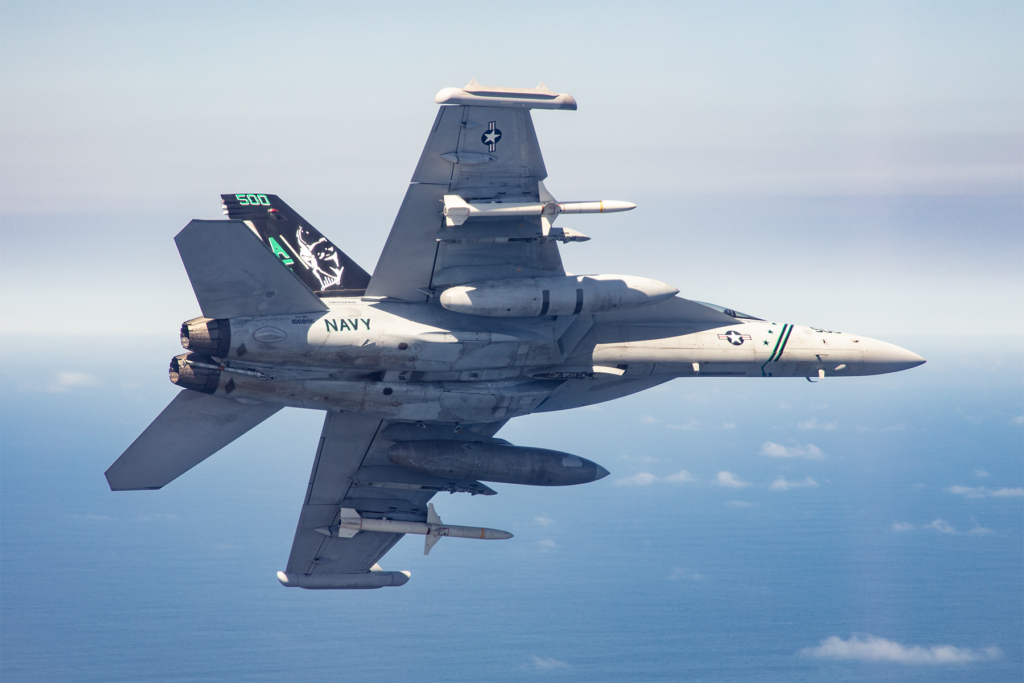
Developed as a replacement for the US Navy’s veteran EA-6B Prowler fleet in the early 2000s, the EA-18G Growler is a specialised variant of the Boeing-made Super Hornet family. The platform – the first EA aircraft to be developed by the US in more than 35 years – combines the combat-proven abilities of the dual-seat F/A-18F Super Hornet with a sophisticated electronic warfare (EW) suite.
The EA-18G completed its maiden flight in August 2006 and achieved Initial Operational Capability (IOC) with the Navy in September 2009. The US Navy and Royal Australian Air Force (RAAF) are the only two operators of the type.
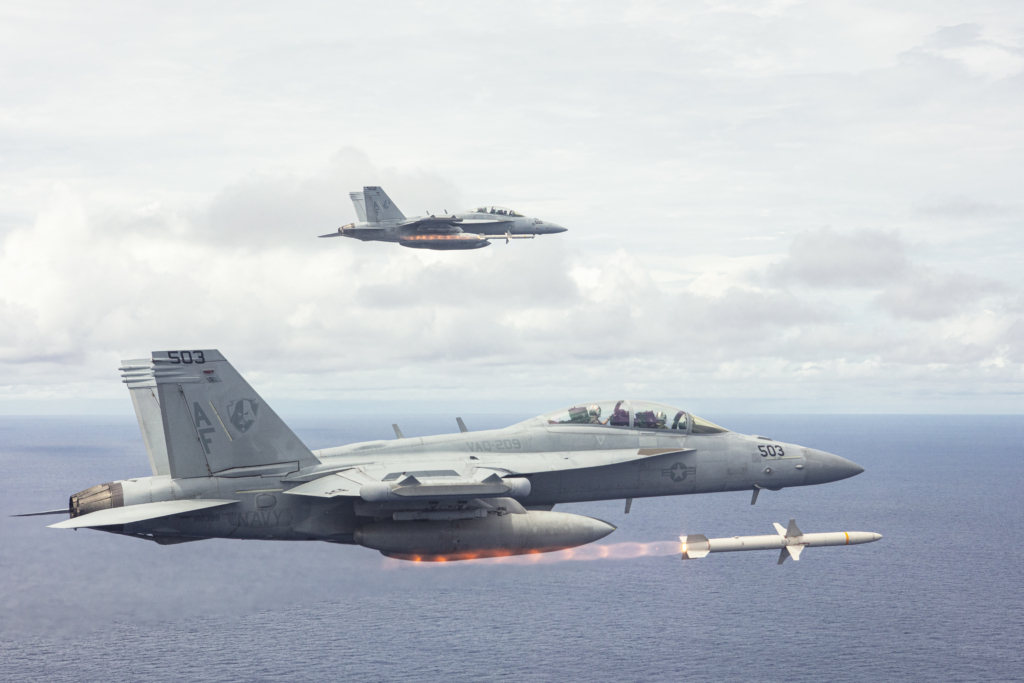
The Growler is powered by two GE Aerospace F414-GE-400 afterburning turbofan engines and shares a great deal of commonality with the F/A-18F. To accomplish its designed SEAD/DEAD mission set, the EA-18G typically carries two AGM-88 High-speed Anti-Radiation Missiles (HARMs) and three ALQ-99 Tactical Jamming Systems (TJSs), housed in hardpoint-mounted pods under the jet’s fuselage and wings.
The type also carries two AIM-120 Advanced Medium-Range Air-to-Air Missiles (AMRAAMs) for self-defence, as well as two 480-gal external fuel tanks to extend the platform’s effective combat range to more than 850nmi (1,574.2km).
The EA-18G made its combat debut over Libya during Operation Odyssey Dawn in 2011 and has since provided the Navy’s deployed Carrier Strike Groups (CSGs) with a dedicated airborne EA capability. The type has since contributed to the Navy’s global operations, participating in rapid reaction action situations and supporting combat operations spearheaded by CSGs, while embarked.
Modernising the Growler for contested airspace
As the US Navy presses forward with its wide-scale F/A-18E/F Block III upgrade, the service is not overlooking its Growler fleet. The EA-18G is currently undergoing a critical Block II upgrade to enhance its already sophisticated EA/EW capabilities against evolving and advancing threats.
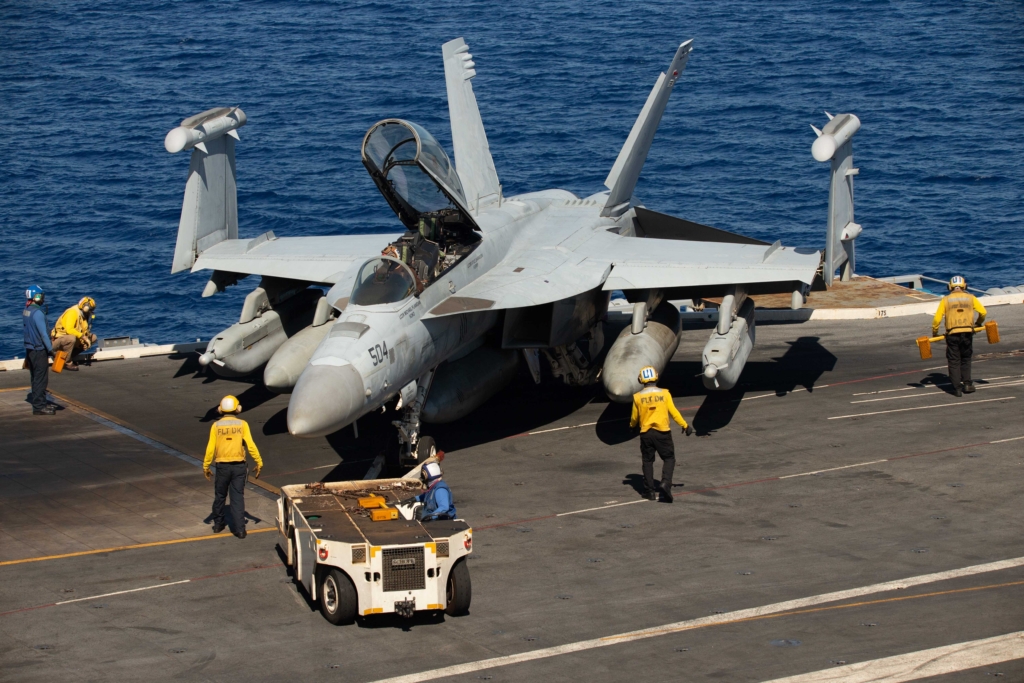
The Growler’s highly anticipated Block II enhancements share a high degree of basic commonality with the advanced Block III Super Hornet. However, the programme is also focused on advancing several capabilities that are unique to the EA-18G, which include the introduction of the following:
- AN/ALQ-249 Next-Generation Jammer Mid-Band (NGJ-MB): The Block II-upgraded Growlers will see their current and now-ageing AN/ALQ-99 TJS pods – which were first employed on the EA-6B – replaced with the newer, more advanced AN/ALQ-249 NGJ-MB. Compared with the older AN/ALQ-99 pods, the AN/ALQ-249 will provide EA-18G crews with greater jamming power and range, as well as the ability to engage more targets simultaneously. This system achieved IOC in 2021.
- Advanced Cockpit System (ACS): As part of the Block II upgrade, the Growler will receive a redesigned cockpit, which will feature a new large-area display (LAD) and a low-profile head-up display (HUD) to improve the crew’s overall situational awareness and mission management abilities. This upgrade is similar to changes being made for the Block III Super Hornet.
- Upgraded Airborne Electronic Attack (AEA) Suite: The Block II upgrade will also provide enhancements to the Growler’s internal mission-specific systems, with the EA jet due to receive an upgraded Electronic Attack Unit (EAU) and Reactive Electronic Attack Measures (REAM) system. REAM leverages machine learning to autonomously identify and counter unknown radar emitters.
- Advanced Networking and Data Architecture: The upgrade will also introduce a new, digital cockpit data bus architecture to the Growler, enabling it to better share sensor data and battlespace data with allied aircraft and forces.
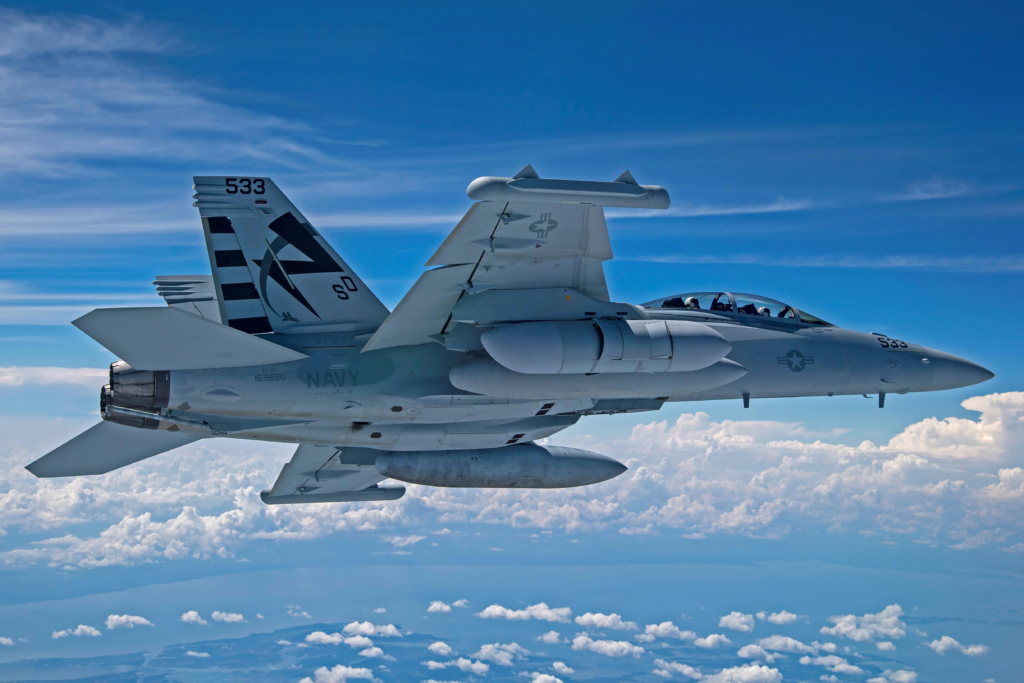
Combined, these upgrades – complete with the fact that the aircraft has been designed using a Modular Open Systems Approach (MOSA) to better enable frequent and flexible software updates to match and outpace evolving threats – aim to ensure the Growler remains the world’s most advanced and effective EA platform throughout its remaining operational lifecycle.