A 9-seat aircraft that flies from 150ft? Electra’s ultra-STOL EL9 begins FAA certification

December 11, 2025
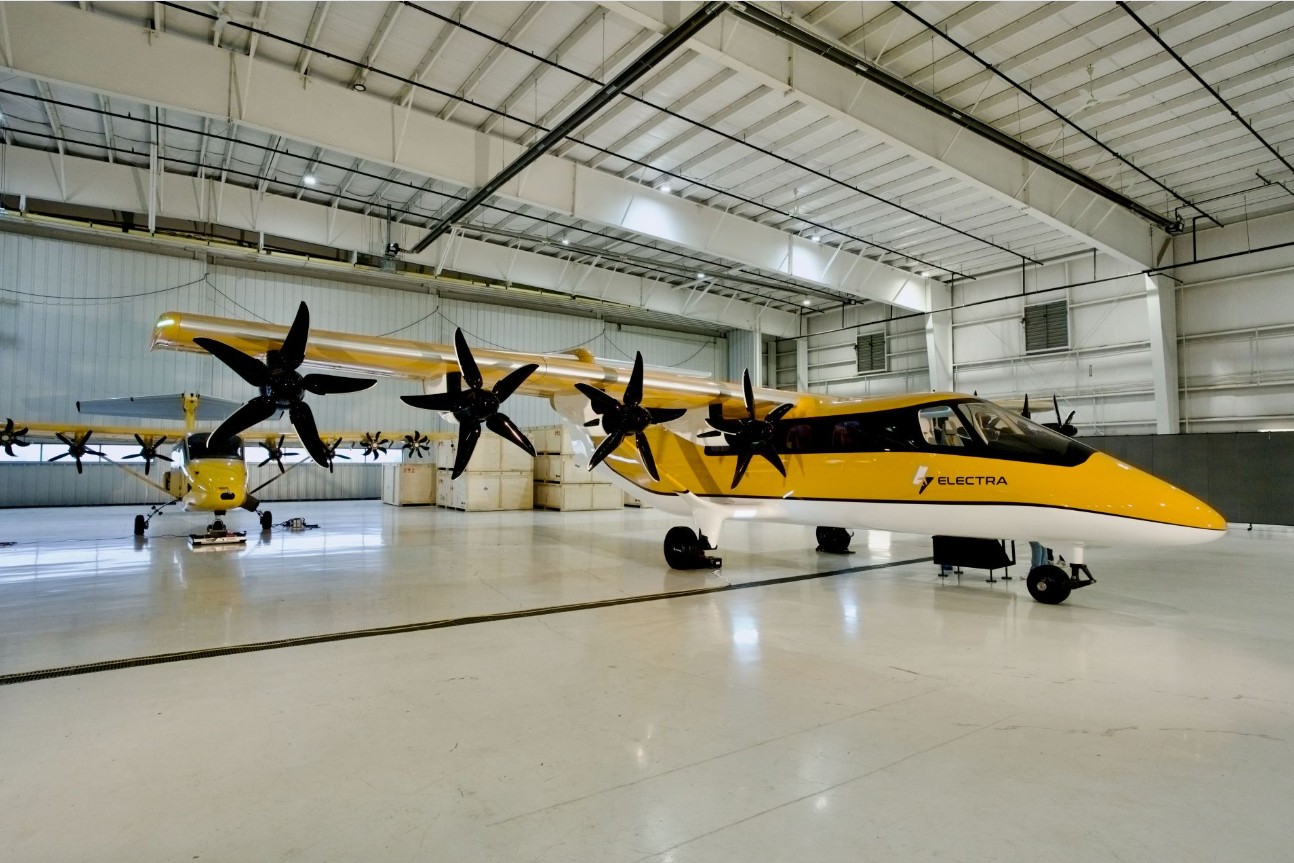
Electra, the US-based developer of the EL9 ultra-short take-off and landing (uSTOL) nine-seat aircraft, has applied to the Federal Aviation Administration (FAA) for Part 23 Type Certification for its aircraft.
Part 23 establishes the FAA’s airworthiness standards for aircraft with 19 passengers or fewer and is the regulatory pathway for certifying small aircraft for commercial passenger and cargo operations.
The filing “marks a significant step in transitioning the EL9 from technology development into the formal certification process,” said the company in a statement.
Electra’s Part 23 filing with the FAA for the EL9
Electra’s submission to the FAA includes a Project Specific Certification Plan (PSCP), along with a full EL9 aircraft specification, outlining the company’s proposed certification basis and approach to regulatory compliance.
According to the company, the filing “reflects several years of coordinated engagement between Electra and the FAA through the Emerging Technology Section of Policy and Standards.”
“This certification application signals that the EL9 is fast becoming a reality and reflects the progress our team and the FAA have made together,” said Electra CEO Marc Allen.
“The EL9 combines blown-lift with distributed electric propulsion to unlock air travel that takes people directly from where they are to where they want to go. We will continue to engage with the FAA to demonstrate that the EL9 is a reliable fixed-wing aircraft that will serve passengers, move cargo, and connect communities for many years to come.”
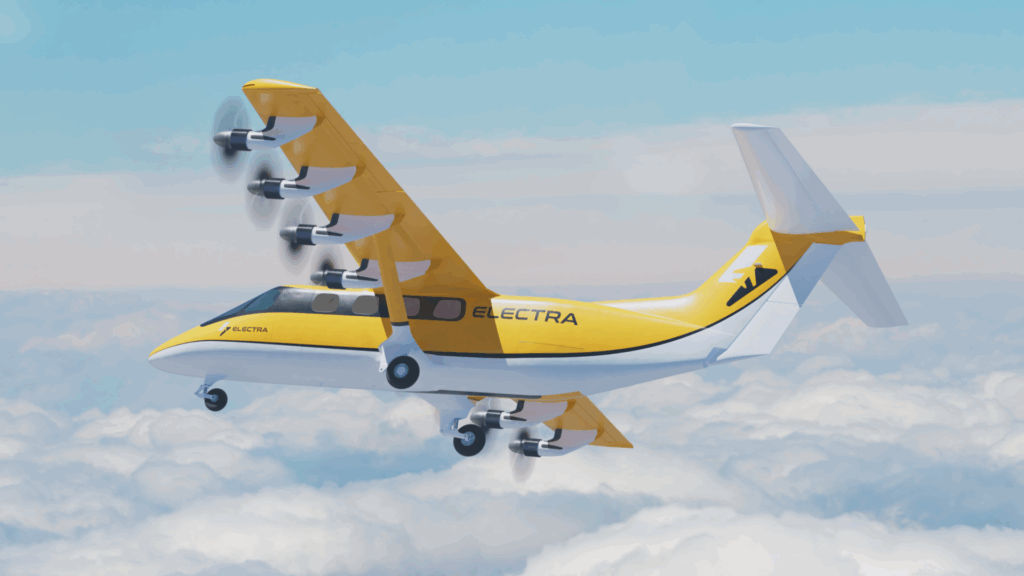
Electra’s statement said that the company will continue its ongoing collaboration with the FAA as the EL9 progresses through the certification process.
This will include the continued collaboration toward acceptance of the PSCP, which includes compliance and conformity plans, and details the test implementation phase of the Type Certification process with the FAA.
In April of this year, Electra successfully closed a $115 million Series B funding round, with the new investment earmarked to support the pre-production and certification of its blown-lift, hybrid-electric EL9 aircraft. The filing of the Part 23 application comes as a direct result of that fundraising effort.
The funding round was led by investment firm Prysm Capital, with other strategic investors including Lockheed Martin Ventures, Honeywell and Safran, along with other private individuals.
Electra’s ultra-STOL regional aircraft
The EL9 aircraft is designed for ultra-short take-off and landing operations in as little as 46 metres (150ft). The aircraft also has the ability to use unprepared or semi-prepared runways in remote locations.
Electra says that the EL9 aims to improve regional mobility in a sustainable manner in markets that are otherwise inaccessible to larger regional aircraft.
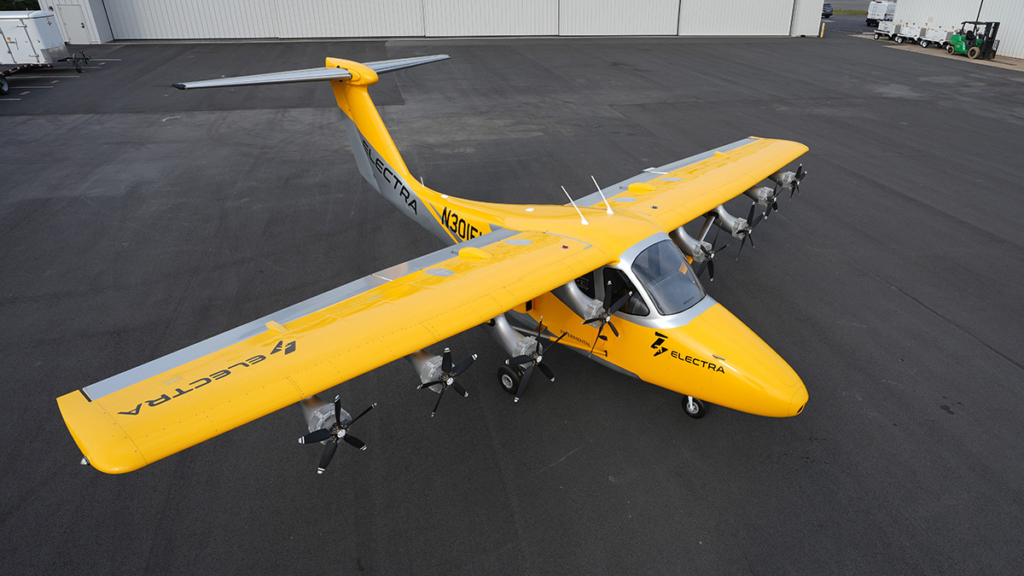
The aircraft has a cruising speed of 175 knots and can fly for 330 nautical miles (611km) with full passenger capacity. The aircraft’s maximum ferry (empty) range is expected to be 1,100 nautical miles (2,037km) with IFR reserves.
Ultra-STOL achieved through Electra’s Direct Aviation concept
Known as the company’s ‘Direct Aviation’ concept, the EL9 will enable regional air services that bypass large hubs by using smaller, underused sites like soccer fields, campuses, and local airstrips.
With its uSTOL capability, quiet propulsion systems, fixed-wing payload and range, and hybrid-electric efficiency, Electra says that its EL9 will allow operators to offer reliable regional services directly between communities, employment centres, logistics hubs, and remote locations.

The aircraft is powered by a hybrid-electric propulsion architecture combined with Electra’s ‘blown-lift‘ wing design, which channels airflow over the wing to generate exceptional lift. In wind tunnel tests carried out earlier in 2025, Electra confirmed that the outcome of those tests confirmed that the aircraft’s approach and landing met FAA Part 23 safety and stall margin requirements.
Electra selects Evolito as the engine supplier for the EL9
In October, Electra announced that Evolito, a developer of electric engines, generators, and fully-integrated electric propulsion systems, had been selected to supply electric propulsion units (EPUs) for the aircraft.
Evolito’s EPUs will power the EL9’s eight propellers, which feature lightweight motors, high-integrity motor controllers, and advanced thermal controls, providing the plane with a high lift-to-weight ratio, which gives the EL9 its uSTOL capabilities.
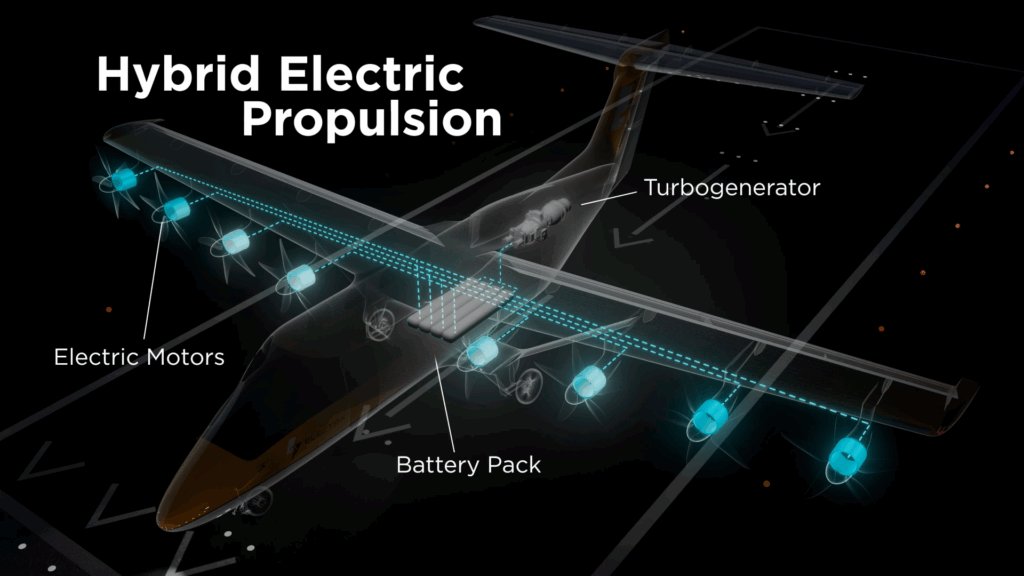
The eight electric motors are placed along the leading edges of the fixed wings. Additionally, the batteries on the EL9 are rechargeable in-flight, meaning that ground-based charging stations or other infrastructure are unnecessary.
Electra claims that its EL9 is a more sustainable aircraft than other regional aircraft, with lower carbon emissions than conventional jet planes and a lower environmental noise footprint.
Electra is looking at a service entry date of 2029 for the EL9
Flight tests of the EL9 are expected to commence in 2027, followed by anticipated certification and an entry into service in 2029. Currently, Electra has over 2,200 orders for the EL9 aircraft, representing US$8 billion in market value.
One such customer is the US-based regional mobility company, Surf Air Mobility. Once certified, Surf Air Mobility plans to integrate the EL9 into its network of commuter airlines, including Southern Airways and Mokulele Airlines.
The company’s nationwide commuter route system and proprietary SurfOS software could make it easier to scale Ultra Short operations, said a Surf Air Mobility statement.
Featured image: Electra