Ecojet grounded as Dale Vince withdraws backing from electric airline plan

January 23, 2026
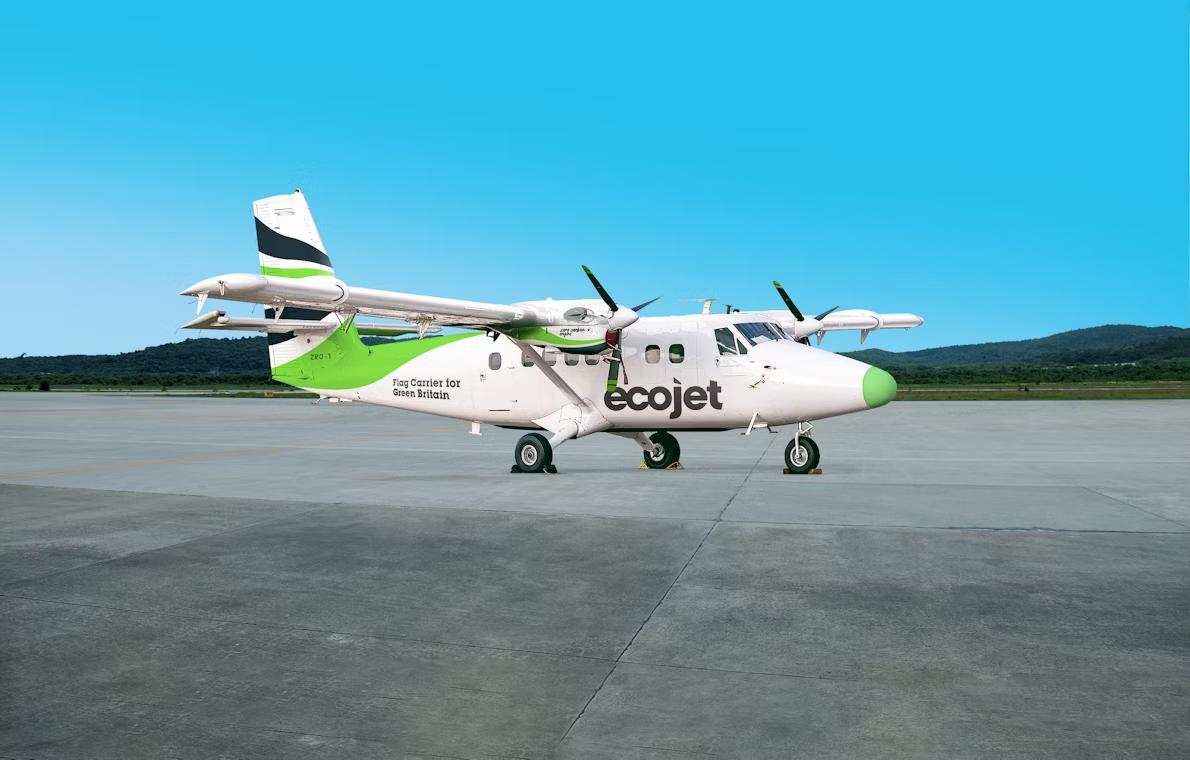
Ecojet’s principal backer, renewable energy entrepreneur Dale Vince, has withdrawn financial support from the project, signalling the end to the self-styled ‘airline for green Britain’.
The start-up, which had hoped to become the UK’s ‘flag carrier’ for low-carbon aviation, is reportedly now being wound up, bringing an abrupt end to one of the sector’s most closely watched green airline concepts.

Restructuring specialists have been appointed to oversee the closure of Ecojet, which was majority-owned by Ecotricity, Vince’s renewable energy group.
Founded in August 2021 as Fresh Airlines Limited, the airline was relaunched as Ecojet in May 2023.
The airline had aimed to enter service in the UK regional market with zero-emission aircraft, but had already delayed its proposed launch beyond an original target of last summer.
Funding pressures and certification challenges for Ecojet
Ecojet’s difficulties became apparent last year when the company made widespread redundancies, shrinking its workforce to just two employees.
Those job cuts followed unsuccessful efforts to raise around £20 million in external funding, capital the airline said was required to support certification activities and secure an air operator’s certificate from the UK Civil Aviation Authority.
Despite the setbacks, the company maintained publicly that it remained viable. As recently as August, Ecojet said it was progressing towards launch, albeit on a revised timetable, and that advisers had been engaged to seek new investors.
That optimism has now faded following Vince’s decision to halt further investment.
Confirming the move, Vince said the company remained committed in principle to decarbonising aviation, but acknowledged that the pace of progress had proved slower than anticipated.
He pointed to the complexity of aligning emerging propulsion technologies with regulatory frameworks, describing aviation as “the hardest” transport sector to electrify.
He was quoted in the Daily Telegraph as saying: “We remain committed to electrifying all forms of transport – aviation is the last frontier and the hardest.
“It’s taking longer than we hope to get the technology and regulatory pieces of the puzzle in alignment, and so we’re pausing work at this time.”

Ecojet’s vision for zero-emission regional flying
Ecojet’s business plan focused on short-haul domestic routes, initially linking Edinburgh with cities such as Southampton.
The airline proposed operating small turboprop aircraft retrofitted with hydrogen-electric powertrains supplied by ZeroAvia.
On board, the company proposed further steps to reduce the impact of the aviation industry, including serving plant-based meals, eliminating single-use plastic and issuing staff environmentally-friendly uniforms.
The initial fleet was to comprise 20-seat De Havilland Canada Twin Otters, with a longer-term transition to larger 70-seat ATR 72 aircraft.
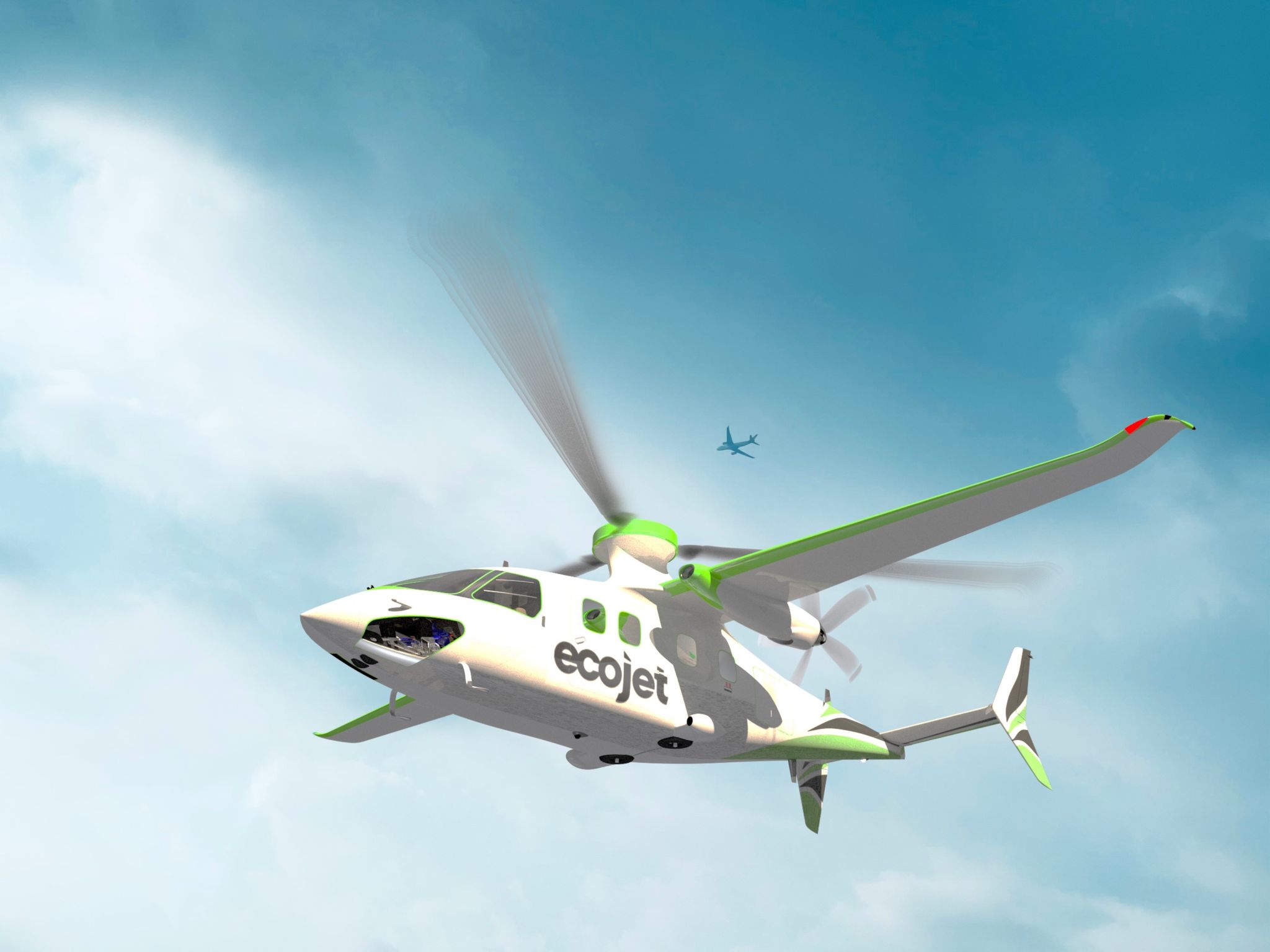
Ecojet also explored future urban and regional mobility concepts, signing a provisional agreement for up to 50 nine-seat aircraft from ARC Aerosystems.
Aerospace Global News has contacted Ecojet for comment.
Featured image: Ecojet