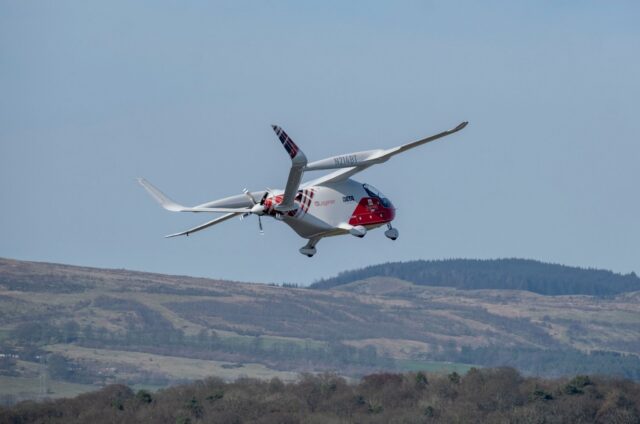
Digital twins take off as Deutsche Aircraft joins Dassault’s growing 3DEXPERIENCE ecosystem

March 25, 2026

Deutsche Aircraft is pressing forward on the development of its D328eco regional turboprop, deploying Dassault Systèmes’ 3DEXPERIENCE platform across the programme.
The move signals a shift in how the D328eco is being designed, tested and prepared for certification, with the German OEM building the programme around a fully integrated, model-based digital environment.
“Establishing a robust digital engineering platform is vital for the entire lifecycle of the D328eco to fulfil customer expectations,” said CEO Nico Neumann. “The 3DEXPERIENCE platform facilitates cross-functional collaboration and equips our teams with the solutions necessary to develop, manufacture, and maintain next-generation regional aircraft.”
The D328eco, a modernised evolution of the Dornier 328, is being positioned as a next-generation regional turboprop, combining improved performance, updated avionics and compatibility with sustainable aviation fuel.
What is Dassault’s 3DEXPERIENCE platform and how does it support aircraft development?
Dassault’s 3DEXPERIENCE brings multiple parts of aircraft development into one place.
Design, simulation, certification data and manufacturing planning all sit inside a single, connected system. Instead of teams working across disconnected tools and datasets, everyone works from the same live model.
At the heart of the system is the idea of a “virtual twin”, effectively a digital version of the aircraft that evolves alongside the real programme.
That allows engineers to:
- Test performance and systems behaviour before anything is built
- Run simulations on structures, loads and configurations
- Track every design change in a way regulators can follow
- Share data instantly across teams and suppliers
It’s a shift away from linear development, where design, testing and certification happen in stages, toward something far more continuous and iterative.
How virtual engineering could accelerate D328eco certification and production
Moving to the Dassault ecosystem gives Deutsche Aircraft immediate and practical benefits
By modelling the aircraft digitally from the outset, the team can evaluate system behaviour, structural loads and cabin layouts well before physical manufacturing begins. That reduces the risk of late-stage changes and helps keep the programme on track.
It also feeds directly into certification, often the most time-consuming part of any aircraft programme. With requirements, design decisions and test data all captured in one environment, demonstrating compliance becomes more structured and traceable.
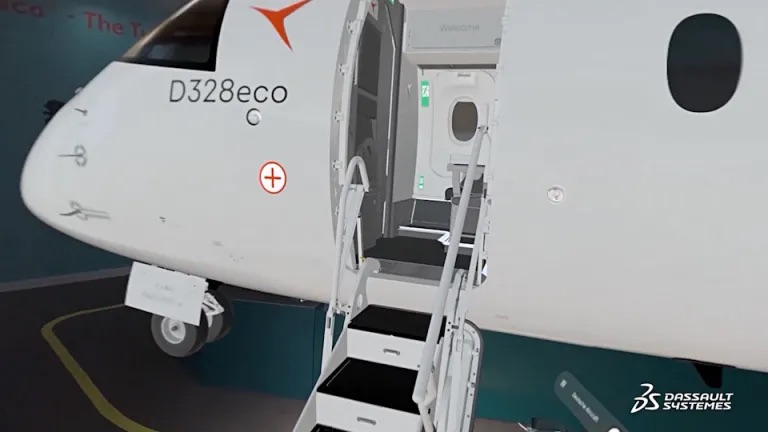
“Establishing a robust digital engineering platform is vital for the entire lifecycle of the D328eco,” Neumann said.
The same approach carries through into production. At its Leipzig final assembly line, Deutsche Aircraft is preparing for a more digitalised manufacturing setup, where workflows, resources and processes can be planned and refined virtually before scaling up in the real world.
There are also knock-on benefits for customers and partners. Using immersive tools linked to the same dataset, operators can explore cabin layouts or operational concepts in detail, while suppliers can validate how components will integrate before anything reaches the factory floor.
Dassault’s 3DEXPERIENCE platform is becoming the default for Advanced Air Mobility
Deutsche Aircraft is not alone in taking this approach, but it is joining a growing group of OEMs that have already standardised on Dassault Systèmes’ 3DEXPERIENCE platform as the backbone of their development programmes.
Across the advanced air mobility and next-generation aviation, the platform has quietly become a common thread.
Electric aircraft developer VÆRIDION, for example, is using the same platform to design its battery-powered Microliner, with CEO Ivor van Dartel noting it allows the company to “accelerate development while keeping processes simple and effective”.
In the eVTOL space, Joby Aviation has built its entire digital engineering environment around the platform. “We want to be best-in-class in everything we do,” said chief product officer Eric Allison. “So, we were looking for a best-in-class 3D solution with a long heritage of use in aviation. There was really only one choice.”
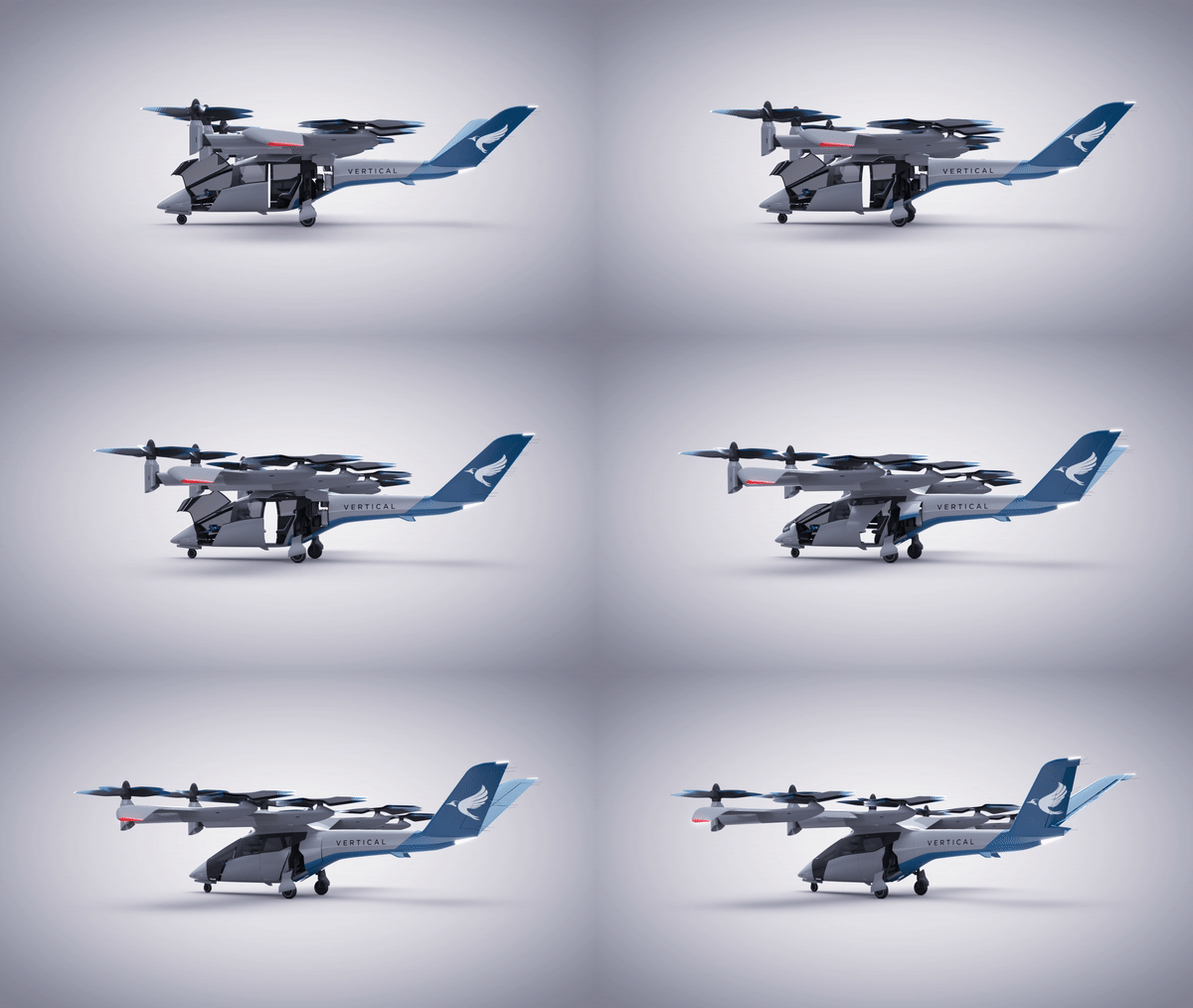
UK-based Vertical Aerospace has taken a similar route, using the platform to manage design, certification and change control as it works toward type certification of its aircraft. “It’s a one-stop shop and single source of truth,” said head of engineering Eric Samson.
The same pattern extends beyond urban air mobility. Hydrogen-electric developer Beyond Aero is using the platform as its product lifecycle backbone to manage the complexity of integrating hydrogen systems, while US startup Pivotal has adopted it to support the transition from design to scaled manufacturing.
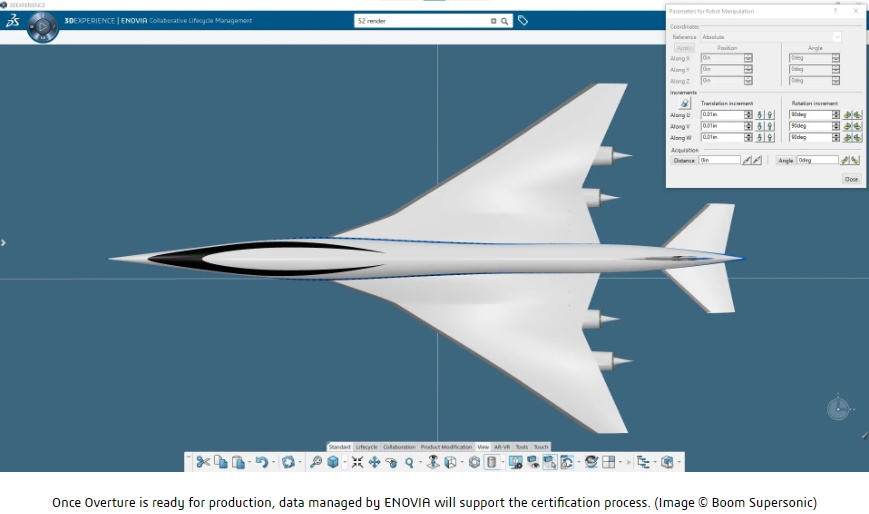
Even more unconventional programmes are following suit. Otto Aviation is using the platform to develop its Phantom 3000, a transonic aircraft built around sustained laminar flow, while Boom Supersonic is applying it to manage the complexity of designing and certifying its Overture supersonic airliner.
The appeal is consistent across all of them. As Boom founder Blake Scholl put it: “We’re building one of the most complex, safety-critical machines ever created… and we need a platform that allows everyone to work on the same model of the airplane.”
What makes 3DEXPERIENCE so popular among aircraft developers?
In practical terms, adopting 3DEXPERIENCE gives developers several key advantages from the outset. It creates a single, shared dataset across the programme, enabling continuous simulation and validation as designs evolve. It also embeds traceability directly into the development process, something increasingly critical for certification, while allowing teams to iterate faster with fewer physical prototypes.
This is why the platform, rather than a patchwork of separate tools, is gaining traction. Aerospace programmes are becoming more complex, particularly with electric, hydrogen and hybrid propulsion systems, while certification requirements continue to tighten. Traditional development methods, built around disconnected systems and late-stage testing, are struggling to keep pace.
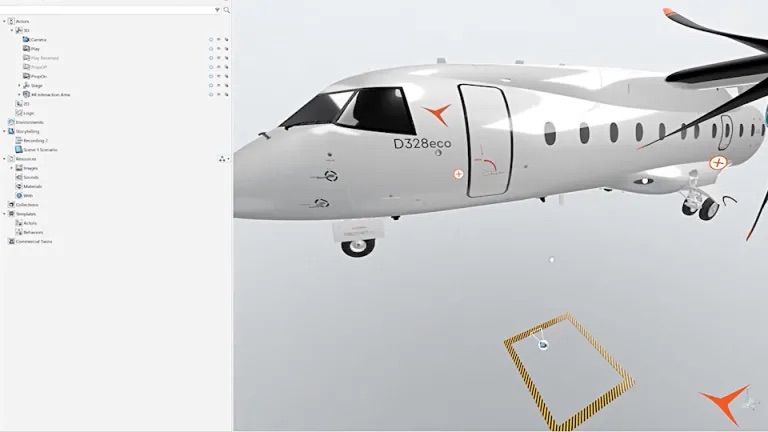
By contrast, a unified, model-based environment allows requirements, design, testing and manufacturing to evolve together. Issues can be identified earlier, changes can be managed more effectively, and production systems can be validated before they are implemented.
For startups, this provides a way to compete without legacy constraints. For more established programmes like the D328eco, it offers a route to reduce risk, maintain schedule discipline and move more confidently toward certification.
Taken together, the growing list of adopters suggests something more fundamental is happening. Platforms like 3DEXPERIENCE are not just supporting aircraft development; they are beginning to define how it is done.
Featured image: Deutsche Aircraft