First flight: China’s autonomous Lanying R6000 tiltrotor draws comparisons with US V-280 Valor

December 29, 2025
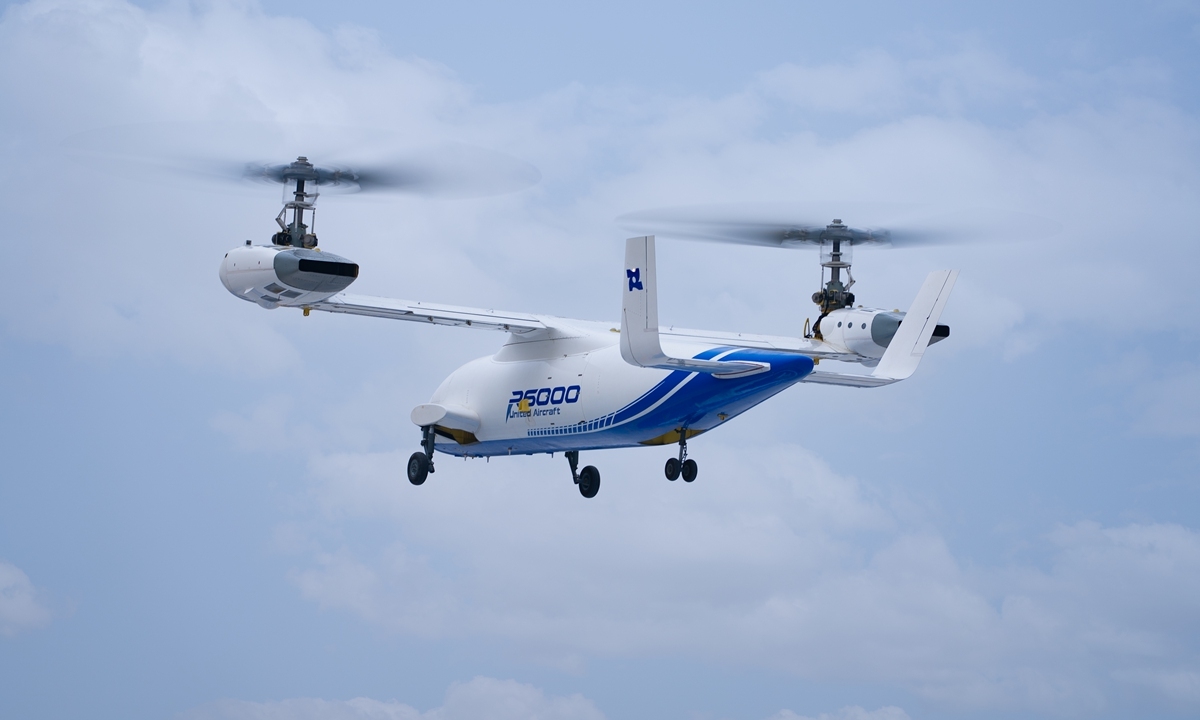
A new class of Chinese aircraft has entered flight testing. The Lanying R6000, a 6-ton-class tiltrotor developed by United Aircraft, has completed its maiden flight in Sichuan Province, combining helicopter-like vertical lift with fixed-wing cruise speeds approaching those of turboprop aircraft.
According to China’s state-run English-language news outlet, Global Times, the flight was conducted as part of United Aircraft’s ongoing development programme. Reports suggest the aircraft is intended for a mix of civil and government missions.
New autonomous tiltrotor developed in China
Citing a release sent by United Aircraft to the Global Times, the publication says that the Lanying R6000 is designed to be used for point-to-point air commuting “in cities, across sea routes, and mountainous areas.” United Aircraft is reportedly developing both crewed and uncrewed versions of the aircraft.

The R6000 is powered by the AES100 engine that has been developed by the AERO Engine Corporation of China. It is able to cruise at 550 kilometres per hour in fixed-wing mode, or around double that of traditional helicopters.
It has a maximum payload of 2 tonnes, a max range of 4,000 kilometres, and a service ceiling of 7,620 metres.
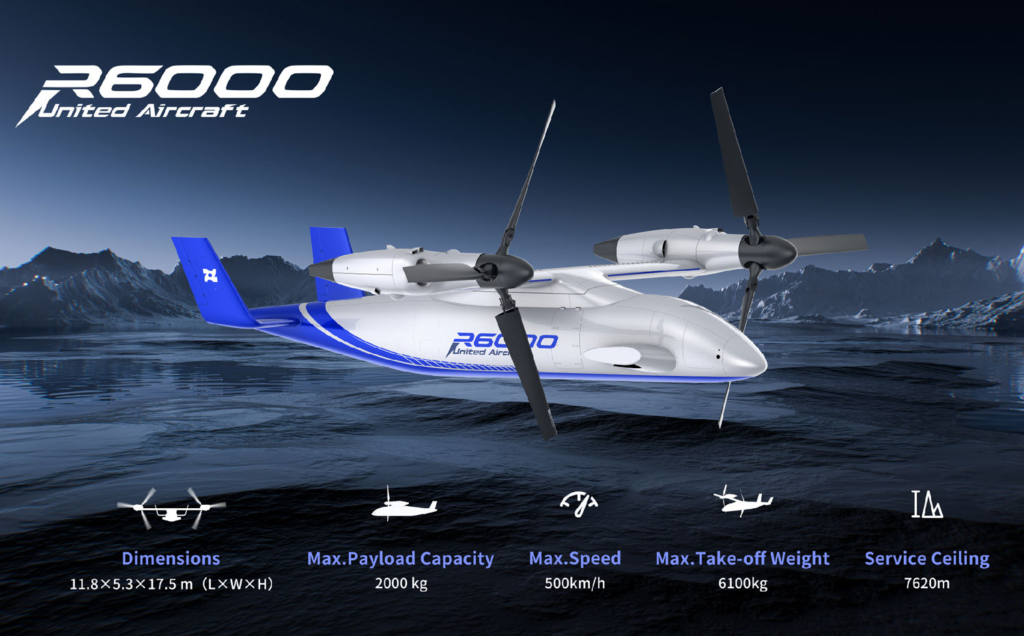
As a tiltrotor, the R6000 combines the vertical takeoff, landing, and hovering capabilities of a helicopter with the range, high capacity, and cruise speed of a fixed-wing aircraft.
Get the latest aerospace defence news here on AGN.
The Lanying R6000’s striking resemblance to the US Army V-280 Valor
The Lanying R6000 features a tilting rotor shaft design rather than a fully rotating engine nacelle configuration. The Global Times claims this achieves “significant breakthroughs in flight control and power system design.”

The US was the first to develop an operational tiltrotor aircraft. It developed the MV-22 Osprey, mostly for the Marines, but also for the Army and Air Force. The US Army is now developing the Bell MV-75 (formerly V-280 Valor) as its next-generation replacement for the UH-60 Black Hawk.
The War Zone reported on the R6000 in flight testing in mid-November. It noted the design “features swivelling rotors that are extremely similar to the ones found on Bell’s V-280 Valor.”

The War Zone added its swivelling rotors, “looks to be heavily inspired by, if not copied directly from the V-280.” Flight Global says the R6000 is the first of its kind, although it’s unclear in what capacity that is true. The V-280 has a payload capacity of around 5.4 tonnes.
A tiltrotor for both civil and military applications
United Aircraft and China’s state media highlight its civil applications. China’s state-run Xinhua News Agency reported the emerging drone market can “transform into food delivery couriers.”
Major breakthrough! World's FIRST 6-ton-class #tiltrotor takes flight in #Shenzhen! United Aircraft Group from #Longgang has successfully completed the maiden flight of the "Lanying R6000".
— Shenzhen Daily (@szdaily1) December 29, 2025
It's a milestone moment for #China’s #aviation industry, marking a decisive leap from… pic.twitter.com/s9TJAfbdXl
The Global Times says the R6000 can serve air commuting and is expected to play a role in “medical emergencies, fire rescue, police patrols, and large-scale disaster relief operations, enabling rapid and precise deployment of personnel and supplies.”
It then says the new tiltrotor could open up new possibilities for high-end private travel and aerial sightseeing tourism. No reference to military applications is made.
However, the aircraft has very obvious potential military applications. The aircraft joins an explosion of new aircraft designs emerging in China that have dual civilian and military applications.

Separately, earlier in 2025, the first Chinese ekranoplan (or ground effect vehicle) was spotted by open-source naval analyst H I Sutton. He dubbed it the ‘Bohai Sea Monster.’
Featured Image: United Aircraft