Chile unveils T-40 Newen trainer aircraft as air force shifts to digital pilot training

April 8, 2026
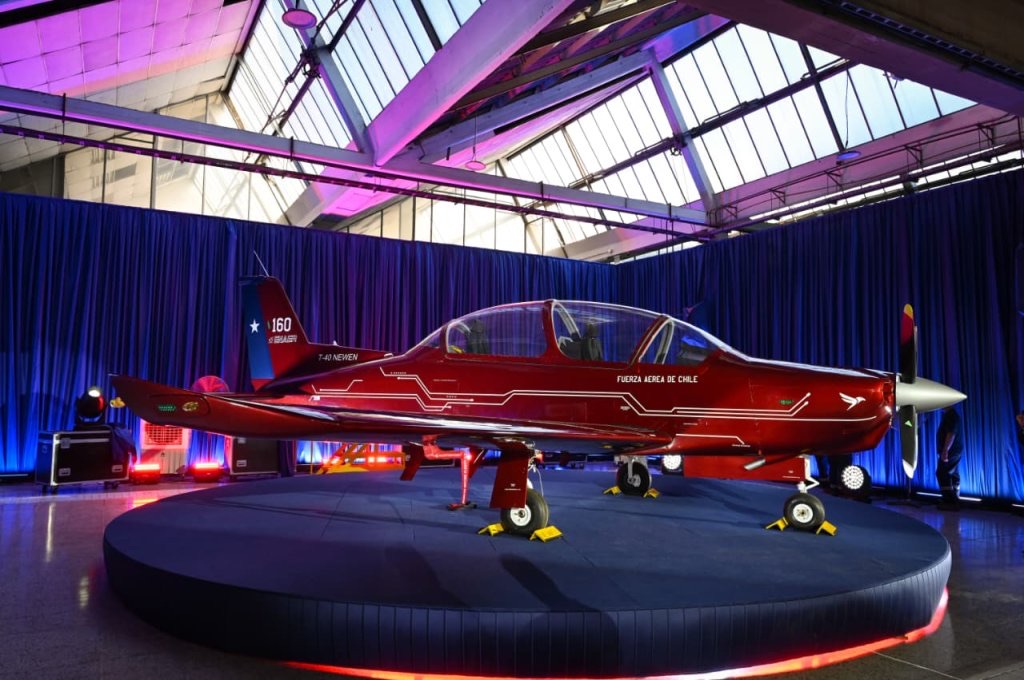
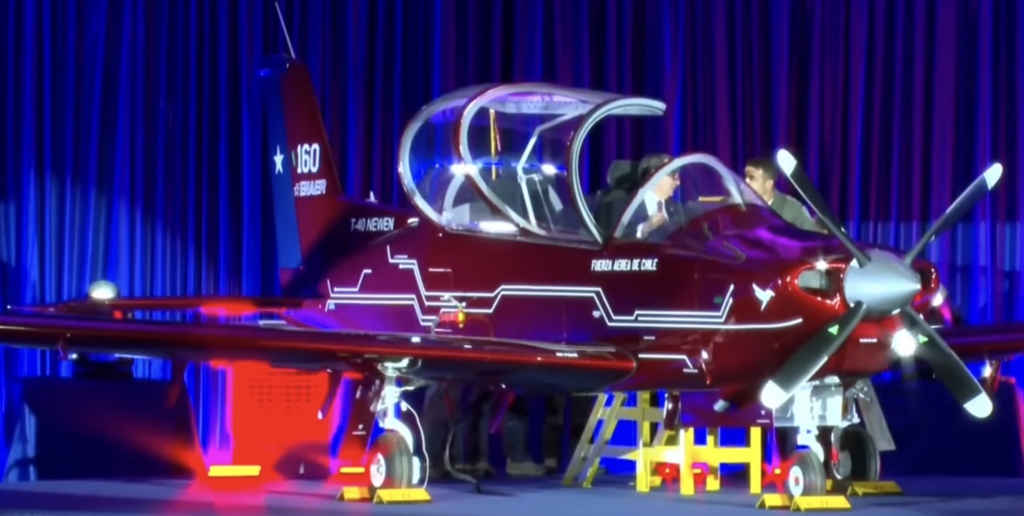
The Chilean Air Force has unveiled the T-40 Newen, a new basic trainer aircraft that sits at the centre of a wider effort to modernise pilot training and rebuild domestic aerospace capability after decades of reliance on an ageing fleet.
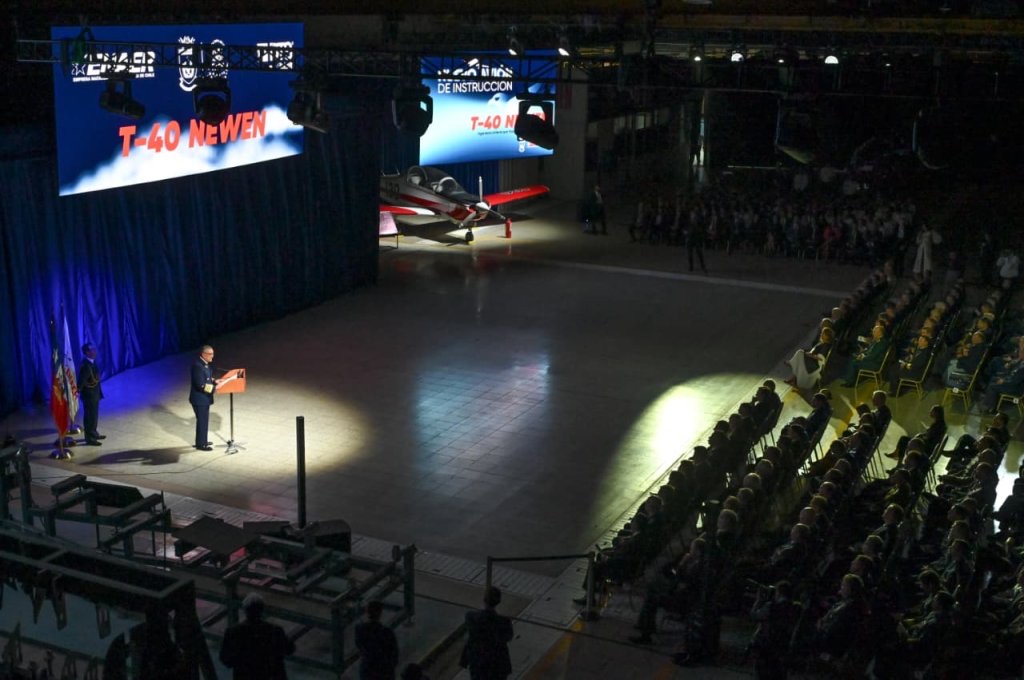
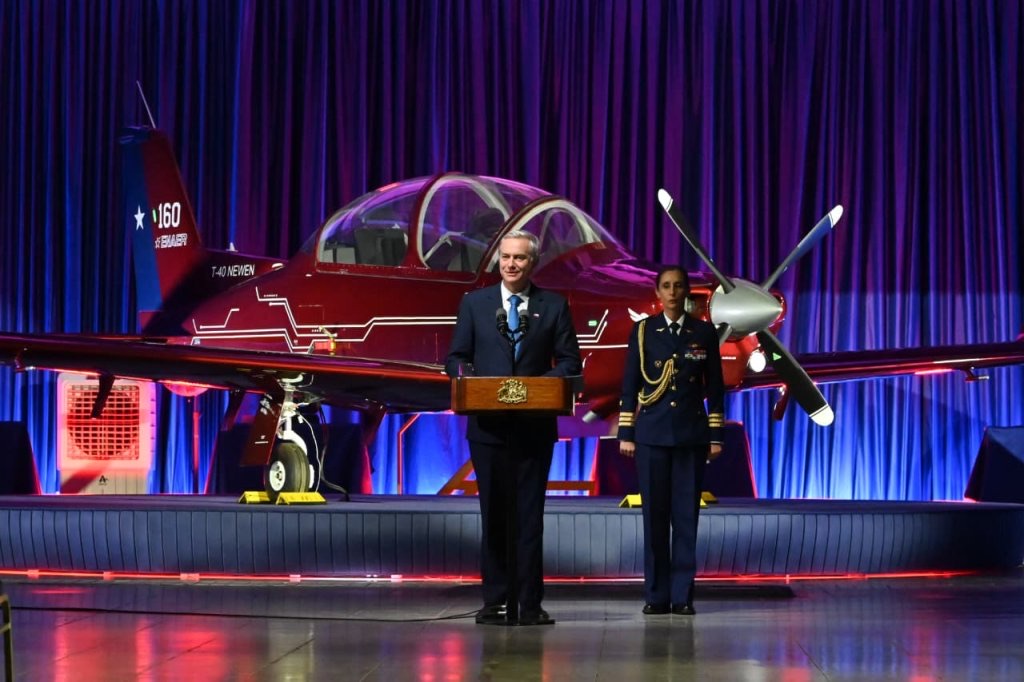
Presented during an official ceremony attended by President Jose Antonio Kast and senior civilian and military authorities on 6 April, the aircraft marks what is being described as the country’s most significant military aviation programme in decades, combining a new platform with a digitally driven training system.
T-40 Newen prototype enters structural testing ahead of first flight
The aircraft unveiled is a non-flying prototype, designated “00”, which will now be prepared for structural testing before the programme advances to flight trials.
According to programme details, the airframe will be disassembled and shipped abroad, either to the United States or Brazil, for a series of validation tests aimed at confirming structural integrity and performance margins.
These tests are a standard step in modern aircraft development and will clear the way for prototype “01”, which is expected to carry out the programme’s first flight, potentially as early as next year.
The approach reflects a staged development process, with early validation focused on airframe strength before moving into flight evaluation.
T-40 Newen anchors Chile’s new digital pilot training system
While the aircraft itself is central to the programme, the T-40 Newen has been conceived as part of a broader training ecosystem rather than a standalone platform.
The system combines the aircraft with a suite of digital tools, including simulation environments, mission planning software, flight monitoring systems and post-mission debriefing capabilities.
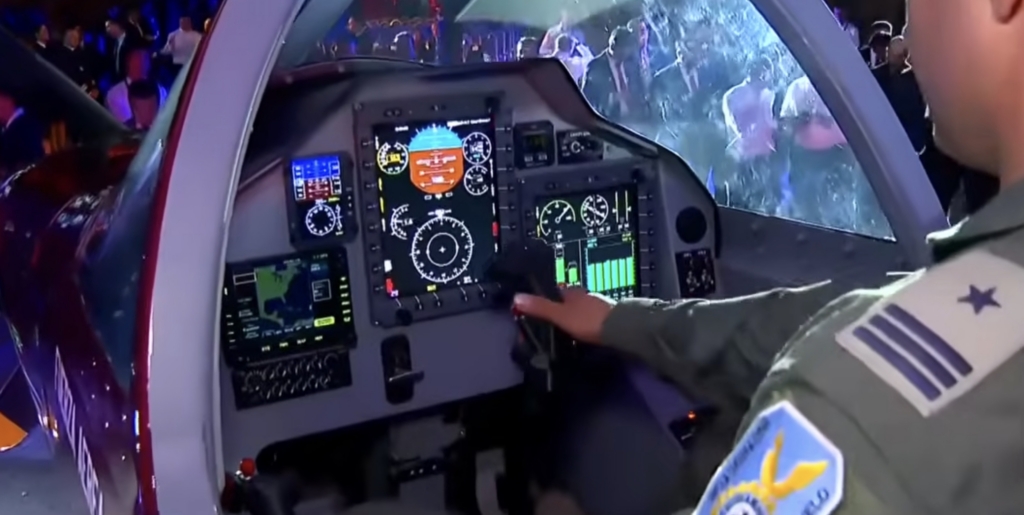
According to programme material, the concept is designed to expose trainee pilots to operational workflows from the earliest stages of instruction, mirroring the systems they will encounter later in their careers on front-line aircraft.
This includes immersive simulators with mixed-reality environments, integrated mission planning tools and data-driven debriefing systems capable of replaying flight parameters, audio and video for analysis.
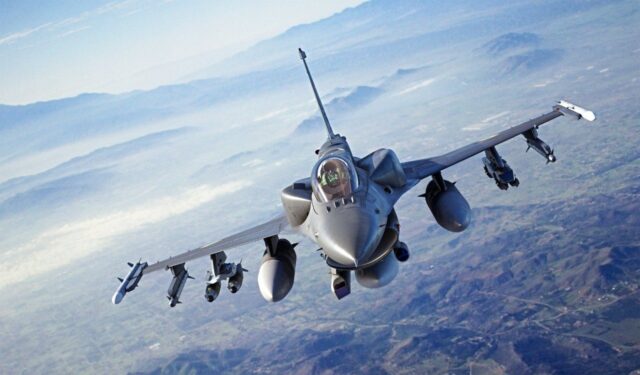
The intention is to reduce the gap between basic training and advanced conversion, particularly for aircraft such as the F-16 and F-5 currently in Chilean service.
T-40 Newen to replace Chile’s ageing T-35 Pillán trainer fleet
At the heart of the programme is the planned replacement of the T-35 Pillan, which has formed the backbone of Chile’s basic flight training since the mid-1980s.
Introduced in 1985, the Pillan has accumulated decades of service, training thousands of pilots across multiple air forces and logging hundreds of thousands of flight hours.
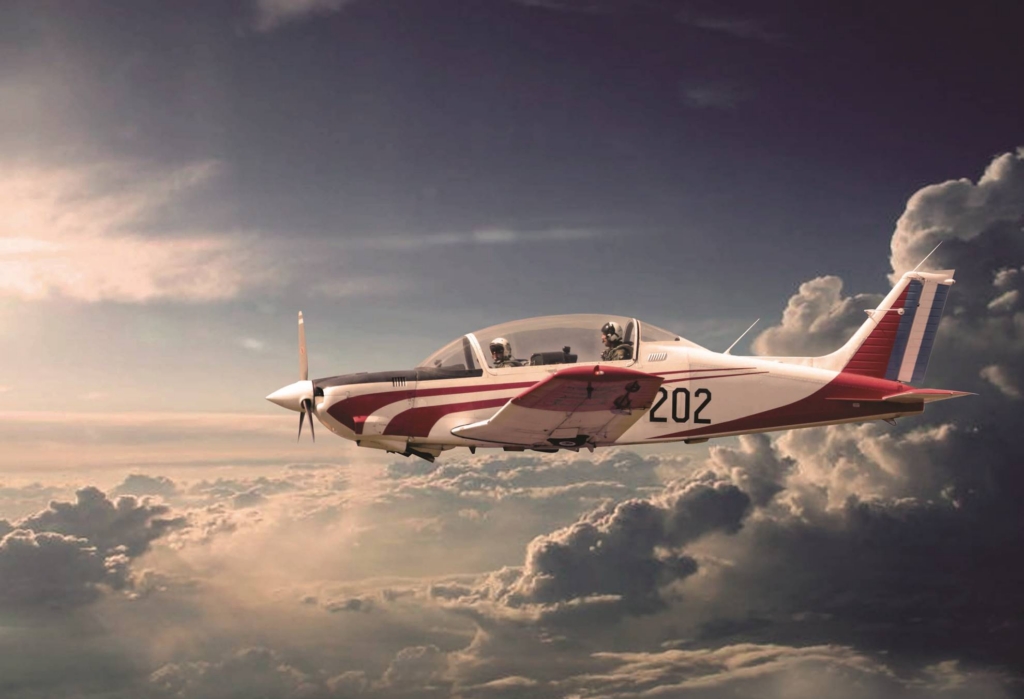
However, with the fleet approaching the limits of its operational life, the Chilean Air Force has opted for a transition that goes beyond a simple platform replacement.
The move to the T-40 reflects a broader shift towards digitally integrated training methods and a more structured progression model for pilot development.
T-40 brings updated avionics, composites and improved performance
The T-40 builds on the legacy of the Pillan but introduces a range of changes in design and capability.
Programme documentation highlights the use of updated avionics, a redesigned wing, removable winglets and a new engine, all contributing to improved power-to-weight performance.
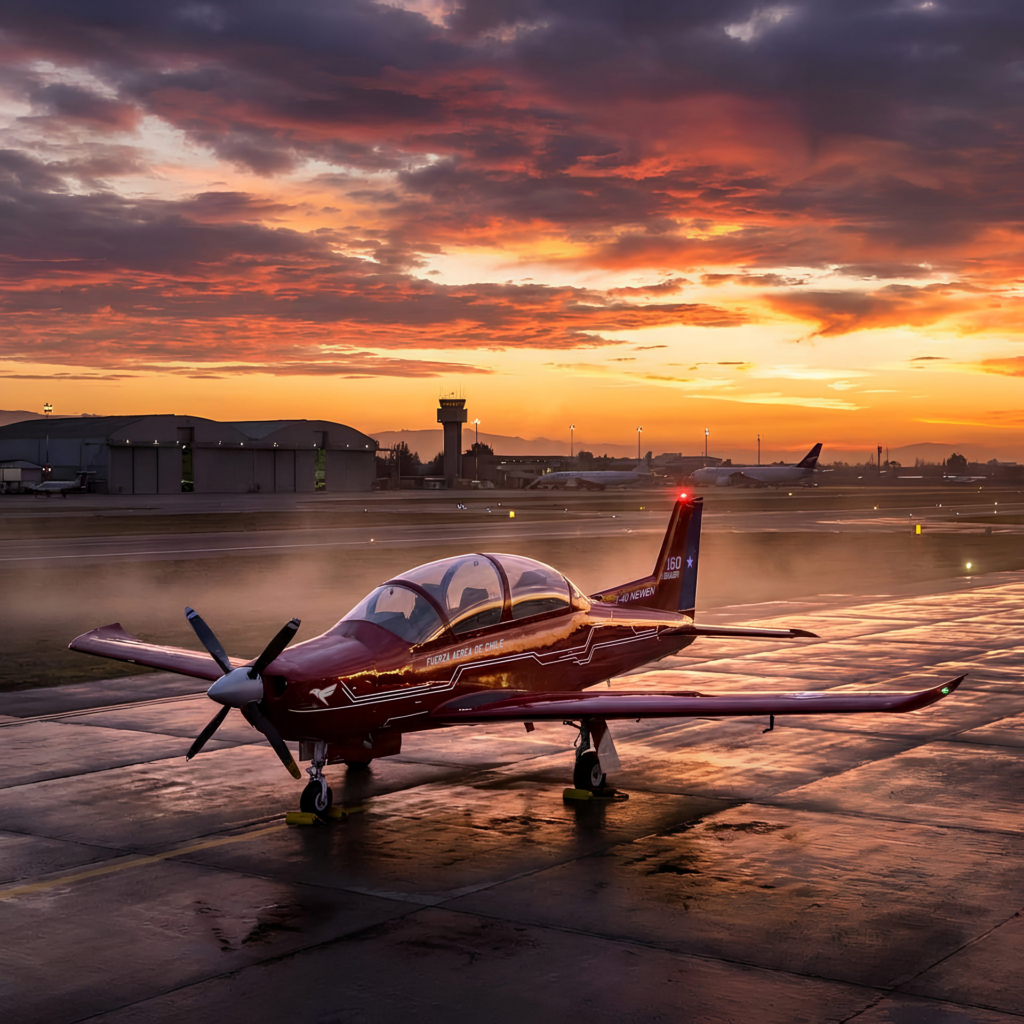
The aircraft also incorporates extensive use of carbon fibre materials, reflecting a move towards lighter structures and improved efficiency.
At the same time, the platform has been designed to retain the reliability and relatively low operating costs associated with its predecessor, an important factor for training fleets that require high sortie rates.
Integrated training pipeline links T-40 Newen to frontline aircraft systems
A central feature of the programme is the concept of a “comprehensive primary instruction system”, which ties together airborne and ground-based elements into a single training pipeline.
This includes flight simulators designed to replicate cockpit environments, mission planning systems that feed directly into aircraft avionics, real-time tracking tools for monitoring training flights and debriefing systems capable of reconstructing missions in detail.
The structure is intended to familiarise rookie pilots with the procedures, interfaces and decision-making processes associated with more advanced aircraft from the outset.
According to programme material, the goal is to ensure that trainees are already accustomed to modern operational environments before progressing to higher-performance platforms.
T-40 Newen programme boosts Chile’s domestic aerospace industry
Beyond training, the T-40 Newen carries wider implications for Chile’s aerospace industry.
The programme involves engineers, technicians and a network of domestic suppliers, including small and medium-sized companies contributing components, electronics and composite structures.
This approach is intended to strengthen local industrial capability, reduce reliance on external support and ensure long-term sustainment within the country.
It also marks a return to aircraft manufacturing activity at scale, building on earlier experience in maintenance, upgrades and system integration.
T-40 Newen production to begin by 2027 as Chile replaces Pillán fleet
If development and testing proceed as planned, series production of the T-40 is expected to begin towards the end of 2027.
Current plans call for an initial production of 33 aircraft to be delivered to the Chilean Air Force, replacing the existing Pillan fleet on a gradual basis.
The transition is expected to redefine how Chile trains its pilots, introducing a model that combines aircraft performance with digital instruction and simulation.
Featured image: Fuerza Aérea de Chile