Changchun Air Show 2025 highlights: J-20s, drone conversions and new UAV debut

September 27, 2025
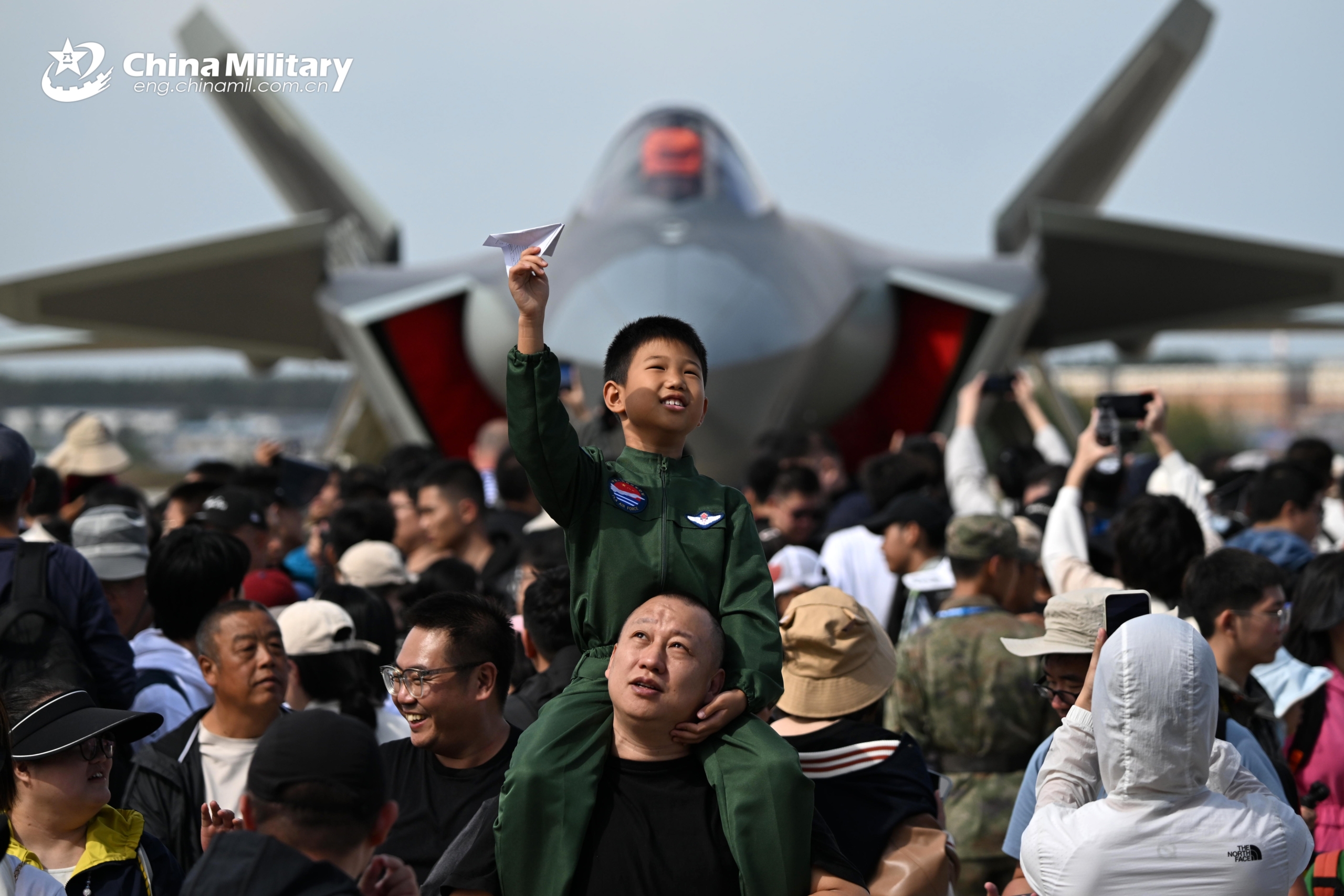
China’s Changchun Air Show may have been overshadowed by the recent Victory Day Parade, but it still produced a string of significant revelations about the country’s aviation industry.
China’s Changchun Air Show
Held between 19 and 23 September, the free-to-attend show drew close to a million visitors, according to state media. Since its launch in 2011, it has grown into a combined civil-military exhibition and PLA Air Force Open Day.
The 2025 edition covered 1.8 million square meters and featured more than 125 exhibits across 93 aircraft and systems, ranging from cutting-edge fighters to historic classics, missiles, radars and electronic warfare equipment.

While the Victory Day parade showcased China’s military modernisation and prowess in general, the air show focused on China’s aviation. The People’s Daily Online said it was “a key platform to showcase the PLA Air Force’s latest development achievements.”
Chinese fighter jets take centre stage
Flying displays included Flanker derivatives such as the J-11BS, the advanced J-16, and the J-20 Mighty Dragon stealth fighter. The Bayi Aerobatic Team flew J-10s, while serial production examples of the new J-35A were also visible.
A milestone moment came when a J-20 was placed on public static display for the first time, allowing rare close-ups of China’s most advanced fighter.
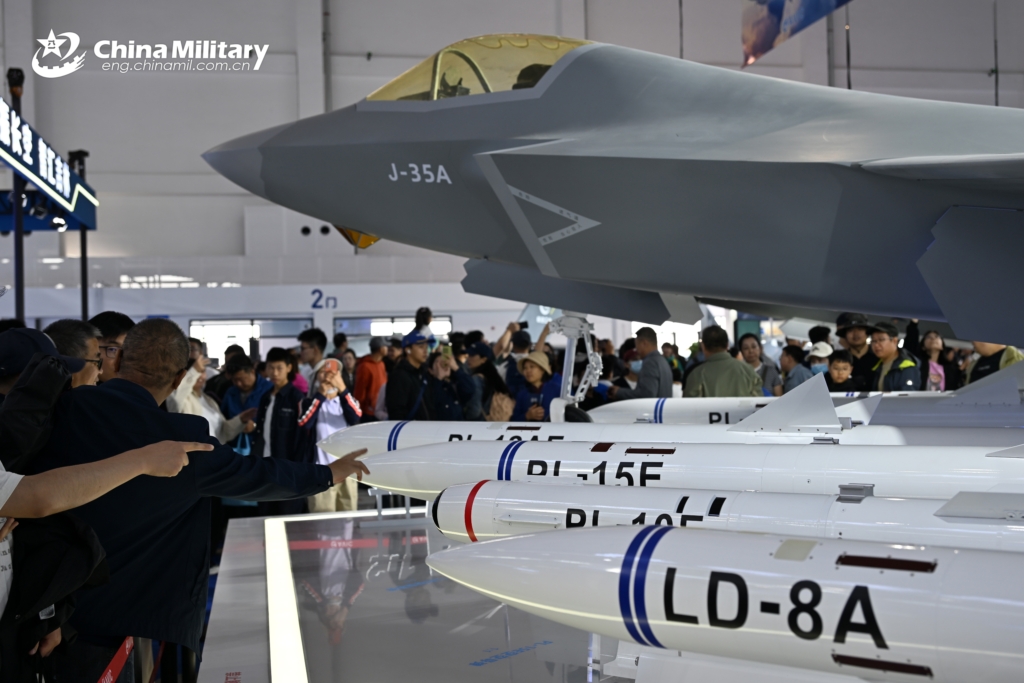
Sadly, there was no real J-35 at the show, but rather a scale model displayed alongside new anti-radiation missiles. The J-35A is believed to be coming with a naval carrier-based variant and is now in serial production. Besides fighter jets, transport aircraft, and various types of unmanned aircraft, the PLAAF also showcased new types of air defence missiles.
Performances were not just for show: analysts noted that many aerial demonstrations mimicked real-combat manoeuvres or “adaptive training,” signalling an emphasis on operational readiness. The J-16 in particular carried out high-energy aerobatics, with state media publishing pilot point-of-view imagery from the cockpit.
Confirmation PLAAF has at least 300 J-20s in service
One significant revelation came when Chinese military analyst Andreas Rupprecht reported that the PLAAF is now confirmed to have 300 J-20 air superiority fighter jets in service.
This was determined based on the registration and tail numbers of four J-20s seen between September 12 and 14, just before the show kicked off. One of the jets, assigned to the 19th Air Brigade, came with the serial number 63106.
Hey !! J-20 serial number 63106 has arrived at the Changchun Air Show 2025.🥳
— @Rupprecht_A (@RupprechtDeino) September 12, 2025
It is assigned to the 19th Air Brigade and even more important, finally it is one where the construction number is visible: CB10300, aka from Batch 10 & the 300th J-20 in total!
(via @齐天的孙猴子) pic.twitter.com/WOoPYmXJJv
That airframe is believed to be the 300th airframe based on the construction number “CB10300” located on the cheek beneath the canopy. It also indicated it was from Batch 10.
An estimate of 300 J-20 deliveries is broadly in line with various third-party assessments. Calculating the number of fighter jets in Chinese service accurately is difficult because, unlike many Western governments, China doesn’t disclose such information.
🥳🥳🥳
— @Rupprecht_A (@RupprechtDeino) September 16, 2025
And finally after years of waiting! The PLAAF has placed a J-20 into the official static display!
🥳🥳🥳 pic.twitter.com/JwqgOI8p33
This also means that China’s J-20 now outnumbers the USAF F-22 Raptor by a substantial margin. Only 187 serial production examples were built, and 142 are believed to be in combat service after mishap losses and training models are accounted for.
Lockheed Martin has now delivered over 1,200 examples of its F-35 stealth fighter of all variants. Many of these have been exported to US allies.
China is converting J-6 fighter jets into autonomous combat drones
One notable revelation was confirmation that China is converting its old, obsolete Shenyang J-6 fighter jets into combat drones. It is thought China may also be converting its Chengdu J-7s and J-8s fighter jets.
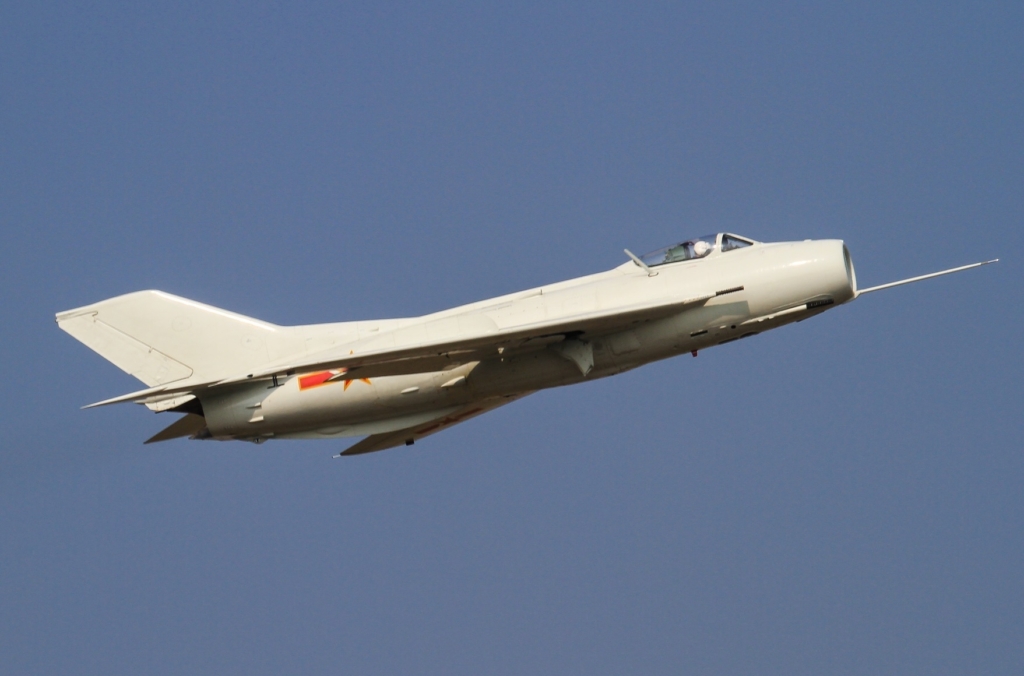
The J-6 is the Chinese derivative of the old Soviet MiG-19 that first appeared in the 1950s. While that aircraft is obsolete on the modern battlefield, as a combat drone, it can be used to exhaust Taiwanese air defence, paving the way for modern fighters.
China, like the USAF, has also been converting old fighter jets into aerial target drones. China is known to have been doing that since 1995, but this is the first confirmation that it is using them as combat drones.
New Chinese flying wing recon drone
One new aircraft unveiled at the Changchun Air Show is a twin-engined, medium-sized, uncrewed flying wing. The drone appears to be an autonomous combat vehicle and high-altitude ISR platform.
The name and designation for this new uncrewed aircraft are unknown, and details remain limited. While the aircraft doesn’t appear to be a mockup, it is unclear if it is in its final form and if it is operational or not. It was first spotted in the run-up to the air show, with more images appearing as it was displayed there.
"Changchun Air Show: More photos of China's new flying-wing drone" pic.twitter.com/a20HKOBmxd
— tt_125 (@tt12514) September 17, 2025
This new medium-sized drone should not be confused with the new massive UCAV/GJ-X flying wing recently found on satellite images on the other side of China. That aircraft appears to have a wingspan approaching that of the new B-21 Raider and may fill a similar role to the USAF’s highly secretive RQ-180 surveillance drone.
Collision of two flying cars at rehearsal
While many Chinese headlines led with glowing tales of the air show, the BBC reported that two flying cars had crashed at a rehearsal in preparation for the show. The Xpeng AreoHT flying vehicles were meant to showcase the new technology, but they collided mid-air, with one catching fire during landing.
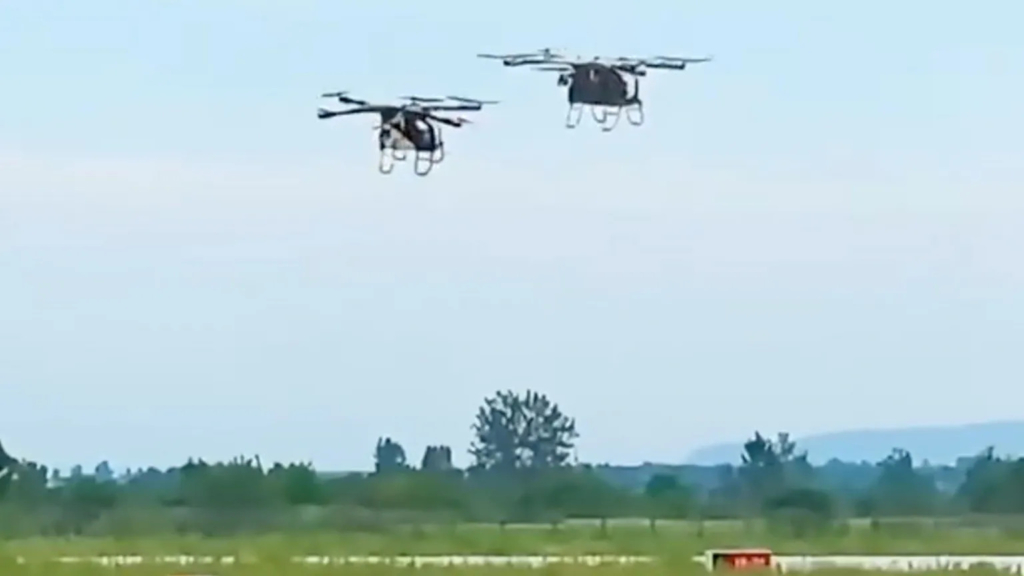
One person was reported injured by an anonymous company employee. Xpeng AeroHT stated one vehicle “sustained fuselage damage and caught fire upon landing,” while adding all personnel were safe.
Footage of the incident appeared on China’s Weibo social media. It showed a vehicle in flames on the ground with fire engines at the scene.
At the beginning of 2025, Xpeng claimed to have orders for around 3,000 of the flying cars and plans to sell them at a price point of around $300,000. The BBC also noted some analysts’ belief that China is trying to replicate its success with EVs by pushing the early adoption of the flying vehicle, believing it will inevitably catch on around the world.
Continuing Chinese trend to include female pilots
Another thing to note is the continued increase in female Chinese pilots. While these shows are heavily choreographed, in recent years, China has started to train female pilots for frontline fighter jets.
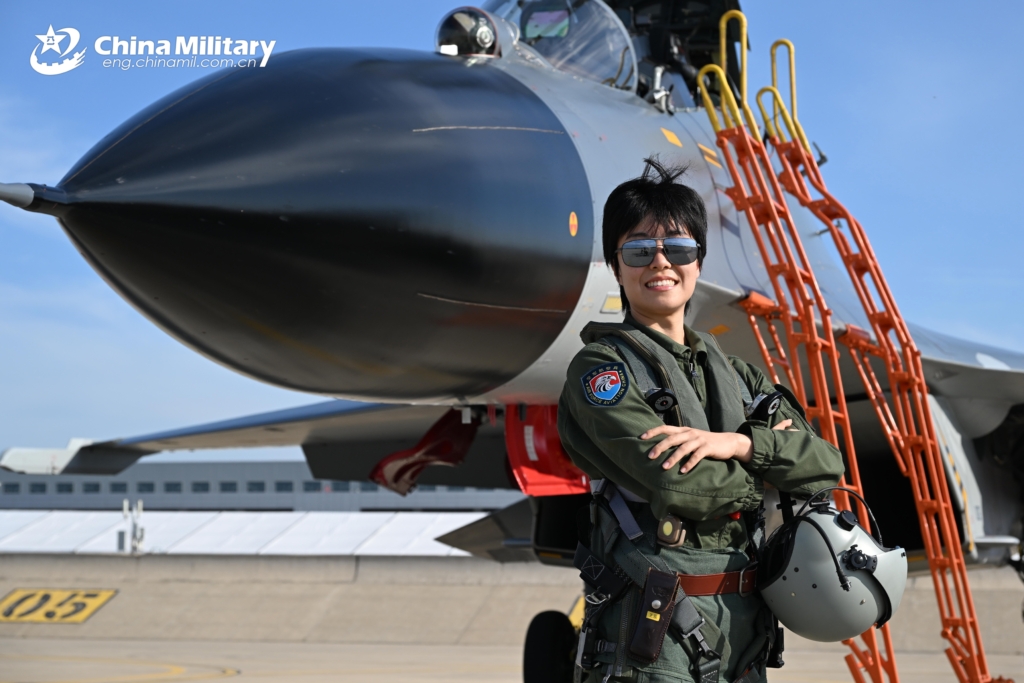
Many air forces around the world, including the US Air Force, are struggling with a shortage of pilots. In March 2023, China Daily reported that the PLAAF had just received its first female pilots who could operate “heavy-duty fighter jets.”
At the time, the PLAAF stated that the five female flight students were in the middle of the training for “heavy-duty combat aircraft” and had recently carried out their first solo flights on J-11 fighter jets. Shenyang J-11s are Chinese derivatives of the Soviet Sukhoi Su-27SK.
Female Fighter Pilots flying J-10 Aircrafts from Bayi Aerobatic Team of PLAAF pic.twitter.com/DqXVZmXwtg
— Húrin (@Hurin92) December 17, 2022
It is unclear how many female pilots took part in the Changchun Air Show, but the Chinese Government did release a picture of at least one female pilot taking part in the flight performances.
In WW2, the USSR’s Red Air Force was famous for its many female pilots, but it then banned them from operating combat aircraft in the war. This was only overturned in 2017.
The USAF is estimated to have a pilot shortfall of around 2,000 pilots, including around 1,100 fighter pilots.