From Hong Kong to the world: Marking 80 years of Cathay Pacific Airways

January 17, 2026
Established in 1946, Cathay Pacific celebrates its 80th anniversary in 2026. Originally established by two men and a single wartime-surplus Douglas DC-3, the airline has become one of the world’s leading international carriers of the modern age, renowned for its high standards of service.
To mark its 80th birthday, Aerospace Global News takes a whistle-stop tour of the history behind Hong Kong’s homegrown airline, its journey from post-war China to today’s modern airline, and the milestones that proved key to the airline’s development over the past eight decades.
1946 and the founding of Cathay Pacific Airways
Although Cathay Pacific has its roots firmly embedded in Hong Kong, its operations initially began out of Shanghai. It was back in 1946 that two airmen by the names Roy Farrell and Sydney de Kantzow founded the airline. They were both ex-military pilots who had flown supply routes from India to China during the war.
Their main goal was to fly much-needed goods from Sydney, Australia, to Shanghai, China, during the immediate post-war period. This was done with the men’s first aircraft, a Douglas DC-3 with the nickname ‘Betsy’ and registered as VR-HBD.
This was not a new aircraft, as it had already carried out cargo operations during the Second World War in a variety of theatres. The original Betsy aircraft had a bare-metal body with “Cathay Pacific Airways” emblazoned in red cursive lettering on the fuselage.
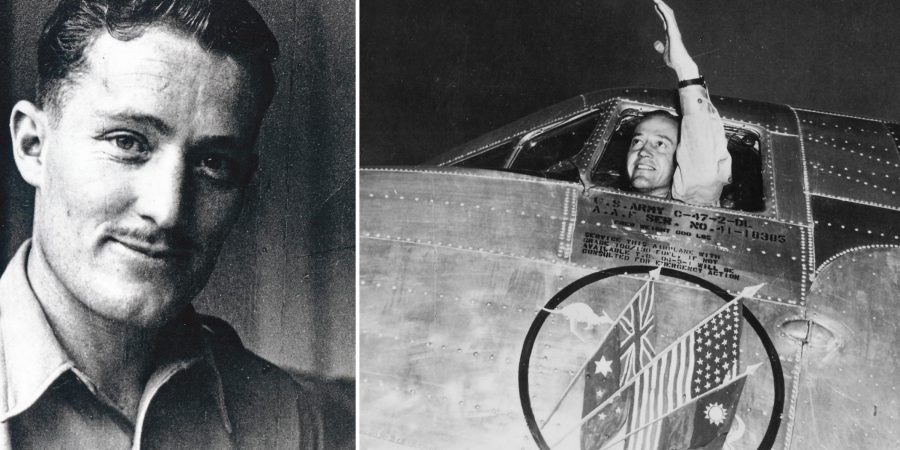
Within months, the airline’s founders ran into issues with the Chinese authorities, and subsequently relocated the business to Hong Kong, registering their company as Cathay Pacific Airways Limited. Services officially began under this moniker on 24 September 1946.
In its early years, the airline stayed true to its name. ‘Cathay’ is an old European name for China, while ‘Pacific’ was added based on Farrell and de Kantzow’s vision of flying services across the Pacific. The name seemed fittingly ambitious for the aspirations of the nascent airline.
“From there came Cathay Pacific, an airline fuelled by its founders’ passion for flying and love of the region,” states the airline on its website. The airline adds that its name comes from Roy Farrell’s sense of ambition – “that the new airline would one day cross the vast Pacific Ocean from China.”
For context, ‘Cathay’ was an alternative European historical name for China.
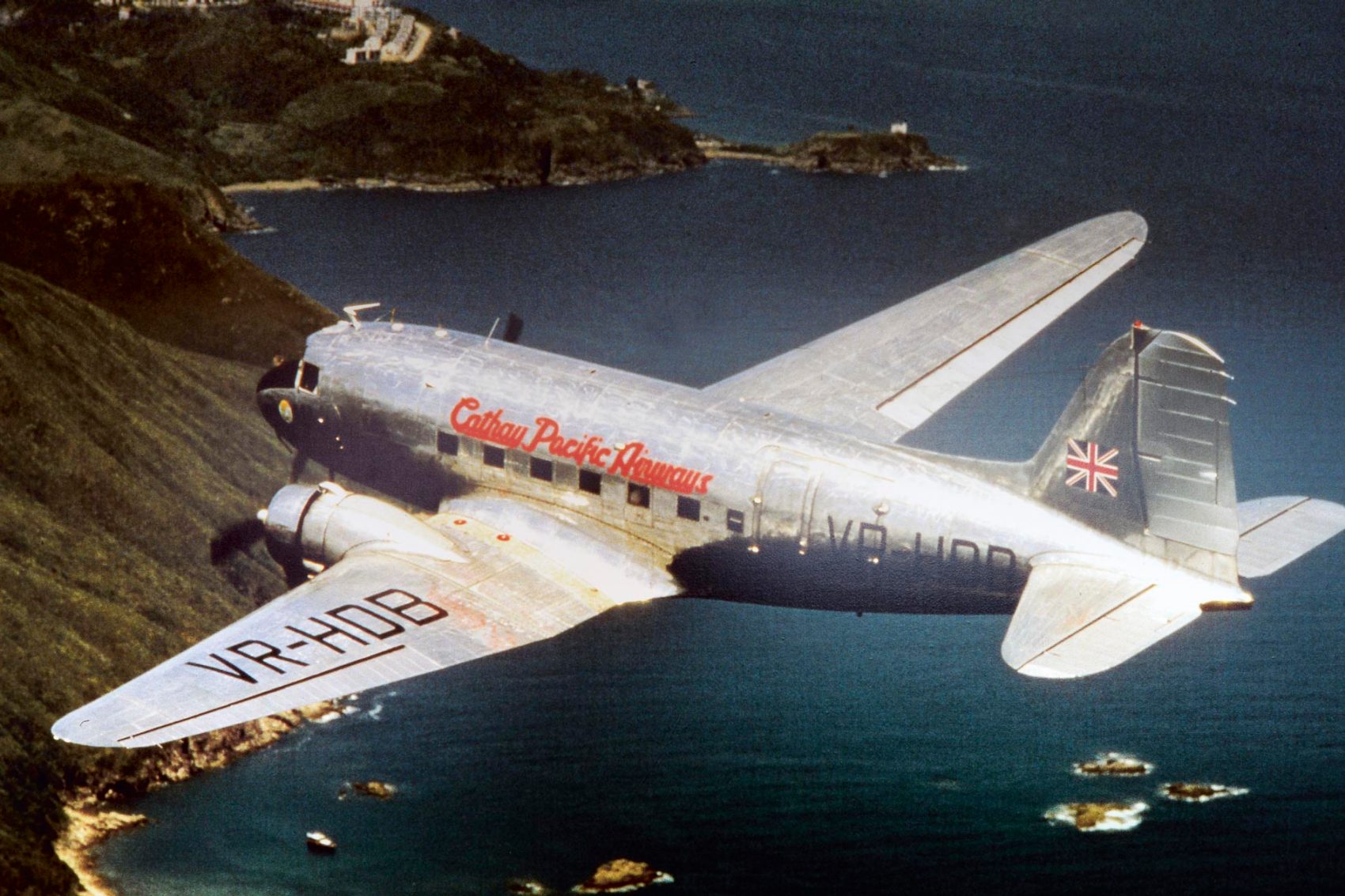
Just one day after its establishment in September 1946, Cathay Pacific took off on its first flight from Sydney to Hong Kong. Two years later, in 1948, London-based Swire Group became a key shareholder in the airline, creating a long-standing partnership that would shape the airline’s future for decades to come.
More about Douglas DC-3 ‘Betsy’
With ‘Betsy’ operating regular Sydney to Hong Kong cargo flights, the aircraft was later converted for passenger use, along with another two DC-3s acquired by the airline by the end of 1946. Registered as VR-HDA and VR-HDJ, the second of these acquired the nickname ‘Niki’.
A former flight attendant who worked on the company’s DC-3 recalled her experiences in an interview with Cathay Pacific in 2017. She described how the flights were rough, while the service was limited to sandwiches and items stored in thermos flasks.
“It was often a balancing act to ensure you didn’t spill food or hot coffee into passengers’ laps,” she commented. “There were no straps to hold onto. Cabins were loud, and the ride wasn’t as smooth as today’s Airbus A350s.”
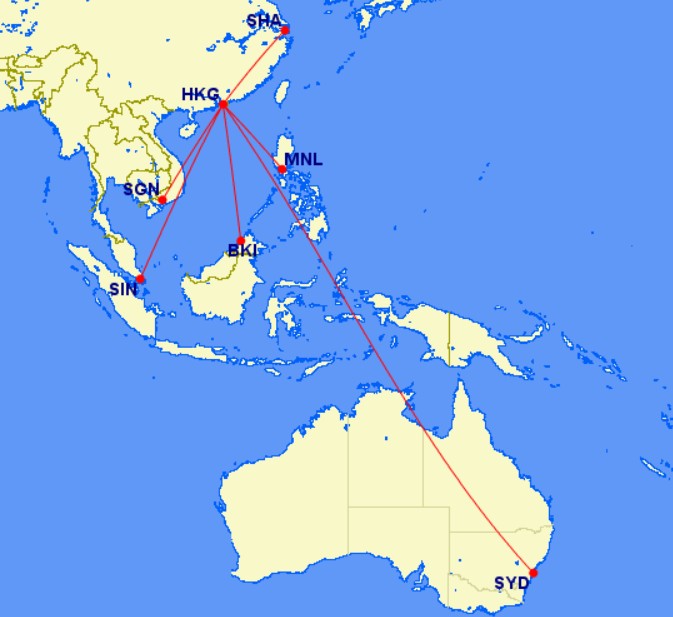
Early DC-3 routes included flights from Hong Kong to Sydney, Manila, Singapore, Shanghai, Saigon, and Kota Kinabalu. The initial fleet of three DC-3s soon increased to six by the end of 1949, with more routes being added regularly.
Betsy left the fleet in August 1955 and was sold to Ansett Australia. She was not the last DC-3 to leave the airline, however, as VR-HDA remained in service until 1961. However, keen to revive its heritage, Cathay Pacific repurchased Betsy in 1985.
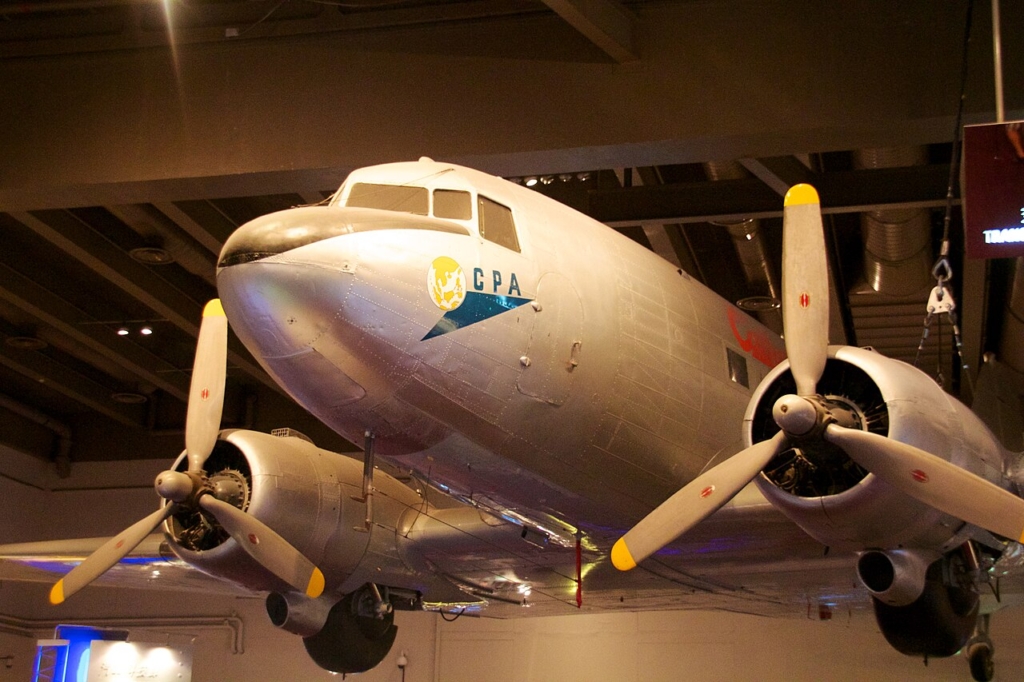
While no longer operational, Cathay Pacific restored and repainted the plane to how it would have originally appeared in the 1940s and 1950s. Betsy is now on display at the Hong Kong Science Museum in the Tsim Sha Tsui East district of the city.
1940s amnd 1950s – Further fleet expansion
Cathay Pacific expanded its fleet further over the following years. It added the Douglas DC-4 in 1949 and the even-larger DC-6 in 1958.
It eventually diversified from operating exclusively Douglas aircraft and added the Lockheed Electra four-engined piston airliner in 1959. These aircraft were larger than the DC-4s and offered significantly more range and lift capability.
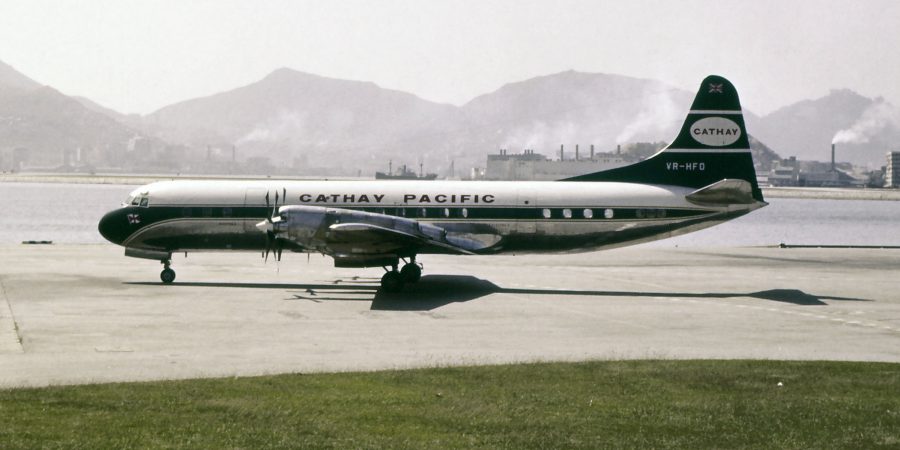
With the addition of the Electras, in 1959, Cathay Pacific acquired rival Hong Kong Airways and expanded its network further into Japan and Australia, subsequently adding Darwin, Sydney, Tokyo and Taipei flights to its network.
The Electras featured a sleek green and white livery for the first time, setting a brand standard that would follow the airline for the next few decades.
The Electras also allowed Cathay Pacific to offer two classes (first and economy class) of on-board service for the first time, marketing the former as its premium service on its long-haul routes. The Electras remained in service with the carrier until 1967.
1960s – Cathay Pacific enters the jet age
In the early 1960s, Cathay Pacific joined the jet set when it took delivery of its first jet-powered airliner in the form of the Convair 880. Again, the Convairs allowed the airline to expand its reach and offer faster and cheaper air travel to the residents of Hong Kong.
By 1967, with the remaining Lockheed Electras all retired, the airline’s fleet was fully jet-powered for the first time in the airline’s history. With the addition of eight Convair 880s in total, the aircraft facilitated the expansion of Cathay’s network to new destinations, including Fukuoka and Nagoya in 1966, and Okinawa in 1967.
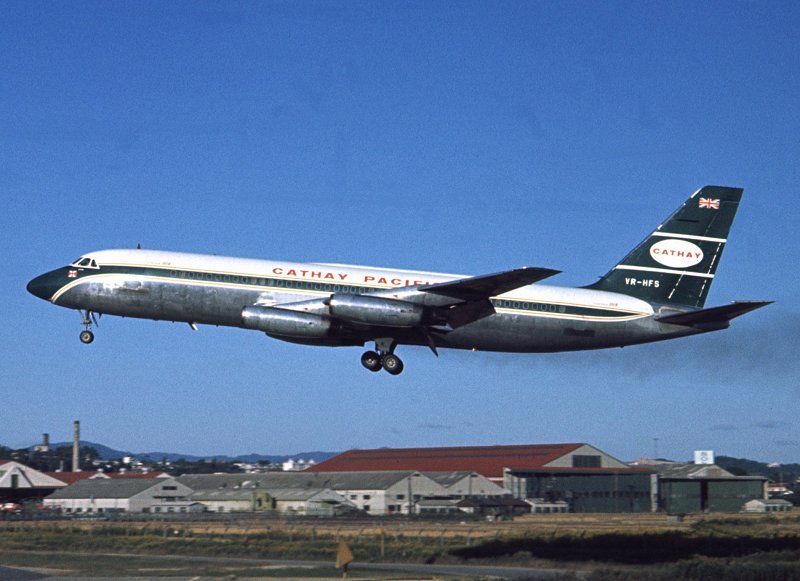
The Convair 880 jetliners sported a modernised version of Cathay’s smart green-and-white livery. The airline name printed on the fuselage was shortened to “Cathay Pacific” in red, upper-case lettering.
On 19 October 1964, the airline welcomed its millionth passenger onboard a flight from Singapore to Bangkok. That same year, it unveiled an electronic booking system for its burgeoning cargo business, enabling freight space to be booked in a similar way to how passengers booked their seats.
Cathay Pacific heads into the 1970s with larger aircraft
By 1971, the Convairs were being phased out as the carrier’s first Boeing 707 arrived from the United States. These offered a greater seat capacity than the Convairs and could travel even further, offering a superior level of service. The aircraft also wore a new version of the Cathay Pacific livery.
Known as the airline’s iconic ‘lettuce leaf sandwich’ livery, the aircraft tailfins were painted in alternating stripes of white and Brunswick green, resembling a stack of salad leaves. This livery would subsequently make a reappearance in 2026 (see below).
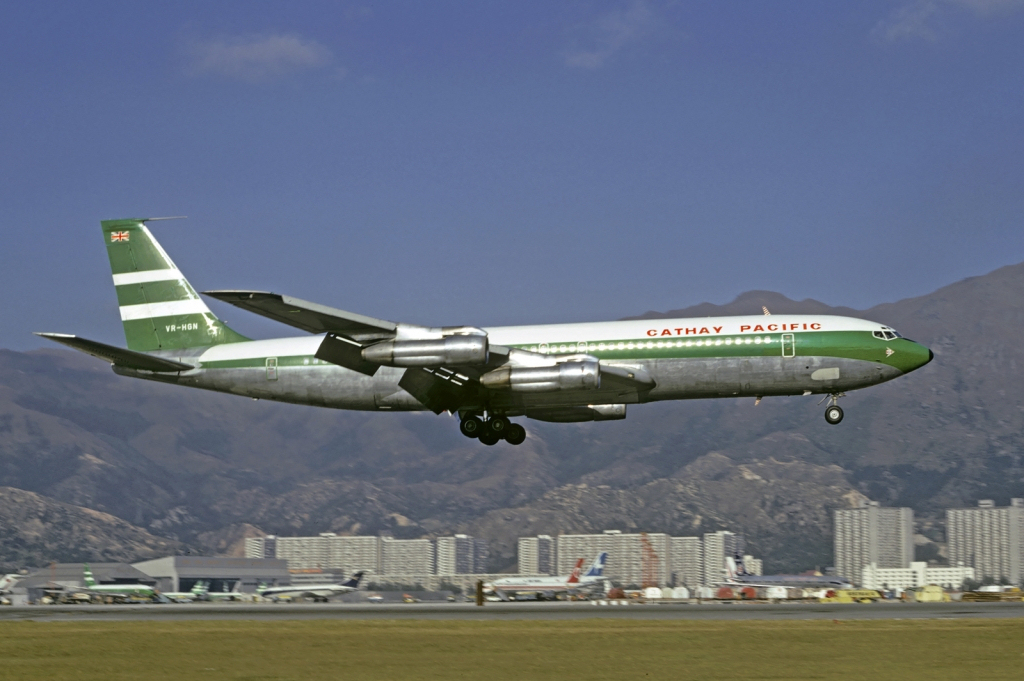
With the 707s forming the backbone of the fleet, the carrier’s first widebody aircraft arrived in the form of a Lockheed TriStar in August 1975, following an order placed in March 1974. The carrier operated a total of 19 TriStars, with the last phased out in October 1996.
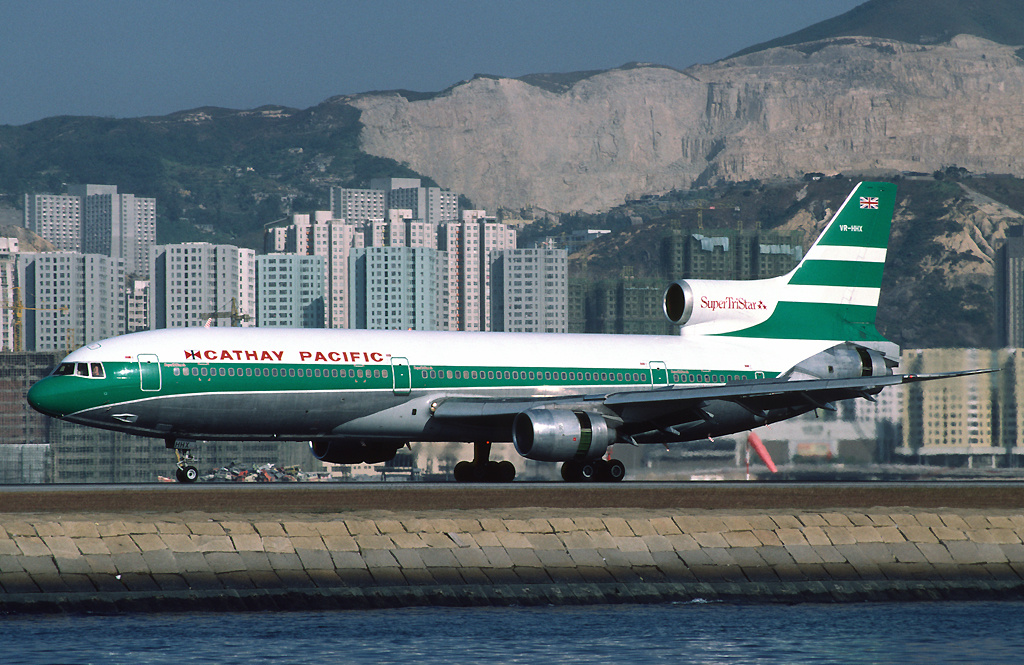
In 1976, Cathay Pacific Cargo was launched, making Cathay Pacific the first Asian carrier to launch a freighter-only service brand.
The airline took on its first dedicated freighter, a converted Boeing 707 passenger aircraft that featured a large cargo door and Cathay Pacific Cargo branding. Nowadays, the company’s fleet is made up entirely of Boeing 747 freighters.
The airline’s first Boeing 747 ‘jumbo jet’ arrives
In 1976, the carrier welcomed its first Boeing 747, VR-HKG, into its fleet – a pivotal moment that transformed Cathay Pacific into a global contender with a truly global long-haul network.
The enhanced 747-400, introduced in 1989, paved the way for more long-haul flights across Europe and to destinations in North America.
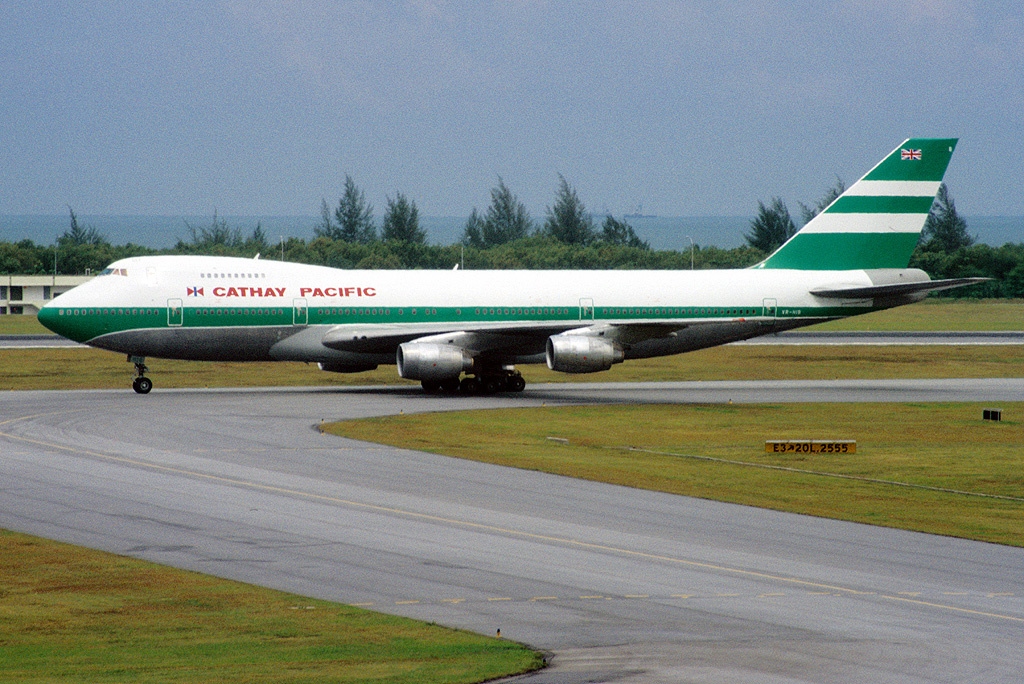
By 1982, the airline had operated its first non-stop Hong Kong to Vancouver service and set a brand new world speed record for the route in the process.
Later, 1983 saw the launch of non-stop services between Hong Kong and London Gatwick Airport (LGW), while flights to Los Angeles began in 1991. The introduction of the Boeing 747 also allowed Cathay to introduce a business class for the first time
Taking advantage of the enhanced features of the Boeing 747-400, Cathay launched non-stop, direct passenger flights to London Heathrow, Zurich and Amsterdam, further establishing its role as a major carrier from the Asia-Pacific region.
Into the 1990s with the ‘brushwing’ livery
As the 1990s progressed and as the carrier’s network expanded further, the airline took the opportunity to re-imagine its livery. In 1994, the company debuted its new ‘brushwing’ logo, a symbol of flight rendered in a swooping calligraphic stroke that honours the carrier’s Chinese heritage.
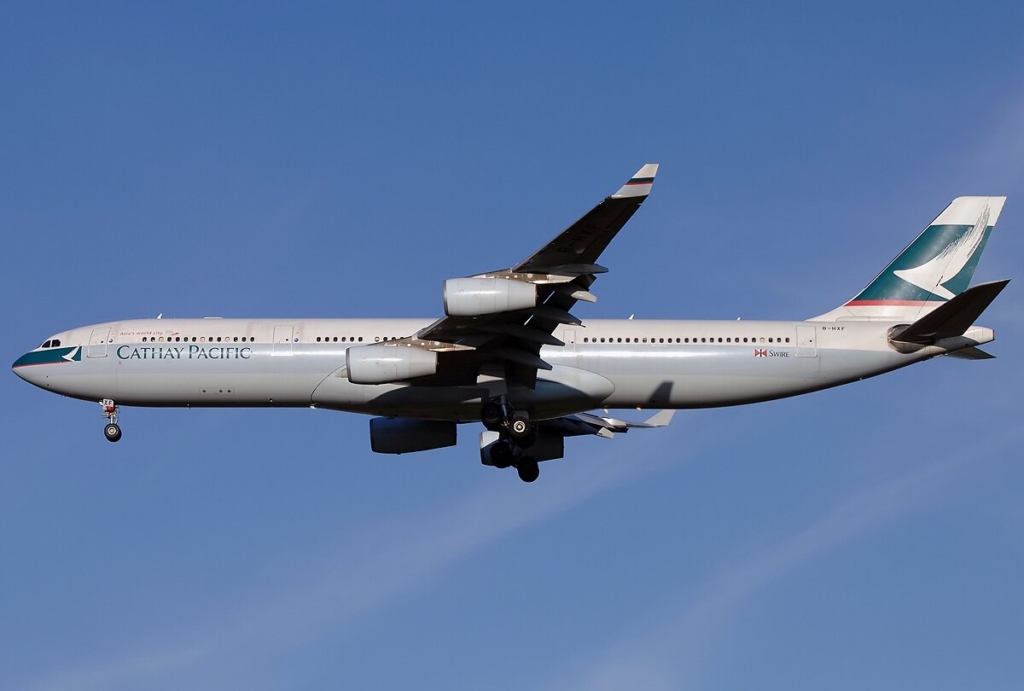
It also swapped out the Brunswick green for the modern, elegant ‘Cathay jade’. This livery was later updated in 2015, with a sleeker version and the removal of the red stripes from the tailfin and nose.
1998 – From Kai Tak to Chek Lap Kok
In 1998, Cathay Pacific marked a defining moment in Hong Kong’s aviation history. As the city bid an emotional farewell to Kai Tak Airport, the airline operated the very first commercial landing and the longest direct commercial flight at the time at Chek Lap Kok Airport (now Hong Kong International Airport – HKG.
That same year, Cathay Pacific became a founding member of the oneworld alliance, along with other carriers such as British Airways, JAL, American Airlines, Qantas and Finnair.
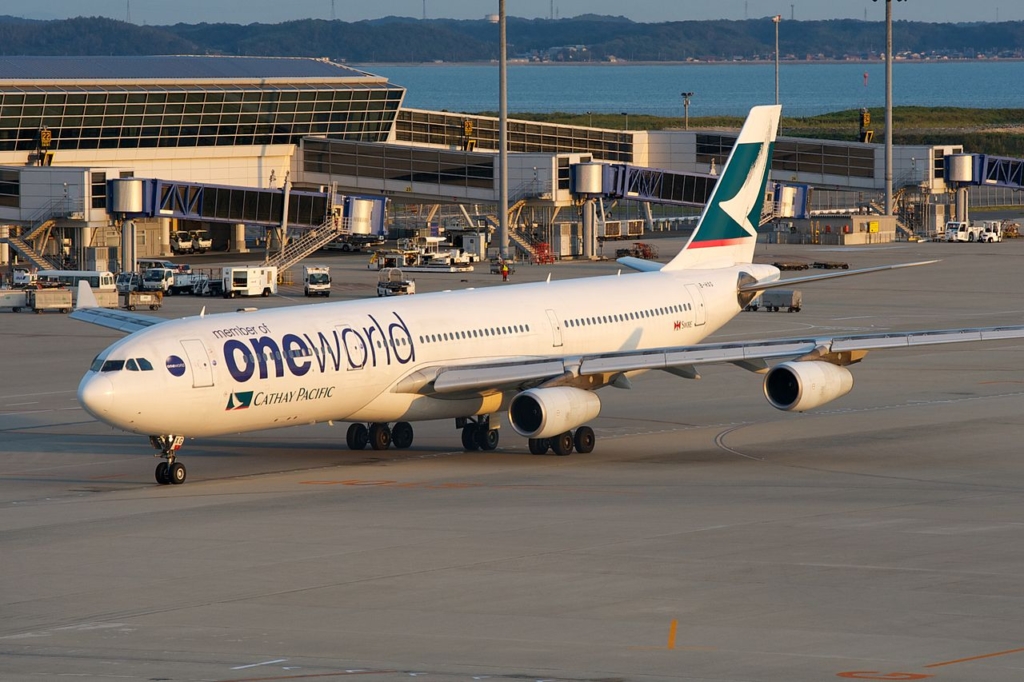
Also in 1998, Cathay’s first Boeing 777 was delivered. That same year, Cathay Pacific would operate the first non-stop flight from Hong Kong to New York. Dubbed Polar One, the service at the time was the world’s longest commercial passenger flight.
As 2020 approached, so did a global health pandemic
In July of 2019, Cathay Pacific officially acquired budget carrier Hong Kong Express Airways, or HK Express. A full subsidiary of the Cathay Pacific Group, the low-cost carrier continues to operate under its own name and distinct branding.
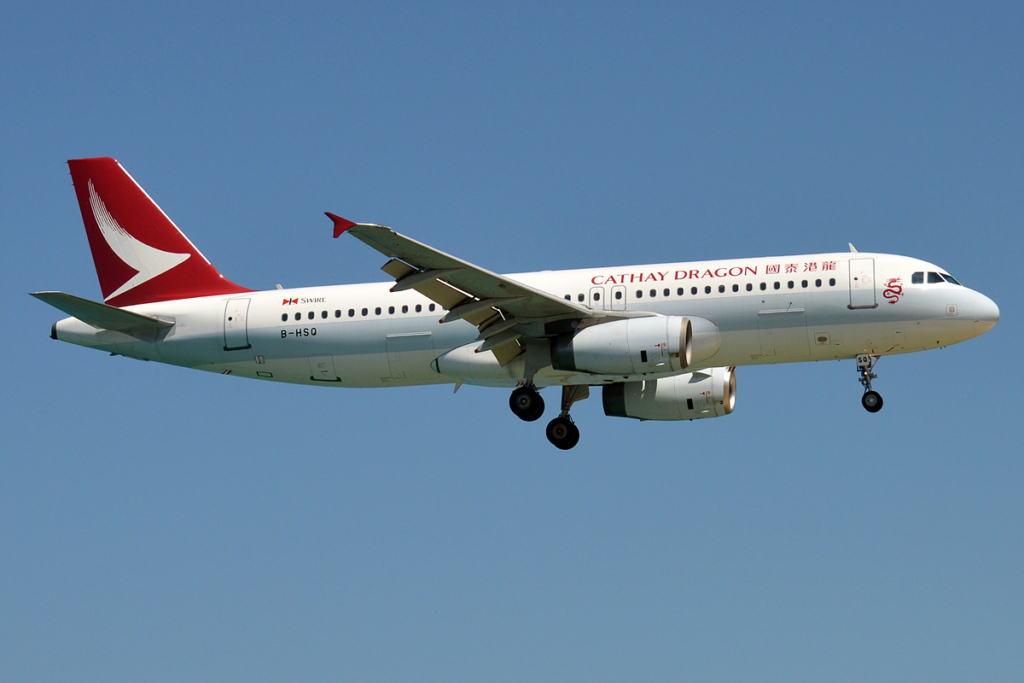
Another Cathay Pacific subsidiary, Cathay Dragon, was also born in 2016, having formerly flown as local rival Dragonair.
By the end of 2019, things took a turn for the worse. The COVID-19 pandemic engulfed the world, and China and Hong Kong in particular. Cathay Dragon would become an early casualty and was shut down in October 20220, with most of its services being merged back into Cathay Pacific’s mainline operations.
By 2021, Cathay Pacific’s operations had contracted significantly, largely due to the ongoing health crisis. However, the steady increase of competition in the region, as well as continued political instability, also continued to threaten the airline’s passenger numbers and profitability.
By 2022, with the worst behind it, Cathay Pacific slowly began rebuilding itself as an airline for the future.
The airline began modernising its fleet with the acquisition of more Airbus A350s. The airline’s initial order for the type was placed in 2009 for 30 A350-900s and firmed up the year after. The airline would go on to expand its order to include the stretched A350-1000 and today operates almost 60 of the type.
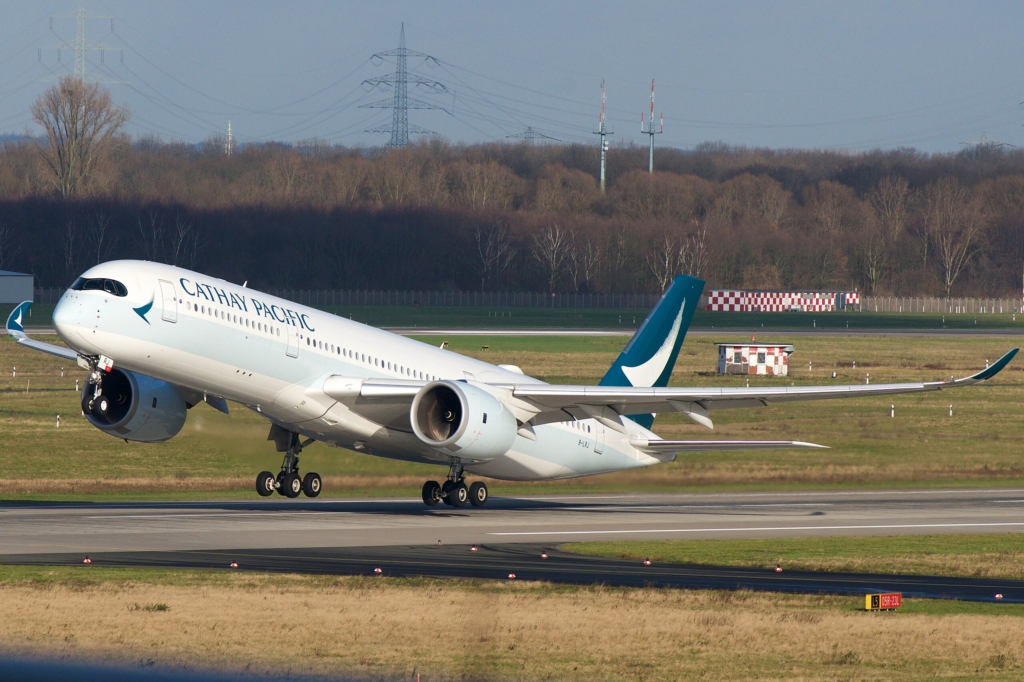
With 2023 came a new vision for the airline. The carrier completed its rebranding and transformation into a premium travel and lifestyle brand, with the renaming of its master brand to simply Cathay.
Under the new brand, its offerings extended beyond flights to holidays, shopping, dining, wellness and payment solutions. Similarly, Cathay Pacific Cargo simply became Cathay Cargo.
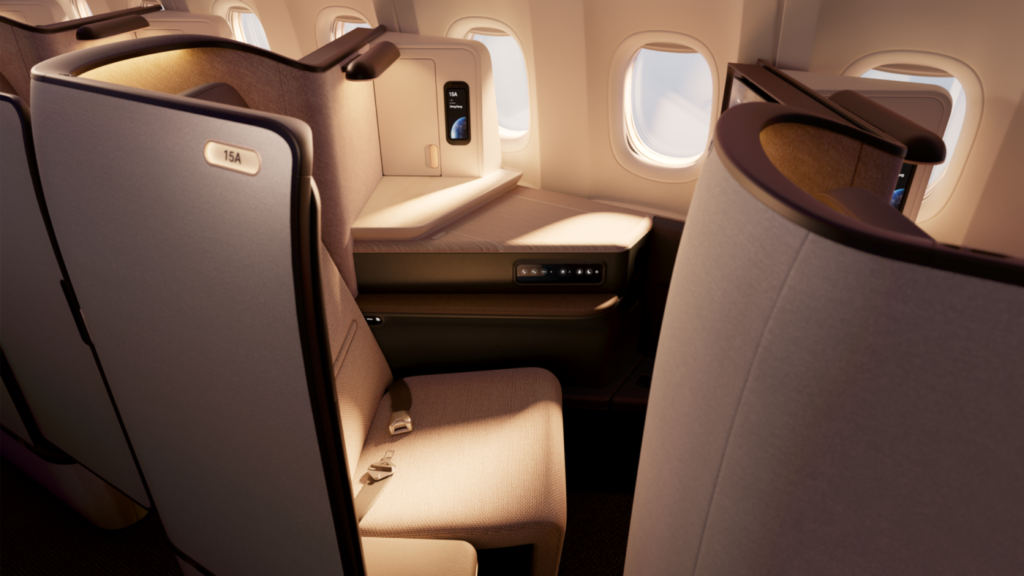
In 2024, Cathay Pacific unveiled its all-new Aria Suite, its new business class product, alongside a refreshed premium economy and economy class cabins across its Boeing 777-300ER fleet.
This product was to set a new standard of on-board travel for all Cathay Pacific customers for the next decade.
How Cathay Pacific will mark its 80th anniversary in 2026
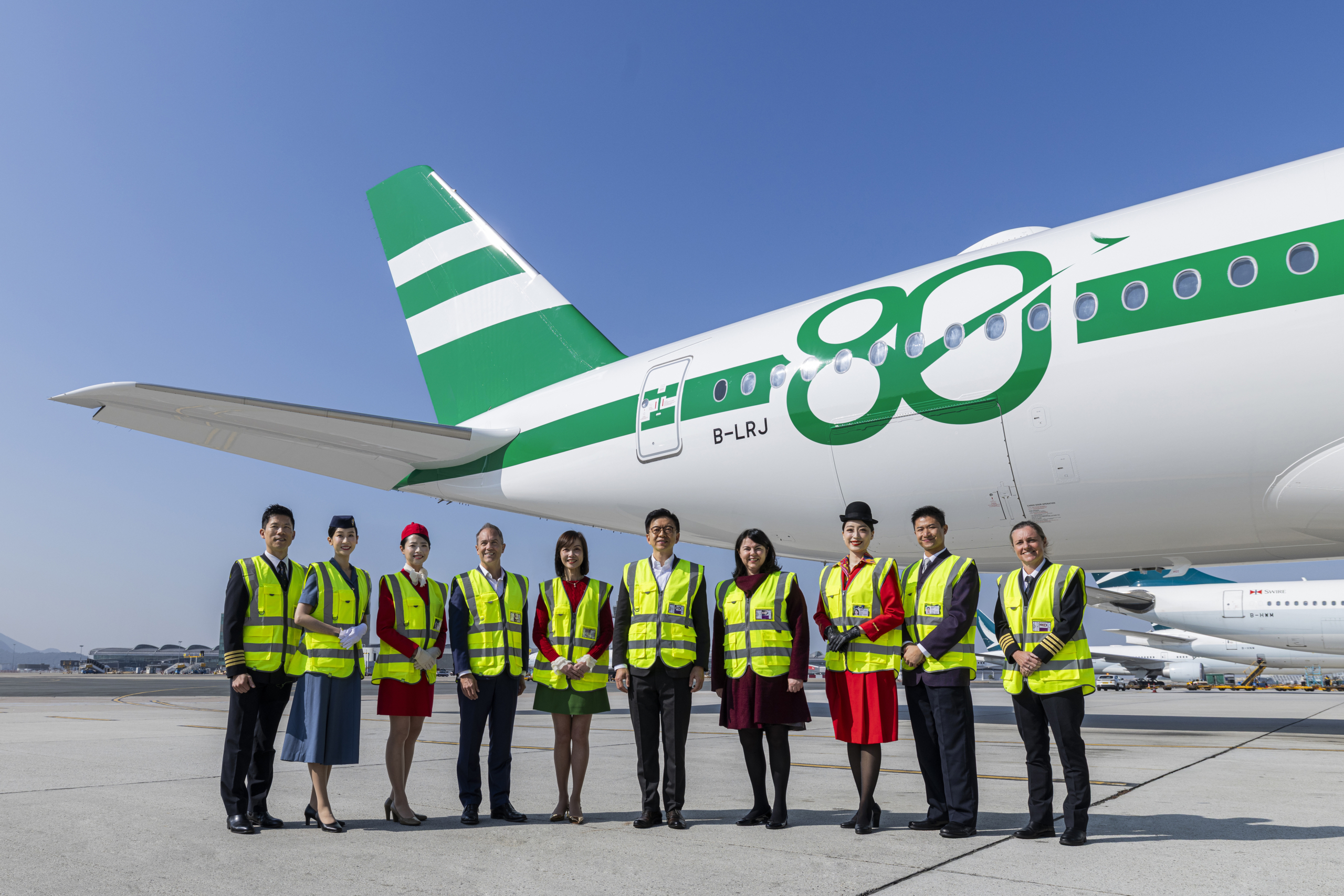
In 2026, Cathay Pacific marks its 80th anniversary. According to the airline, “Over the last eight decades, our shared journey has been woven from the threads of thoughtfulness, progressiveness, and the unique can-do spirit of Hong Kong. As we look to the future, we remain committed to our vision of becoming our customers’ most-loved service brand.”
To mark the celebrations, the carrier is reintroducing the ‘lettuce leaf sandwich’ livery onto one of its Airbus A350s, as well as a Boeing 747 freighter of Cathay Cargo.
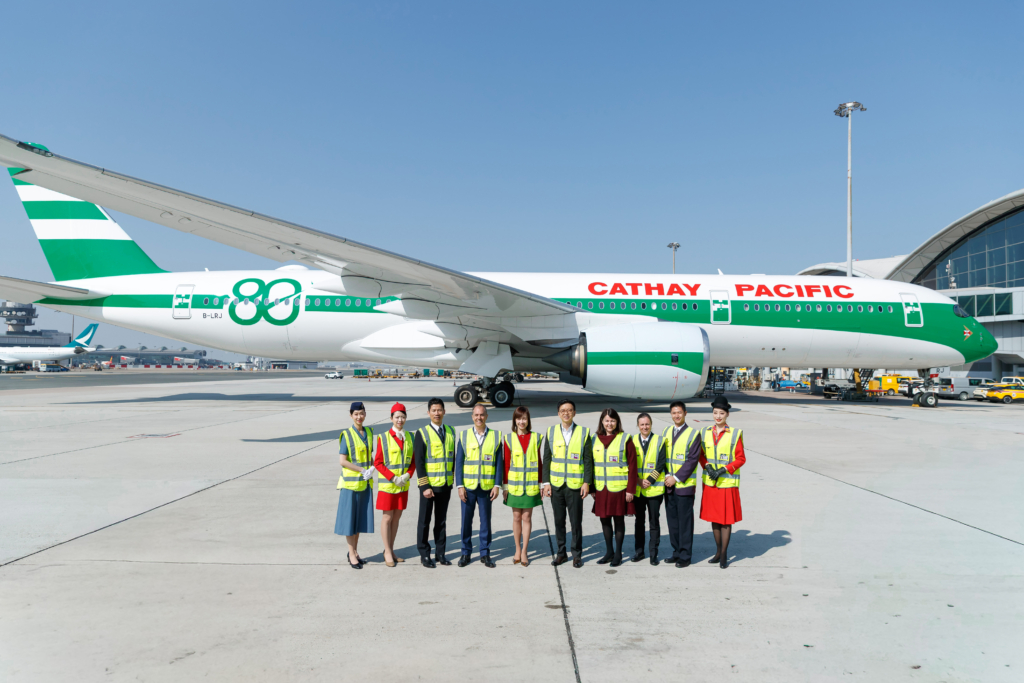
In addition to introducing the retro livery on two of its aircraft, the airline has announced that Cathay Pacific cabin crews will wear vintage uniforms through various design eras in 2026, to “pay tribute to the generations of people who have defined the signature Cathay service in the skies.”
Throughout 2026, around 1,000 to 2,000 of Cathay’s cabin crew and ground employees will showcase these vintage uniforms at work, “bringing the evolution of the Cathay brand to life in true Cathay fashion.”
Lastly, Cathay Pacific customers can expect to see a specially curated collection of merchandise inspired by the special liveries and iconic designs from different eras in Cathay’s storied history.
“The collection reimagines these elements across aviation, travel and everyday lifestyle essentials,” said the airline.
Featured image: Richard Vandervord / Wikimedia Commons