Britten-Norman receives Canadian type approval for its BN2T-4S Islander multi-role utility aircraft

December 2, 2025
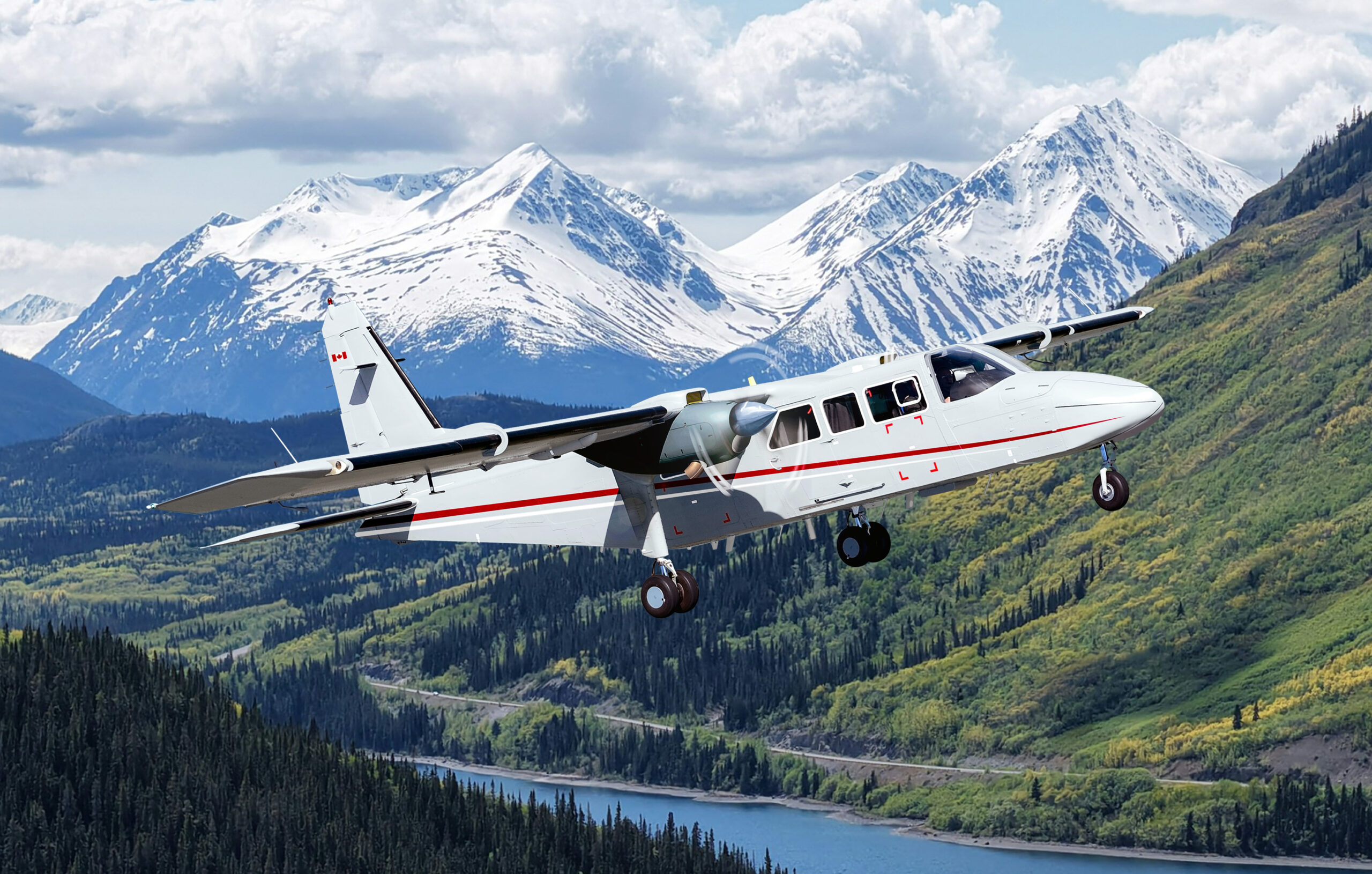
UK aircraft manufacturer Britten-Norman has received Transport Canada Civil Aviation (TCCA) type certification for its BN2T-4S Islander, the Rolls-Royce Model 250-powered turboprop variant of the company’s utility aircraft.
The British-built aircraft, designed for challenging flying environments, should be well-suited to operations in Canada, where its ruggedness and reliability should make the type attractive to commercial, general aviation, and special missions operators alike.
BN2T-4S Islander gains Canadian type certification
On 2 December, the Bembridge-based company announced that it had received type certification for the BN2T-4S Islander in Canada. It is hoped that the type’s approval in the country will pave the way for more operators to consider the Islander for a variety of roles throughout Canada, for which the aircraft’s capabilities are well-suited.
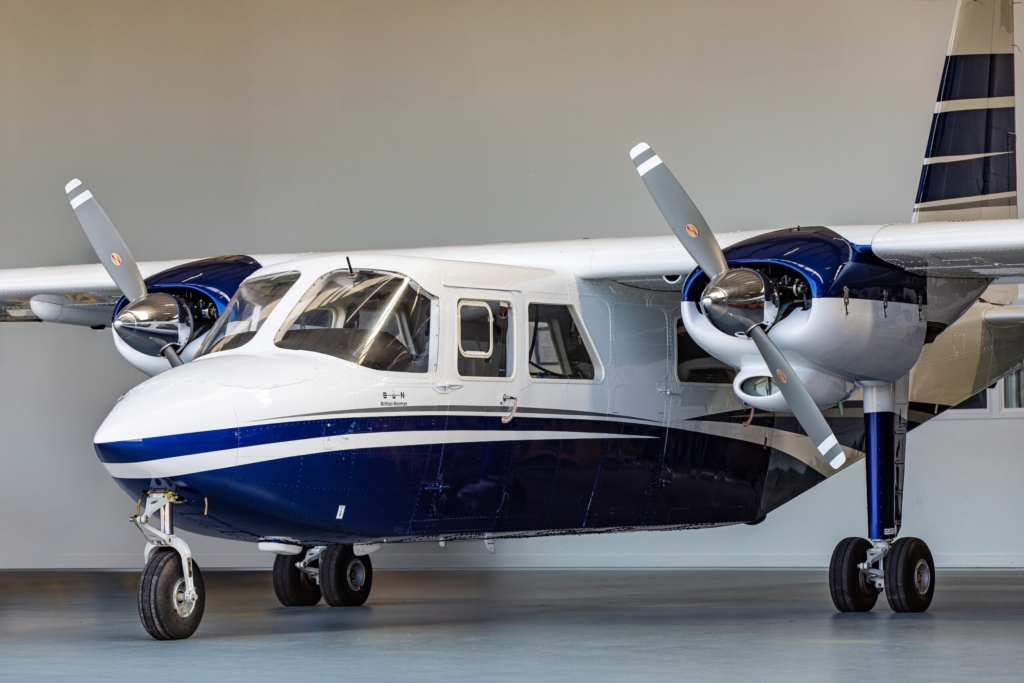
The BN2T-4S Islander is an upgraded version of the popular utility aircraft that first flew in 1965. Since then, over 1,300 aircraft have been built and have served on every continent of the world in a variety of roles.
Operating in over 100 countries on six continents, the Islander has accumulated around 20 million flight hours since it entered service.
The latest incarnation of the BN2T Islander family
The latest incarnation of the type, the BN2T-4S, sees a multitude of upgrades over earlier variants. These include a full IFR-equipped glass cockpit, all-window seating for up to eight passengers, enlarged baggage access and a higher maximum take-off weight of 8,925lbs (4,048kg) than earlier variants of the Islander.

Additionally, the aircraft can be equipped with a variety of engine configurations, depending on customer preference, including a Lycoming 260hp normally aspirated piston, a Lycoming 300hp fuel-injected piston, or a Rolls-Royce turboprop powerplant.
The BN2T-4S’s rugged capabilities are well-suited to Canada
with the modern upgrades incorporated into the Islander’s tried and tested Islander airframe, the aircraft is likely to prove popular among a variety of operators in Canada.
The aircraft is equally capable of operating off unpaved or unprepared strips, many of which are found across Canada, as well as paved surfaces at more established airports.
Additionally, the aircraft is perhaps best known for its STOL (short take-off and landing) capabilities, making it ideal for operations from rural community air strips that are incapable of being served by larger aircraft types.
The Islander’s twin-engined configuration also makes it capable of operating from more challenging airstrips, with the surety of two engines and the power needed for steep approaches to avoid obstacles.
The Islander specialises in multi-role operations
Available in a variety of configurations, the BN2T-4S Islander aircraft can be equipped to meet a wide range of roles.
In addition to passenger commuter flights on shorter, high-frequency routes providing lifeline services to small and remote communities, the Islander has carved a niche for itself in other theatres such as search and rescue, maritime patrol, cargo operations, and medevac flights, all of which could have useful applications across the wilderness areas of Canada.
There is also a military version of the Islander (also built by Britten-Norman) known as the Defender.

“Achieving type certification for any aircraft requires extensive technical work and close collaboration with regulators,” said Mark Shipp, Technical Director & Head of Design at Britten Norman.
“We are proud to have worked with TCCA and UK CAA to demonstrate the BN2T-4S’s compliance and capability. This approval is an important milestone for the Islander family and the operators who will be able to depend on its proven performance in one of the world’s most demanding environments.”
“For operators serving remote and coastal regions, the BN2T-4S provides dependable performance across every mission, ensuring confidence in even the most challenging conditions,” added Richard Milne, Britten Norman’s Chief Operating Officer.
“This certification strengthens our presence in key global markets and supports our long-term commitment to growing the worldwide Islander fleet with modern, highly capable aircraft. Since then, we have introduced many refinements and enhancements. Our aircraft are dependable workhorses that thrive in the harshest of operating conditions.”
Britten-Norman is making a strong comeback
The type certification comes as Britten Norman accelerates the Islander programme at its UK factory on the Isle of Wight.
At the start of 2024, Britten-Norman’s future appeared to be in doubt after the company filed a notice to appoint administrators. However, its future was secured with new investment from a group of investors led by 4D Capital Partners in March 2024.
Then in October, the business announced that a second funding round had proved successful with Northern Ireland-based Beechlands Enterprise backing the planemaker.
The extra investment, said the company, would allow it to scale manufacturing operations in the UK up to eight aircraft a year and “transform the aftermarket business,” which has become more lucrative for Britten Norman in recent years.

The company added at the time that the planned manufacturing increase would be focused primarily on the unleaded piston version of the Islander, with around 20% of aircraft being delivered as turboprops.
By September of this year, the company announced that it had completed more than 50% of the assembly of the first fully UK-built Islander, having previously had production being completed offshore for several years.
Featured image: Britten-Norman