BAE Systems wins $137m US Army deal for missile warning systems on Apache, Chinook and Black Hawk helicopters

February 10, 2026

BAE Systems has been awarded $137 million in Foreign Military Sales (FMS) contracts by the US Army to supply its AN/AAR-57 Common Missile Warning System (CMWS) to allied nations, reinforcing the system’s position as one of the most widely fielded aircraft survivability solutions in service.
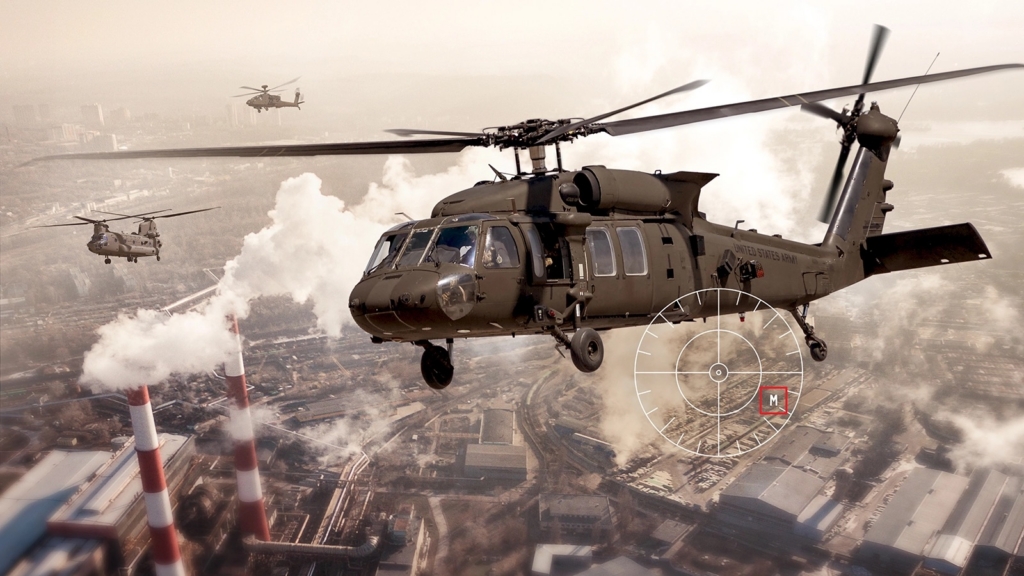
The latest order will see additional CMWS units delivered to international operators seeking to protect both existing fleets and newly acquired aircraft, including AH-64 Apache, CH-47 Chinook and UH-60 Black Hawk helicopters.
It is not the first time the system has been procured under US-backed export arrangements, but the scale of continued demand underlines its entrenched role in coalition fleets.
BAE Systems’ missile warning protects Apache, Chinook and Black Hawk helicopter fleets
The AN/AAR-57 was originally fielded to address the growing threat posed by infrared-guided missiles, particularly shoulder-launched systems that can be concealed and fired with little warning.
Over time, the threat landscape has broadened, with more advanced seekers, radio-frequency guidance and a proliferation of man-portable air defence systems in unstable regions.

CMWS is designed to detect missile launches and other hostile fire by sensing infrared and radio-frequency signatures.
Once a threat is identified, the system automatically alerts the crew and cues appropriate countermeasures in real time. In practical terms, that means the difference between seconds of reaction time and none at all.
More than 3,000 units have been delivered worldwide and installed on over 40 rotary-and fixed-wing aircraft types. The system has accumulated more than four million combat theatre flight hours across the US and allied platforms. With the latest award, CMWS will equip aircraft fleets across more than 20 nations.
“International customers continue to choose CMWS for its proven effectiveness and reliability in combat, where it has saved many lives,” said Jared Belinsky, director of Integrated Survivability Solutions at BAE Systems. “We are proud of this legacy and look forward to continuing to support US coalition partners.”
How CMWS integrates with AN/ALE-47 and DIRCM countermeasures
A key element of CMWS’s longevity has been its compatibility with a broad range of defensive systems.
The warning unit can interface with BAE Systems’ AN/ALE-47 Airborne Countermeasures Dispenser System, which deploys chaff and flares, as well as the company’s Smart D2 next-generation countermeasure solution.
The system can also operate alongside laser-based Directed Infrared Countermeasure (DIRCM) systems, forming part of a layered defensive architecture.

In 2024, BAE Systems and Leonardo UK received US government approval to develop an interoperable suite combining CMWS with Leonardo’s Miysis DIRCM system.
The combination was intended to allow existing CMWS users to enhance protection against advanced infrared threats without redesigning their aircraft survivability architecture.
The ability to integrate warning, dispensing and directed energy countermeasures within a single survivability framework reflects how aircraft protection has evolved from standalone sensors to coordinated defensive systems.
BAE’s missile warning system scales across more than 40 aircraft platforms
From the outset, CMWS was engineered to function across multiple aircraft types without extensive modification. Its line-replaceable units can be swapped on the flight line within minutes and without specialist tools, a feature that has proved important for operators deploying in austere conditions.
The system can also serve as a central processing element within an Integrated Aircraft Survivability Equipment configuration, supporting hostile fire indication and data recording for post-mission analysis.
These capabilities allow operators not only to respond to threats in flight but also to assess engagement patterns and refine defensive procedures.
Production takes place at BAE Systems facilities in Huntsville, Alabama; Austin, Texas; and Nashua, New Hampshire.
Featured image: BAE Systems