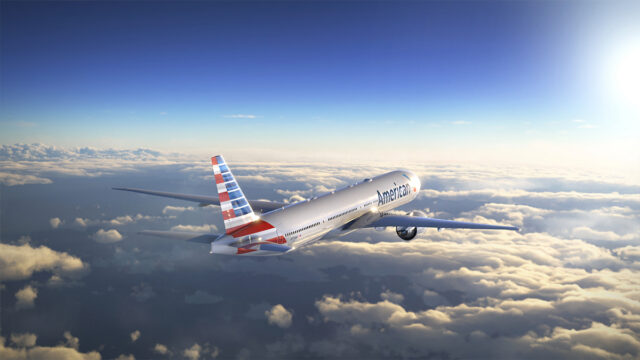
AeroSHARK: Austrian Airlines saves over $1M in fuel with shark skin-coated Boeing 777s

March 27, 2026
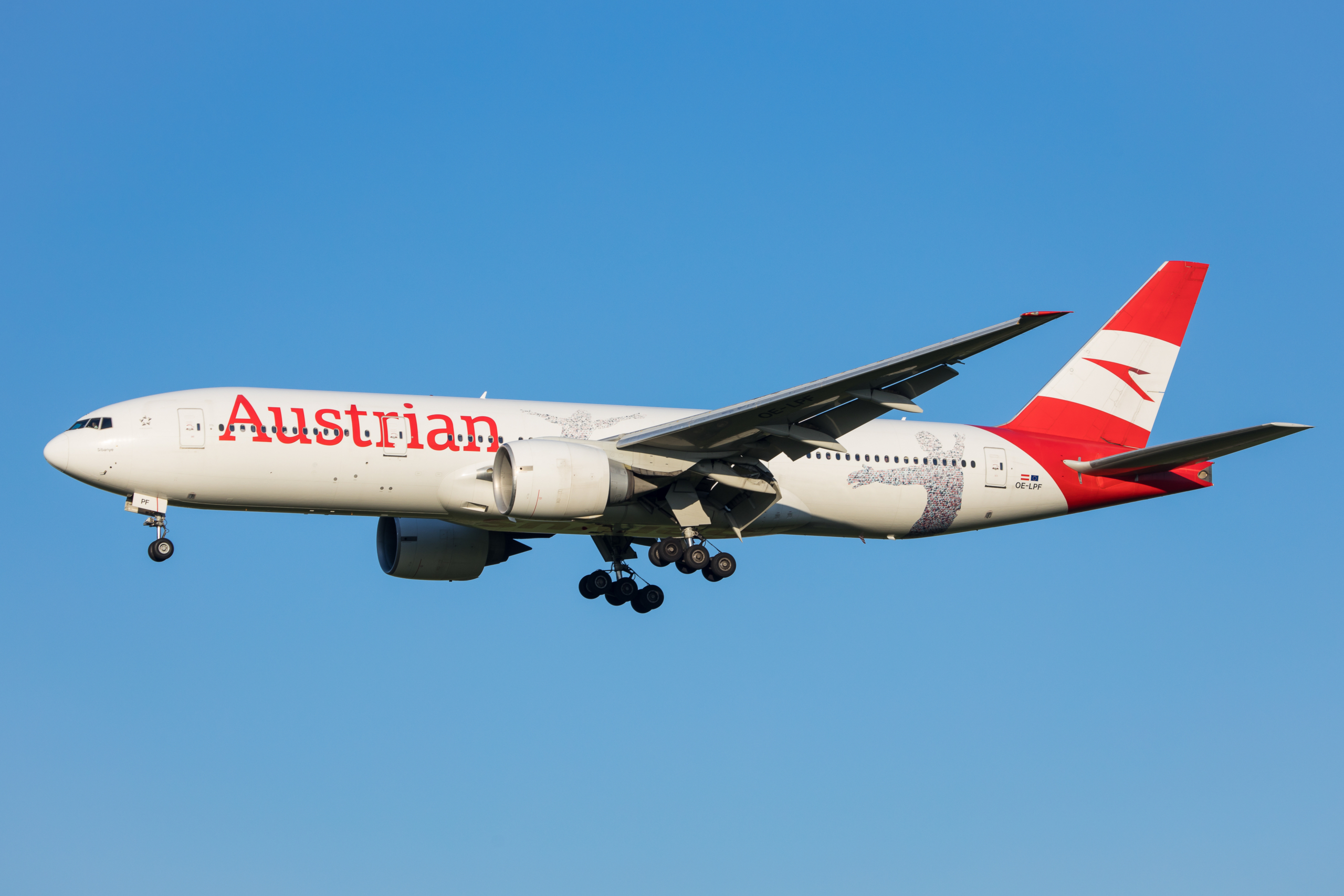
A trial of the fuel-saving AeroSHARK surface film fitted to Austrian Airlines’ Boeing 777-200ER aircraft has proved successful with a 0.7% reduction in drag, the carrier said.
Four of Austrian’s 777-200ERs – OE-LPA, OE-LPB, OE-LPC, and OE-LPD – have been fitted with the riblet film, each covering around 830 square metres of fuselage and engine nacelles, with the installation completed in March 2025.
One year on, Austrian says the trial had delivered positive results for the airline.

Austrian Airlines’ investment in AeroSHARK surface film ‘paying off’
Austrian has gained several insights into the film, enabling it to modify its operations. This includes cleaning procedures for the widebody aircraft, which have been adapted to meet the requirements of the new textured surface film.
“The investment in this sustainable technology is clearly paying off – both ecologically and economically,” the airline said.
After 12 months of regular long-haul service, data scientists from Lufthansa Technik alongside Austrian Airlines’ operations efficiency experts said they had recorded a reduction in drag of 0.7%, leading to fuel savings of between 0.7% and 0.9%, depending on the flight route.
Over the course of the trial, 930 tons of fuel and approximately 3,000 tons of CO₂ have been saved, equivalent to 20 flights from Vienna to New York. At current European jet fuel prices, those savings would likely be worth well over $1 million in reduced fuel costs.
“Sustainability and economic efficiency go hand in hand for us,” said Stefan-Kenan Scheib, COO of Austrian Airlines.
“AeroSHARK technology impressively demonstrates how technical innovation delivers concrete results in flight operations.
“This allows us to consistently continue our efforts to systematically reduce emissions – while at the same time, the technology makes a measurable contribution to lowering operating costs.”
AeroSHARK: Tiny grooves, modelled on sharkskin, that save airlines fuel
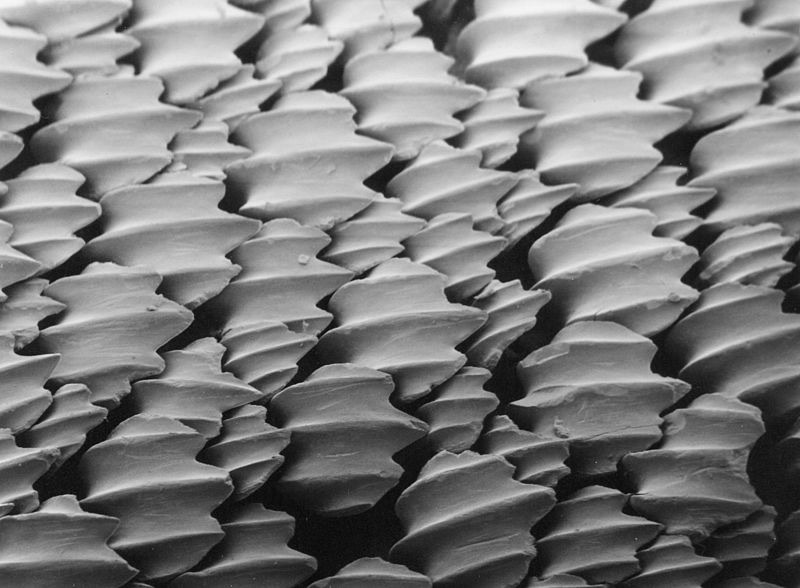
The surface technology (jointly developed by Lufthansa Technik and the German chemical company BASF) consists of ‘riblets’ about 50 micrometres thick, mimicking the structure of sharkskin and its friction-reducing characteristics.
The tiny, transparent grooves – modelled on shark skin – guide the airflow more efficiently along the surface and reduce drag.

At the outset, the aerodynamic coating was expected to reduce fuel burn by around 1% per aircraft, delivering a projected fleet-wide saving of approximately 8,300 tonnes of CO₂ over four years.
After the first year of operations, Austrian Airlines’ recorded fuel and emissions savings suggest the trial is broadly on track to meet, and potentially exceed, that target if performance is sustained.
Austrian is first in the world to trial AeroSHARK on a Boeing 777-200ER
Austrian Airlines was the first airline in the world to use the AeroSHARK film on the Boeing 777-200ER. The innovation is part of the push to reduce its CO2 emissions by 30.6% by 2030 compared to 2019.
It hopes to reach that target through AeroSHARK and other initiatives, such as fleet modernisation, the use of Sustainable Aviation Fuels (SAF), and operational efficiency programs such as optimised flight routes and weight-reduction measures on board.
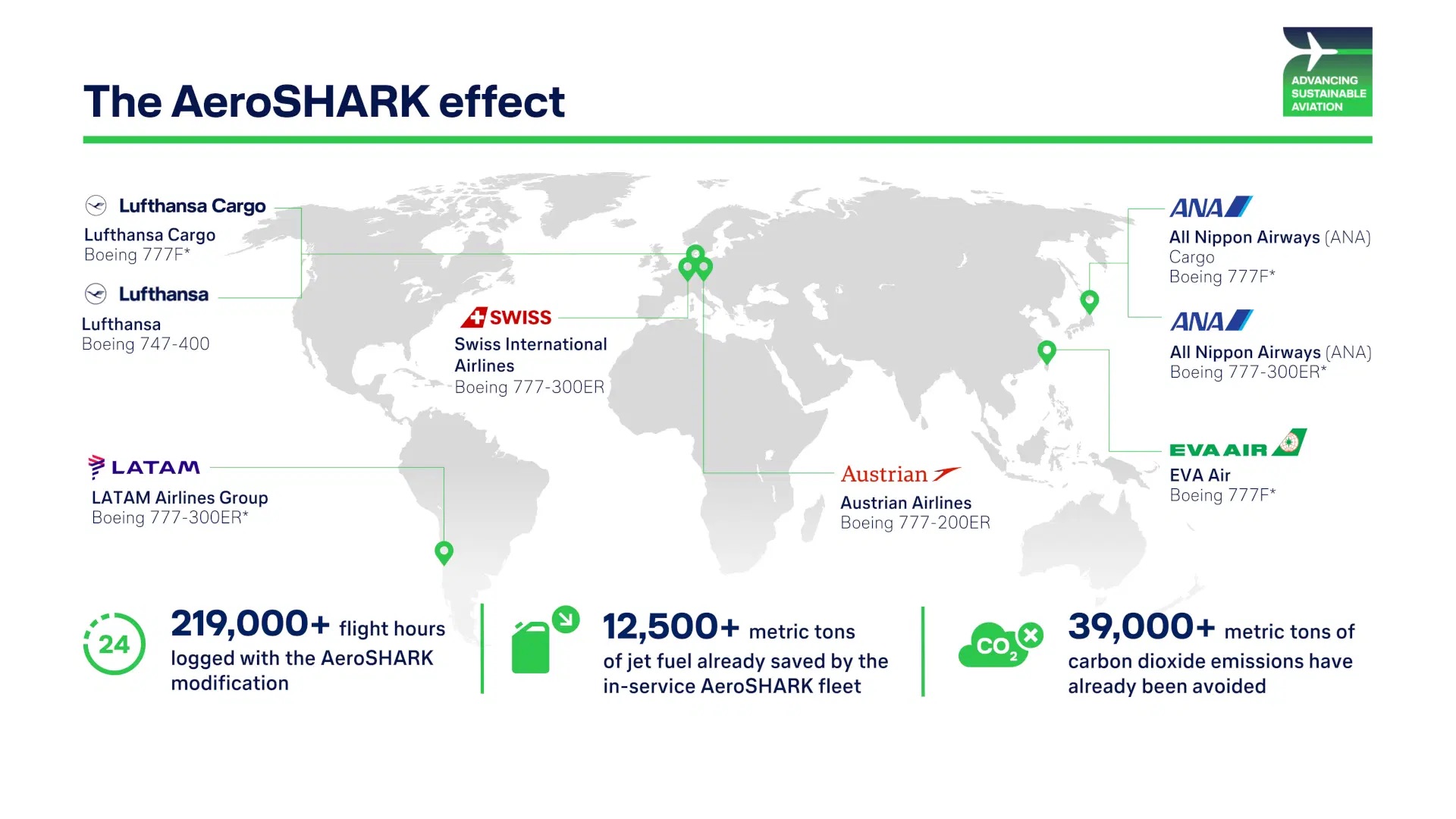
However, Austrian is not the only carrier within the Lufthansa Group to deploy the technology.
Other airframes to benefit from the surface film include a Lufthansa Airlines 747-400, 12 SWISS 777-300ERs and four Lufthansa Cargo 777Fs.
Featured image: Photofex | stock.adobe.com