Anduril starts YFQ-44A Fury production in Ohio as CCA programme accelerates

March 25, 2026

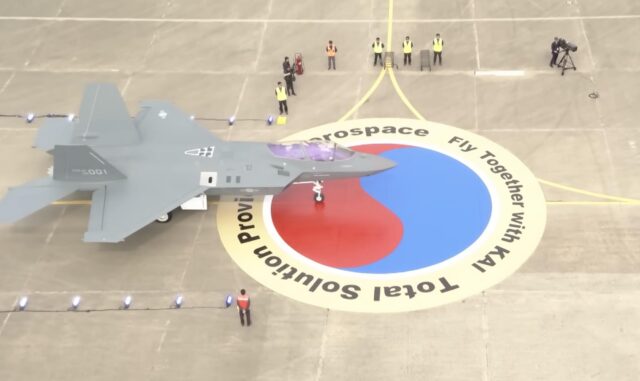
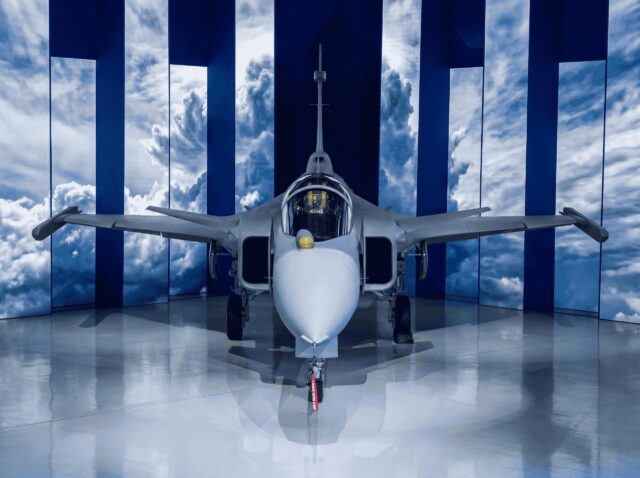
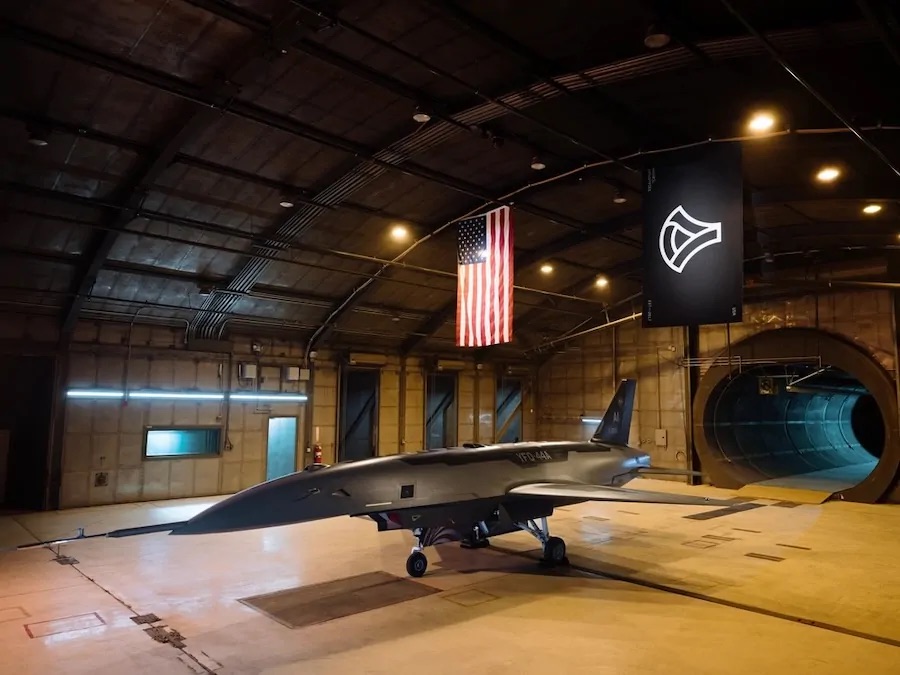
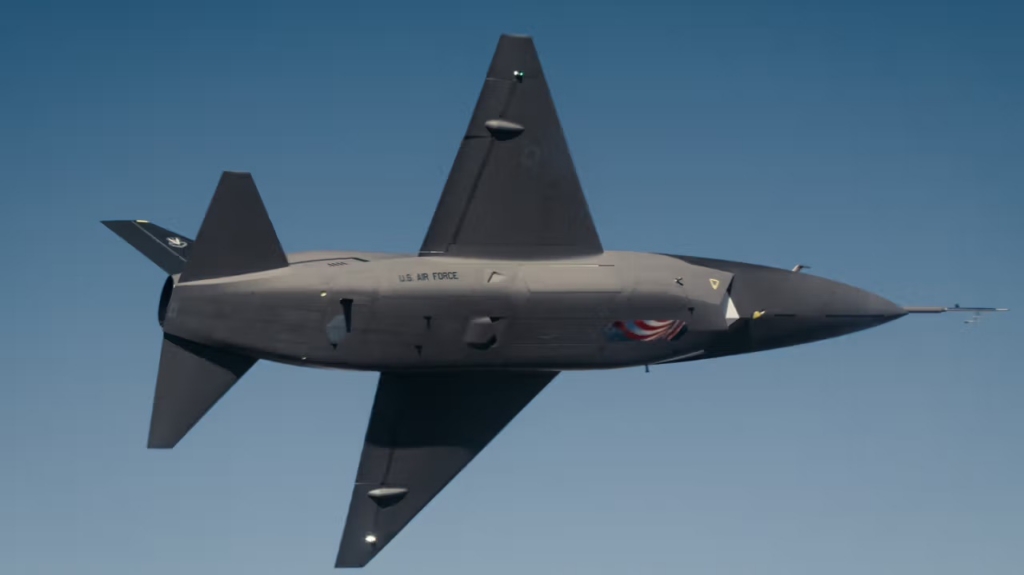
Anduril Industries has begun assembling its YFQ-44A Fury uncrewed fighter at a newly opened manufacturing facility in Ohio, marking a pivotal moment in the US Air Force’s effort to field a new generation of autonomous “loyal wingman” aircraft at scale.
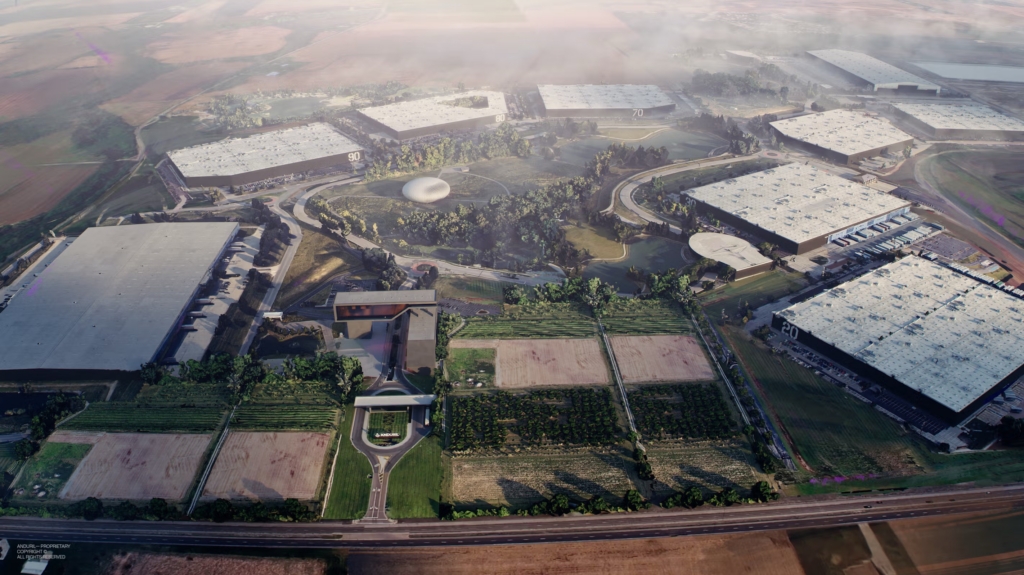
The California-based defence technology firm confirmed that production work is now underway at its Arsenal-1 site near Columbus, shifting the programme from low-rate assembly in Costa Mesa to what it describes as its first large-scale manufacturing operation.
The move comes as the US Air Force accelerates its Collaborative Combat Aircraft (CCA) programme, where Fury—designated YFQ-44A—is one of two competing prototypes intended to operate alongside crewed fighters in future combat scenarios.
Anduril begins scalable production of YFQ-44A Fury at Ohio Arsenal-1 facility
Until now, the Fury programme had largely been confined to development and early testing, with limited production activity at Anduril’s California base.
That phase is now giving way to something more ambitious.
The Arsenal-1 facility, announced in early 2025 and now operational, is designed to support sustained production rather than experimental builds.
At least two YFQ-44A aircraft are already flying as part of an ongoing test campaign, but the focus is shifting toward output. Anduril needs to prove how quickly and in what numbers these aircraft can be built.
For decades, advanced combat aircraft programmes have struggled not just with design complexity, but with the challenge of producing systems in meaningful quantities.
The CCA programme is intended to change that, and Arsenal-1 is an early test of whether it can be done.
YFQ-44A Fury loyal wingman designed to operate alongside fighter jets
The YFQ-44A designation places Fury within a new category of aircraft being defined by the US Air Force.
Under the Mission Design Series framework, the “F” denotes a fighter role, while “Q” identifies it as uncrewed, an acknowledgement that these systems are not simply drones, but combat aircraft intended to operate in concert with human pilots. The “Y” stands for prototype and will be dropped upon entering production.
The concept is often described as a “loyal wingman”.
Fight Unfair. https://t.co/y4ZGSjVxaG pic.twitter.com/Jnzk6i3W1m
— Anduril Industries (@anduriltech) February 23, 2026
In practical terms, that means aircraft like Fury would accompany crewed platforms such as the F-22 or future sixth-generation fighters, extending their reach, carrying additional sensors or weapons, and taking on tasks that might otherwise expose human pilots to greater risk.
“They were only on paper less than a couple of years ago, and they are going to be ready to fly this summer,” US Air Force Chief of Staff Gen. David W. Allvin said when announcing the designation of the YFQ-44A and its rival platform, the YFQ-42A.
US Air Force CCA programme drives shift to autonomous loyal wingman aircraft
The emergence of aircraft like Fury is part of a wider transformation in how air power is being conceived.
Rather than relying solely on highly advanced, and increasingly expensive, crewed fighters, the US Air Force is looking to pair those platforms with more numerous, lower-cost autonomous systems.
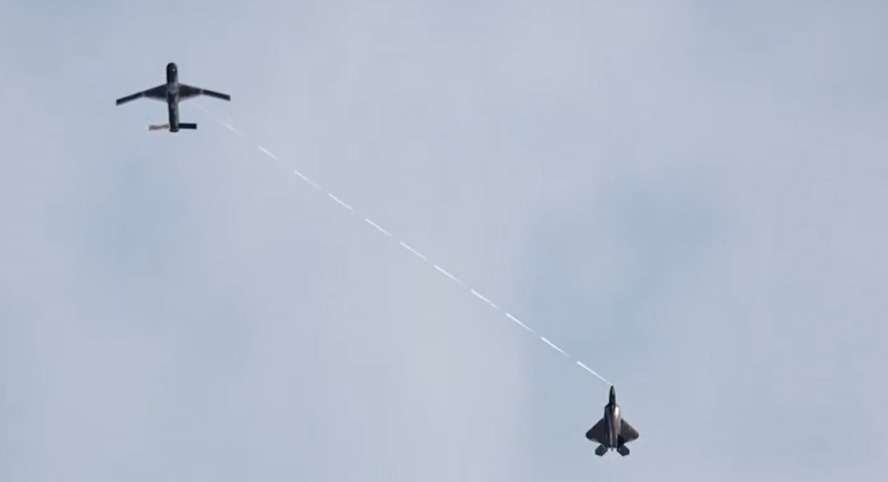
These aircraft would act as force multipliers, augmenting capability without requiring additional pilots. Recent testing has already demonstrated elements of this approach.
In one scenario, an F-22 pilot was able to control an uncrewed surrogate aircraft in flight, directing it to perform combat air patrol tasks and respond to airborne threats.
Such demonstrations offer a glimpse of how future air combat could unfold, with human pilots orchestrating formations of both crewed and uncrewed aircraft.
Arsenal-1 factory in Ohio introduces new modular defence manufacturing model
If Fury represents a shift in operational thinking, Arsenal-1 reflects a change in how such systems are built.
Located near Rickenbacker International Airport, the facility occupies a repurposed warehouse rather than a purpose-built aerospace plant. Inside, the production process is structured around modular workstations rather than large-scale automated assembly lines.
Soon. https://t.co/6V68tR0nF9 pic.twitter.com/KZj6bmUZAp
— Anduril Industries (@anduriltech) March 20, 2026
The approach is intentionally different. By relying on commercially available components and simplified manufacturing processes,
Anduril is attempting to reduce both cost and production time, the two factors that have historically constrained military aircraft programmes.
The company has also avoided heavy dependence on robotics, instead favouring flexible, human-led assembly that can adapt more easily to design changes.
US Air Force needs loyal wingman aircraft production to radpily scale
At the heart of the CCA concept is not just capability, but quantity. Traditional fighter programmes produce aircraft in relatively small numbers due to cost and complexity.
The Air Force’s vision for CCAs is different with fielding larger fleets of more affordable systems that can be deployed in greater numbers across multiple theatres.
That ambition places new demands on the industrial base.
Facilities like Arsenal-1 are intended to support that scale, with the flexibility to increase output if required. While Anduril has not disclosed precise production targets, the facility has been designed with expansion in mind.
The upcoming programme decision which is expected as early as this summer could see orders for at least 100 aircraft, providing the first real test of whether that scale can be achieved.
YFQ-44A Fury competes with General Atomics YFQ-42A in CCA programme
Fury is competing directly with General Atomics’ YFQ-42A for selection in the programme’s first increment.
Both aircraft are undergoing flight testing, and both represent different approaches to the same requirement: an autonomous platform capable of integrating seamlessly with existing fighter fleets.
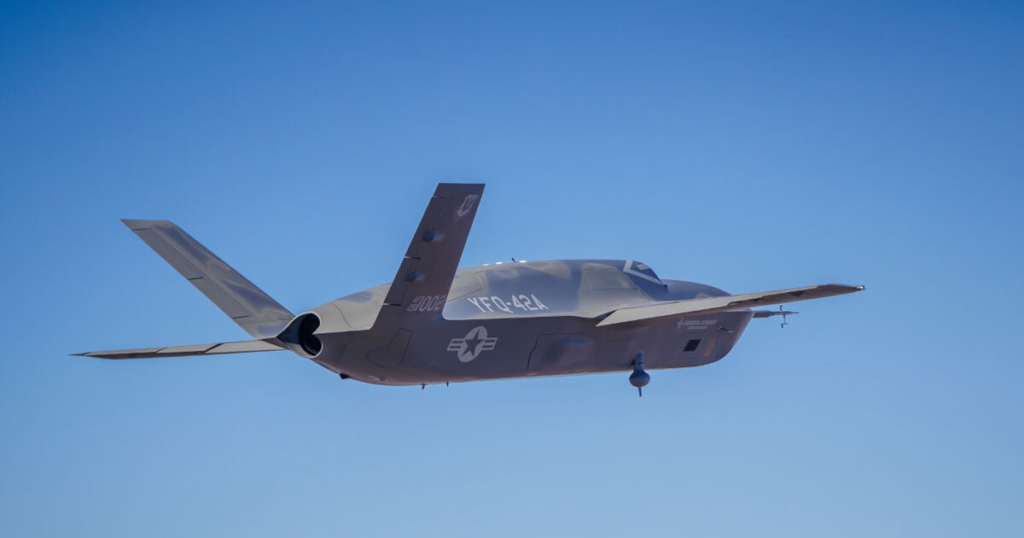
The outcome of this competition will determine not only which design enters initial production, but also how the broader concept of collaborative combat aircraft is implemented in practice.
For Anduril, beginning production ahead of that decision allows the company to demonstrate readiness not just in design, but in manufacturing.
Anduril’s Ohio facility will produce more than just Fury
Arsenal-1 is not dedicated solely to the Fury programme.
The facility is intended to manufacture a range of systems, including interceptor drones and cruise missiles, alongside the YFQ-44A. This multi-product approach reflects a broader shift towards more flexible, adaptable manufacturing models within the defence sector.
Rather than building single-purpose factories for individual programmes, companies are increasingly investing in facilities that can support multiple product lines, allowing them to respond more quickly to changing requirements.
For all the ambition surrounding the programme, the coming months will be critical.
The transition from prototype development to sustained production has historically been one of the most challenging phases in aerospace programmes. It is here that timelines are tested, costs are scrutinised, and manufacturing concepts are either validated or exposed.
Anduril’s approach of simplified production, commercial components and modular assembly represents a clear attempt to overcome those challenges. Whether it succeeds will depend not just on the performance of the aircraft, but on the ability to deliver it in numbers.
Featured image: Anduril