Airbus Racer helicopter enters advanced test phase as military pilots take control

April 1, 2026
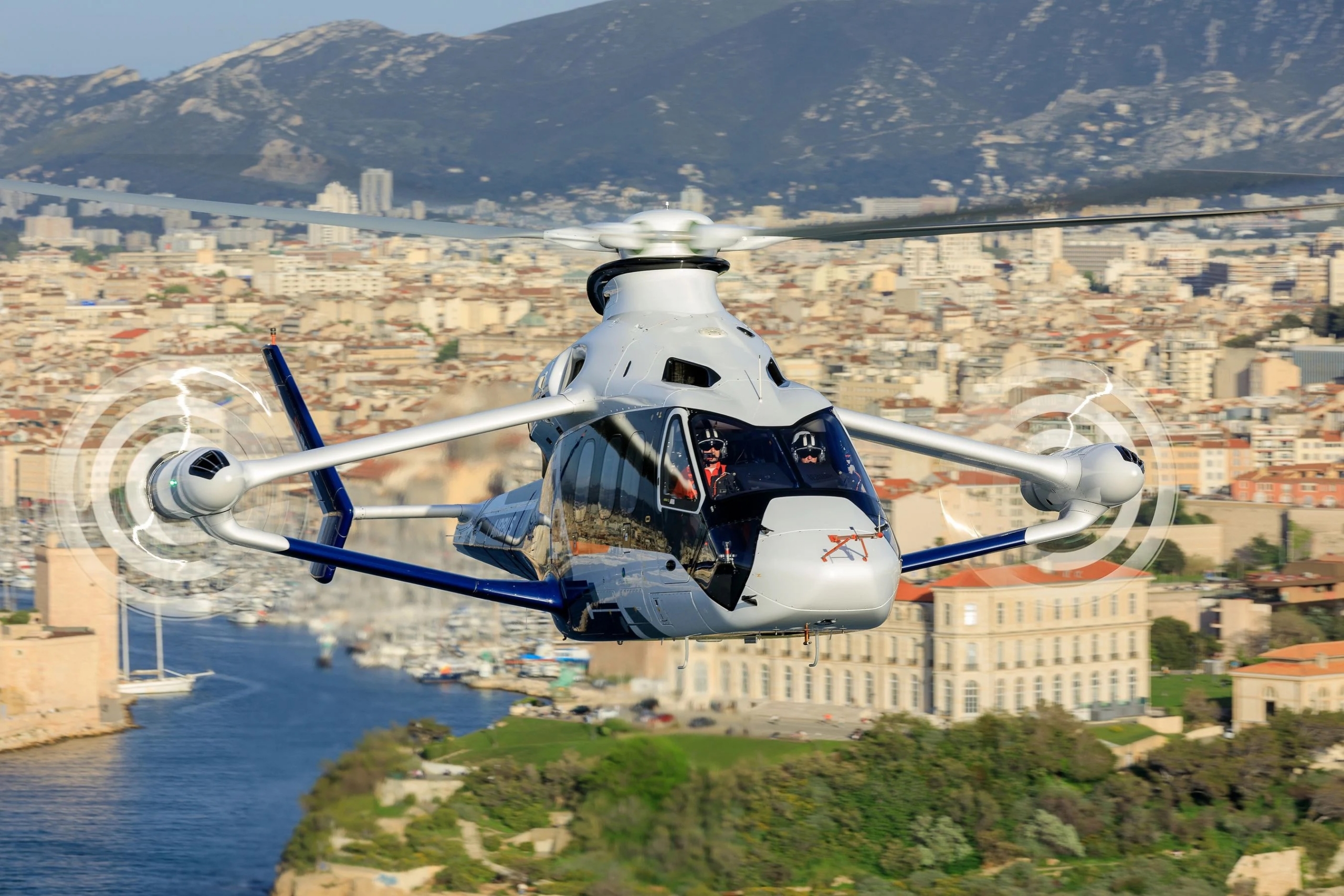
Airbus Helicopters‘ Racer compound rotorcraft demonstrator has moved into a more advanced phase of testing, with over 50 flight hours logged and, for the first time, military pilots taking control of the aircraft as it continues to expand its operational envelope.
The development marks a shift in the programme from validating speed targets to demonstrating maturity, stability and mission relevance under more realistic operating conditions.
Military pilots fly Airbus Racer, signalling growing confidence in design maturity
In a notable step for an experimental programme, pilots from France, Germany and Finland have now flown the Racer as part of the European Next Generation Rotorcraft Technologies (ENGRT) initiative.
Allowing non-test pilots, particularly military crews, to handle a demonstrator aircraft is rare and typically only permitted once regulators and engineers are satisfied with its stability and handling characteristics.

The move effectively signals that Airbus considers the platform sufficiently mature, while also allowing operational users to directly evaluate its performance.
Their feedback is expected to play a role in shaping future military rotorcraft requirements, particularly for high-speed platforms under programmes such as NATO’s Next Generation Rotorcraft Capability.
Airbus Racer flight tests expand to agility, climb performance and high-speed manoeuvres
While the Racer has already met and exceeded key speed benchmarks such as reaching up to 240 knots in testing, the current phase has focused on how the aircraft performs in demanding scenarios.
Recent trials included a 14-degree slope landing, where the aircraft maintained a level rotor while using lateral propellers to align with uneven terrain. This differs from conventional helicopters, which require complex manoeuvres to match slope angles.

Climb performance has also stood out. The aircraft reached 10,000 feet in just 2 minutes and 44 seconds, achieving a climb rate of approximately 3,600 feet per minute, about twice that of traditional rotorcraft.
At higher speeds, the demonstrator has executed 2G turns at around 370 km/h, highlighting its ability to combine speed with manoeuvrability, something that has historically been difficult for helicopters.
Compound rotorcraft design delivers speed and fuel efficiency gains in Airbus Racer tests
The Racer’s design combines a main rotor with lateral propellers and fixed wings, allowing aerodynamic loads to be shared more efficiently.
At cruise, the wings generate lift, reducing demand on the rotor system and enabling higher speeds with improved fuel efficiency. The aircraft has demonstrated cruise speeds of around 440 km/h while consuming roughly 25% less fuel than conventional helicopters.
This architecture also allows the aircraft to accelerate and decelerate while maintaining a stable attitude, unlike traditional helicopters that rely on pitch changes.
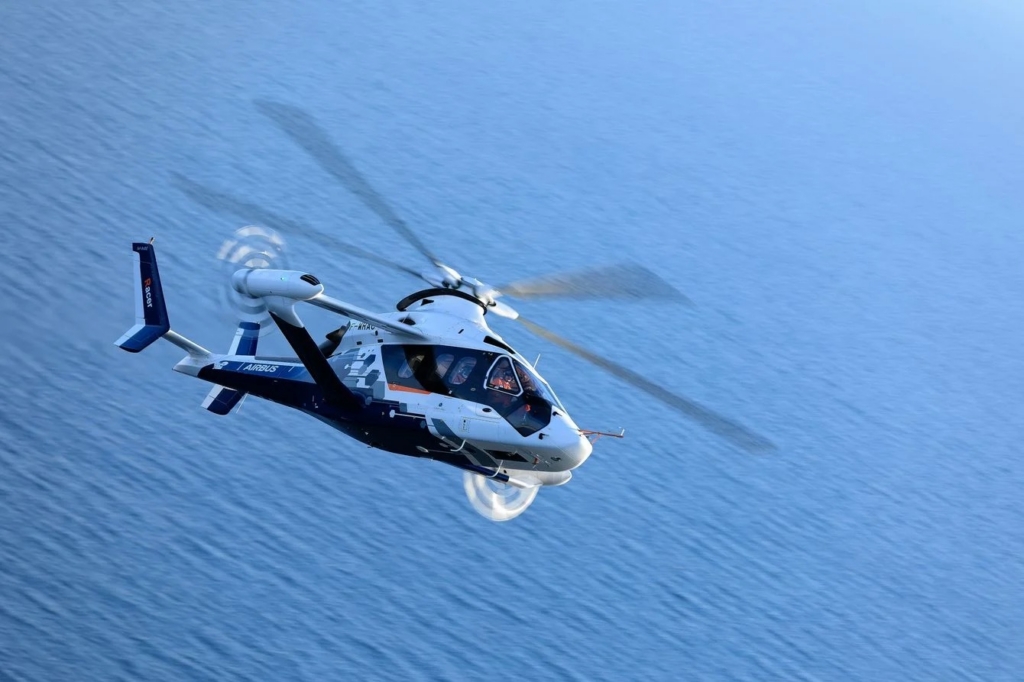
Airbus has positioned the Racer as a demonstrator aimed at answering a long-standing challenge in rotorcraft design, whether higher speed can be achieved without significantly increasing operating costs.
The aircraft reached its initial speed targets early in the test programme, and did so with power margin available, suggesting that the design has room for further optimisation.
Despite being heavier than the earlier X3 demonstrator, Racer has approached similar performance levels, pointing to gains in aerodynamic efficiency and overall system integration.
Airbus targets eco-mode, lower noise and efficiency gains in next Racer test phase
With core flight performance largely validated, the programme is now moving towards efficiency and environmental improvements.
A key development is the planned introduction of an “eco-mode” system, which will allow one of the two Safran Aneto-1X engines to be shut down during cruise to reduce fuel consumption.
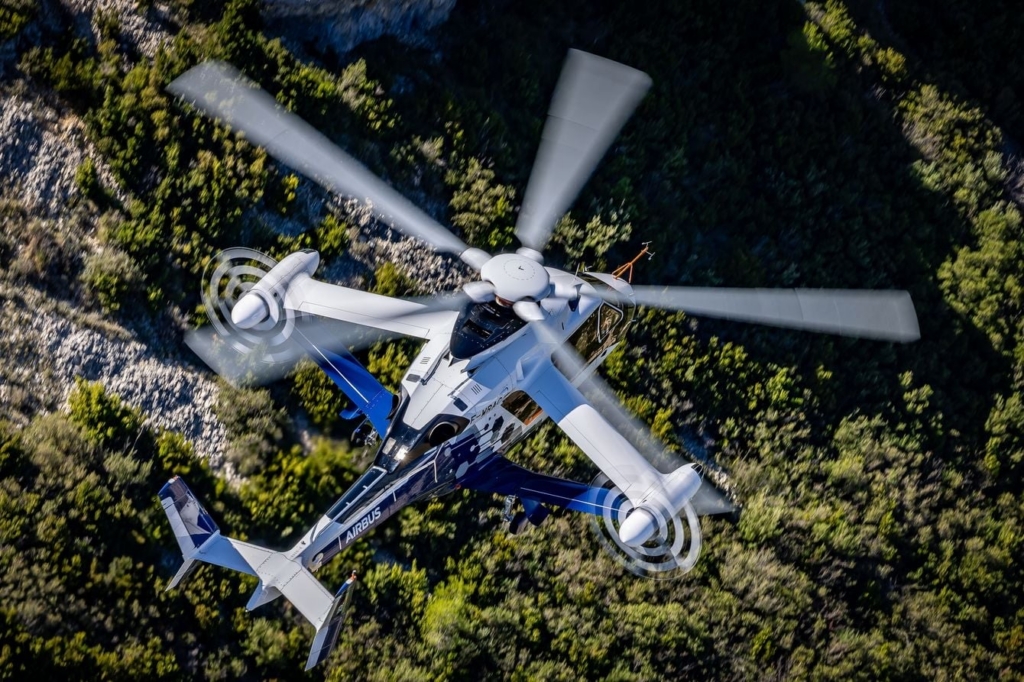
The system is designed to restart the engine within seconds when full power is required, supported by onboard energy systems, and is expected to deliver an additional 15% reduction in fuel burn while maintaining cruise speeds of around 330 km/h.
Alongside this, Airbus is exploring ways to reduce the aircraft’s acoustic footprint. By optimising flight profiles and leveraging the flexibility of the compound configuration, the programme aims to cut noise levels on the ground by at least 30%.
Racer test data to support NATO next-generation rotorcraft development
Although the Racer itself is a demonstrator under the Clean Sky 2 programme, its role extends beyond technology validation.
Data gathered from the flight campaign is already being used to inform future rotorcraft designs, including concepts proposed for NATO’s next-generation requirements.
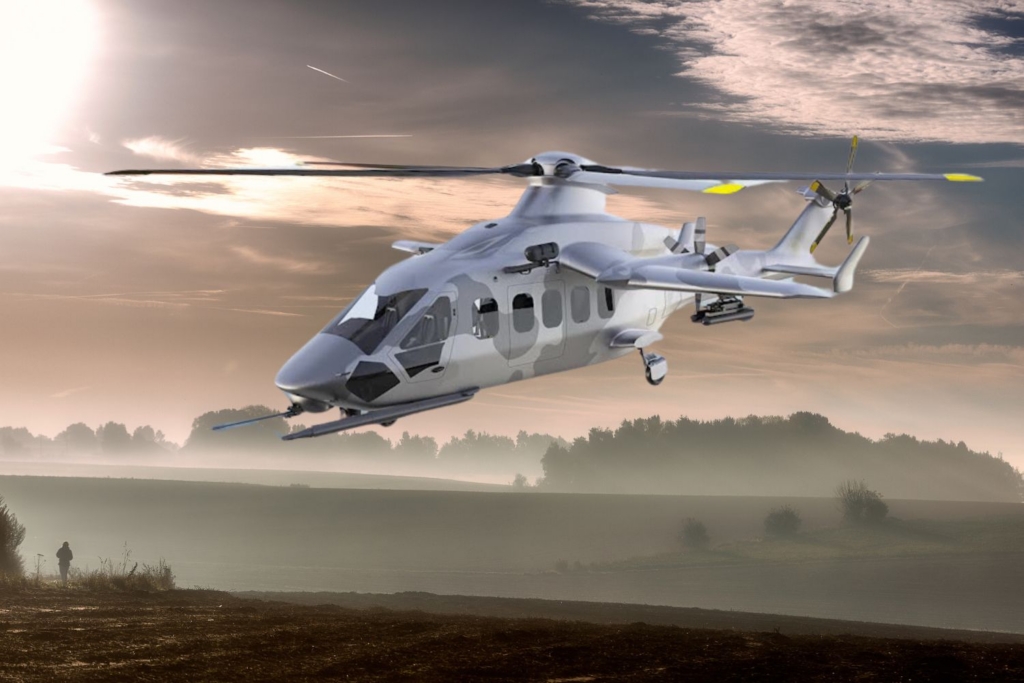
The aircraft is effectively being used to bridge the gap between conventional helicopters and fixed-wing aircraft, offering higher speed and range without losing vertical lift capability.
With military pilots now involved, key performance milestones achieved and further efficiency upgrades planned, the Racer is moving closer to demonstrating not just technical feasibility but operational relevance.
Featured image: Airbus