Airbus tests Bird of Prey interceptor drone designed to defeat swarms of low-cost attack UAVs

March 30, 2026
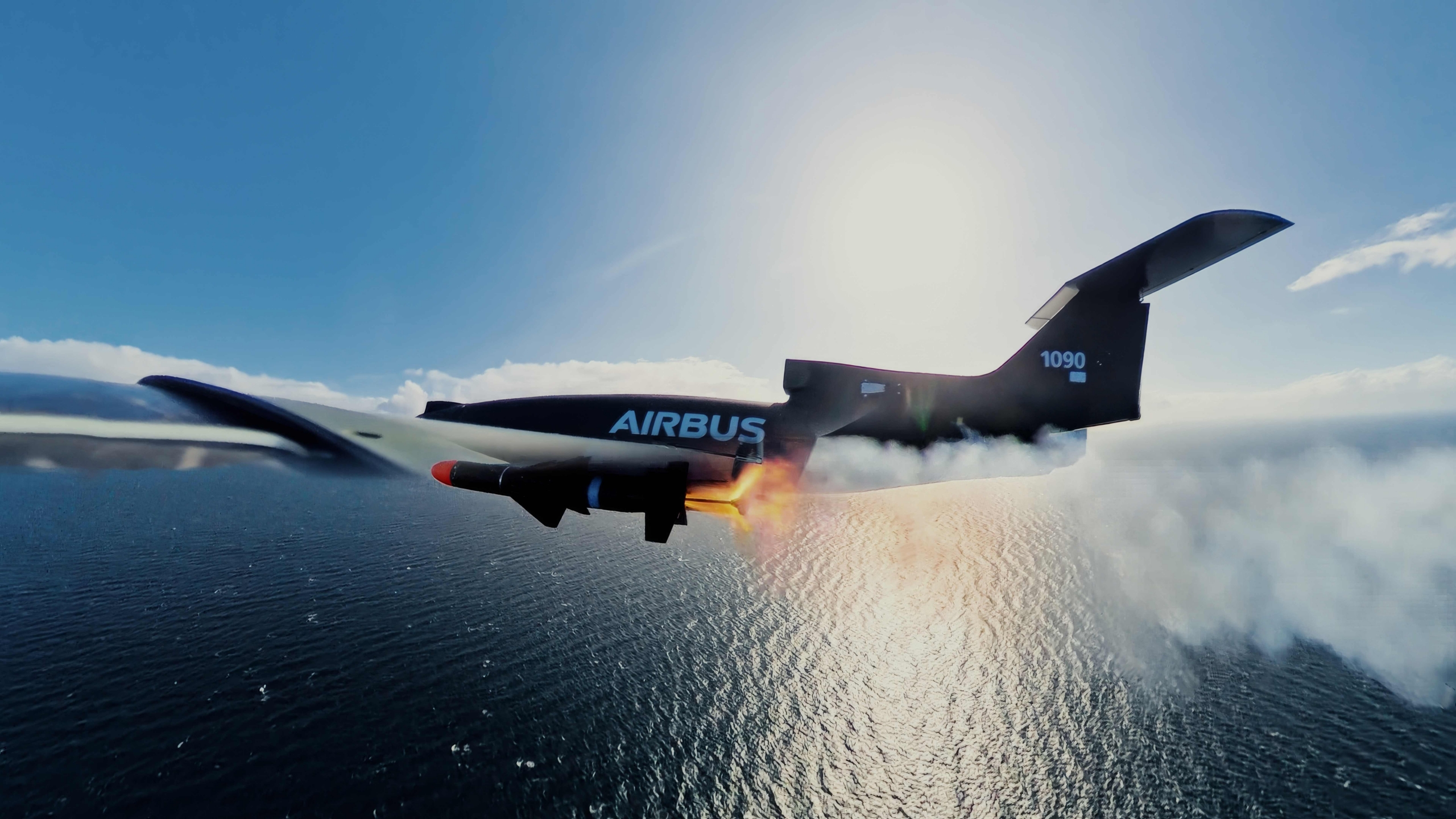
Airbus has carried out the first successful demonstration flight of its ‘Bird of Prey’ interceptor drone, offering a glimpse of how militaries may begin to tackle the fast-growing threat posed by one-way attack drones.
The test, conducted at a military training area in northern Germany, saw the uncrewed system autonomously search for, detect and classify a kamikaze drone before engaging it with a lightweight air-to-air missile.
It is a sequence that, until recently, would have required a far more complex and expensive chain of sensors, operators and weapons.
Instead, Airbus is betting on something simpler: a relatively small drone, carrying low-cost interceptors, operating as part of a wider air defence network.
From prototype to operational counter-UAS capability
The pace of development is notable. The first demonstration flight came just nine months after the project began, a timeline that reflects both urgency and a shift in how such systems are developed.
Further trials are planned through 2026, including tests with live warheads, as Airbus and its partners move towards operational deployment.
The timing is not accidental. From Ukraine to the Middle East, low-cost attack drones have reshaped the economics of air defence.

Systems that cost a few thousand dollars to build have forced militaries to respond with interceptors that are often orders of magnitude more expensive.
“Against the current geopolitical and military backdrop, defending against kamikaze drones is a tactical priority that urgently needs to be tackled,” said Mike Schoellhorn, Chief Executive of Airbus Defence and Space.
His point reflects a growing consensus. The challenge is no longer just detection, but cost. Any viable solution must be able to counter mass attacks without exhausting resources.
Airbus believes the answer lies in combining autonomy, scale and affordability.
Inside the Airbus Bird of Prey drone interceptor design
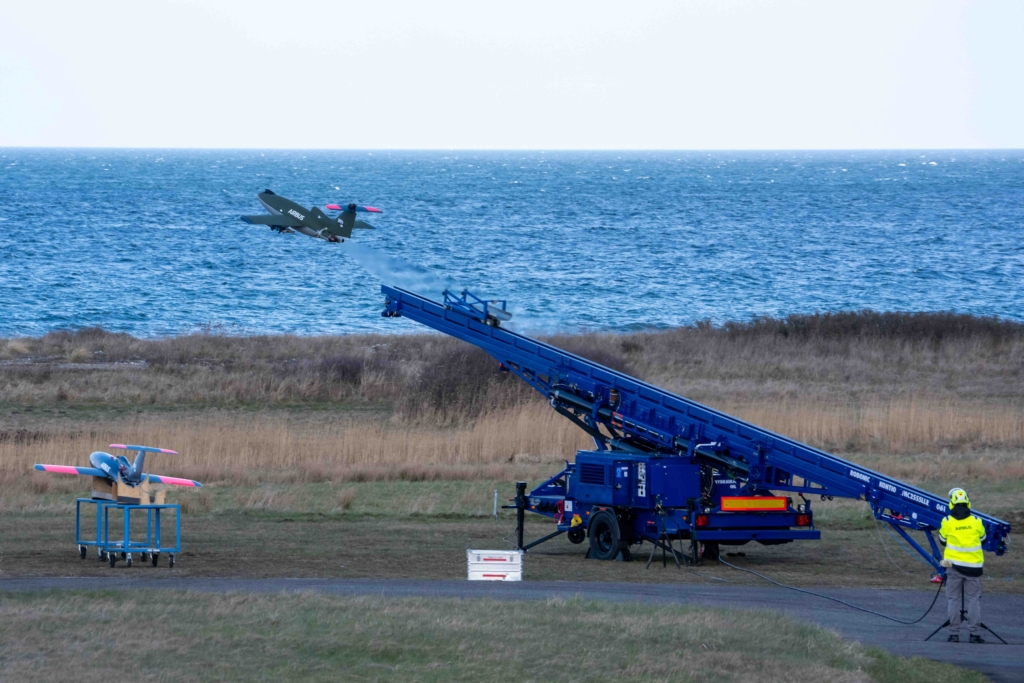
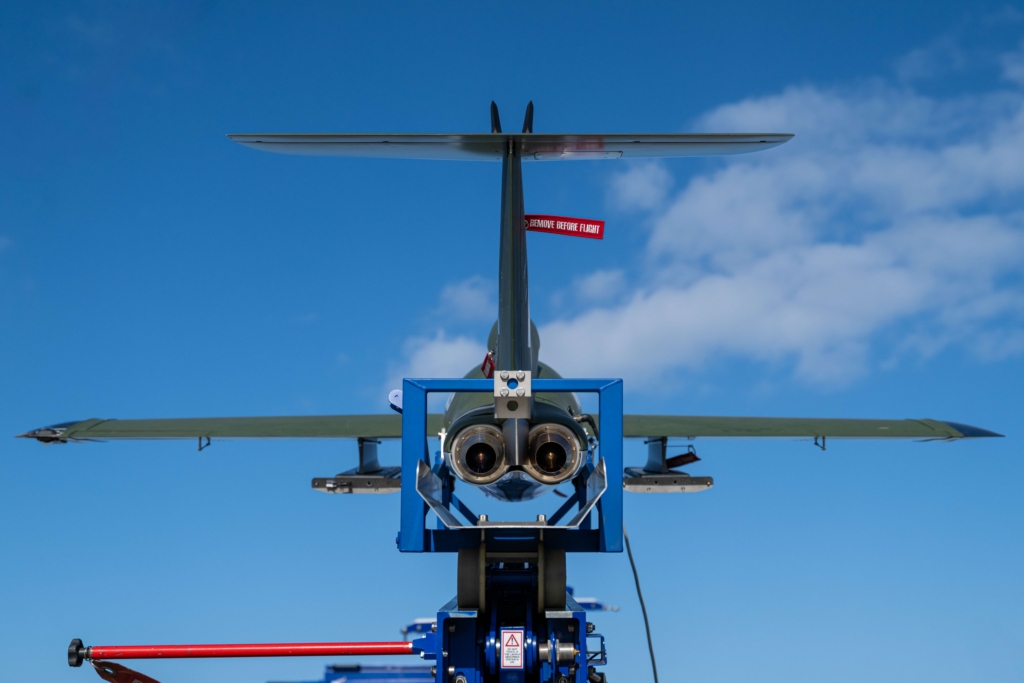
The Bird of Prey itself is not a large or complex platform. Based on a modified Do-DT25 drone, the prototype used in the demonstration has a wingspan of 2.5 metres and a maximum take-off weight of 160 kilograms. What sets it apart is its role.
Rather than acting as a surveillance or strike platform, it is designed specifically as an interceptor. In the recent test, it operated autonomously, identifying a target before firing a Mark I missile developed by Frankenburg Technologies.
The missile is small, measuring just 65 centimetres in length and weighing less than 2 kilograms, but it is built for purpose. With a range of up to 1.5 kilometres and a fragmentation warhead, it is intended to neutralise drones at close range without the need for larger, more costly systems.
The prototype carries four missiles, while the operational version is expected to carry up to eight, allowing it to engage multiple targets during a single mission.
Rethinking air defence costs in the age of drone warfare
If the platform itself is modest, the thinking behind it is not.
“This is a defining step for modern air defence,” said Kusti Salm, Chief Executive of Frankenburg Technologies. “It marks the first integration of a new class of low-cost, mass-manufacturable interceptor missiles onto a drone.”
That combination, he suggested, creates a different cost curve altogether.
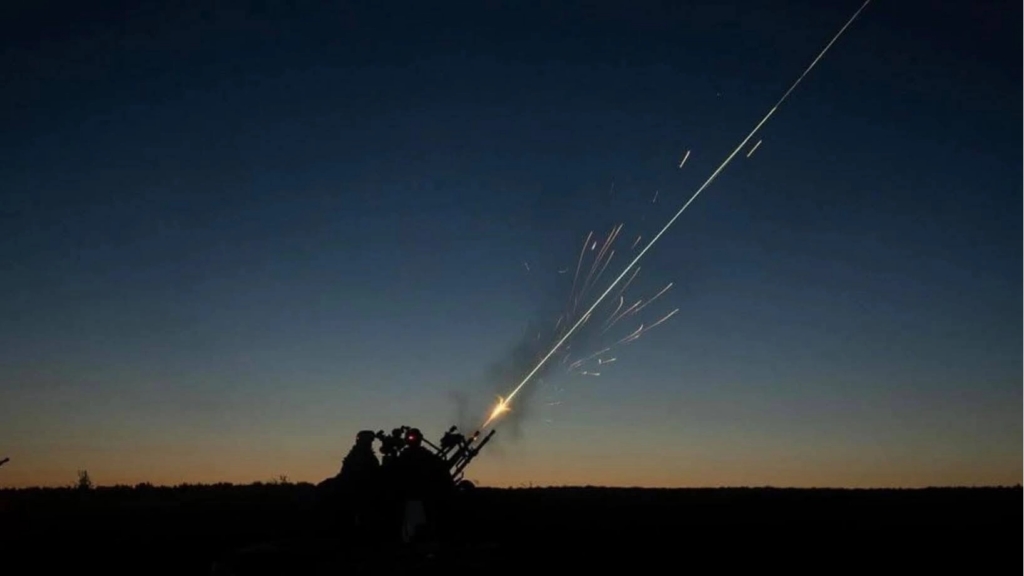
The idea is straightforward. Instead of relying on high-end interceptors to defeat low-cost threats, militaries could deploy swarms of relatively inexpensive systems that are both reusable and scalable.
In practical terms, it means shifting from a model where each engagement is costly to one where multiple threats can be neutralised at a fraction of the price.
Airbus Bird of Prey drone integrates into modern air defence networks
The Bird of Prey is not intended to operate in isolation.
Airbus has designed the system to integrate into its Integrated Battle Management System, allowing it to function as part of a layered air defence architecture. In that role, it becomes another node in a network that includes sensors, command systems and other interceptors.
Schoellhorn described that integration as a force multiplier, suggesting that the value of the system lies not just in its individual capability, but in how it fits into a broader defensive framework.
That compatibility may prove critical for NATO operators. The ability to plug into existing command and control structures reduces the barrier to adoption and allows the system to complement rather than replace current assets.
For now, the Bird of Prey remains a prototype. But the low-cost autonomous interceptor could address a problem that is only becoming more acute.
In that sense, the aircraft’s first flight is less about a single test and more about a direction of travel.
Featured image: Airbus