Airbus A350F enters final assembly line: next-generation freighter gets closer to first flight

October 2, 2025
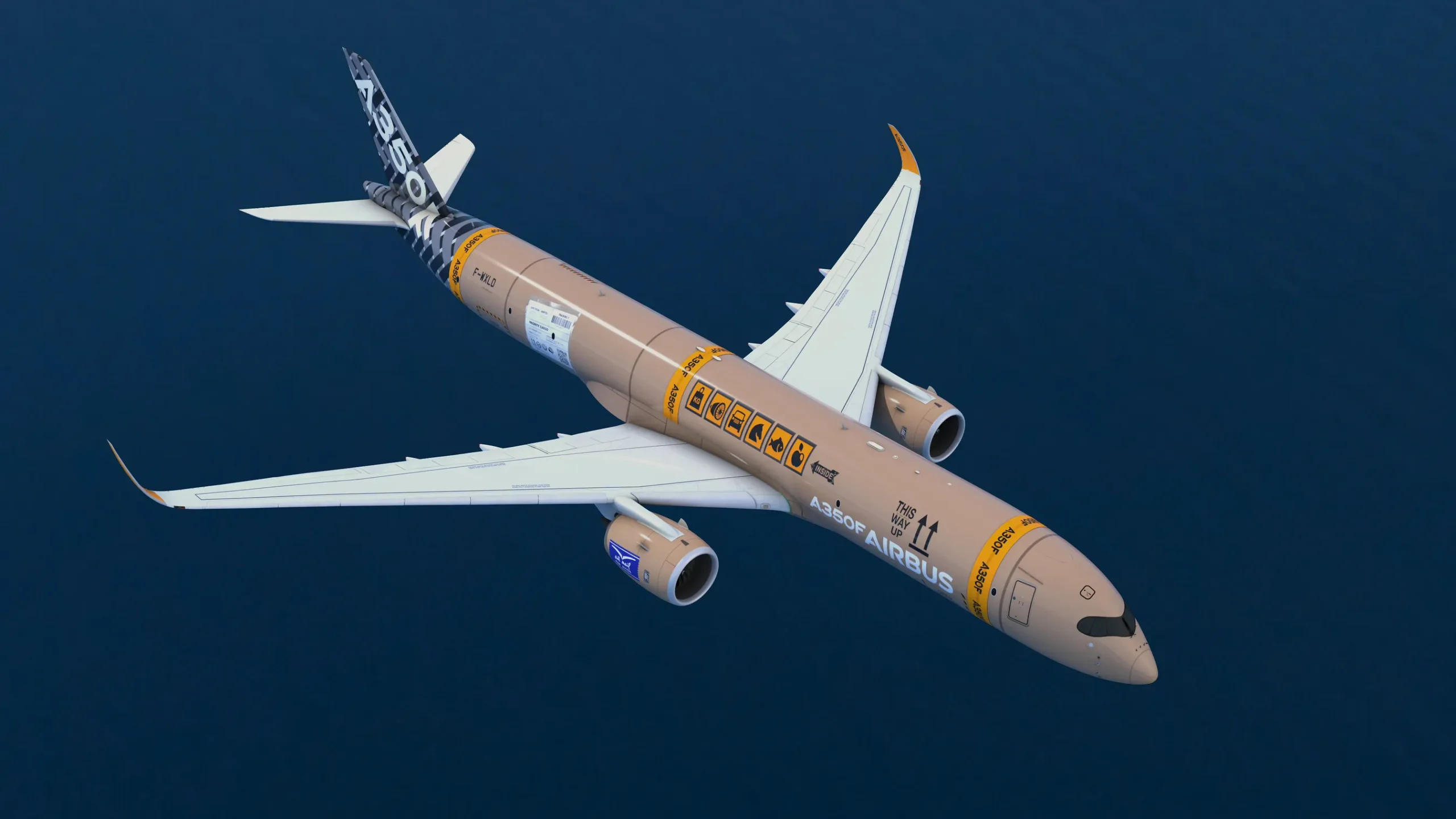
Airbus has officially begun assembling its new-generation cargo aircraft, the A350F freighter. With strong customer demand already confirmed, the aircraft is shaping up to be a major player in the future of air cargo.
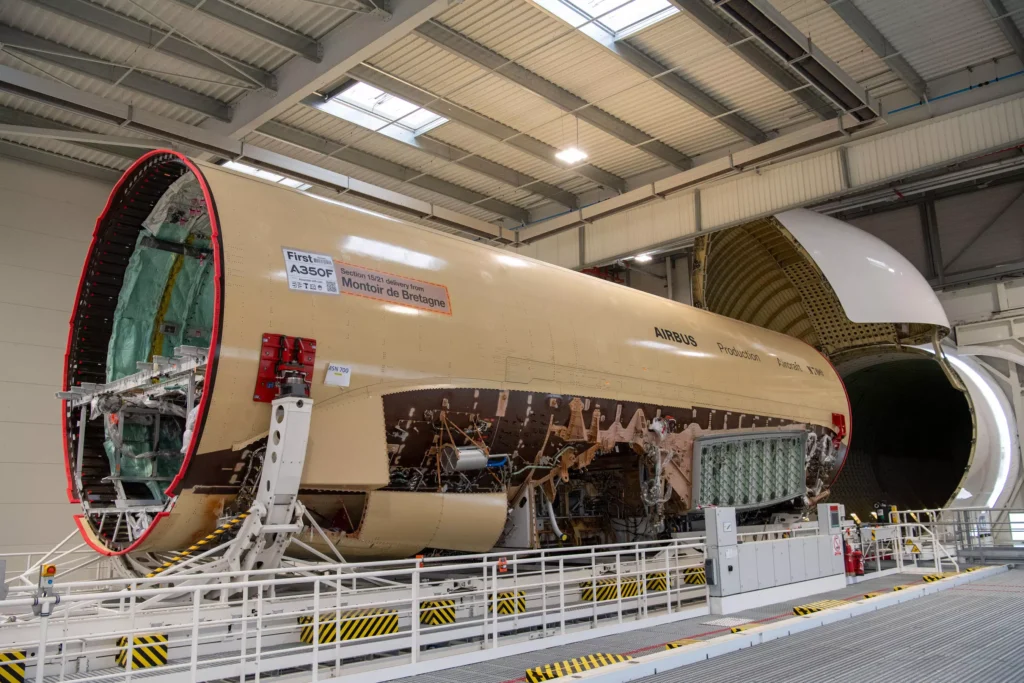
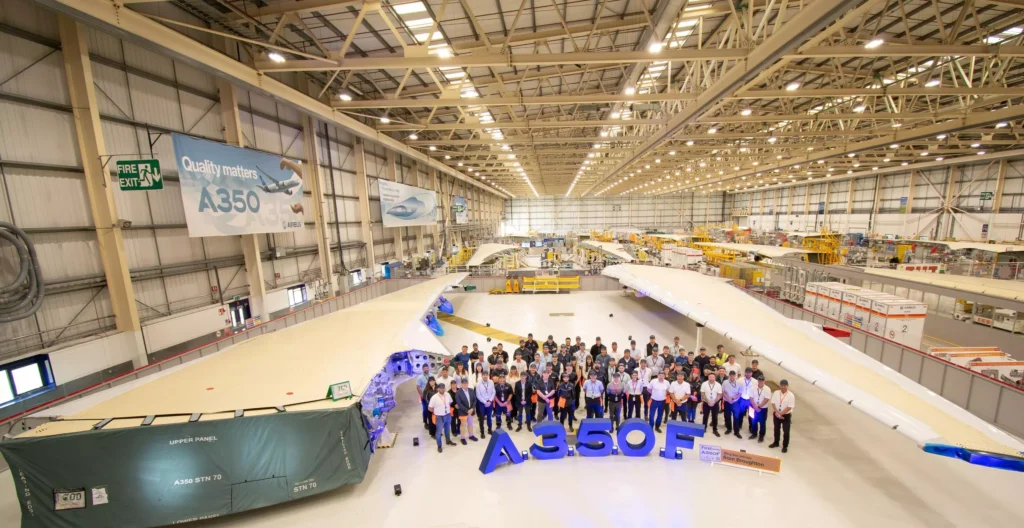
With the first fuselage sections arriving at the Final Assembly Line in Toulouse, including wing, front, centre and rear fuselage sections, assembly is underway, Airbus has announced.
As cargo fleets age, supply chains strain, and environmental regulations become tighter, Airbus is pitching the A350F as a solution to evolving industry demands.
What makes the A350F different from other freighters
The Airbus A350F is a large, dedicated freighter design based on the proven A350‑1000 passenger aircraft platform. Powered by Rolls-Royce Trent XWB-97 engines, the A350F features significant design changes to meet the specific needs of cargo operations and comply with environmental requirements.

Its key specifications include:
- Payload capacity: up to 111 tonnes.
- Range: about 4,700 nautical miles (8,700 km) with full payload.
- Over 70% of its airframe is built from advanced, lightweight materials, which helps reduce weight (e.g. a significant weight saving vs comparable freighters).
- It is the only new freighter designed to meet the ICAO CO₂ emissions standard coming into effect in 2027.
- Fuel burn and CO₂ emissions savings of up to 20‑40% compared to older generation freighters. Quiet operation, and design features such as a large main deck cargo door, flexible pallet loading, internal weapon‑style bays for modular cargo types, etc.
Because the freighter shares many systems (engines, some avionics, and structural commonality) with its passenger A350 siblings, the transition for operators familiar with the A350 family should be smoother. Crews, ground staff, and maintenance regimes will benefit from these commonalities.
What kind of cargo will the A350F carry?
The A350F’s large main deck door and high volume will make it a versatile freighter. It will be able to transport a wide range of goods, including time-sensitive express packages, e-commerce shipments, pharmaceuticals, perishables, and livestock requiring temperature control, as well as high-value electronics and even heavy industrial equipment or oversized cargo.
With the growth of e-commerce, increasing global trade, and the need to replace older, less efficient aircraft, next-generation freighters will be crucial.
According to an Airbus official, “The A350F will address these needs by offering significantly lower fuel burn, reduced emissions, and higher capacity, ensuring the air cargo industry will be able to operate more responsibly.”
Customer orders for the Airbus A350F
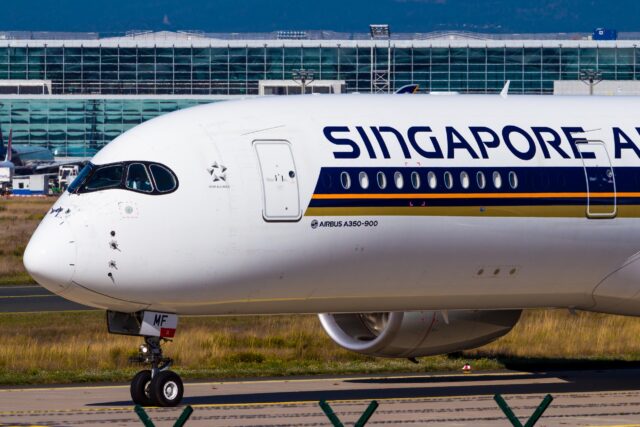
By January 2025, Airbus had received 63 firm orders from a diverse range of customers, including Singapore Airlines, Etihad, Turkish Cargo, and CMA CGM, among others.
Some of the key orders for the Airbus A350 freighter are:
- Cathay Group has ordered six A350Fs to be operated by Cathay Cargo.
- STARLUX Airlines of Taiwan has doubled its initial order by placing five more A350F freighters in early 2025, bringing its total to ten.
- AviLease, a Saudi leasing company, has ordered 10 A350Fs (along with A320neos) at the Paris Air Show 2025.
- MNG Airlines in Türkiye has signed an MoU for two A350F aircraft.
There has been at least one cancellation: Air Lease Corporation (ALC), which was to be a launch customer, has cancelled its order for seven freighters.
How Airbus sees the A350F grabbing a slice of the cargo market
The air cargo market is projected to experience rapid growth. Some industry forecasts project demand for over 900 new freighters by 2044 to replace older aircraft and meet the rising demand, especially from express e-commerce, pharmaceuticals, perishables, and remote or high-volume industrial freight lanes.
Airbus positions the A350F as ideally placed to meet these demand trends. Its lower fuel burn means lower operating costs, its emissions compliance means fewer regulatory hurdles, and its large main deck door and flexible cargo handling mean better asset utilisation.
Operators looking to upgrade from older freighters (e.g. 747Fs, some 777Fs) or convert passenger aircraft will find the A350F a compelling alternative.
Because many airlines already operate A350-900 or A350-1000 models, logistics, training, and part commonality reduce costs and risk.
For example, STARLUX already has a fleet of Airbus widebodies, including A350‑900s, A330neos, and A321neos.
A350F: status of production, timeline and what to watch
Assembly is now underway: wings, fuselage sections (front, centre, rear) have been delivered to the Final Assembly Line in Toulouse.
Airbus predicts the first flight will occur in 2025, with entry into service scheduled for 2026.
Some dates may shift; delays are possible in such large, complex manufacturing programmes.
What potential A350F operators should know
For operators considering the A350F, here are the big takeaways:
- Payload of up to 111 tonnes makes it one of the highest in its class.
- Long range (4,700 nm) enables transcontinental routes.
- Efficiency gains vs older freighters: fuel, emissions, and noise all improved.
- Commonality with the passenger A350 family simplifies training, maintenance, and cost of spares.
- Large door design and flexible interior make it more versatile for diverse cargo types (express, heavy, perishable).
Final livery was revealed at Paris Airshow
In 2022, Airbus organised the A350F Airbus Livery Design Competition to choose the livery for its last-generation freighter aircraft.
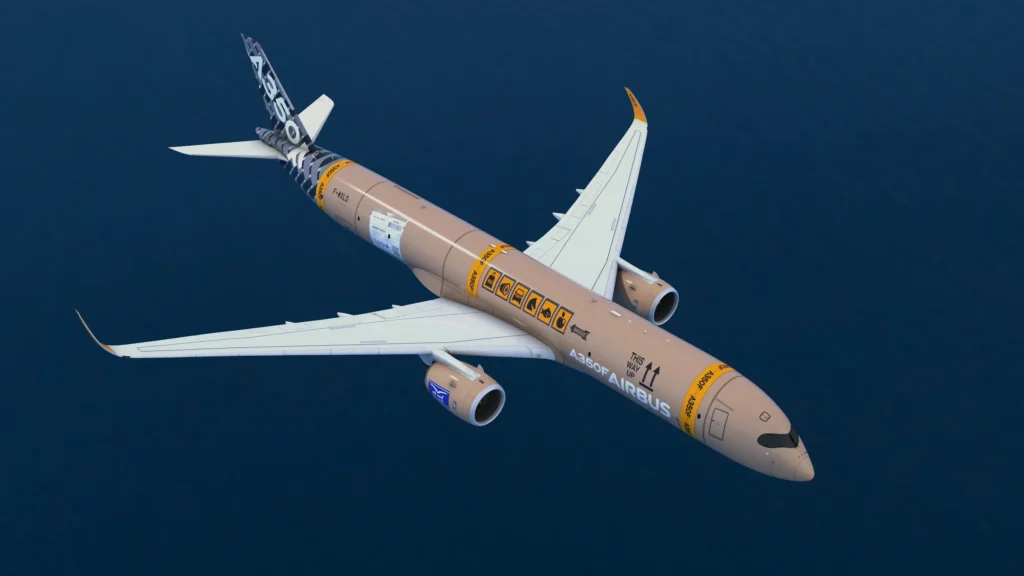
With over 4,000 entries, the jury finally selected two similar submissions and combined them as the final winning design by John Feehan and the brothers Quinnten and Ellisten Iversen.
Can the A350F change the freighter market?
The A350F is arriving at a time when the air cargo sector needs renewal: regulations are tightening, environmental pressures are mounting, older freighters are becoming increasingly costly, and cargo volume growth (especially in express and e-commerce) is relentless.
Airbus is betting that this aircraft is a generational opportunity to capture market share.
With strong early orders, advanced design features, and environmental compliance built in, the A350F appears better positioned than many of its competitors. However, delivery fidelity, actual operating cost performance, and regulatory certification will ultimately be the decisive factors.