AirAsia X pushes ahead with Bahrain hub despite Middle East conflict and soaring fuel costs

April 7, 2026

AirAsia X is sticking to its plan to launch a Bahrain hub in late June, even as the Middle East conflict continues to disrupt airspace, drive up fuel prices and complicate long-haul operations across the region.
The airline had announced in February that it would resume flights from Kuala Lumpur to London via Bahrain, its first hub outside Asia, with services scheduled to begin on June 26.
But that plan was drawn up before the US and Israeli strikes on Iran triggered a sharp escalation, forcing airlines to reroute or suspend services across key corridors.
Chief executive Bo Lingam told media on 6 April that the Bahrain service would proceed if conditions improve before launch, but stopped short of committing to a firm timeline if the crisis drags on.
When asked whether the airline could pursue alternative routings to Europe, including via its existing network into Turkiye, he responded, “Anything’s possible.”
AirAsia X Bahrain hub tests long-haul strategy amid Middle East conflict
The Bahrain hub is central to AirAsia X’s attempt to rebuild and expand its long-haul network, linking Southeast Asia to Europe through a Gulf stopover.
It marks a significant shift for the airline, which has traditionally focused on point-to-point services within Asia-Pacific.
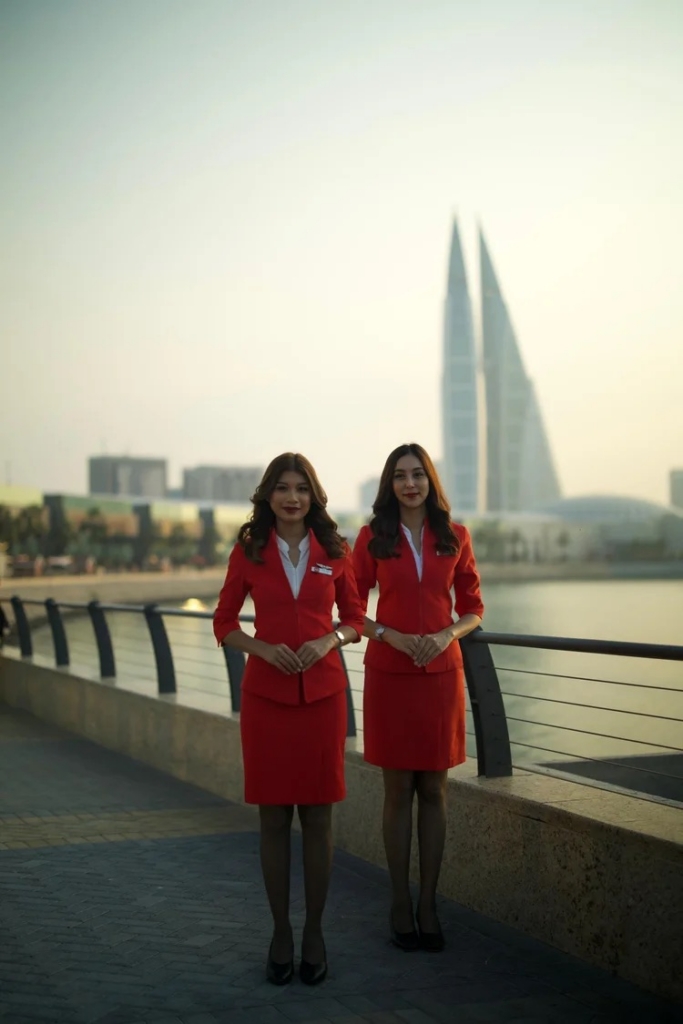
Under the plan, passengers would connect through Kuala Lumpur before continuing to Bahrain and onward to London, leveraging the group’s Fly-Thru connectivity model.
But the conflict has reshaped the operating environment almost overnight. Airspace closures, safety concerns and insurance risks have forced airlines globally to rethink routing strategies, particularly across the Middle East, a region critical to AirAsia X’s new expansion.
Rising jet fuel costs and supply constraints add pressure to the AirAsia X network
Alongside airspace disruptions, the airline is grappling with a sharp rise in operating costs.
Jet fuel prices have surged to more than double 2025 levels, with some markets seeing prices spike to around $300 per barrel.
At the same time, supply shortages in parts of Asia have prompted countries such as Thailand and Vietnam to impose restrictions on refuelling.
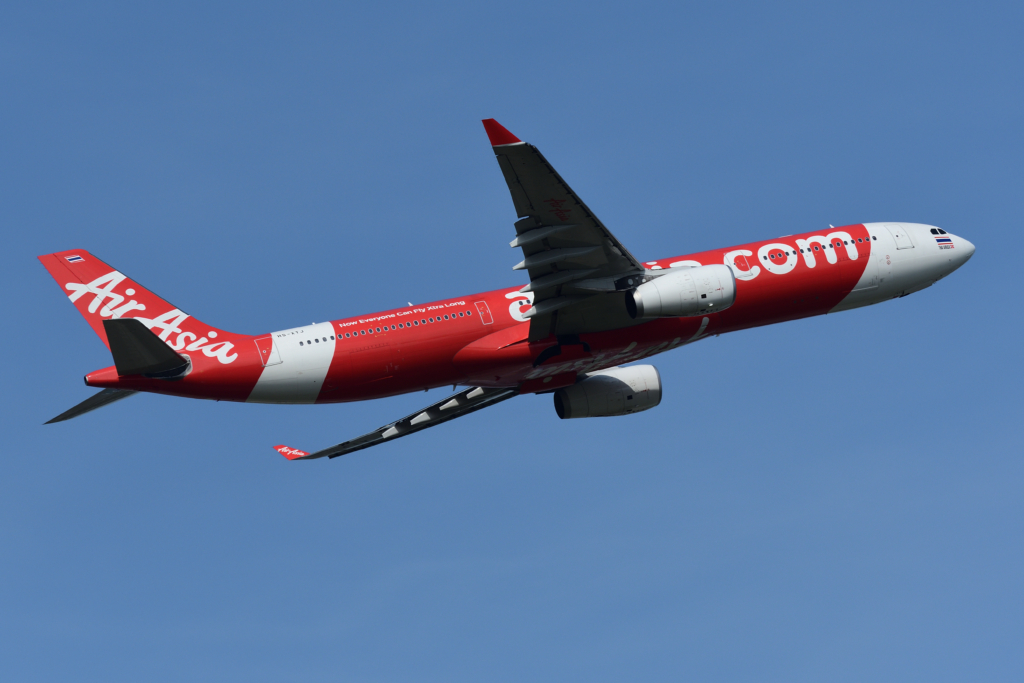
The combined effect has been immediate.
AirAsia X has introduced a one-off fuel surcharge across its network, raising surcharges by about 20%, while fares have increased between 31% and 40% to offset rising costs.
Nevertheless, Tony Fernandes, adviser to AirAsia X and chief executive of Capital A, noted that the airline would trim capacity in markets where fuel costs can no longer be absorbed. He said the group is also evaluating options to expand its aircraft fleet through new orders and leases as part of its longer-term growth strategy.
AirAsia X demand holds steady despite capacity cuts and route changes
Despite the pressures, the airline says demand remains resilient, particularly across ASEAN markets.
Lingam said strong regional demand continues to underpin the network, even as the airline shifts capacity away from affected routes.
In recent weeks, AirAsia X has redirected aircraft towards higher-yield destinations such as Almaty in Kazakhstan, Tashkent in Uzbekistan and Istanbul in Turkiye, aiming to capture displaced demand from disrupted Middle Eastern routes.
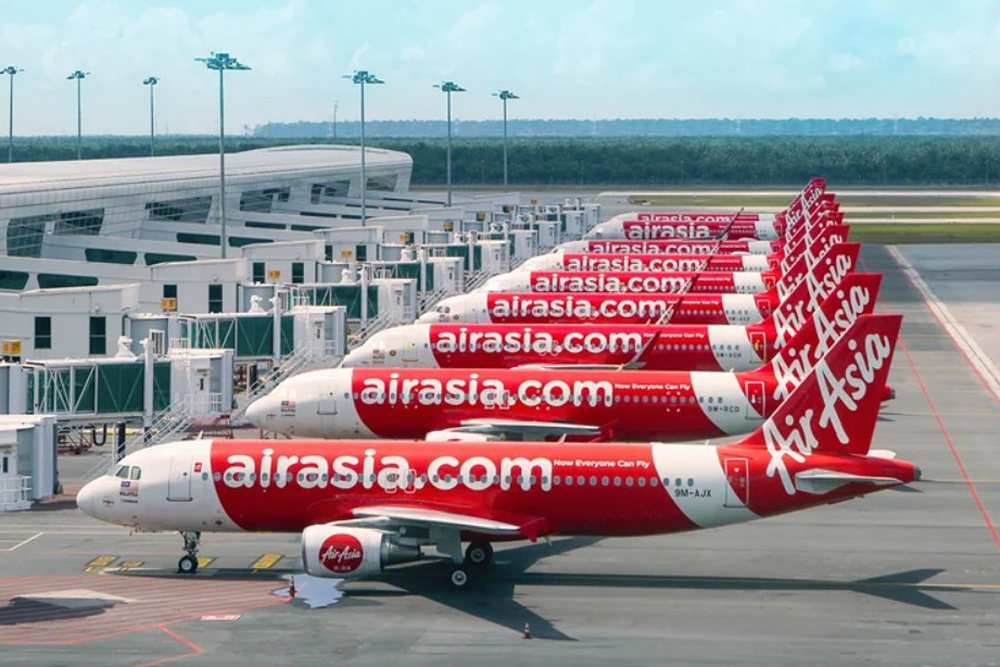
The airline is also exploring further development of its secondary hub in Senai, Johor Bahru, while continuing to reinforce Kuala Lumpur as its primary gateway.
“While we are operating in an increasingly challenging environment, we are seeing strong demand across our ASEAN destinations,” Lingam said. “This demonstrates the resilience of our network and the growing appetite for regional travel.”
AirAsia X leadership reshuffle signals focus on governance and long-term growth
The update comes as AirAsia X reshapes its leadership structure, with Tan Sri Jamaludin Ibrahim stepping in as independent non-executive chairman.
Jamaludin said the airline is entering a difficult phase, but from a position of underlying strength.
“While we are experiencing a period of global uncertainty, we are entering this phase from a position of strength,” he said. “The Group’s fundamentals are solid, supported by a lean and disciplined cost structure, a resilient ASEAN-focused network and robust Fly-Thru connectivity that allows us to respond quickly to market changes.”

He added that the current disruption extends beyond airlines to the broader aviation ecosystem, but could also provide an opportunity to strengthen competitiveness over the longer term.
AirAsia X restructuring and network integration reshape airline operations
The developments follow a broader restructuring of the AirAsia aviation business earlier this year, with the group consolidating its short-haul and medium-haul operations into a single entity.
The move is aimed at improving efficiency and enabling quicker responses to market changes, supported by the wider Capital A ecosystem.
“The strength of the Capital A ecosystem continues to support the aviation business, reducing costs while driving higher revenue,” said Fernandes. “AirAsia MOVE is boosting sales and connectivity, ADE is optimising the cost base, and AirAsia NEXT is using its technology and data to maximise aviation sales.”

For AirAsia X, the Bahrain hub represents both an opportunity and a risk.
If conditions stabilise, it would mark a significant step in reconnecting Southeast Asia with Europe under a low-cost long-haul model. If not, the airline may need to rethink its routing strategy at short notice.
The uncertainty reflects a broader challenge facing airlines worldwide, balancing network expansion with geopolitical volatility and cost pressures that can shift rapidly.
Featured image: AirAsia X