Air Congo passengers made to jump down from the aircraft door due to lack of air stairs

December 19, 2025
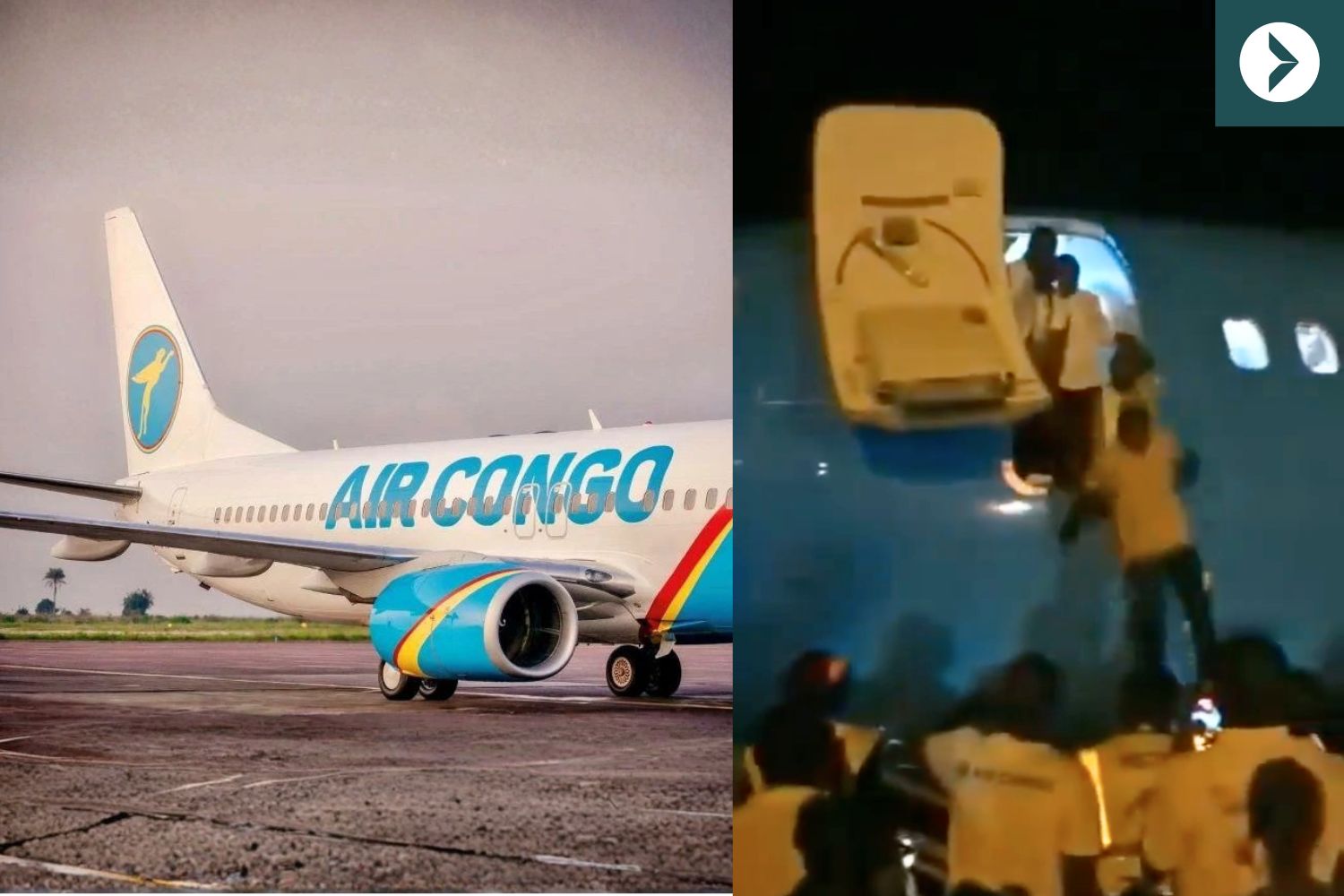
A flight in the Democratic Republic of the Congo ended in chaos when passengers were encouraged to jump down from the aircraft door due to a lack of air stairs at the airport.
According to videos posted online, passengers had waited on the Air Congo Boeing 737 for hours for the airport to provide stairs to get off.
At Kindu Airport (KND), (Maniema) of Democratic Republic of the Congo, passengers of Air Congo company were forced to jump from the Door to get out of the plane as a Passenger Stairs was not made available after hours of waiting inside the cabin post arrival at the gate on… pic.twitter.com/MYAUywwSlD
— FL360aero (@fl360aero) December 19, 2025
Passengers jump from the door of an Air Congo Boeing 737
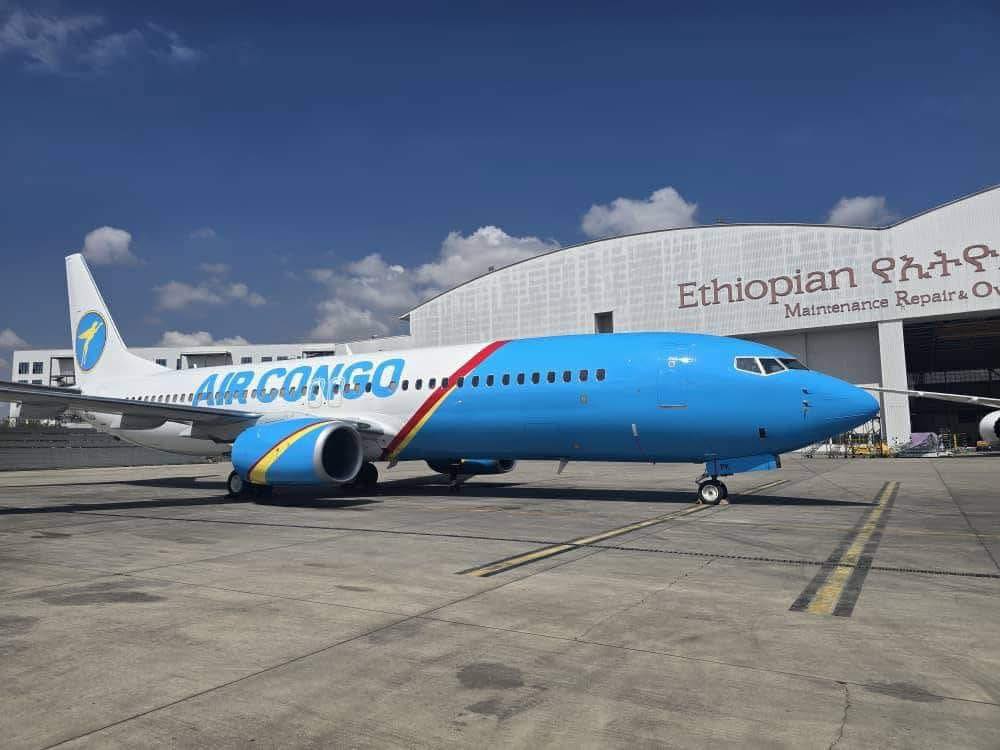
Air Congo operates a pair of Boeing 737-800s, on lease from Ethiopian Airlines. Online reports suggest the incident occurred at Kindu Airport (KND), although that has not been confirmed by the airline or the airport.
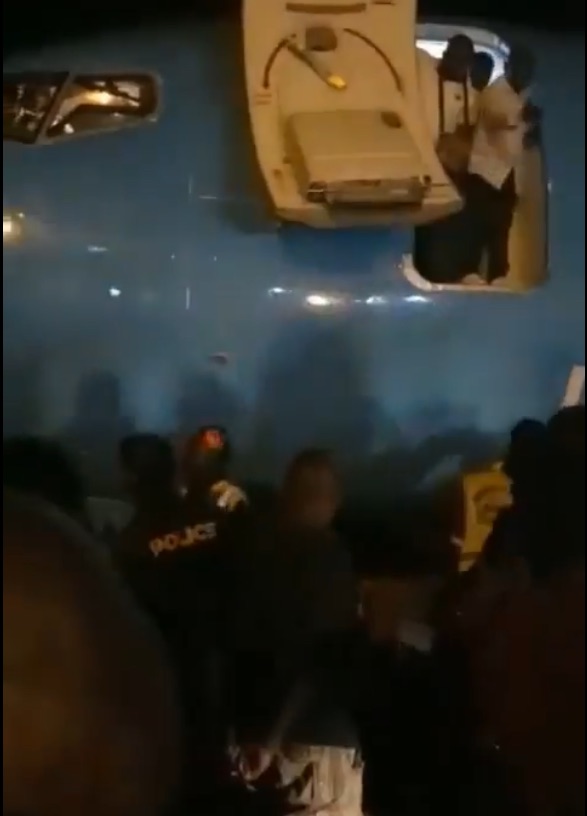
In the video, passengers can be seen handing down luggage before making the jump to the ground. Concerningly, there appear to be Air Congo staff on the ground, as well as ground staff in hi-vis with the word ‘piste’ on the back (meaning runway in French).

The video also shows that the local police were present, although they did not appear to be preventing the unsafe deboarding of the aircraft.
Air Congo is a young airline, launched in December 2024 and based out of N’djili Airport in Kinshasa. It is owned by the DRC government (51%) and Ethiopian Airlines (49%).
Air Congo and Ethiopian Airlines have been contacted for comment; the article will be updated if and when a response is received.
Is it dangerous to jump out of the door of a Boeing 737?
When a 737 is parked at the gate with the aircraft depressurised, engines shut down, and the door opened normally, the aircraft is only a few metres above the ground. In this situation, stepping or even jumping out of the doorway itself is not inherently dangerous, although it would still be highly ill-advised.
A Boeing 737’s forward doors sit roughly 3 to 4 metres above the ground. A fall from that height could easily result in broken bones, head injuries, or spinal damage, especially without assistance or a controlled descent.
In December 2024, a member of TUI cabin crew was seriously injured when the steps were moved away from the aircraft before the door was closed and they fell. They suffered multiple broken bones and required a significant period of recovery following the accident.
Why didn’t Air Congo use the emergency slide?
Although emergency slides are designed to evacuate passengers quickly, deploying them on the ground when there is no immediate danger is not a decision airlines take lightly.
Slides are single-use safety devices. Once deployed, they must be removed, inspected, repacked or replaced entirely, a process that is costly and time-consuming. An unnecessary slide deployment can ground an aircraft for hours or even days, disrupting schedules and stranding passengers far beyond the original flight.
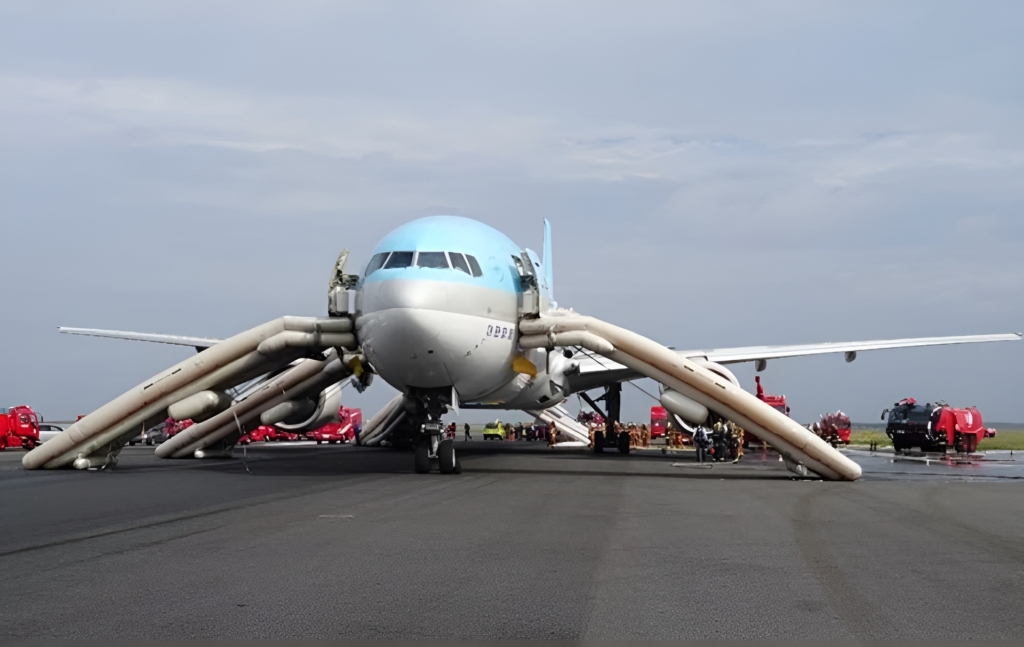
According to US Federal Aviation Administration estimates, replacing the entire escape slide assembly on a Boeing 737 after an inadvertent or maintenance-driven removal can cost around $19,000 per slide, including parts and labour. Even just repacking and inspection costs upwards of $12,000.
Nevertheless, asking passengers to jump from the aircraft door is highly irregular and would be inconsistent with standard commercial aviation practice.
The regulatory response will ultimately depend on the circumstances, local oversight, and whether the airline formally instructed passengers to exit in this way. Even in challenging operating environments, passengers should never be placed in a position where improvisation replaces approved and safe means of disembarkation.
This is a developing story and will be updated when more information is received.