Boeing 777X passes super-hot 2,500°F brake test, advancing certification

4 min read
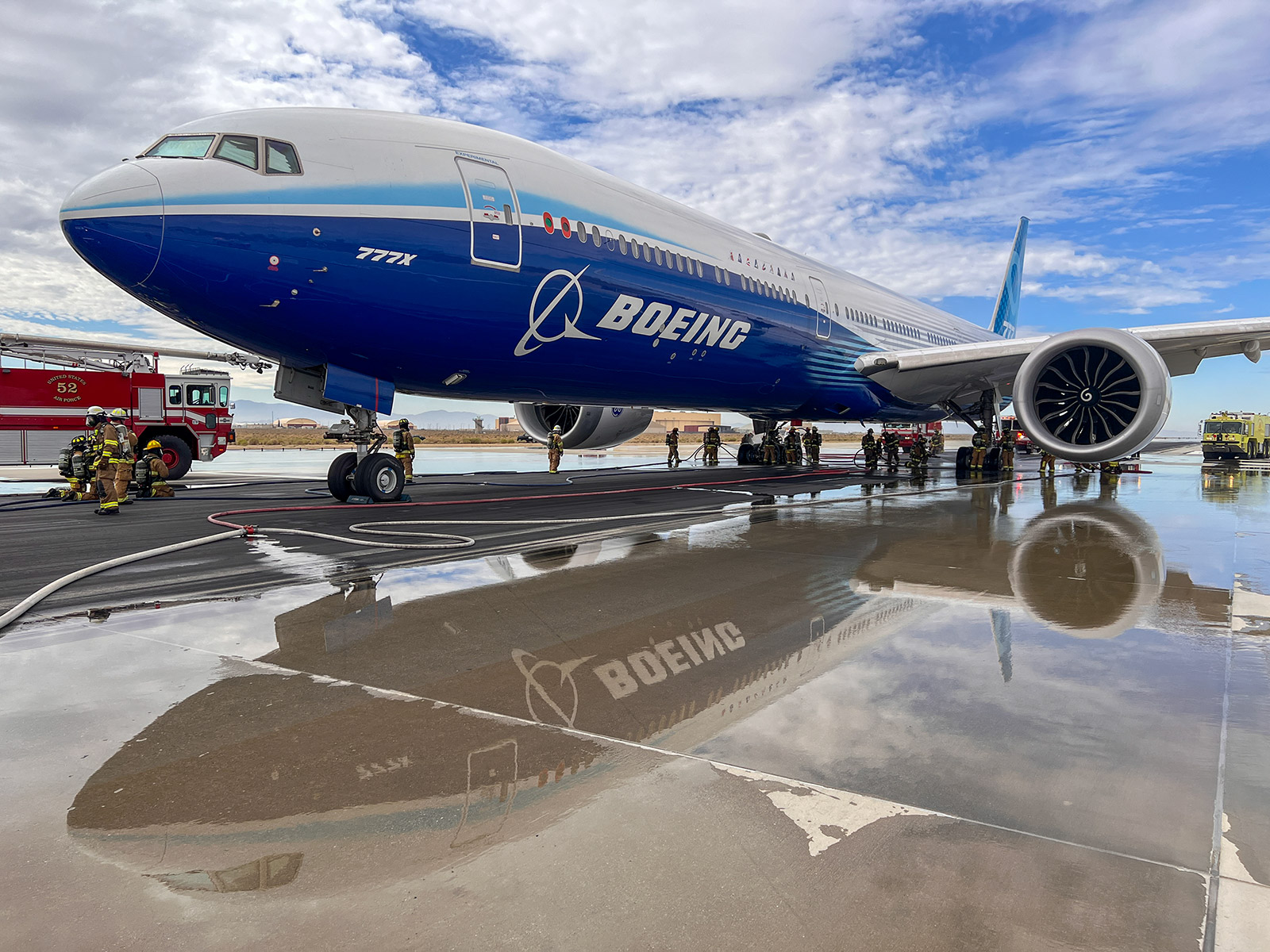
Boeing’s new 777-9, the largest member of the 777X family, has completed a demanding safety test conducted at Edwards Air Force Base in California.
The maximum-energy brake test has pilots perform an aborted takeoff at high speed, with the aircraft loaded to its maximum weight, pushing the jet’s braking system to the limit and generating extreme heat.
Passing the test marks another step forward in the long certification process for Boeing’s next-generation widebody.
Simulating a worst-case rejected takeoff
During the trial, Boeing test pilots accelerated the aircraft to roughly 190 knots before performing a full rejected takeoff with the jet loaded to its maximum takeoff weight.
“We don’t use thrust reversers, so the brakes provide 100% of the stopping power of the aeroplane,” Matt England, 777-9 flight test engineer, explained in the Boeing announcement. To make the test even more challenging, the manufacturer used brakes in an end-of-service-life condition. “We do the condition on brakes that are intentionally machined down to 100% worn, so it’s a worst-case simulation.”
The goal is to ensure the braking system can safely absorb the enormous kinetic energy of a fully loaded widebody jet travelling at high speed, even when the brakes are close to failure.
The aircraft’s brakes absorbed over a billion foot-pounds of energy, causing them to glow red-hot as temperatures climbed above 2,500°F (1,371°C).
“We’re optimising the conditions to make sure we put the most energy we possibly can into those brakes,” said Capt. Heather Ross, 777-9 project pilot, in Boeing’s announcement.
“It’s just conditions that you’ll never see in service,” said Brianna Hitchcock, 777-9 flight test engineer. “But regulations require it, and we test it.”
At such extreme temperatures, the test also proved the emergency function of the aircraft’s landing-gear safety systems. Fuse plugs installed in the wheels melt when heat exceeds safe limits, allowing the tyres to deflate in a controlled manner and preventing a potential explosion from pressure buildup.
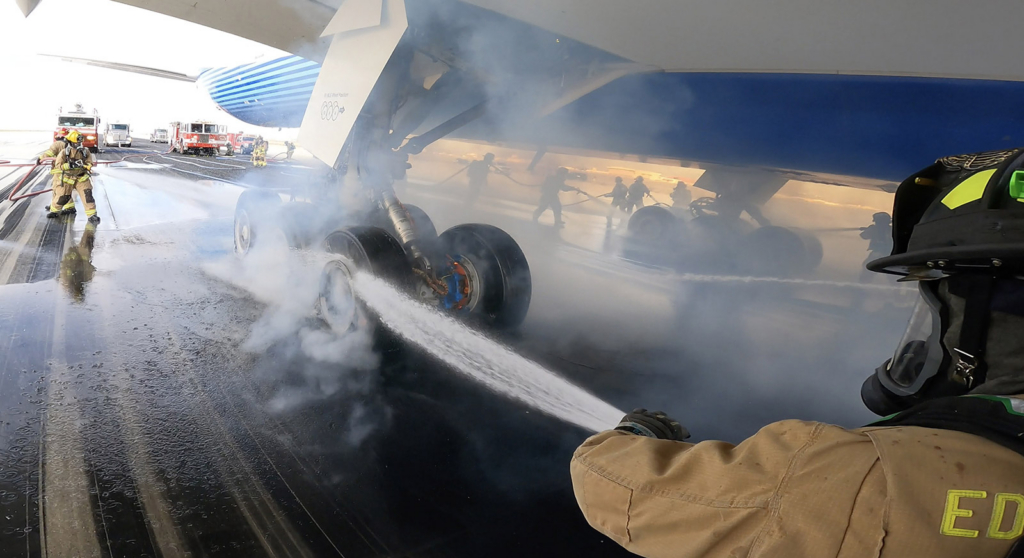
Emergency crews were on standby for the test, but waited before approaching the aircraft after it stopped, to replicate real-world response time following a high-energy rejected takeoff. After five minutes, firefighters then cooled the wheels and brakes with water.
“Maximum brake energy is one of the most highly choreographed tests that we do,” said Madison Strauss, 777-9 test director, in Boeing’s account of the trial.
“The conditions were executed flawlessly,” Ross added. “I’m incredibly proud of the aeroplane and the team.”
Maximum-energy break testing is standard for new aircraft types
Aircraft certification involves extreme performance parameters. Regulators require proof that the aircraft can withstand the toughest imaginable environmental, mechanical and technological trials so they can be confident the aircraft will be safe when it enters service, even under irregular circumstances.
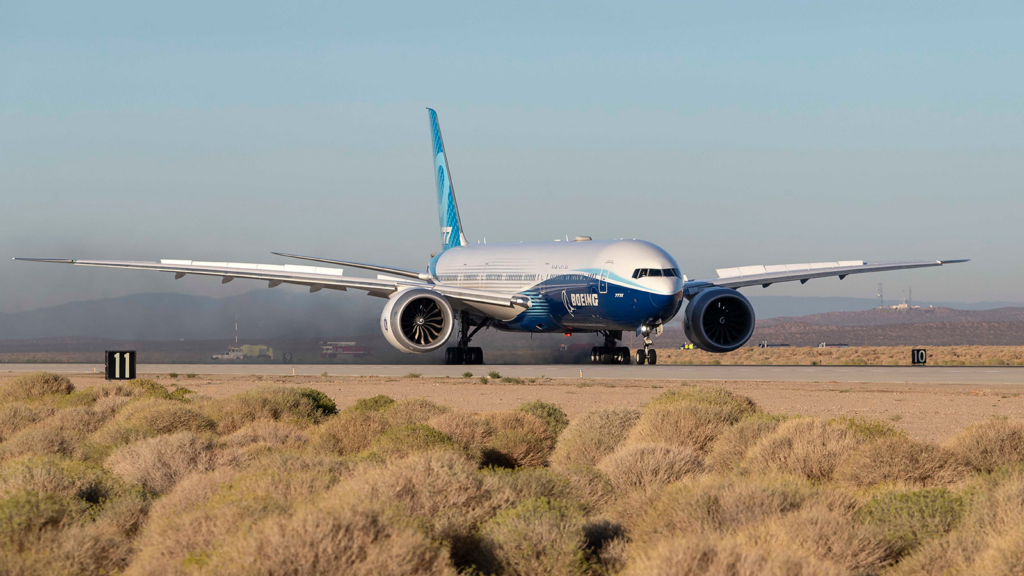
Large transport aircraft must undergo maximum-energy brake testing as part of their certification requirements under the FAA (14 CFR 25.735) and EASA airworthiness regulations. The test proves that an aircraft can safely stop during a high-speed rejected takeoff at maximum takeoff weight without catastrophic brake or tyre failure.
While Boeing’s recent 777-9 test is dramatic due to the size and weight of the new aeroplane, the same requirement applied to other modern widebody aircraft programs, like the Airbus A350 and the Boeing 787 Dreamliner.
A critical trial for Boeing’s long-delayed new widebody
The 777X program, Boeing’s next-generation successor to the 777-300ER, features several major design changes, including composite wings with folding tips, GE9X engines, and a wider passenger cabin.
The aircraft has suffered multiple development delays due to certification requirements and scrutiny of Boeing’s safety processes following Alaska Airlines’ 737 MAX mid-exit doorplug blowout.
Completing the maximum brake energy test proves that the aircraft can safely handle extreme operational scenarios.
“We’ve had a lot of experience with this aeroplane–there really isn’t a system that we haven’t tested,” Ross said. “Everybody is working together to show we meet the requirements.”
Terry Beezhold, vice president and general manager of the 777-9 programme, added: “The team demonstrated impressive dedication and resolve to complete these critical tests.”
Boeing is now targeting first deliveries of the 777-9 around 2027, with Lufthansa as the launch operator.
Featured Image: Boeing
Sign up for our newsletter and get our latest content in your inbox.


More from

October 13, 20263 min read

October 13, 202612 min read

October 13, 202612 min read