United Airlines raises bag fees by $10 as jet fuel prices surge

4 min read
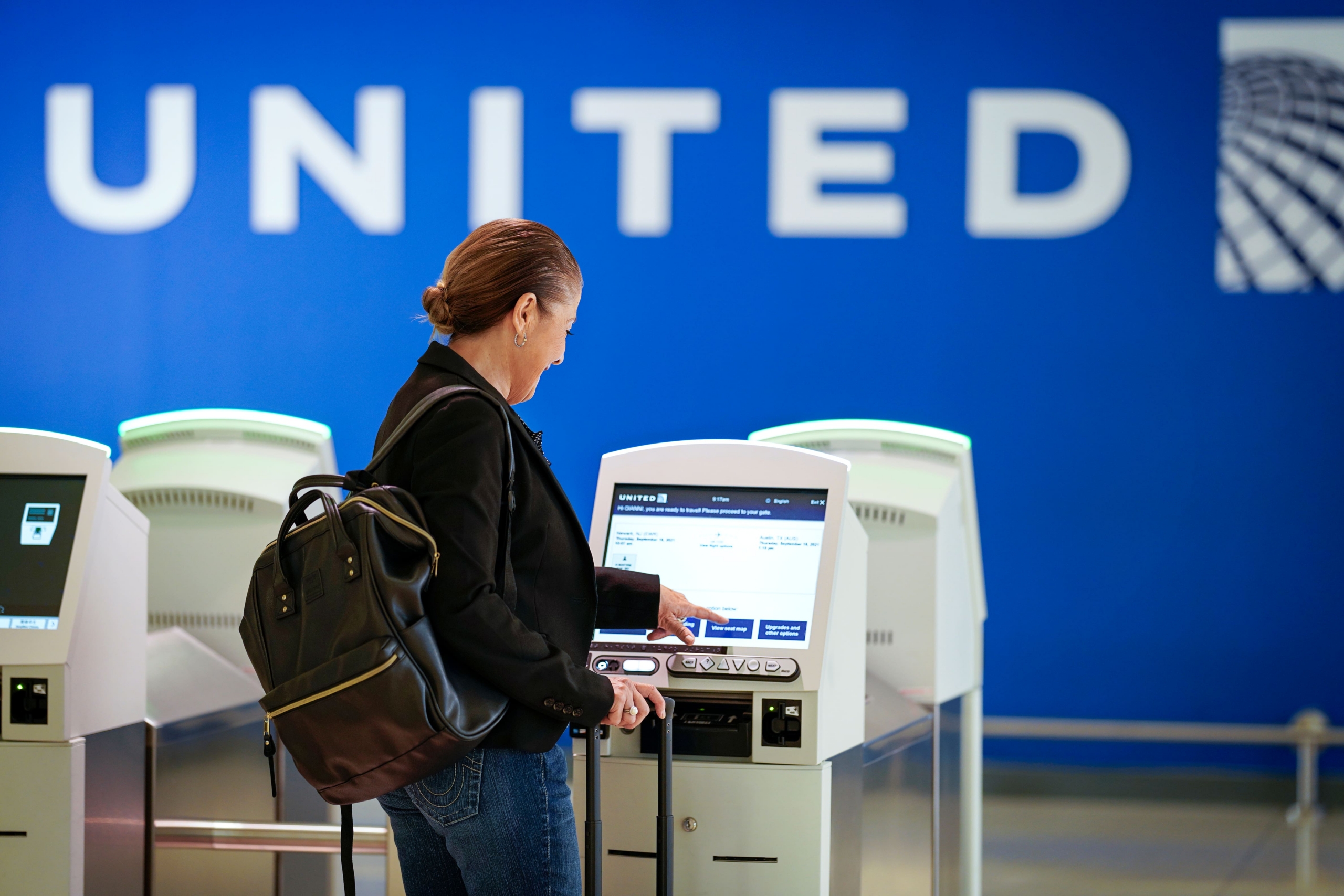
United Airlines has increased checked baggage fees by $10, adjusting its ancillary charges as the aviation industry grapples with rising jet fuel costs.
The change applies to tickets purchased from early April 2026 and affects most routes within the US, Canada, Mexico and Latin America. The fee hike comes as United’s CEO has warned that a sustained increase in jet fuel costs could force the airline to raise fares.
New baggage fees at United Airlines
The increase marks United’s first baggage fee rise in roughly two years, as the Middle East conflict raises cost pressures across the airline industry.
United’s new bag fee pricing structure:
- First checked bag: $45 if prepaid, $50 if paid within 24 hours of departure
- Second checked bag: also increases by $10 to $55 if prepaid, and $60 if paid within 24 hours
- Third bag: increases by as much as $50, depending on route, up to $200
As reported by CNBC, United said customers who are eligible for free checked baggage—including MileagePlus elite members, United credit card holders, premium cabin passengers and active military personnel—will continue to receive that benefit.
JetBlue and American have also raised bag fees
United is not alone in turning to ancillary fees to offset rising operating costs. At the end of March, JetBlue raised the price of its first checked bag to $49 on peak days, up from $40.
“As we experience rising operating costs, we regularly evaluate how to manage those costs while keeping base fares competitive,” a spokesperson for JetBlue told Business Insider.

Not all baggage fee hikes are directly related to the surge in jet fuel costs. As Business Traveller reported in February, before the US launched Operation Epic Fury against Iran, American Airlines increased its fee for a second checked bag to $50 when paid at the airport, while keeping a lower prepaid rate and leaving its first bag fee unchanged.
Other US carriers have not yet adjusted their baggage fees, but rising costs could spur a wave of increases in ancillary fees and air fares if fuel costs remain high.
Jet fuel prices have surged in recent weeks
The airline industry is grappling with a rapid spike in aviation fuel prices driven largely by tensions in the Middle East, which have led to oil market volatility following the closure of the Strait of Hormuz.
As reported by The Street, Jet fuel prices in the US rose from about $2.11 per gallon at the start of 2026 to roughly $3.40 by early March, a 60% jump in just two months.
Fuel typically accounts for 20–30% of airline operating expenses, making it one of the industry’s largest cost categories, along with labour.
The International Air Transport Association (IATA) has warned that volatility in jet fuel prices can be more damaging to airlines than higher fuel prices alone. From 2011 to 2014, jet fuel prices reached $124 per barrel, but the industry adapted by adjusting fares and capacity and finding efficiency gains to offset the higher operating costs.
“The most damaging episodes occur when fuel prices rise rapidly, and airlines do not have time to adapt their strategy,” IATA states in an update published this March.
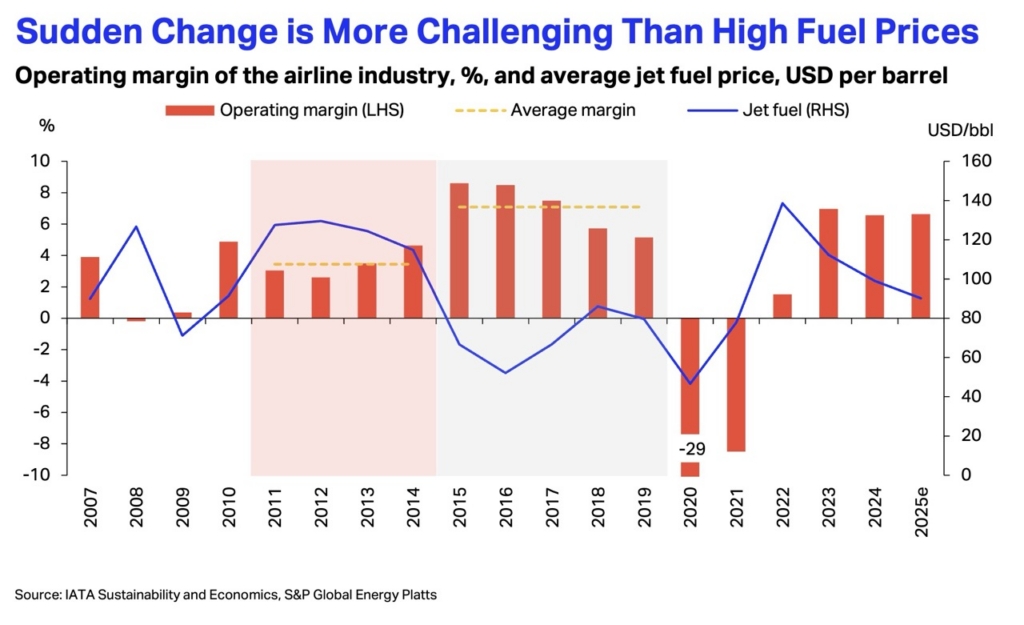
For example, during the 2008 oil crisis, jet fuel prices rose suddenly by 40%, reaching $127 per barrel, which would be equivalent to $190 per barrel in 2025 dollars. Airlines could not adjust their fares and fees in time to offset higher fuel costs, leading to a collapse in the industry’s operating margins, from 4% to near zero.
“Airline profitability is highly sensitive to the speed of fuel price changes,” IATA states. “When fuel prices remain elevated but stable, airlines can adjust pricing and operations gradually and continue to operate profitably, although typically with thinner margins. Fuel price shocks, however, push costs higher faster than revenues can adjust, and pose an elevated risk of eroding margins and industry profits.”
Airlines raising fares and adjusting fuel surcharges
With fuel costs rising rapidly, airlines have several options: increase fares, introduce fuel surcharges, cut capacity, or raise ancillary fees such as baggage charges.
Cathay Pacific has announced it would adjust its fuel surcharges due to rising costs amid the conflict in the Middle East.
“To enable a more agile response to the volatile jet fuel prices, we will review and revise the fuel surcharge every two weeks to better capture jet fuel price movements in either upward or downward direction. This increased frequency of review is intended as a temporary measure and will be revisited when the Middle East situation stabilises,” the airline stated.
Qantas and Air New Zealand have raised fares to adjust for the spike in fuel costs. In Europe, SAS has also temporarily increased its fares to offset higher fuel prices.
United’s CEO Scott Kirby has said the airline might need to raise fares by as much as 20% if jet fuel prices remain elevated.
“If oil prices stay where they are today, that’s $11 billion of expense for us, and that would require prices to be up 20% to break even—to cover that cost,” Kirby told Bloomberg.
For now, United has opted to raise baggage fees as one of the fastest ways to pass high fuel costs on to travellers without immediately raising fares.
Featured Image: United Airlines
Sign up for our newsletter and get our latest content in your inbox.


More from


October 13, 202612 min read