Artemis II rolls back to launch pad as NASA targets April window

6 min read
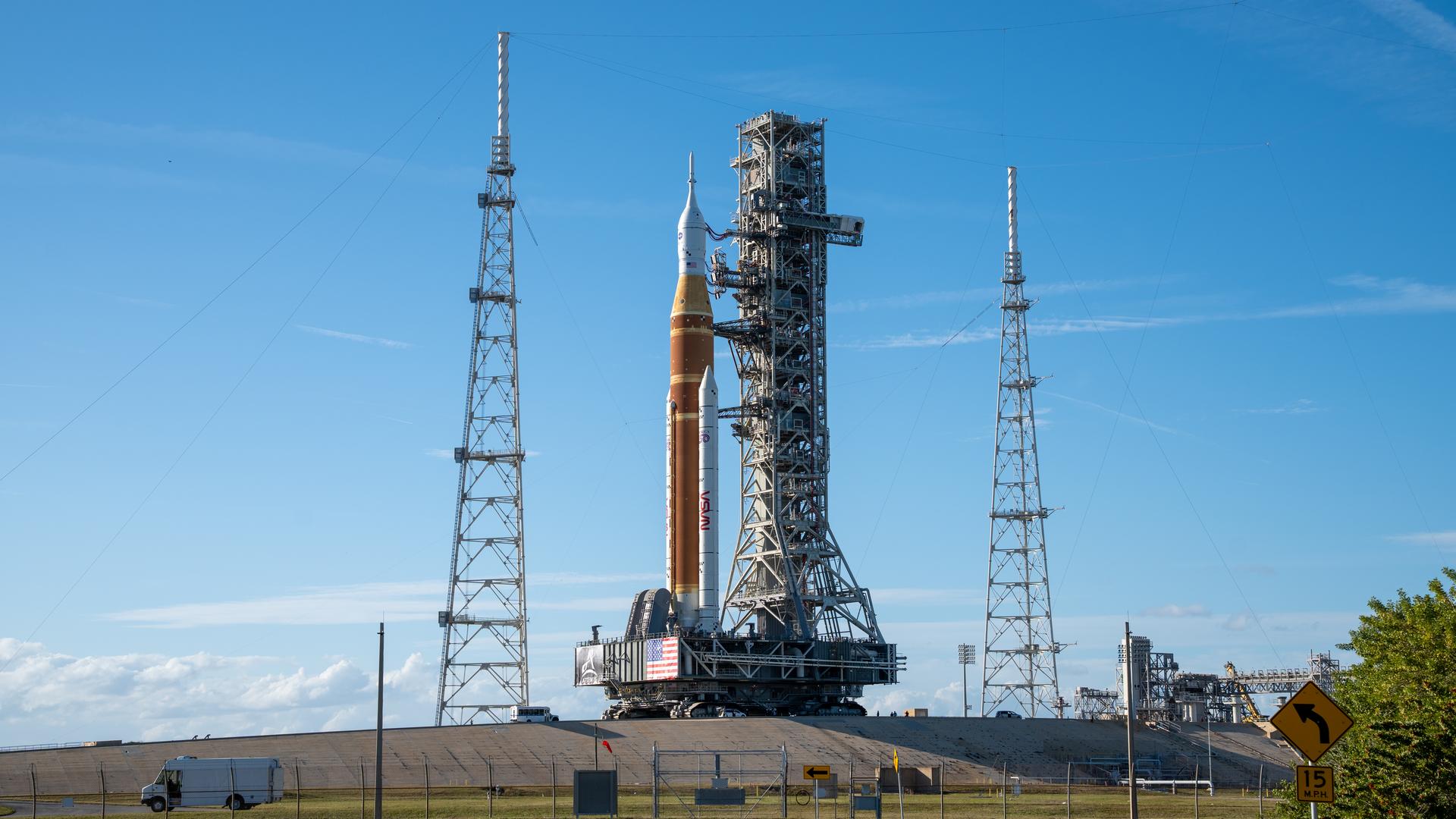
NASA’s Artemis II rocket and its four-person crew are steadily moving toward a long-awaited launch pad rendezvous in April, marking a critical step forward for the agency’s first crewed lunar mission in more than half a century.
NASA said engineers are preparing to roll the Space Launch System (SLS) rocket and Orion spacecraft to Launch Pad 39B at Kennedy Space Center, while the crew—Reid Wiseman, Victor Glover, Christina Koch and Canada’s Jeremy Hansen—has entered pre-flight quarantine in Houston, a routine but symbolic milestone as the mission edges closer to flight.
The target remains an early April launch window, with April 1 currently identified as the earliest opportunity and additional launch dates extending through April 6, subject to final checks and conditions.]
Potential April launch windows for Artemis II
| Local date | Local time (EDT) | UTC date/time | Lighting | Duration (mins) |
|---|---|---|---|---|
| 01 April 2026 | 06:24 PM | 22:24 | 1.28 hours before sunset | 120 |
| 02 April 2026 | 07:22 PM | 23:22 | 0.32 hours before sunset | 120 |
| 03 April 2026 | 08:00 PM | 00:00 (04 Apr) | 0.30 hours after sunset | 120 |
| 04 April 2026 | 08:53 PM | 00:53 (05 Apr) | 1.17 hours after sunset | 120 |
| 05 April 2026 | 09:40 PM | 01:40 (06 Apr) | 1.95 hours after sunset | 120 |
| 06 April 2026 | 10:36 PM | 02:36 (07 Apr) | 2.87 hours after sunset | 120 |
| 30 April 2026 | 06:06 PM | 22:06 | 1.86 hours before sunset | 120 |
Artemis II: NASA’s first crewed Moon mission since Apollo
Artemis II is not just another test flight. It represents NASA’s first crewed journey beyond low Earth orbit since the Apollo era, sending astronauts on a loop around the Moon before returning to Earth.
The mission will validate the systems that will underpin future lunar landings, including life support, deep-space navigation, communications and crew operations.
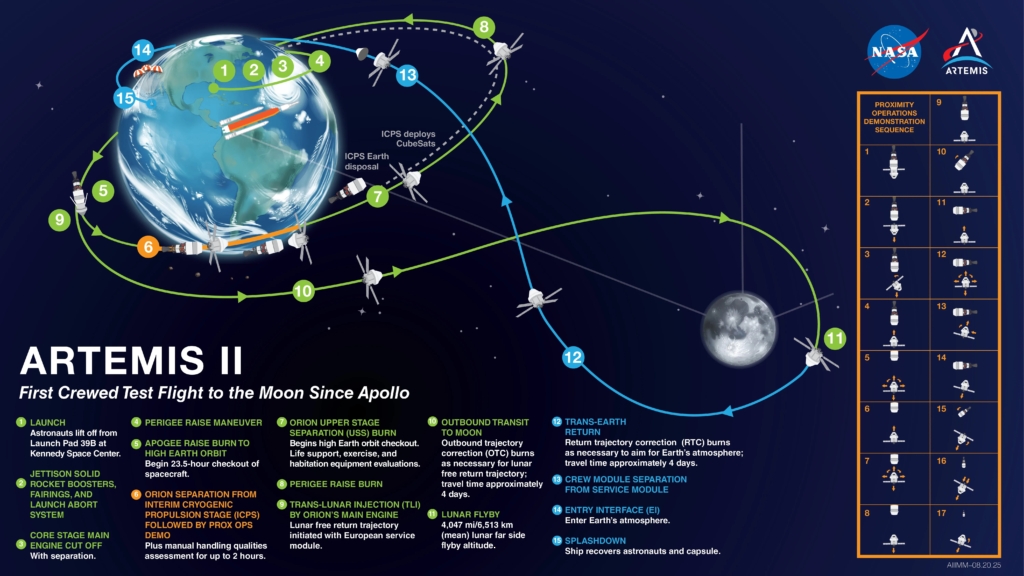
It is a decisive step toward Artemis III, which aims to return humans to the lunar surface later this decade.
Unlike Artemis I, which flew without a crew, Artemis II raises the stakes significantly. Every system must perform as expected, and any anomaly, however small, demands scrutiny.
Artemis II launch delayed by system issues
The road to this launch window has been shaped by repeated technical challenges, forcing NASA to prioritise caution over schedule.
Earlier plans had included potential launch opportunities in March. However, a helium flow anomaly detected in the rocket’s upper stage forced a halt to countdown preparations.
Engineers determined that the issue, linked to the system responsible for pressurising propellant tanks, required more extensive inspection than could be safely conducted at the launch pad.
The decision was made to roll the rocket back to the Vehicle Assembly Building (VAB), a move that effectively delayed the mission and ruled out any near-term launch attempt.
This marked at least one major delay in the current campaign, adding to earlier disruptions caused by hydrogen leaks during fuelling tests, an issue that has persisted across the Space Launch System programme since Artemis I.
Inside the VAB, engineers replaced components, conducted detailed inspections and repeated tests to ensure the helium system was functioning correctly. The rollback also allowed teams to carry out additional work on batteries and other critical systems under controlled conditions.
Why the helium anomaly posed a risk to the NASA mission
Helium plays a quiet but vital role in rocket operations. It is used to pressurise fuel tanks and ensure the steady flow of propellants into the engines.
Any irregularity, particularly in the upper stage that propels the Orion spacecraft toward the Moon, can have serious implications.
In a crewed mission, such risks are unacceptable.
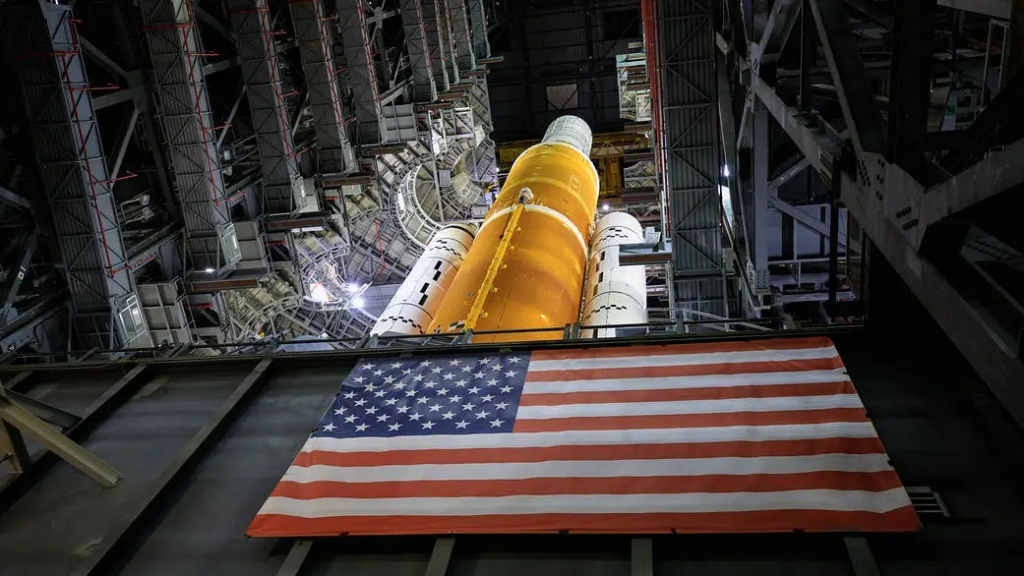
NASA’s decision to step back, diagnose the issue thoroughly, and retest reflects a broader engineering philosophy: anomalies discovered on the ground are manageable; anomalies in deep space are not.
The approach has been shaped, in part, by lessons from past programmes where schedule pressure competed with technical caution. In Artemis II’s case, the balance has clearly tilted toward safety.
Artemis II rollout: NASA returns SLS rocket to the launch pad
With repairs complete and confidence restored, Artemis II has now re-entered its final pre-launch phase.
NASA formally cleared the mission to proceed following its Flight Readiness Review in mid-March, with teams polling “go” to move toward launch.
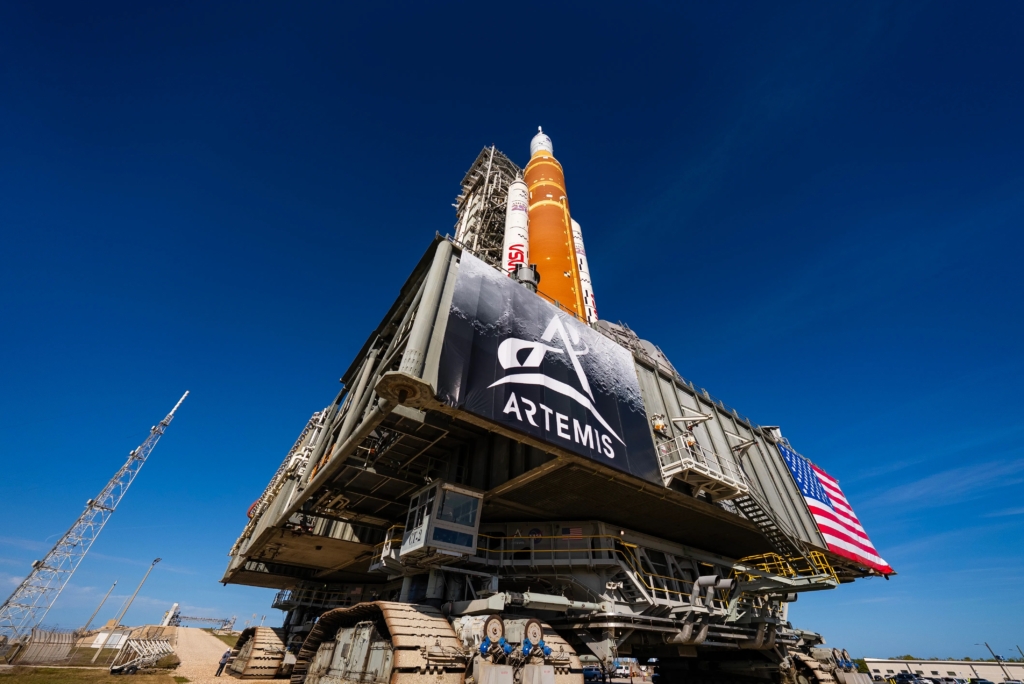
The rollout to Launch Pad 39B is one of the most visible milestones in this process. The fully assembled rocket, standing nearly 100 metres tall and weighing around 11 million pounds, will be transported by crawler-transporter 2 at a speed of roughly one mile per hour.
The journey from the Vehicle Assembly Building to the launch pad spans about four miles and can take up to 12 hours.
The slow pace is deliberate. Moving what is effectively a mobile skyscraper requires extreme care to avoid structural stress and to allow engineers to monitor every aspect of the vehicle during transit.
Artemis II crew enters quarantine ahead of launch
While the rocket makes its journey to the pad, the astronauts themselves are entering the final phase of preparation.
The four-member crew began quarantine in Houston to minimise the risk of illness ahead of launch. They will remain in isolation before travelling to Kennedy Space Center roughly five days before liftoff, where they will continue quarantine and participate in final rehearsals.

These preparations include suit checks, launch-day simulations and familiarisation with the sequence of events leading up to liftoff.
For the crew, the mission carries both operational and symbolic weight. It will mark humanity’s return to deep space after more than five decades, pushing farther from Earth than any human mission since Apollo 13.
Final launch checks as NASA targets April liftoff
Once the rocket reaches the launch pad, engineers will begin a series of final checks designed to confirm that all systems are ready for flight.
These include validating repairs to the helium system, conducting pressure tests and rehearsing elements of the countdown without fuelling the rocket.
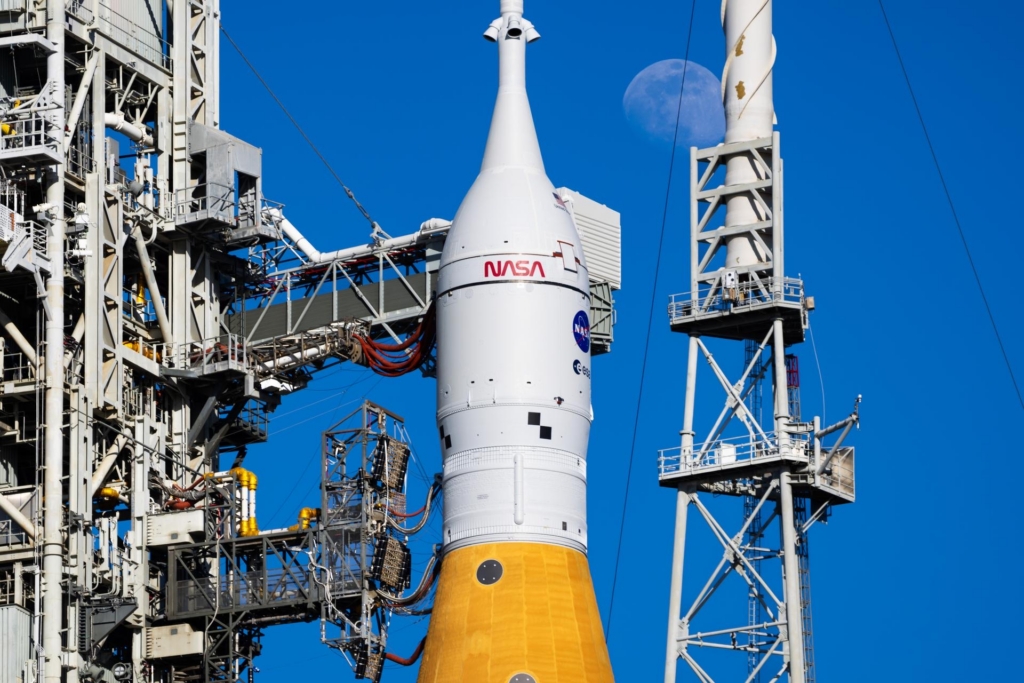
Controllers will also run simulations using the same systems that will be used on launch day.
Only after these checks are complete will NASA’s mission management team make the final decision to proceed with launch.
Even then, the timeline remains fluid.
Weather conditions, technical considerations or additional data reviews could still shift the launch date within the available window.
Why Artemis II is critical to NASA’s Moon programme
Artemis II sits at the heart of NASA’s broader lunar ambitions. Its success is essential not only for the next mission in the sequence but for the credibility of the entire Artemis programme.
The mission will test the integrated performance of the Space Launch System and Orion spacecraft in a crewed configuration, laying the groundwork for future lunar landings and sustained human presence on the Moon.
Delays, while frustrating, are part of that process.
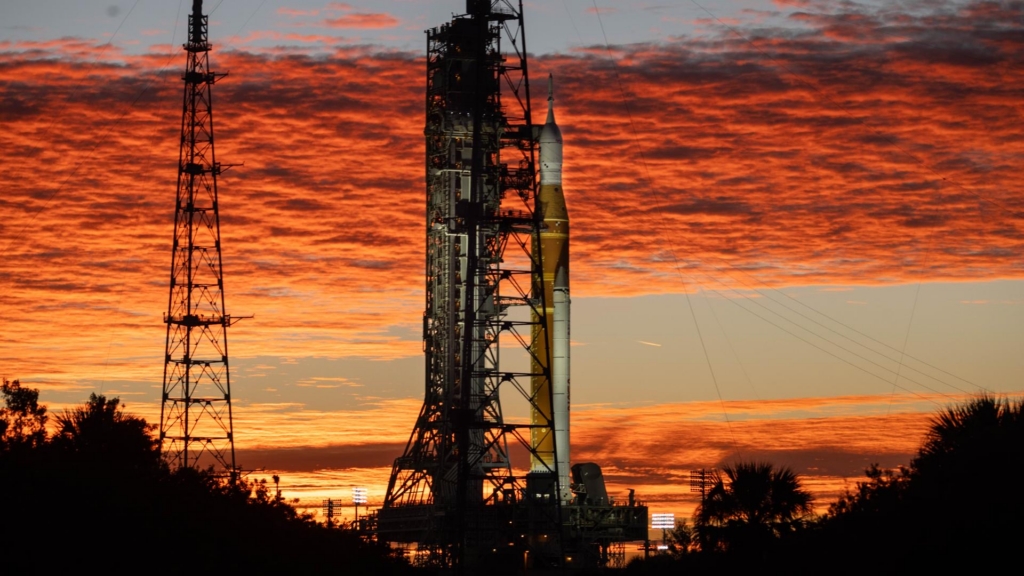
The Artemis programme has already demonstrated that building and flying one of the most powerful rockets ever developed is a complex and iterative effort.
Each setback has provided data, and each delay has reinforced the importance of precision in deep-space missions.
For now, Artemis II is back on track. The rocket is ready to move. The crew is preparing. The systems have been tested, retested and scrutinised.
If all goes to plan, the coming days will see the mission transition from preparation to execution, as NASA takes another step toward returning humans to the Moon.
Featured image: NASA