


Ukraine narrows long-range strike gap with new missiles and drones

8 min read
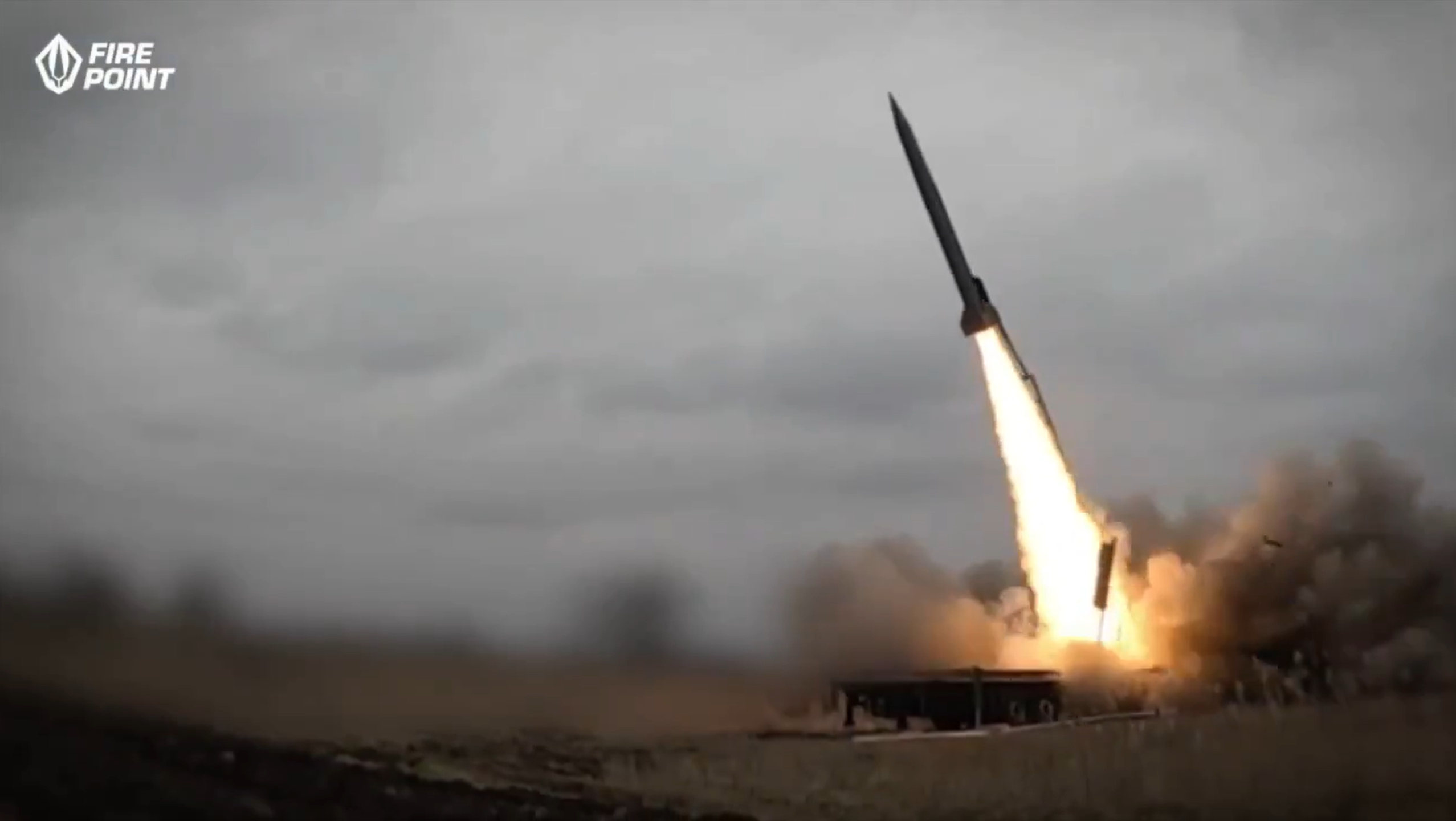
Over the last year, Ukraine’s long-range drone, cruise missile, and ballistic missile development and production have leveled up. Ukraine is not only constantly developing new systems, but it is also improving its existing systems. It is unclear if Ukraine will be able to completely close the long-range strike gap with Russia, but it is certainly rapidly narrowing it.
Ukraine’s ballistic missiles
Until now, Ukraine didn’t have ballistic missiles in its aersonal and this was one of the major gaps in capability between Ukraine and Russia. But this is now changing.
🚀The very first public footage of Ukraine’s FP-7 ballistic missile launches marks a new chapter in the country’s military capabilities. https://t.co/xU2WAwfwEh pic.twitter.com/r7LdmU2HQ5
— Special Kherson Cat 🐈🇺🇦 (@bayraktar_1love) February 27, 2026
In February 2026, the OSINT account Special Kherson Cat reported, “The very first public footage of Ukraine’s FP-7 ballistic missile launches marks a new chapter in the country’s military capabilities.”
According to reporting by MAK 25, Fire Point’s co-owner Denis Shtilerman stated, “They made a clone of the S-300 missile for existing launchers, so that after integration with radars they could create an anti-ballistic shield – ‘Freya’ project.” Shitlerman added that they are cheaper than the S-300 as Ukraine has simplified the design and new production technologies.
Select Fire Point products:
- FP-1: One-way attack drone
- FP-2: Larger, longer-range one-way attack drone
- FP-5 Flamingo: Long-range heavy cruise missile
- FP-7: Short-range ballistic missile
- FP-9: Upcoming extended range FP-7 ballistic missile
The missile was announced by Fire Point in late 2025, saying mass production was already underway and that it would have a range of 200 km and a top speed of 1500 m/s, while carrying a 150 kg warhead.
It is described as a cheap analogue of the US Army ATACMS, which is 2.5 times the price. It is also described as being free of bottleneck production.
Ukrainian company Fire Point plans to field its FP-7 ballistic missile this year, with mass production already underway. The FP-7 boasts a 200 km range, 1500 m/s top speed, 14 m CEP, and a 150 kg warhead. An extended-range FP-9 (850 km) is due mid-2026. Meanwhile, Fire Point is… pic.twitter.com/8yyxUn5duc
— NOELREPORTS 🇪🇺 🇺🇦 (@NOELreports) November 21, 2025
Fire Point added that the extended-range FP-9 is expected in mid-2026 and would have a range of 850 km. This short-range ballistic missile is expected to have a warhead of 800 kg.
Ukrainian cruise missiles
Ukraine technically started the war with its first fledgling domestic cruise missiles. These were its Neptune anti-ship cruise missiles that it had in extremely limited numbers, with which it was able to score extremely lucky hits on Russia’s Black Sea flagship, the Moscva, sinking it.

Since then, Ukraine has developed land-attack variants of the Neptune missile that it has used to attack various Russian targets.
In late 2025, Ukraine unveiled the FP-5 Flamingo to much fanfare. It is a heavy cruise missile that Ukraine claims has a very large warhead and extra long range.
But then months went by, and little materialized, with some suggesting it was overhyped. However, in February 2026, Ukraine appeared to score a couple of successful strikes with its Flamingos, some 1,300 kilometres from the frontlines, deep in Russia.
Ukrainian General Staff confirms the strike on Votkins plant in Udmurtia region of Russia using FP-5 Flamingo missiles.
— Anton Gerashchenko (@Gerashchenko_en) February 21, 2026
The plant produces intercontinental ballistic missiles, ballistic missiles for submarines, Iskander missiles and Kinzhal missiles. https://t.co/tWL8vsNumc pic.twitter.com/ZJNIbBmcR3
The Flamingo uses old engines that Ukraine “found in a dump.” These are restored to the point that they can make one last flight. In March 2026, Fire Point’s Denis Shtilerman said that the missile still has an engine problem that the company is still in the process of resolving.
Shtilerman says Ukraine is planning to launch strikes on Moscow, as “strikes on the Russian province do not impress the Russian elite.” He estimated that around 25% of the FP-5 missiles fired should be able to make it through Moscow’s exceptionally dense air defences and hit their targets.

Shtilerman notes that cruise missiles and drones are unable to reach Moscow as they all get shot down. The Flamingo skims over the terrain at an altitude of just 40 metres, making it difficult to intercept. He also said the launchers for the FP-7 and FP-5 missiles will look like ordinary trucks so that Russia can’t track them.
Get the latest aerospace defence news here on AGN.
Ukraine’s one-way attack drones
While Russia seems to be relying on the easy-to-shoot-down Shahed-type one-way attack drones, Ukraine seems to be relying on its FP-1 and FP-2 medium-range drones and other similar drones.
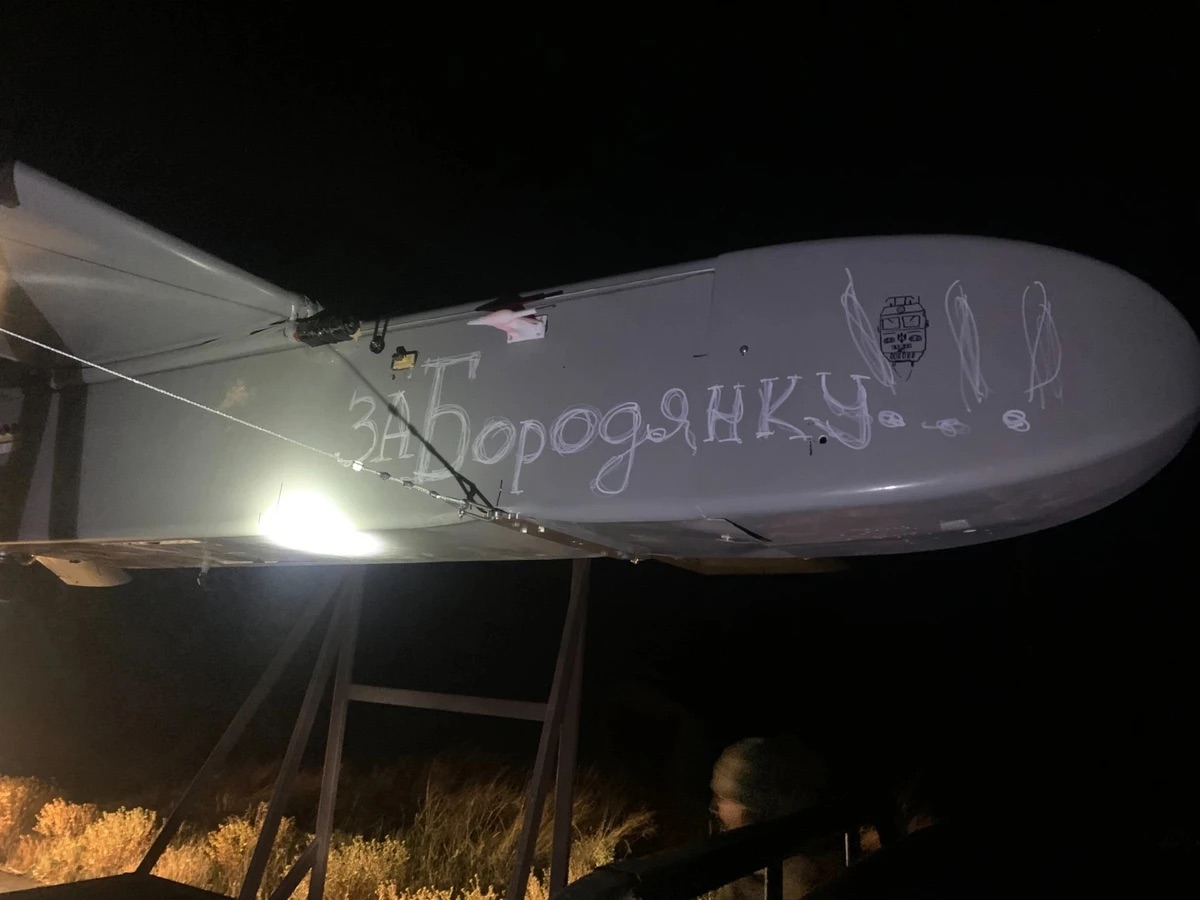
These appear to have recently leveled up with a seemingly daily torrent of videos coming from Ukraine showing FP-1/2s hunting down Russian air defence systems.
In recent weeks, they have destroyed a large number of Russian Tor, Buk, and Pantsir medium and short-range air defence systems as well as large numbers of long-range high-end S-300, S-400, and even S-500 launchers, radars, and other equipment.
🇺🇦🇷🇺 Ukrainian MoD released a video showing them targeting a 98L6 Yenisei surveillance radar of the S-500 Prometheus air & missile defense system.
— Colby Badhwar 🇨🇦🇬🇧 (@ColbyBadhwar) March 6, 2026
The same model was struck previously in August 2025 in Crimea. pic.twitter.com/95LEDwwLWb
Shtilerman says that FP-1 drones are constantly being improved. Recent testing has allowed them to navigate using night cameras and without the use of GPS.
He claims a whopping 200 FP-1/2 drones are being produced daily, and the company can easily increase the production rate by 2-3 times.
🔥Ukrainian @usf_army struck four Russian air defense systems overnight on March 6 in Zaporizhzhia and Kherson regions.
— Special Kherson Cat 🐈🇺🇦 (@bayraktar_1love) March 6, 2026
Targets included Buk, S-300V, Pantsir-S1, and Tor systems. The strikes were carried out with Ukrainian FP-2 strike drones equipped with 60 kg and 100 kg… pic.twitter.com/LlQOhJoPaE
Shtilerman also said work is underway to increase the warhead capacity of the FP-1 to 105 kg at a range of 1,000 km, and the FP-2 to 158 kg, thanks to a new wing-integrated fuel tank design.
Ukraine’s development of cheap interceptor drones
In addition, Ukraine’s cheap interceptor drones are taking an ever greater role in defeating swarms of cheap Russian Shahed-type drones.
Much ink has been shed on, so-called the shot exchange problem that a Patriot interceptor missile costs around $3.7 million, and a Shahed drone costs $20,000 to $50,000, depending on the variant.
Another timely graphic from Covert Shores, showing Ukrainian drone interceptors. https://t.co/9R2T73n49J pic.twitter.com/eNmkJN1D1C
— Samuel Bendett (@sambendett) March 9, 2026
But these discussions are frequently clickbait or otherwise disengenious. The Patriot was not designed to intercept Shaheds, although it can. Ukraine does not expend its precious few Patriot missiles or other similar (NASAMS, SAMP/T) missiles on Shaheds.
Instead, it has developed a range of interceptor drones that cost as little as $1,000 each. Some sources claim the costs are around $2,500 each; there are many varieties with various costs. At the high-end, estimates are as high as $15,000 each.
H I Shutton’s list of interceptor drones:
- Wild Hornets Sting-II: Speed up to 315 km/h
- Tenebris Bagnet: Speed up to 250 km/h
- Skyfall P1-Sun: Speed up to 400 km/h
- Octopus-100: Speed, unclear
- ODIN Win_Hit: Speed up to 280-300 km/h
- Vinnytsky Bdzholy VB140 Flamingo: Speed, unclear
- TYTAN Technologies Tytan: Speed up to 300 km/h
- Project Eagle Merops: Speed up to 280 km/h
Some claims are that some variants have an interception rate of 60%, while others claim hit rates as high as 95% for some variants.
Another Shahed has been shot down by interceptor STING.
— Wild Hornets (@wilendhornets) December 7, 2025
The enemy UAV was targeting critical infrastructure and civilians, but our warriors intercepted it in time. https://t.co/u4NvSqrwxN pic.twitter.com/Q8WcEaXAV7
Open source analyst, H I Shutton has compiled a (very helpful) list of Ukraine’s known drone interceptors with descriptions of each. He says, “The interceptor drones continue to evolve, ranging from modified high-performance quadcopters to streamlined, projectile-like designs, and even a handful of fixed-wing types.”
Even if Ukraine is spending several interceptor drones on each Shahed, the cost balance of the shot exchange problem shifts back to Russia, having the problem that Ukraine is only paying in the low thousands, while taking down a drone costing in the tens of thousands.
Slow-motion footage of Shahed being shot down with an M134D Minigun mounted on a Mi-8 helicopter. pic.twitter.com/kw0tgK9Mwu
— Special Kherson Cat 🐈🇺🇦 (@bayraktar_1love) February 5, 2026
The main reason why Shahed drones can cost a lot to shoot down is that units are not equipped with the right tools for the job. If all they have is a high-end air-to-air missile or a high-end interceptor missile, then that is what they will use to neutralize the threat.
Ukraine has been using modified helicopters and even a very old (and successful) An-28 passenger aircraft to shoot them down. The UAE has also released footage of its AH-64 Apache attack helicopters machine-gunning them down.
Featured Image: Fire Point
Sign up for our newsletter and get our latest content in your inbox.


More from

October 4, 20264 min read


October 3, 20267 min read


