


100 years of the Swedish Air Force: How it’s changed over the decades

7 min read
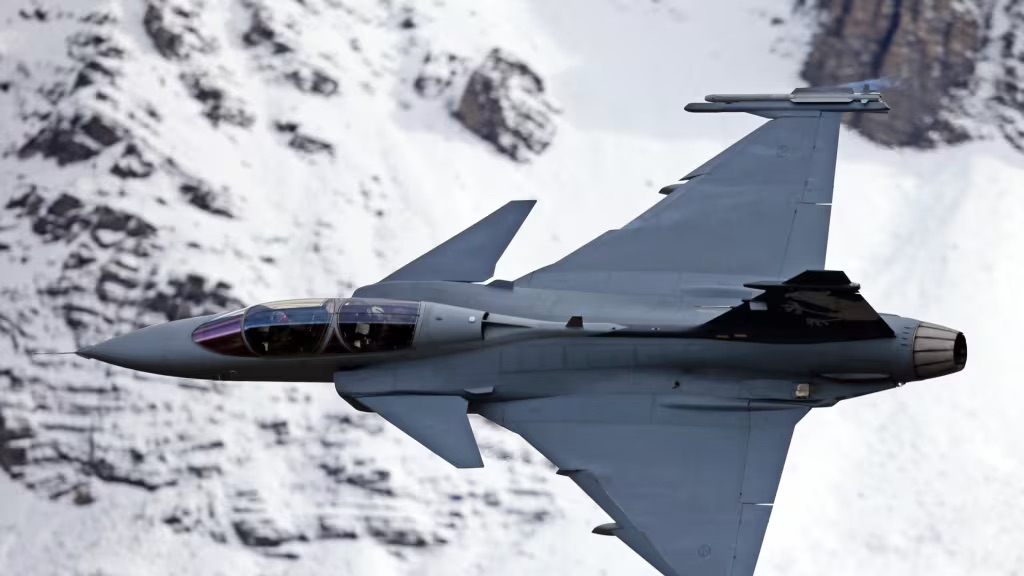
To understand the history of the Swedish Air Force, it is critical to understand Sweden’s 200-year policy of neutrality. Neutrality is a policy it held from the end of the Napoleonic Wars until its accession into NATO in 2024 following the Russian invasion of Ukraine.
Early & WWII history of Swedish Air Force
The Swedish Army developed its aviation arm during WWI, a conflict in which Sweden managed to remain neutral.
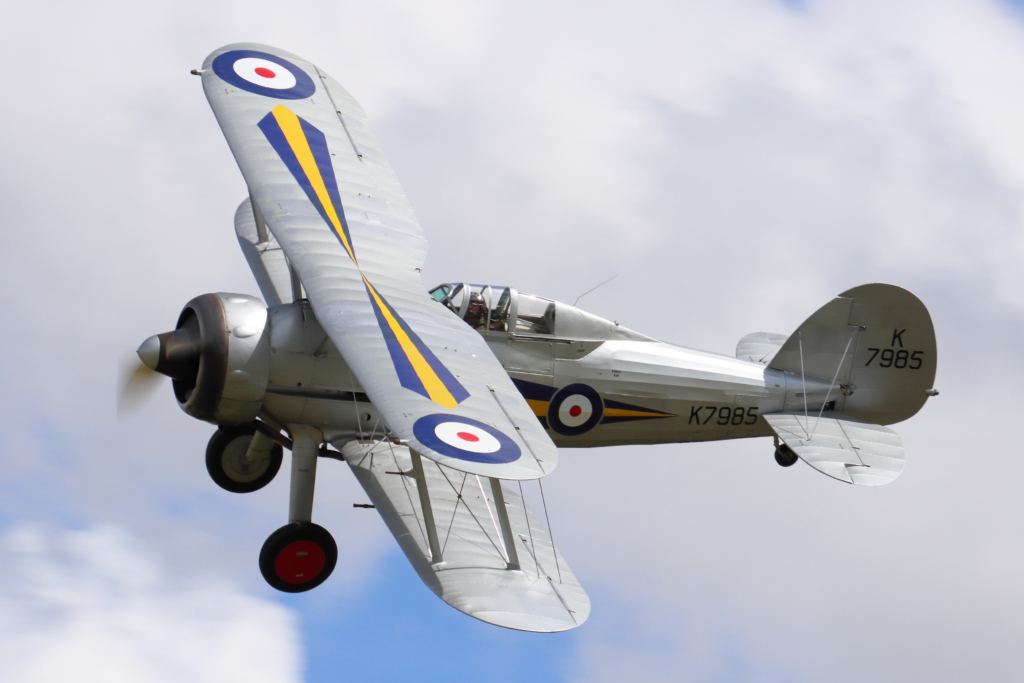
The Swedish Air Force (called Flygvapnet) was officially established in 1926 when the aviation units of the Swedish Army and Navy were merged.
Sweden was one of the few European countries that managed to remain neutral during World War II. To resist potential invasion or coercion, it dramatically increased the size of its air force, reaching 15 fighter divisions by the end of the war.
During WWII, Sweden began to develop its own aviation industry, but its wartime fleets were still supplemented by imported aircraft like the Hawker Hart and Gloster Gladiator.
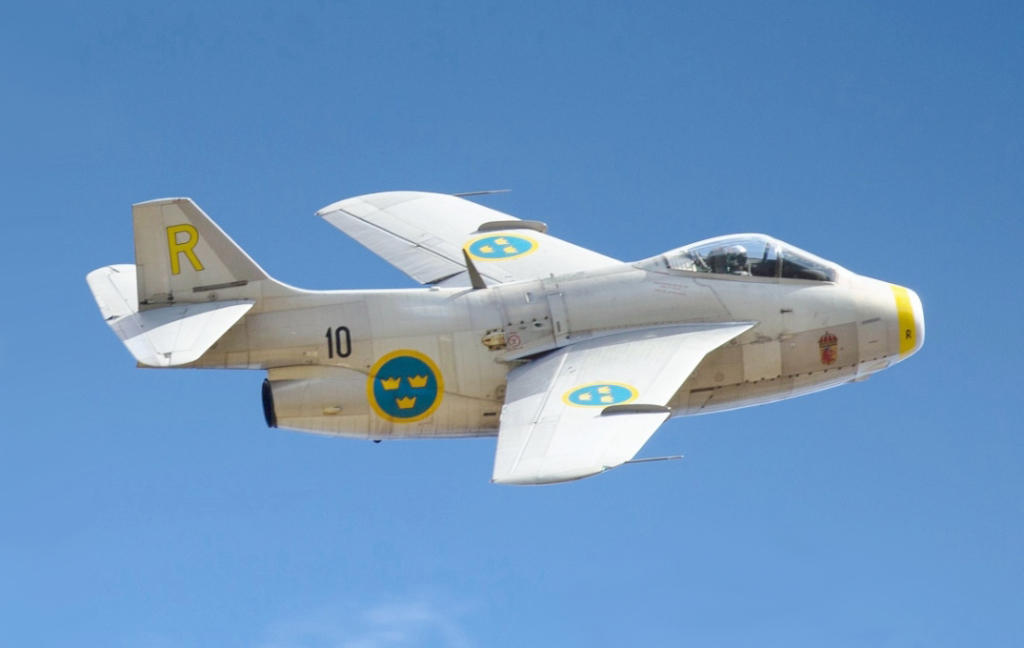
As the war ended, Sweden rapidly modernized its fleet with P-51D Mustang fighters, De Havilland Mosquitoes, De Havilland Vampires, and other aircraft.
Cold War: development of domestic industry over nukes
Sweden’s primary threat shifted from Germany to the Soviet Union following the end of the war.
At the same time, being a neutral nation, it turned to Saab to free itself of foreign fighter jet dependence. The first Swedish jet fighter was the Saab J 29 Tunnan, which entered service around 1950. Others like the Saab A 32 Lansen, Saab 37 Viggen, and Saab J 35 Draken followed.
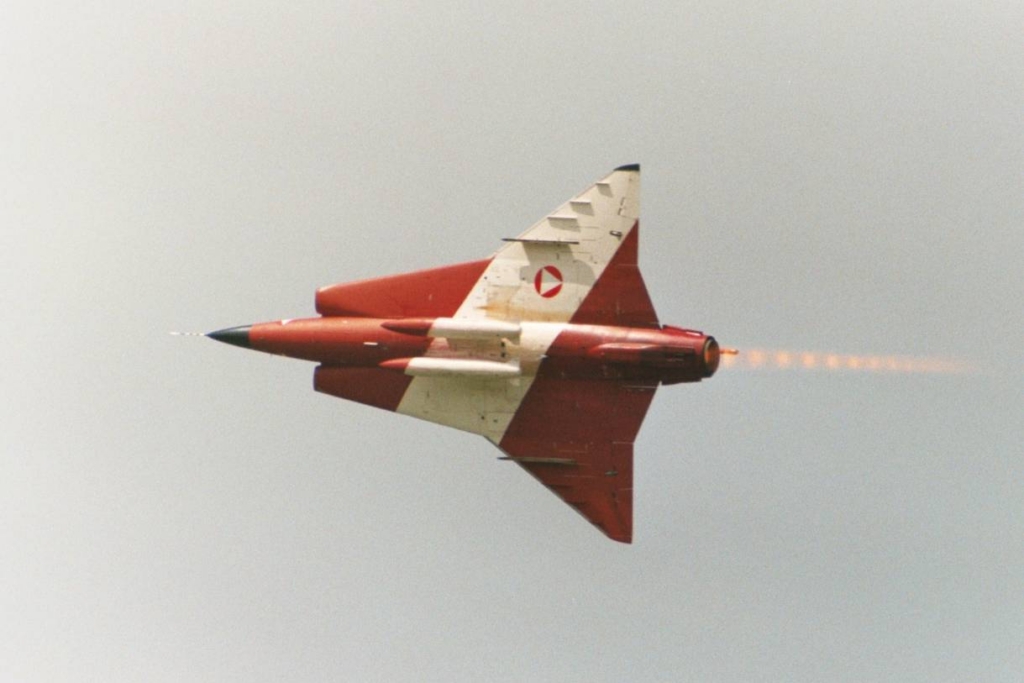
The Draken was a delta-wing aircraft that helped to pioneer the famous Cobra Maneuver now associated with Russian fighter jets.
Fighter jets developed by Saab:
- Saab 29 Tunnan
- Saab 32 Lansen
- Saab 35 Draken
- Saab 37 Viggen
- Saab JAS 39 Gripen
As a small neutral state, Sweden had to find ways to maintain its independence. Between 1945 and 1968, Sweden had a nuclear programme, and this caused a long discussion within Sweden.
Should the country develop nuclear weapons to avoid attack, or develop a robust domestic conventional weapons industry? It didn’t have the resources to realistically do both.
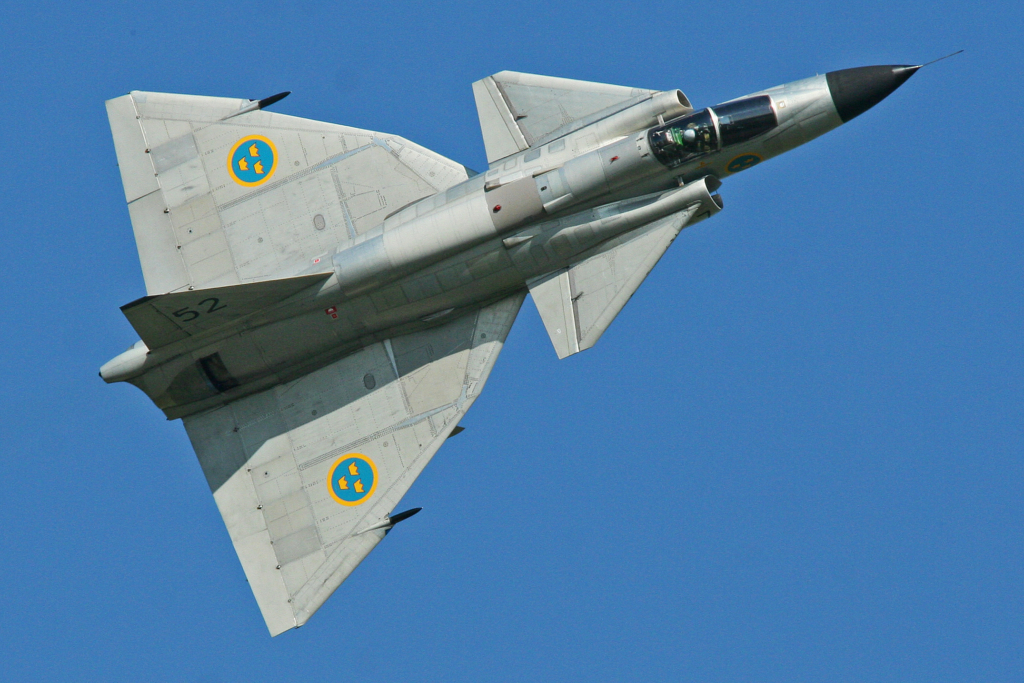
In the end, Sweden chose to focus its limited resources on its world-class conventional domestic military industry. By the late Cold War, developing advanced fighter jets had become so expensive and complicated that only a few countries could do it.
Gripen: A great effort for a small country
France developed the Rafale alone, but the UK, Germany, Italy, and Spain pooled their efforts to develop the Eurofighter Typhoon.
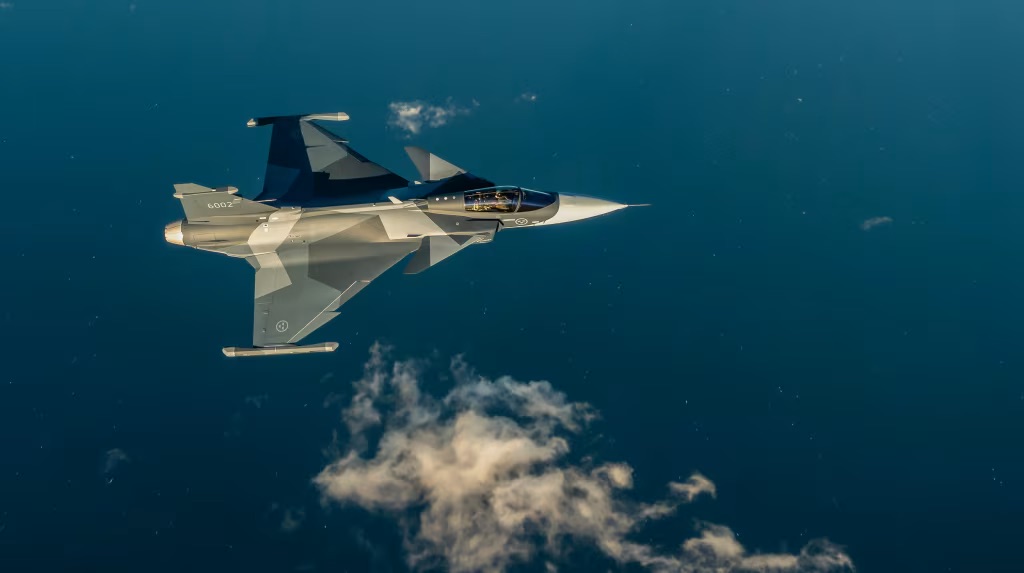
Sweden was the smallest country to develop a frontline modern fighter jet alone. From the 1980s, Saab designed the JAS 39 Gripen to replace the J 35 Draken.
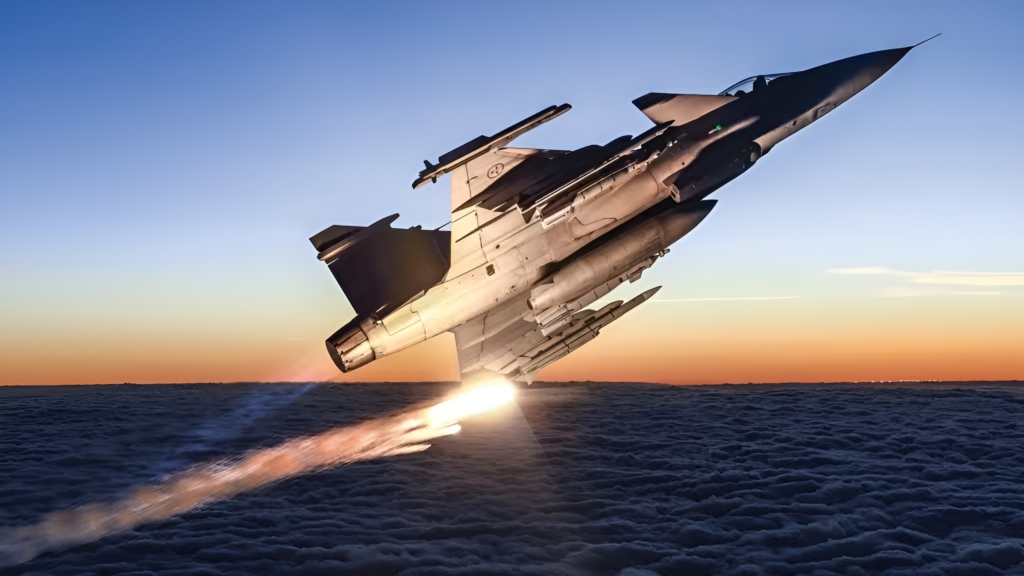
The Gripen comes with design compromises compared with the Rafale. Whereas the Rafale is close to fully-French, the Gripen’s engine is American, and many of its systems are European (or American).
Justin Bronk told a Parliamentary hearing, “Sweden has close to a sovereign capability but about 30% of the Gripen is UK IP and there is still US ITAR technology on the Gripen.”
While this limits the extent to which the Swedish Air Force and its aerospace sector can remain autonomous, it is what is realistic. France has the resources to develop almost every aspect of the Rafale; Sweden does not. A notable Swedish compromise was not developing its own fighter jet industry.
Aircraft of the Swedish Air Force (per FlightGlobal, others):
- Saab Gripen: 96 (C/D/E)
- Saab GlobalEye: 0 (3 on order)
- KC-130H tanker: 1
- C-130H airlifter: 5
- Saab 340: 2
- Sikorsky UH-60M: 15
- Gulfstream IV (ELINT): 2
The Gripen is specifically designed for Sweden’s defensive needs and dispersed operations. That said, internationally, it is more of an F-16 Block 70 competitor than a Rafale or Typhoon competitor, much less an F-35 competitor.
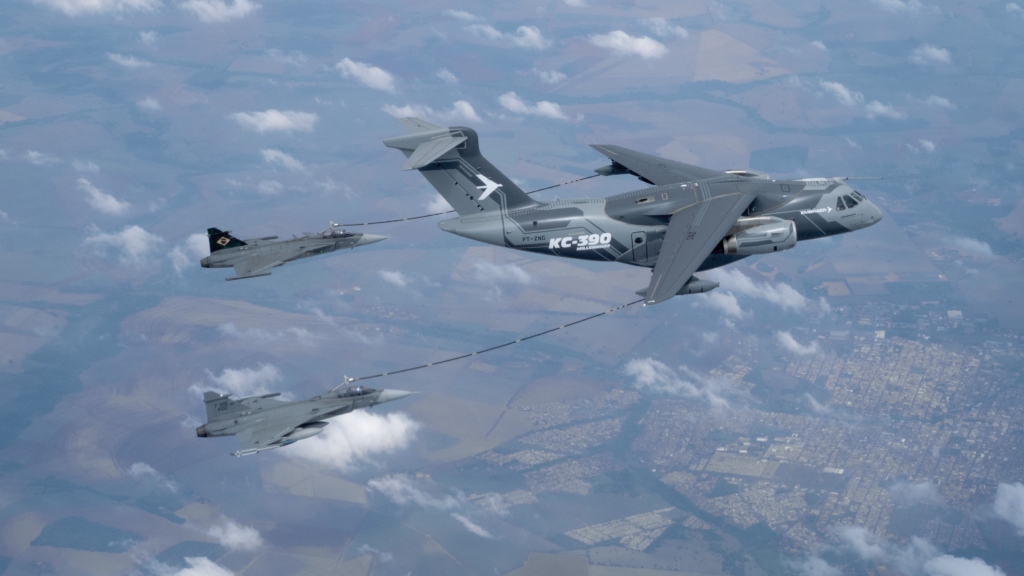
This is both a blessing and a curse for the modern Swedish Air Force. The Swedish Air Force is able to set realistic requirements for a Saab fighter, but it can’t procure a more advanced fighter like the F-35.
Sweden and France prioritize strategic autonomy (in different ways). They are two of the very few close US allies that have requirements for what the F-35 can do, but choose not to purchase it.
Finland has no such domestic aviation industry to protect, so it selected the F-35 as the best solution for its needs. And Finland’s needs are similar to those of the Swedish Air Force.
An air force designed for total defence
The result is that the Swedish Air Force has a large number of fighters for the country’s size, but its jets are best for defence. The Swedish Air Force is also notable for being exceptionally fighter jet-heavy.
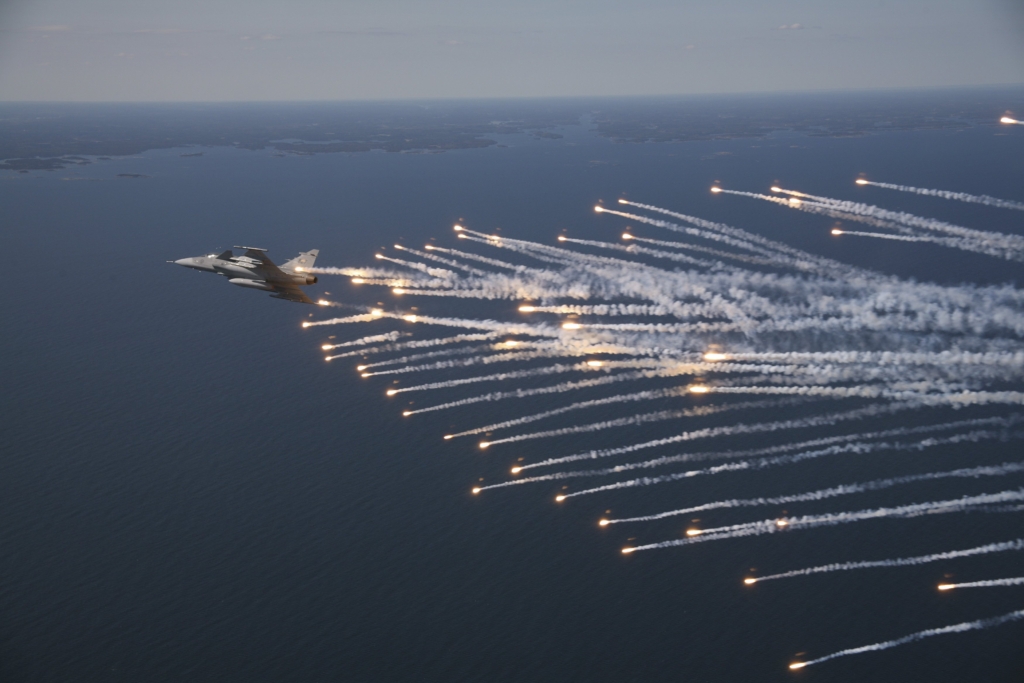
From the late 1950s, the Swedish Air Force’s doctrine has been Bas 60 and later Bas 90. It is a strategy to disperse aircraft across different emergency wartime bases and use road runways as backups. It assumes it would come under overwhelming attack (even nuclear) that would disable or destroy its air force bases.
The strategy is part of Sweden’s greater doctrine of total defence, implicitly to defend against the Soviet Union and later Russia.
One of the more difficult and central elements for Sweden is the defence of Gotland Island in the Baltic Sea. Additionally, while the Swedish Air Force’s doctrine may be similar to Finland’s, it had differences.
Finland sits on the frontline and would likely be the first invaded in the event of an invasion by the USSR/Russia. By contrast, the Swedish mainland would only be realistically invaded if Finland fell, even if Gotland also fell.

Neutrality was expensive for Sweden, and it meant it had to maintain an outsized air force for decades.
Entry into NATO changes the calculation
After abandoning more than 200 years of neutrality, Sweden joined NATO in 2024. For the first time, it could plan as part of a larger alliance.
In truth, this had de facto been ongoing for decades, with Sweden implicitly seeing NATO as an ally and being a near-NATO member. Its aircraft were developed to be NATO-compliant, and the Swedish Air Force was already training and sort of integrated with NATO.
A major continuing question for Sweden and its air force is whether it should retain its ability to develop fighter jets independently now that it has joined NATO.
The Swedish Air Force was previously designed almost exclusively for Swedish defence, but is now taking part in the policing of NATO skies, including in the Baltic.
Get the latest aerospace defence news here on AGN.
Future of the Swedish Air Force
Going forward, Sweden is purchasing 60 updated 4.5th-generation Gripen Es by 2030 to complement its remaining fleet of 60 legacy Gripen C/Ds. The first was delivered in 2025, about seven years late.
Sweden is phasing out its NH90 helicopters in favour of more Black Hawks, while also procuring Brazilian Embraer C-390 Millennium tactical airlifters.
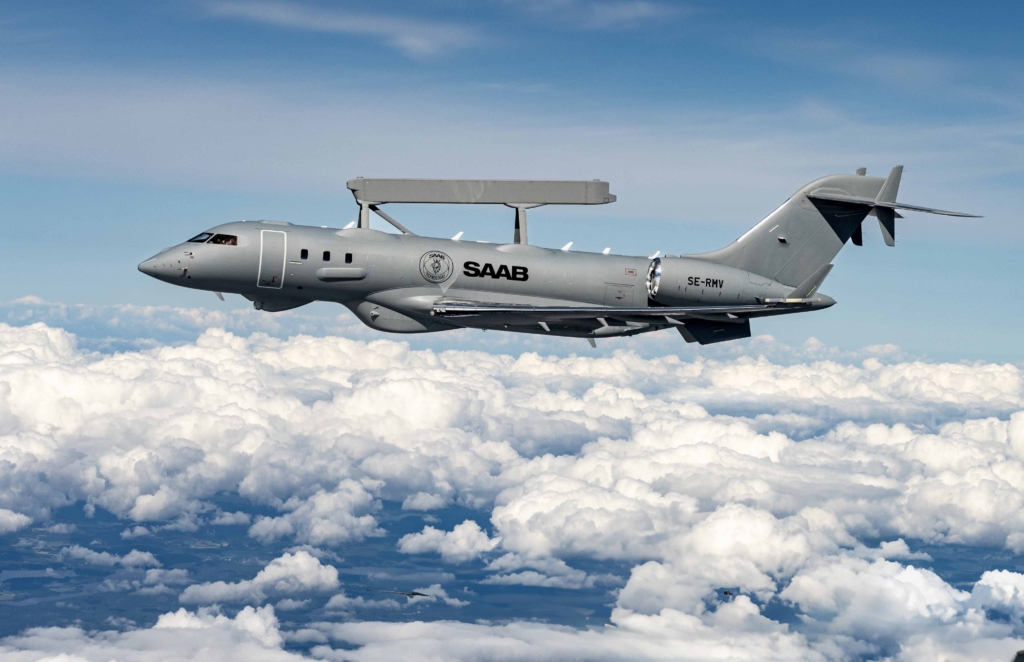
The Swedish Air Force is also expediting the GlobalEye AEW&C aircraft, while donating two Saab 340s to Ukraine. AEW&C aircraft is another key area where the Swedish aerospace industry has focused on being a global leader.
Sweden established its space division in 2023, with its first military satellite launched in 2024.
Saab is exploring developing a 6th-generation fighter, but this is a mission that would tax the aerospace industry of any country, except for the largest countries, to the breaking point. There’s a reason why the UK, Italy, and Japan, all much larger nations than Sweden, have teamed up on GCAP/Tempest.

A potential lifeline could be if FCAS breaks up and Germany partners with Sweden to develop a fighter jet. German officials have spoken favourably about the prospect of working with Sweden, but this remains speculative for now.
Featured Image: Saab


