Quick-acting Royal Navy officer prevents loss of £2.5m Peregrine drone

4 min read
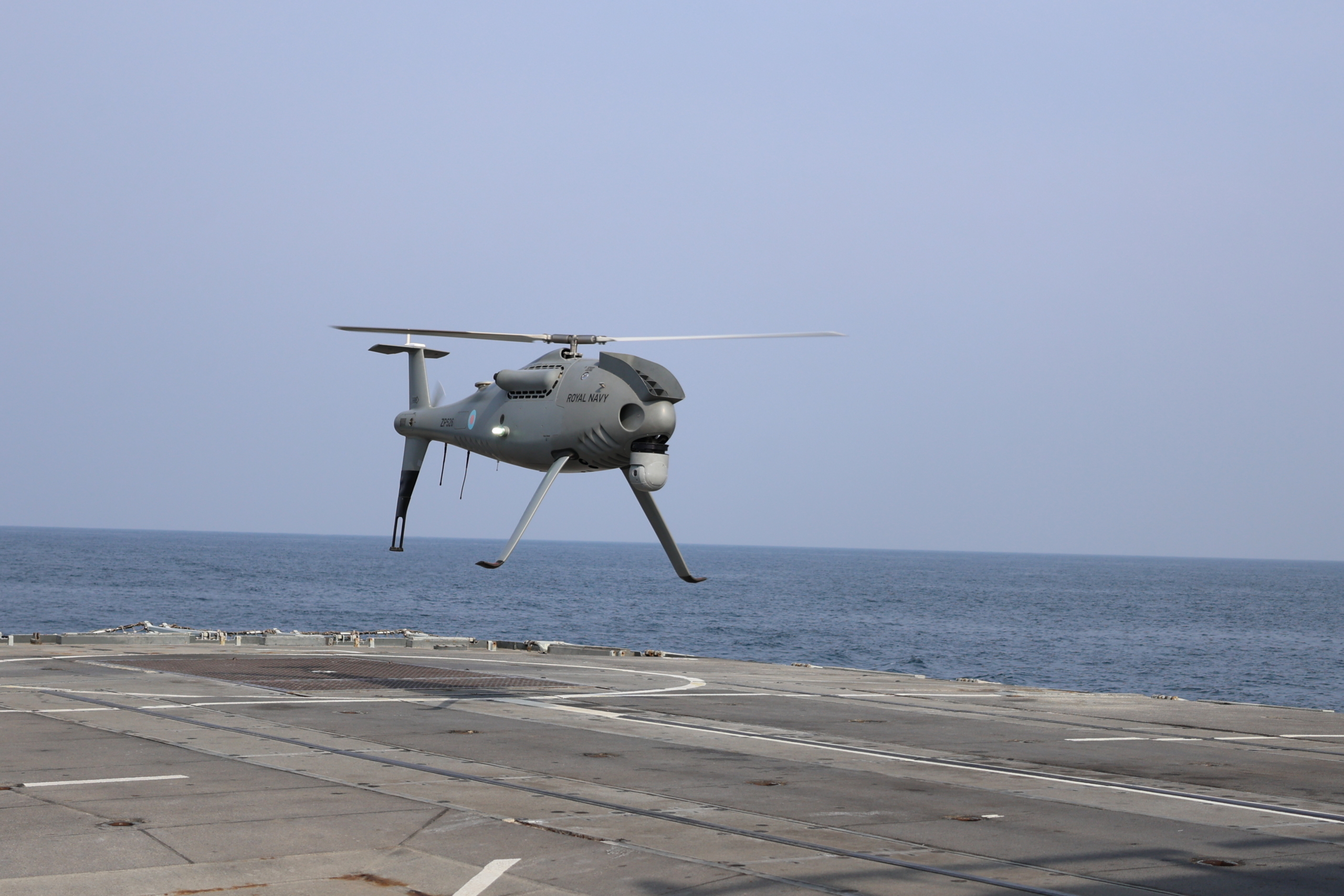
The Royal Navy’s Lieutenant Commander Adrian Hill has received a rare Green Endorsement in acknowledgement of his “rapid intervention prevented the loss of a Peregrine Rotary Wing Uncrewed Air System (RWUAS) during operations in the Middle East.”
Quick-acting RN commander saved Peregrine RWUAS
The incident occurred in 2025 as a Royal Navy frigate, the HMS Lancaster, sent out a routine maritime security patrol in the Gulf of Oman.
Lightning-fast reactions of @RNASCuldrose Lt Cdr 'AJ' Hill prevented a £2.5m Peregrine drone sinking in the Gulf.
— Royal Navy (@RoyalNavy) February 4, 2026
He took control of the mini helicopter a split second from crashing and landed it safely on @HMSLANCASTER
🔗 https://t.co/ZwTmJBSHBL pic.twitter.com/mlAw5Lkm5O
As reported by Navy Outlook, the Peregrine was operating in autonomous mode approximately 60 feet astern of the frigate. It then suffered a sudden computer fault and began an uncontrolled descent, threatening to crash into the sea.
Lt Cdr Hill then reacted instantly and took manual control of the stricken aircraft. The aircraft was only one or two feet from hitting the sea when its descent was arrested.
The Green Endorsement is the highest aviation safety commendation and is awarded by both the RAF and the Royal Navy Fleet Air Arm.
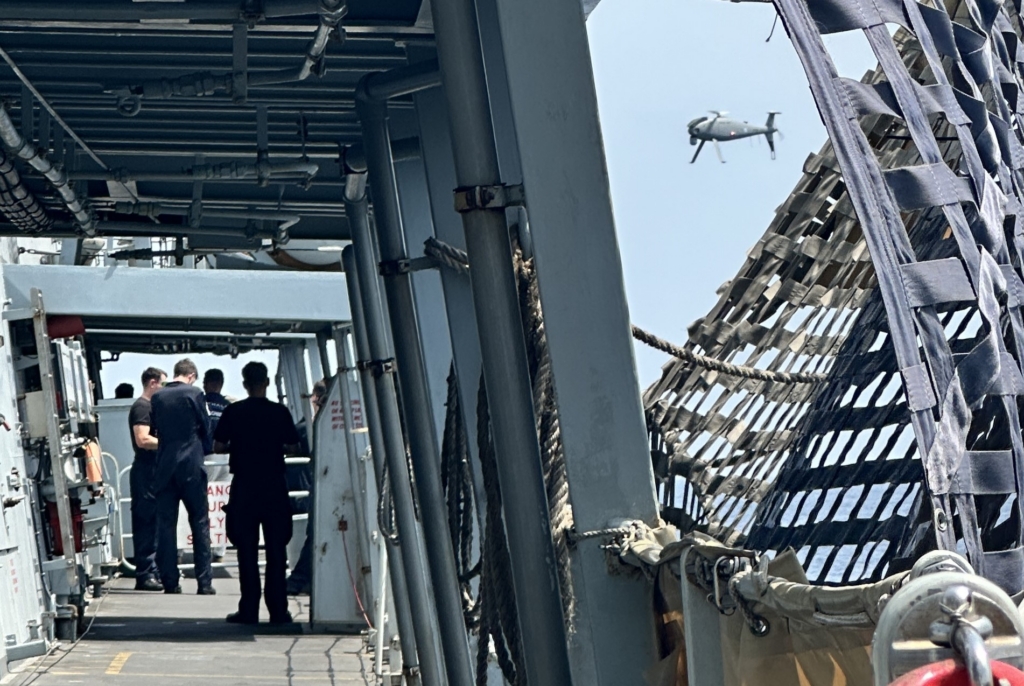
At the time, the Peregrine was still in its testing phase onboard the HMS Lancaster.
Hill is a flight commander with the Royal Navy’s 700X Naval Air Squadron. The squadron is the Royal Navy’s dedicated drone unit and is based at RNAS Culdrose in Cornwall.
The Navy Outlook stated this “highlights both the risks inherent in early uncrewed aviation deployments and the growing professionalism of RN drone aircrew. ”
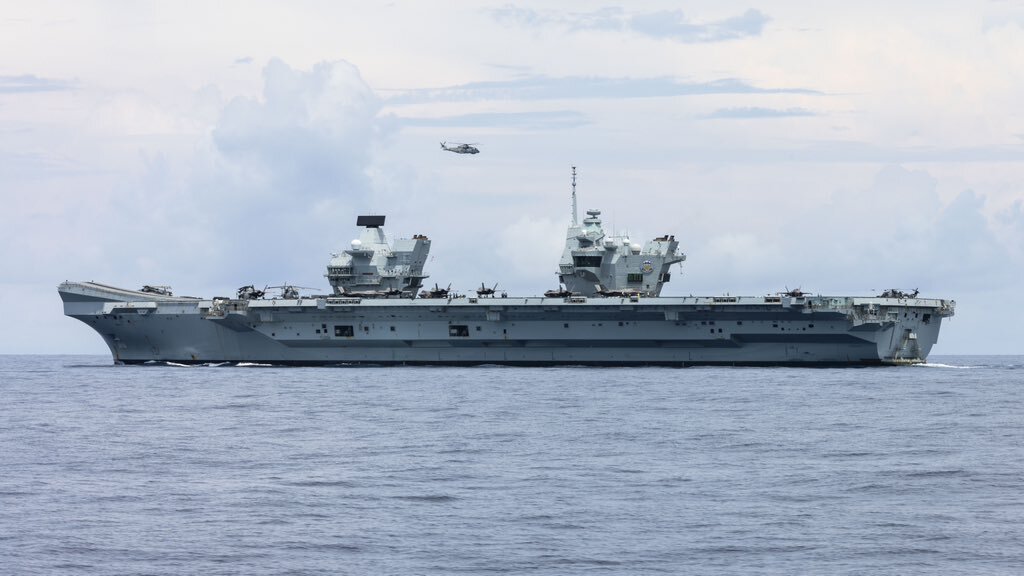
While the Peregrine was able to return home to Britain, the HMS Lancaster was not. It was decommissioned in Bahrain the crew was flown home.
The Royal Navy’s incredibly rare Peregine drone
The Peregine is exceptionally rare as the Royal Navy has purchased only two so far. They cost around £2.5 million and represent a significant part of the frigate’s embarked aviation capability.
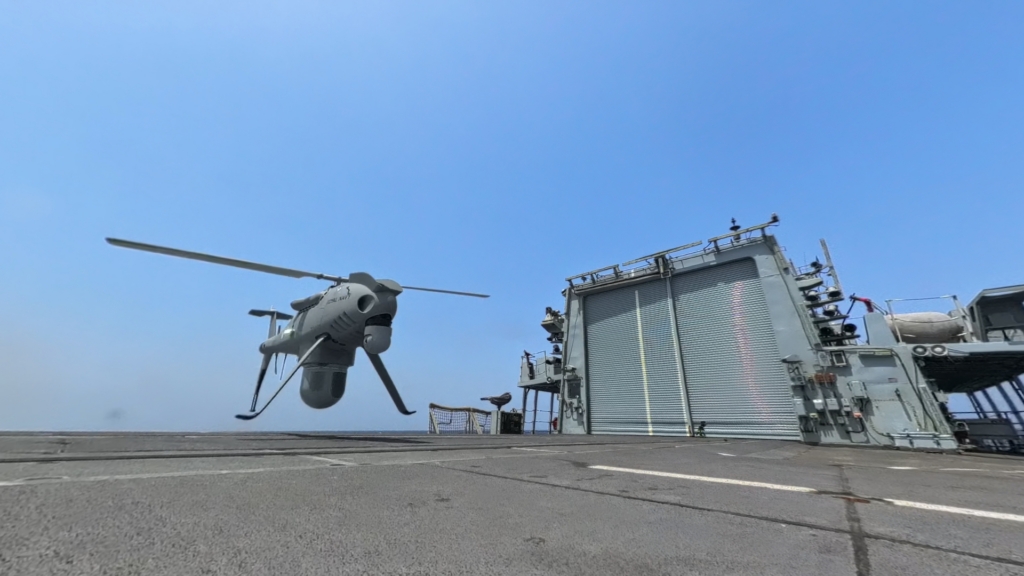
Peregrine is the British designation for the three-metre-long S-100 Camcopter. The S-100 Camcopter is also being tested by the British police.
It is a 200kg uncrewed helicopter developed by the Austrian company Schiebel with modifications for maritime use. The Peregine version is also fitted with additional sensors and military systems.
Camcopter S-100s have been purchased by a large number of operators, including France, Greece, the United States, the UAE, and others. The Canadian Navy is in the process of acquiring them, while the Australian Navy has already divested itself of them.
Debut of the Royal Navy Peregrine
In February 2025, the Royal Navy reported it had used the mini-helicopter, the Peregrine, for the first time on drug-hunting operations in the Middle East.
Her Royal Highness The Princess of Wales, Sponsor of HMS Glasgow, gave her blessing to the Royal Navy’s newest warship.
— Royal Naval Reserve (@RNReserve) May 23, 2025
Smashing a bottle of whisky against the hull for good luck, Her Royal Highness formally named HMS Glasgow, the first of eight Type 26 frigates. pic.twitter.com/rgVl3KUtem
It said the Peregrine is the first remotely-piloted helicopter operated by the Royal Navy and is able to conduct sorties for up to five hours.
The navy news release said the Peregrine had “been launched from the flight deck of frigate HMS Lancaster, which is deployed to the Middle East on a long-term maritime security mission.”
During the mission, the mini-copter looked for smugglers and drug-runners on the so-called ‘Hash Highway.’ It helped relieve pressure on the Navy’s crewed Wildcat helicopters.
The Navy is looking to unlock the potential of using the drone in conjunction with crewed aircraft.
After a slight delay, HMS Cardiff has now been fully floated off the barge at Glen Mallan and is being towed back up the Clyde to begin fitting out @BAES_Maritime in Scotstoun this morning.
— Navy Lookout (@NavyLookout) September 5, 2024
Via @MichaelJWC626 pic.twitter.com/UQEuHgSayq
It’s unclear what the future is for the drone type with the Royal Navy, but the Royal Navy may operate one on its River-class offshore patrol vessel sent to the Middle East.
Featured Image: Royal Navy
Sign up for our newsletter and get our latest content in your inbox.


More from


October 17, 20265 min read


October 17, 20264 min read