Air Greenland in talks to operate new Arctic search-and-rescue aircraft by 2027

3 min read

Air Greenland is poised to take on a significantly expanded role in Arctic security and safety, with negotiations underway that could see the carrier operating new search-and-rescue (SAR) and surveillance aircraft before the end of 2027.
The discussions follow a political decision in Copenhagen and Nuuk to retire the Royal Danish Air Force’s long-serving Challenger surveillance jets and replace them with a civilian-operated SAR provider.
Under the defence agreement covering the Arctic and North Atlantic, responsibility for wide-area surveillance and certain rescue functions is expected to transition to a commercial partner.
Air Greenland in talks to provide civilian SAR and surveillance in the Arctic
Talks are being conducted between Denmark’s defence procurement authorities and Air Greenland.
While no aircraft type has yet been identified publicly, the plan envisages a leasing agreement that would provide both surveillance and SAR capability under a civilian “dual-use” framework.
Danish defence minister Troels Lund Poulsen said the initiative would strengthen Arctic oversight while handing the responsibility to Greenland itself.
The approach also fits with broader efforts to increase local participation in defence-related activities, following Greenland’s direct involvement in defence settlement negotiations and recent threats from the Trump administration.
If an agreement is finalised, it will still require approval by Denmark’s parliamentary finance committee, but officials expect the new air SAR capability to be operational before the end of 2027.
“I am very satisfied that the Defence department, with a possible leasing agreement with Air Greenland, can carry out the important surveillance and rescue tasks in and around the Arctic and the North Atlantic,” said Danish Minister of Defence Troels Lund Poulsen.
“The possibility for Air Greenland contributing to surveillance and rescue tasks in the Arctic is an expression of a civilian dual-use capacity,” added Greenland’s minister for foreign affairs, Vivian Motzfeldt.
“It also shows the importance of Greenland participating in the defence settlement negotiations, whereby we have the opportunity to be heard and our proposals included.”
Building on experience: Air Greenland’s existing Arctic SAR operations
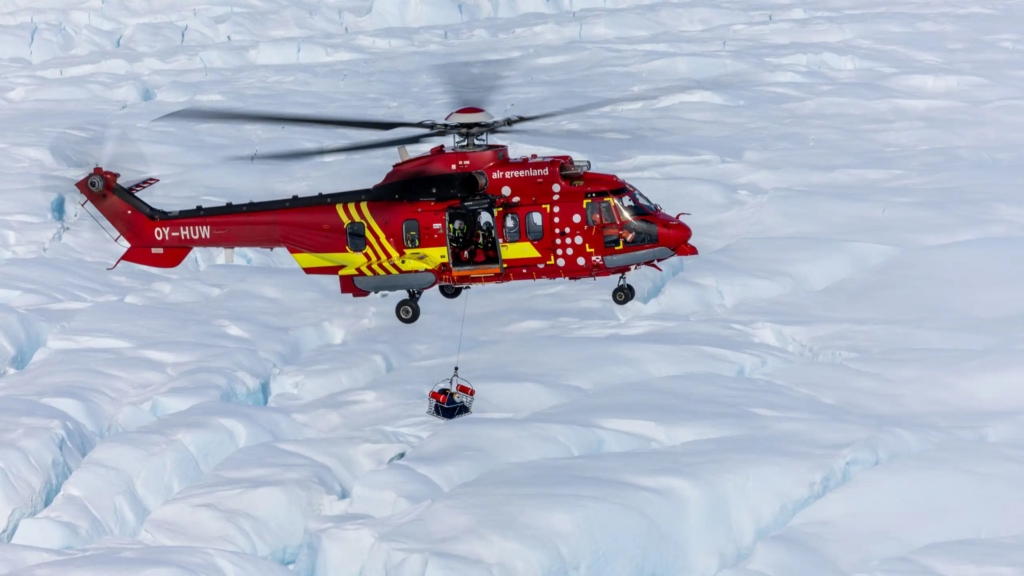
Air Greenland is not new to rescue operations. The carrier already plays a central role in Greenland’s SAR system, operating Airbus Helicopters H225s on behalf of the authorities under the coordination of Arctic Command and the Greenland Police.
In a recent announcement, Air Greenland confirmed an agreement with the Danish Ministry of Defence Acquisition and Logistics Organisation to equip its H225 SAR helicopters with forward-looking infrared (FLIR) sensors and night vision goggle (NVG) compatibility.
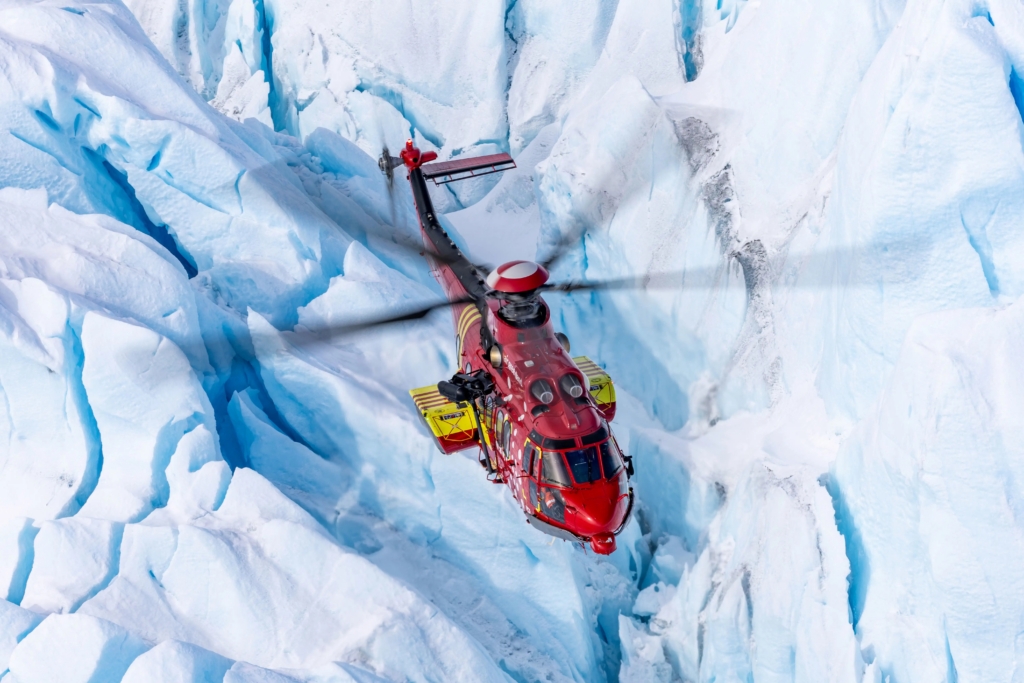
The upgrades allow crews to detect heat signatures on land and at sea and to conduct operations more safely in darkness or poor visibility — conditions that are routine in the Arctic.
“These systems can make a significant difference in the effectiveness of the SAR readiness in situations where time is a critical factor and can mean the difference between life and death,” says Air Greenland’s CEO, Jacob Nitter Sørensen.
Arctic search and rescue in practice: a real-world Air Greenland operation
Air Greenland’s day-to-day SAR work illustrates why authorities see it as a credible candidate for a wider SAR contract.
In one recent operation authorised for disclosure by Arctic Command, an H225 crew based at Kangerlussuaq was scrambled shortly before 06:00 to assist a lone mariner whose small boat had lost power in Uummannaq Fjord, around 60 nm north-west of the town.
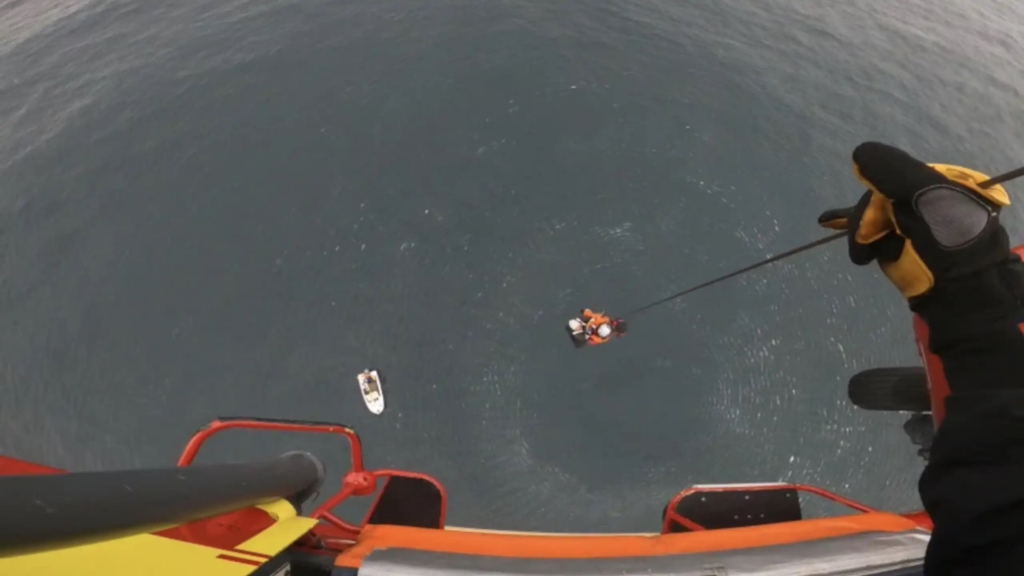
Within an hour of the call, the helicopter was airborne, flying north via Aasiaat before receiving updated position data near the Nuussuaq peninsula.
The crew located the vessel and conducted a hoist recovery, with the hoist operator entering the water to secure the survivor.
The aircraft was one of a small, permanently manned SAR unit, staffed around the clock by rotating crews of pilots, hoist operators and technicians.
While details of the prospective surveillance aircraft remain scarce, the deal reveals Denmark’s intention to replace military-operated jets with a civilian platform capable of supporting both defence and civil authorities across the Arctic and North Atlantic.
Featured image: Air Greenland