


From Cold War workhorse to NATO stalwart: Denmark’s F-16 bows out as the F-35 takes over

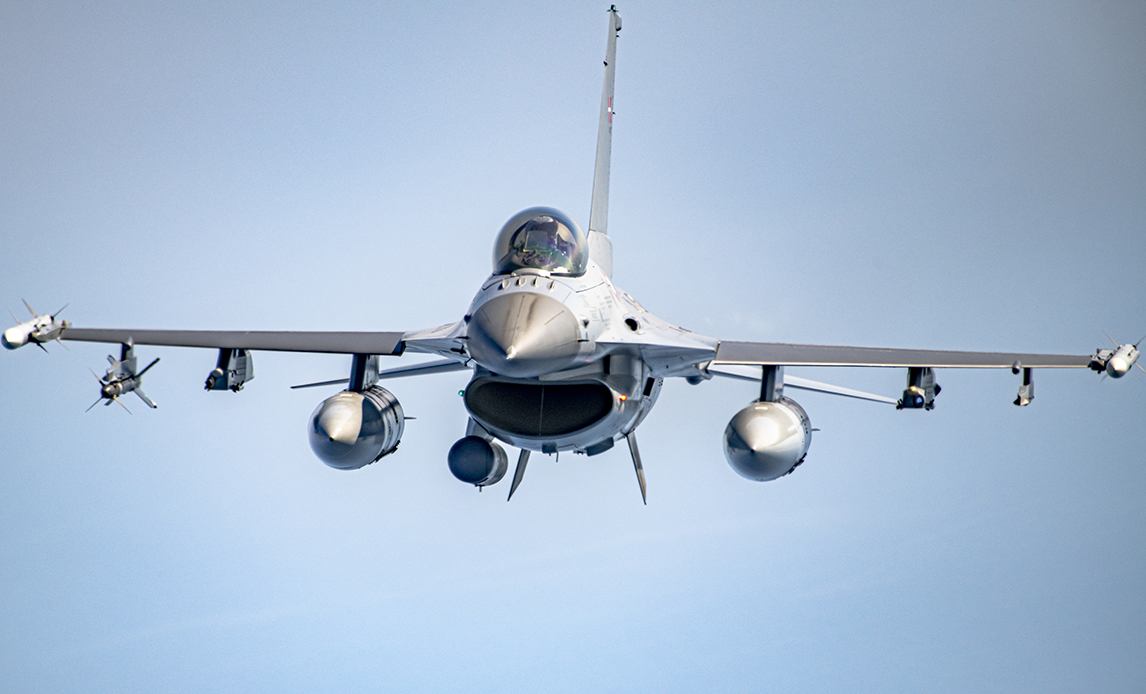
After more than four decades at the heart of Denmark’s air power, the curtain finally came down on the Royal Danish Air Force’s F-16 fleet on 18 January 2026.
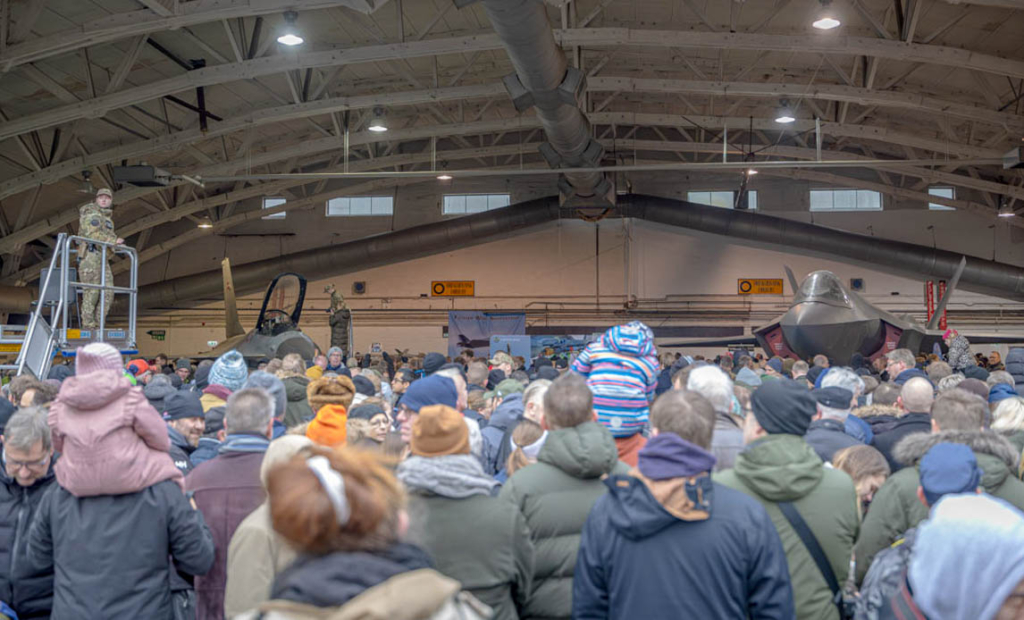
At 13:57 local time at Skrydstrup Air Base, a familiar sound that had defined Danish skies since the Cold War faded into history as the last Fighting Falcons completed their final formation flight and landing, closing one of Europe’s longest-running combat aircraft chapters.
Moments earlier, four aircraft had lifted off together for a final ceremonial formation, their afterburners briefly lighting the winter sky. It was a restrained farewell, but one heavy with symbolism.
Since 1980, the F-16 Fighting Falcon has been Denmark’s primary shield in the air, flying everything from Cold War quick-reaction alerts to NATO combat missions over the Balkans and Afghanistan, as well as air-policing sorties over the Baltic and the North Atlantic.
The F-16: From Starfighter replacement to cornerstone of Danish air power
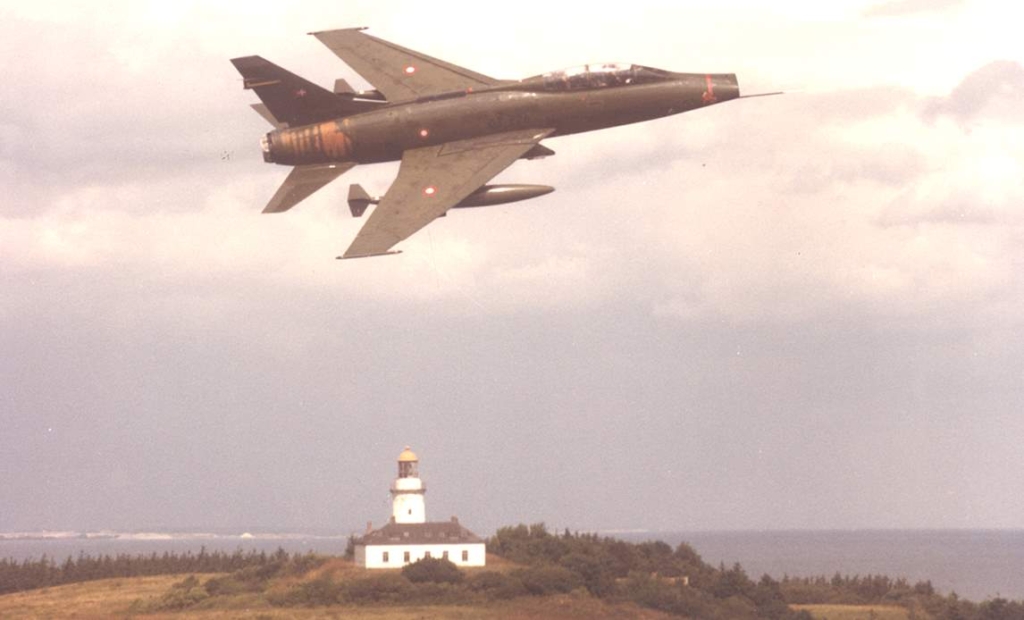
Denmark’s F-16 journey began in the late 1970s, when Copenhagen joined Belgium, the Netherlands and Norway in the European Participating Air Forces programme. Together, the four nations sought a common successor to the F-104 Starfighter, selecting the then-new General Dynamics F-16 in a landmark multinational partnership with the United States.
Under the EPAF arrangement, European F-16s were assembled on production lines in Belgium and the Netherlands. Denmark ultimately acquired 77 aircraft across two main batches and two attrition replacement orders. Deliveries began on 28 January 1980, when the first F-16B arrived in Denmark.
Over time, all surviving aircraft were upgraded under the Mid-Life Update programme, transforming early airframes into F-16 AM/BM standards with modernised avionics, sensors, data links and weapons integration. The MLU ensured Denmark’s Falcons remained credible well into the 21st century, even as newer fighters entered service elsewhere.
How the Royal Danish Air Force operated and adapted the F-16
The F-16 served across multiple RDAF squadrons, shaping the service’s operational culture. Eskadrille 727 and 730 at Skrydstrup became the longest-serving Falcon units, while Eskadrille 723 and 726 at Aalborg played key roles in training and reconnaissance before being disbanded.
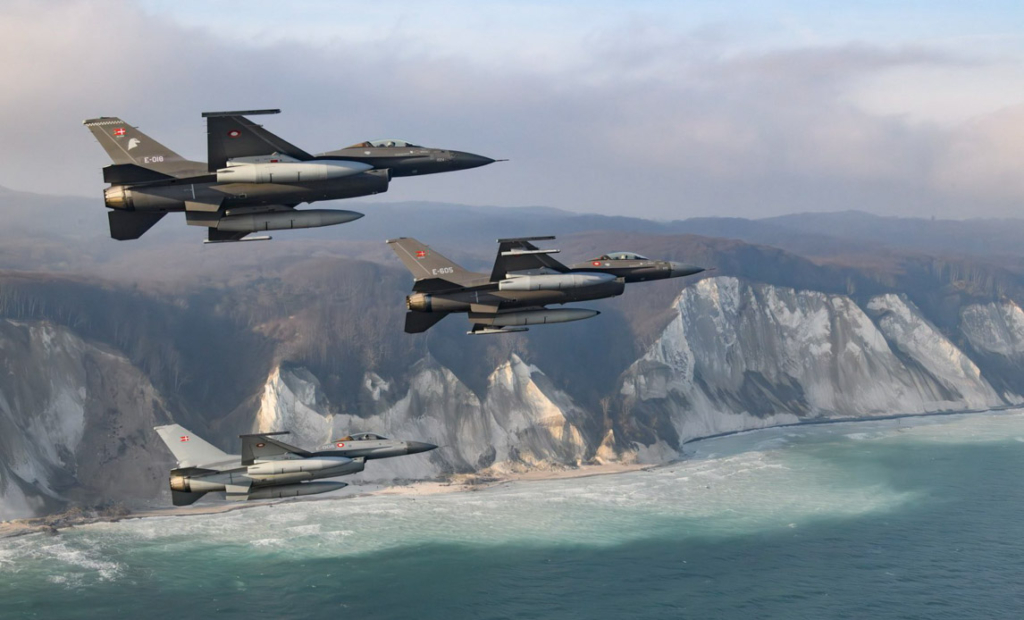
Danish F-16s also carried distinctive national modifications reflecting local operational needs and industrial strengths. All aircraft were fitted with an identification searchlight for night interceptions, while electronic warfare enhancements such as the Pylon Integrated Dispenser System and advanced countermeasures were developed domestically.
Danish-developed reconnaissance pods were later exported to allied air forces, underlining the country’s contribution to the wider F-16 ecosystem.
Danish F-16 combat operations from the Balkans to Central Asia
Although Denmark operates a relatively small air force, its F-16s saw extensive operational use abroad. During NATO’s Allied Force campaign in 1999, Danish Falcons flew combat air patrols from Italy.
In 2002–03, they deployed to Manas Air Base in Kyrgyzstan for Operation Enduring Freedom, conducting missions over Afghanistan alongside Dutch and Norwegian aircraft.
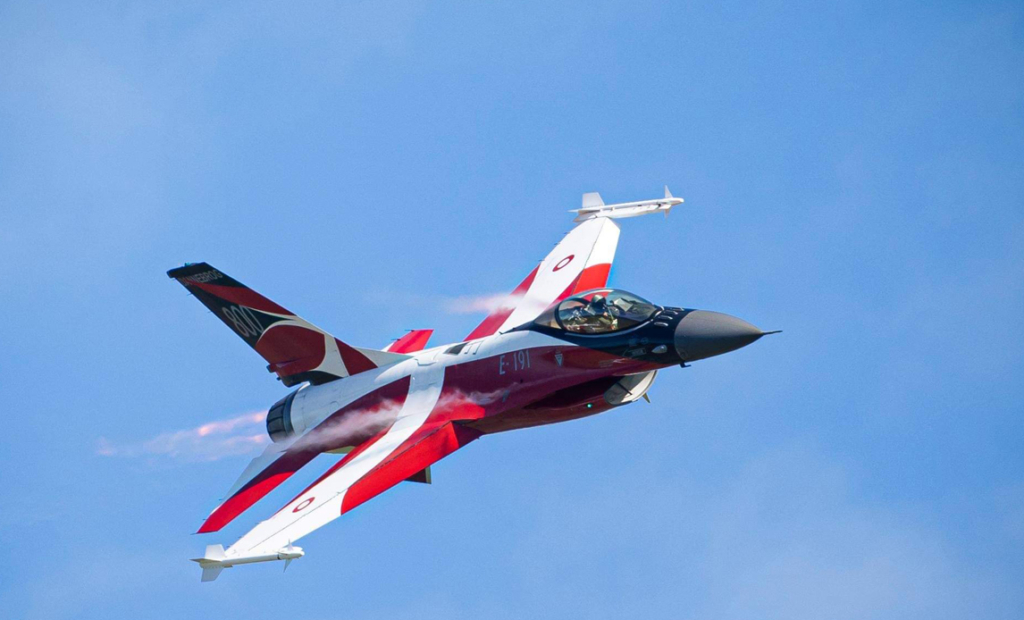
Closer to home, Danish F-16s became regular contributors to NATO air-policing missions, protecting Baltic airspace in 2004 and providing air defence for Iceland in 2009 and 2010 following the withdrawal of permanent US fighter deployments.
These operations reinforced Denmark’s reputation as a reliable NATO partner able to deploy quickly with fully interoperable forces.
The final F-16 flight and symbolic handover at Skrydstrup
The choice of Skrydstrup for the final ceremony was deliberate. It was here that Denmark’s first F-16 landed in 1980, and it is here that the country’s future fighter force is now based.
Among those addressing the farewell was former Chief of Defence General Christian Hvidt, who had personally flown Denmark’s first F-16 into the base 46 years earlier.
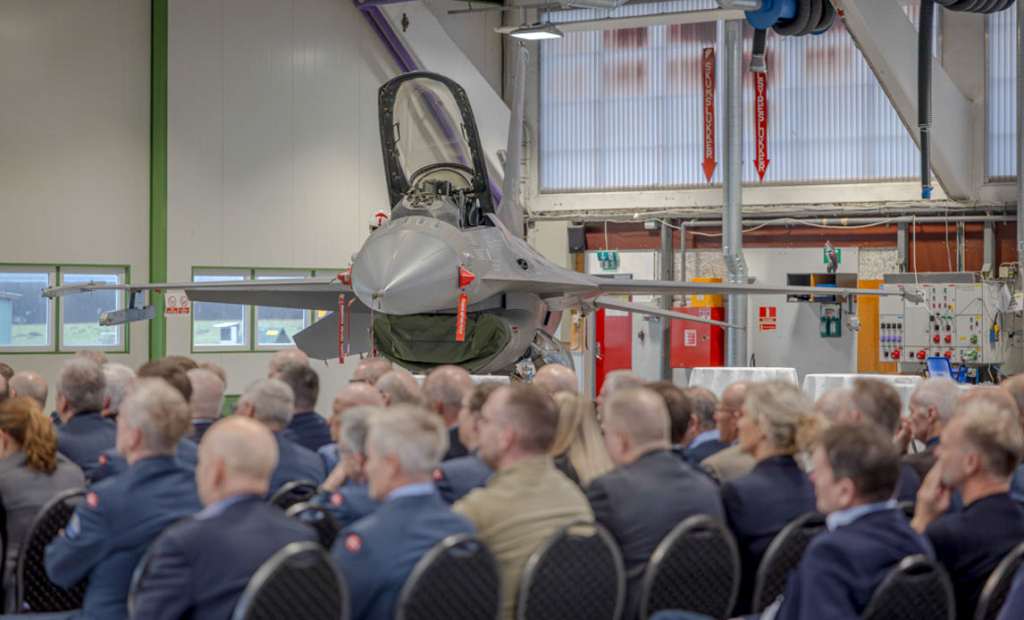
“We are not talking about the age of the F-16,” he said. “It has been maintained by probably the world’s best technicians and flown by some of the world’s best pilots.” His remarks captured the prevailing mood, respect not just for an aircraft, but for the people who kept it operational for nearly half a century.
Replacing the F-16: Denmark’s F-35 takes over
With the F-16 now retired, Denmark’s combat air power rests entirely on the F-35A Lightning II. Under a 2016 political agreement, Denmark ordered 27 aircraft, with the first arriving at Skrydstrup in October 2023. By April 2025, the type had been declared ready for air-defence interception duties alongside the F-16.
In October 2025, Copenhagen approved the purchase of a further 16 F-35s, increasing the planned fleet to 43 aircraft. Full operational capability is expected in 2027.
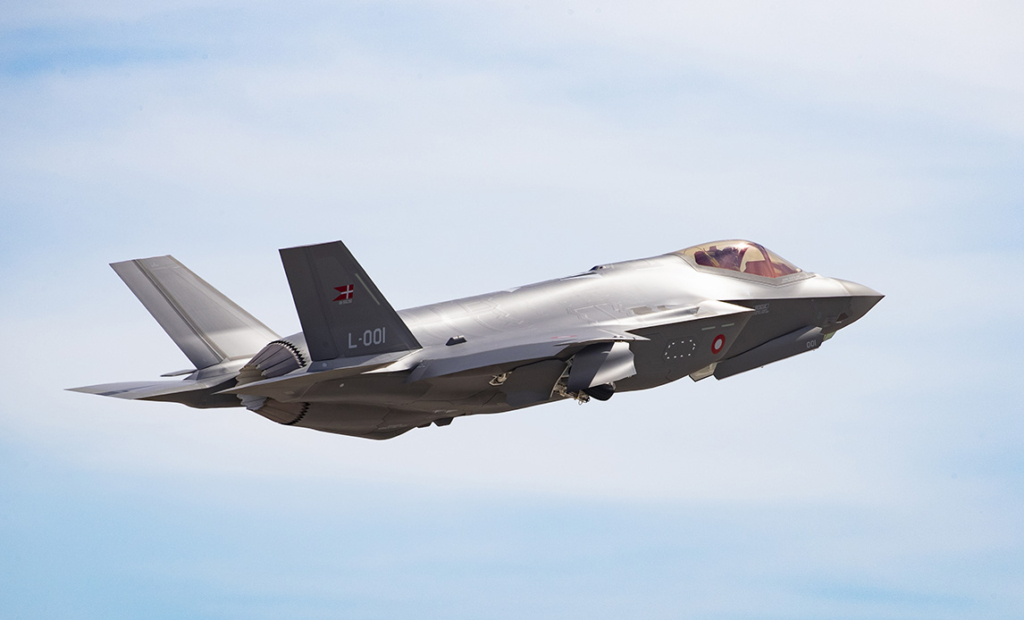
The transition also brings strategic implications. Denmark’s frontline fighters are now entirely US-built, making continued access to American supply chains, software updates and sustainment support essential.
This reliance has come under sharper focus amid renewed geopolitical attention on Greenland, where Denmark bears responsibility for defence across vast Arctic distances.
While officials stress that alliance integration remains a strength rather than a vulnerability, the F-16’s retirement underscores how closely Denmark’s air power is now tied to the United States and the wider F-35 partnership.
The F-16’s legacy in Danish air power
As Denmark looks ahead to a fifth-generation future, the F-16 leaves behind a formidable legacy. It carried the RDAF from the Cold War into the era of expeditionary NATO operations, adapting repeatedly through upgrades, new weapons and new missions.
Its final landing at Skrydstrup was not marked by nostalgia alone, but by a measured acknowledgement of a job done thoroughly and well.
For nearly 46 years, the Fighting Falcon guarded Danish skies and served far from home. Its successor may be stealthier and more networked, but the standard set by the F-16 will be a hard one to surpass.
Featured image: Forsvaret (RDAF)


