JEKTA unveils 1:9 scale test model of its zero-emissions PHA-ZE 100 amphibious flying boat

5 min read
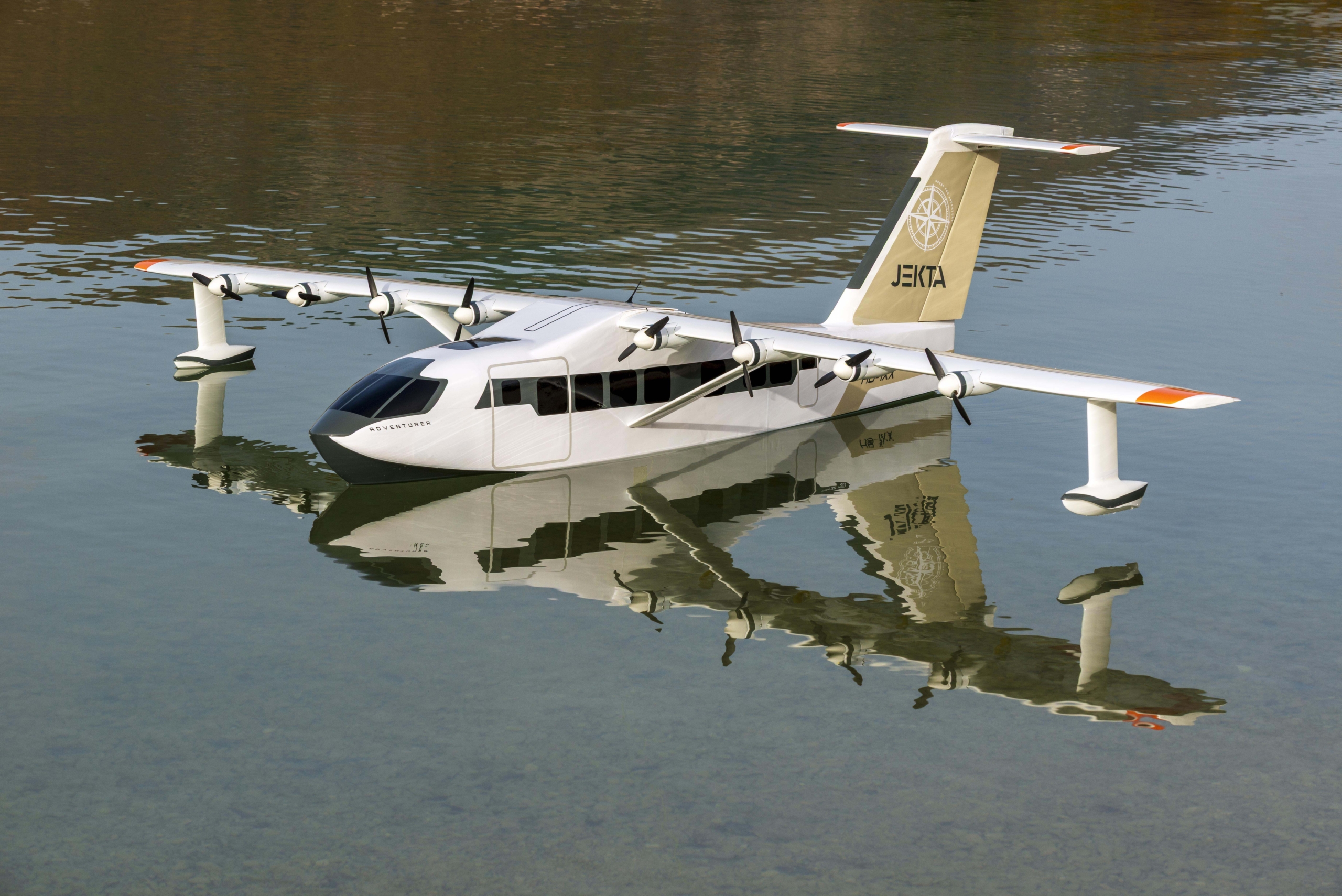
JEKTA, the Switzerland-based designer of a zero-emissions flying boat, has revealed that it has now completed a 1:9 scale model of its Passenger Hydro Aircraft – Zero Emissions 100 (PHA-ZE 100) amphibious aircraft.
The company states that the scale model is to be used to test concepts and adjust the design of the final aircraft through the gathering of performance data acquired by flying the model.
JEKTA’s amphibious flying boat – the PHA-ZE 100
The PHA-ZE 100 amphibious flying boat is the brainchild of George Alafinov and his father, Sergey. The pair have accrued over 20 years’ worth of experience in the seaplane industry. Indeed, Sergey Alafinov also became the first pilot to circumnavigate the North Pole in an amphibious aircraft in 2018.
With experience already gathered over two decades of designing and building amphibious aircraft (the company has already built an Ultralight Aircraft (ULA) and a larger 8-seat variant), the company has set its sights on a much larger concept.

Since 2017, the family-run company has been dedicating its efforts to designing a 19-seater hydrogen-electric-powered seaplane, which would be the largest of its kind. The result of their labours is the PHA-ZE 100 amphibious flying boat.
The PHA-ZE 100 is a multirole aircraft
The PHA-ZE 100 has been designed for sustainable regional, VVIP, corporate shuttle, medevac, or cargo transportation. The company claims that the aircraft will feature low operating costs, unprecedented comfort, and flexible configurations, enabling operations in diverse environments.
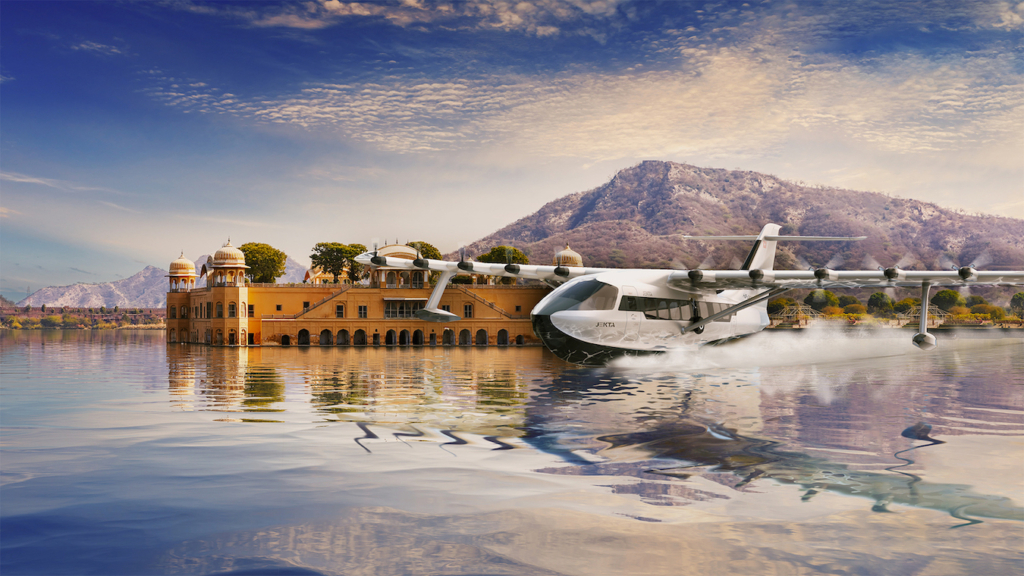
The PHA-ZE 100 will operate in coastal waters with waves up to 1.2m high, as well as in lakes, waterways, and on paved and unpaved runways, utilising its standard retractable wheeled landing gear.

JEKTA claims that its 19-seat aircraft provides “low-cost, sustainable services between cities without the need to install expensive land infrastructure such as runways or parking aprons.”
“With its diverse operational capabilities, adaptable interior configurations, and economically attractive operating parameters, the PHA-ZE 100 can support a growing range of operational demands,” added the company.
Details on the PHA-ZE 100’s design
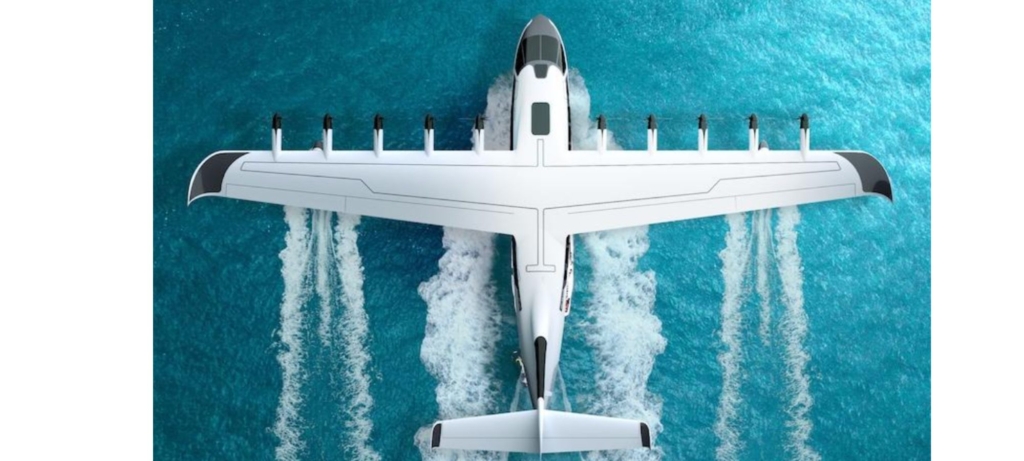
The PHA-ZE 100 (as it currently stands) is a high-wing aircraft that features a boat-shaped hull, ideal for water-based operations. There are four electrically driven power plants along each wing (where the hydrogen batteries are also stored), combined with a high-T-tail design.
The design also features large cockpit and cabin windows, with the latter being fitted to enhance the passenger experience on board.

Underwing outrigger floats, paired with a retractable wheeled undercarriage for amphibious operations, complete the design of the PHA-ZE 100.
1:9 scale model testing is underway
Having now constructed a 1:9 scale model of the PHA-ZE 100 aircraft, a company statement said that the model will be used to gather test data representative of the full-size aircraft.
“While the final aircraft configuration will evolve based on data generated by operating the model in the air and on the water, the model is closely representative of the definitive PHA-ZE 100 design.”
With the 1:9 scale model now available for testing, trials are already underway with test flights being performed in Italy, home of JEKTA’s Head of Design, Max Pinucci. According to the company, “the country’s storied seaplane history has proven inspirational for Pinucci and the wider JEKTA team, while testing of the next-generation PHAZE 100 design is building on that legacy.”
“The 1:9 scale model is large enough to provide data representative of the full-size aircraft and is allowing us to efficiently expand the test envelope while verifying data already collected in our computer modelling,” said JEKTA CEO and co-founder George Alafinov.
“We will continue to refine the aircraft configuration based on findings from the model testing and feed back into our digital models, ensuring the aircraft’s maturity as we work towards introducing it to the global air transport network in 2030.”
Expanding the PHA-ZE 100’s capabilities
With the current level of technology, particularly in electrical powerplant design, the company says that the PHA-ZE 100 could initially be capable of a range of around 62-93 miles (100 to 150 km). However, it expects this range to improve as better hydrogen propulsion technology and battery capabilities improve.
Eventually, once hydrogen-electric engines become more advanced, the company hopes that the aircraft will be capable of regional flights with a range of 250-310 miles (400 or 500km). A feature of the PHA-ZE 100 that the company is keen to promote is that the hydrogen battery containers contained within the wings will be removable, meaning that these can be removed from the aircraft to charge the batteries without grounding the aircraft.
Outstanding commitments for the PHA-ZE 100
Since the model’s official launch in 2022, JEKTA has already confirmed more than USD$1.35 billion in forward PHA-ZE 100 customer commitments.
Having deliberately targeted the Indian domestic seaplane market for potential customers for the PHA-ZE100 orders, in July 2023, JEKTA secured an order for 50 PHA-ZE 100 aircraft from Indian seaplane operator, Maritime Energy Heli Air Services (MEHAIR).
The deal included deposits for the first 10 aircraft, with the remaining aircraft being options. At the time of the order, the initial ten aircraft were to be delivered from 2030, by which time JEKTA expects the PHA-ZE 100 to have completed its certification process and enter serial production.
The first 10 aircraft are to be delivered in the standard 19-seat configuration and are intended to fulfil regional coastal seaplane services within India.
Then, in September 2024, JETKA signed an agreement to lease 30 of its zero-emission PHA-ZE 100 aircraft to Solyu, a South Korean leasing company. Solyu said it would provide financial and leasing solutions for 30 of JETKA’s PHA-ZE 100 aircraft, totalling over $1 billion.
“We are excited by the potential that the PHA-ZE 100 gives to our clients, which can optimise the sustainable qualities of JETKA aircraft to expand and open new markets,” Andrew Claerbout, Chief Executive Officer of Solyu, commented at the time.
The market potential for the PHA-ZE 100
JETKA says that with more than 70% of the planet covered in water, a growing population living around water, and technological developments serving to make amphibious aircraft a more efficient and environmentally friendly form of aviation, the opportunities for market growth and revenue generation are exponential.
At the time of writing, JETKA says that the company is currently due to begin production of the PHA-ZE 100 in 2030/31, with first deliveries to begin thereafter.
Featured image: JEKTA