


CAA’s new drone rules risk ‘killing’ the UK nano-UAS sector, expert warns

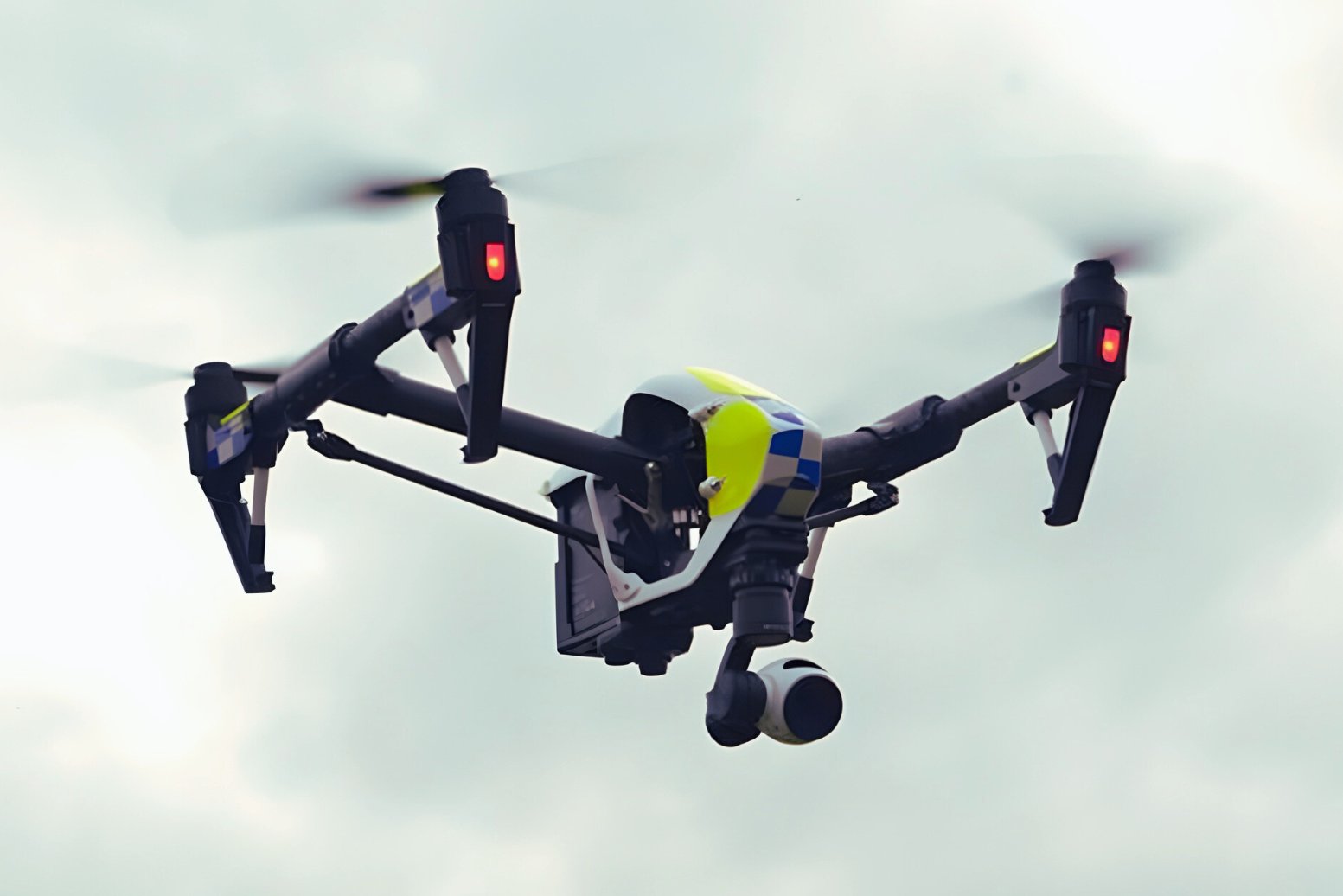
With less than a month before the UK begins tightening its regulations on drones, one of the sector’s leading standards specialists has warned that the reforms risk shutting down the country’s smallest and most innovative end of the market.
Robert Garbett, Founder and Chief Executive of Drone Major Group and former chair of the British Standards Institution committee for drone standards, tells AGN that the UK’s decision to bring the compliance threshold down to 100 g is both technically unrealistic and commercially damaging.
From 1 January 2026, the CAA begins rolling out rules requiring electronic conspicuity, or Remote ID, on new class-marked drones. Two years later, from 1 January 2028, the requirement will expand to any camera-equipped drone weighing 100 g or more, including legacy and home-built systems.
“Some common sense needs to be applied to the use of conspicuity by small UAS,” says Garbett. “This legislative change simply goes too far and is in contrast to limits placed upon UAS manufacturers and operators in Europe.”
Under EASA rules, which apply across the EU, drones under 250 g (C0 class) remain exempt from Remote ID. The UK’s choice to go far below that threshold is the core of Garbett’s warning.
CAA’s new drone rules risk killing the innovative nano UAS sector
The world of ultra-light uncrewed aircraft is rife with innovation. While most encounters with sub-250g drones will be the irritating buzz of someone’s DJI Mini overhead, the nano UAS space goes much deeper than that.
In the UK, nano-UAS have been trialled for offshore wind inspections, internal industrial surveys, social care and medical deliveries, emergency response reconnaissance and indoor policing tasks. British police forces, in particular, have become heavily reliant on sub-250 g drones that can be flown safely indoors or near crowds.
But these ultra-light platforms exist in a finely balanced engineering space. Even a few extra grams can alter performance or push the aircraft into a higher, more heavily regulated category.
“In this sector, every gram counts,” Garbett says. “Adding a conspicuity device would take almost all nano systems over the 250 g limit, killing the market for such systems dead.”
The CAA argues that Remote ID improves safety and accountability as skies get busier. Garbett does not dispute its value on higher-risk systems, but believes applying it down to 100 g is disproportionate.
“The use of Remote ID or ‘conspicuity’ technology is a key enhancement to safety and accountability on larger, higher-risk UAS systems,” he says. “However, the decision to apply this to UAS over 100 g is needless and counterproductive.”
One motivation for extending the requirement is to deter malicious use of consumer drones. Garbett questions the effectiveness of that approach. As he notes, determined individuals could “simply build a system from components imported from China, which do not have such a restriction”.
Read more: FAA study reveals hundreds of drones are breaking the rules and risking aviation safety
UK drone buyers will end up paying more
Consumer and semi-professional sub-250 g drones dominate UK sales. The DJI Mini series alone outsells most heavier categories.
Alongside the new visibility requirements, the UK is breaking from EU class markings and introducing its own UK0–UK6 labels. With Remote ID added into the mix, manufacturers may now need UK-specific versions of their smallest aircraft.

“This presents the likelihood of higher UAS prices in the UK due to additional requirements of small UAS manufacturers having to make modifications to models specifically for the UK market,” Garbett concludes.
Some manufacturers may simply decide not to support UK variants for their smallest drones, reducing choice further.
New UK UAS rules pave the way for shared airspace, but GA is still a holdout
Ultimately, the CAA’s reforms form part of a longer-term plan to modernise UK airspace and enable drones, eVTOLs and crewed aviation to share controlled and uncontrolled airspace more safely. Remote ID is seen as a foundational building block for that future.
“The requirement for full conspicuity is a positive step because it will eventually allow uncrewed and crewed aviation to share airspace more safely,” Garbett says. “But there are many hurdles to overcome, including the compulsory use of conspicuity by General Aviation, something that has been resisted strongly.”

GA aircraft in the UK are not mandated to carry Remote ID, ADS-B Out or any form of compulsory electronic conspicuity. Some pilots voluntarily equip with portable EC devices, but industry groups have consistently argued against mandatory equipage.
A 2024 position paper from the General Aviation Alliance (GAA) states that any future EC system must not impose costs on GA. In their words:
“All the costs associated with the creation and running of the System should be paid for by the new aviation activities that it has been created to enable, i.e. the beneficiary pays.”
This lobbying posture has helped preserve voluntary-only electronic conspicuity for GA, even as mandatory requirements tighten on drones.
Potential of the UK drone market risks remaining untapped
In PwC’s 2022 ‘Skies Without Limits v2.0‘ report, produced with BEIS and the Department for Transport, analysts estimated that drones could contribute £45 billion to the UK economy by 2030, supporting hundreds of thousands of jobs and saving 2.4 million tonnes of CO2 annually.

Garbett warns that the UK risks limiting this potential if regulatory divergence and added hardware requirements make the ultra-light sector uncompetitive.
“We would urge the regulator to reconsider the limits on which conspicuity is required and align them with those used in Europe,” he says.
Featured image: Devon & Cornwall Police


