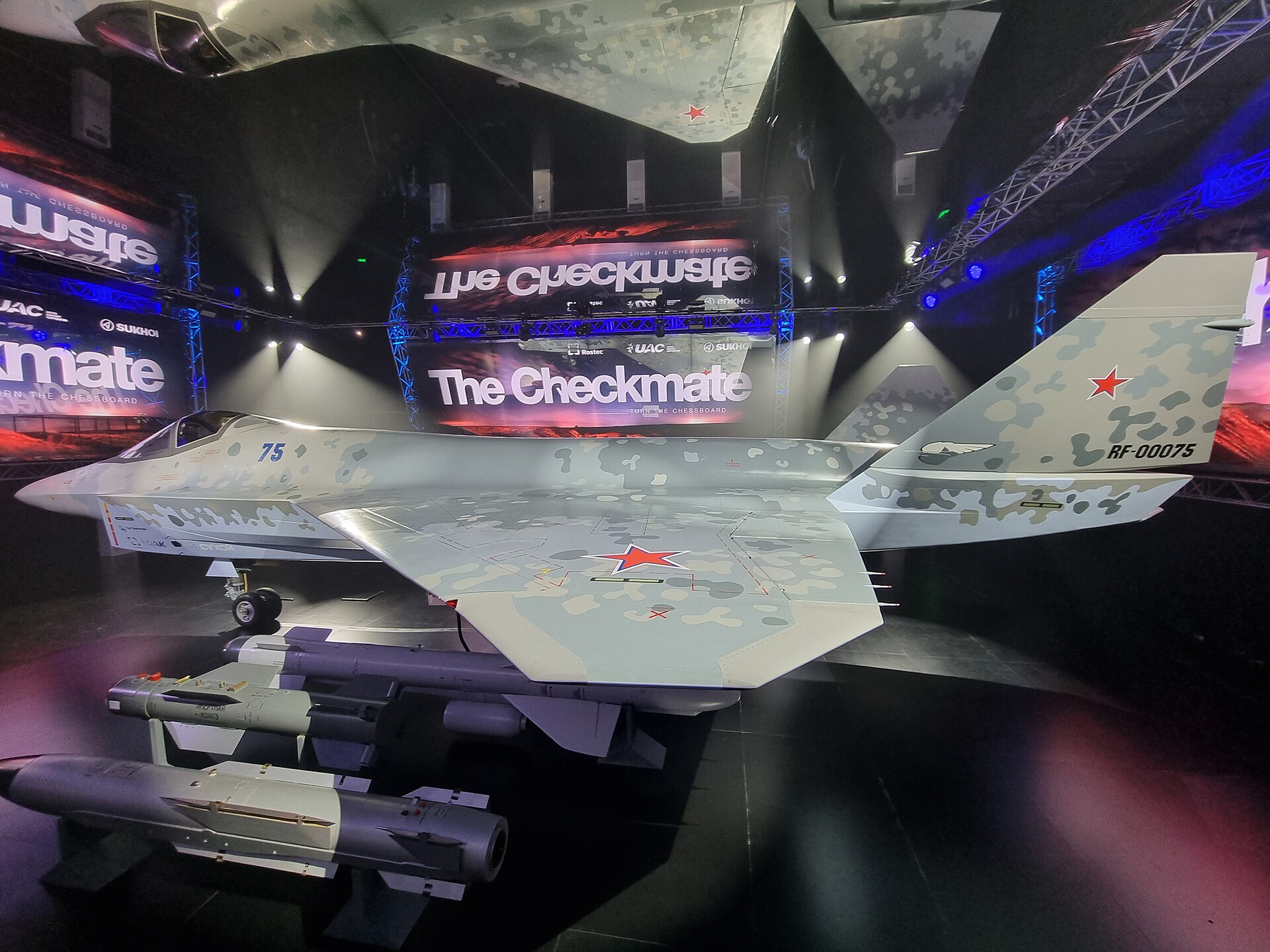
Checkmate: Russia says its Su-75 stealth fighter is almost ready for flight tests

4 min read
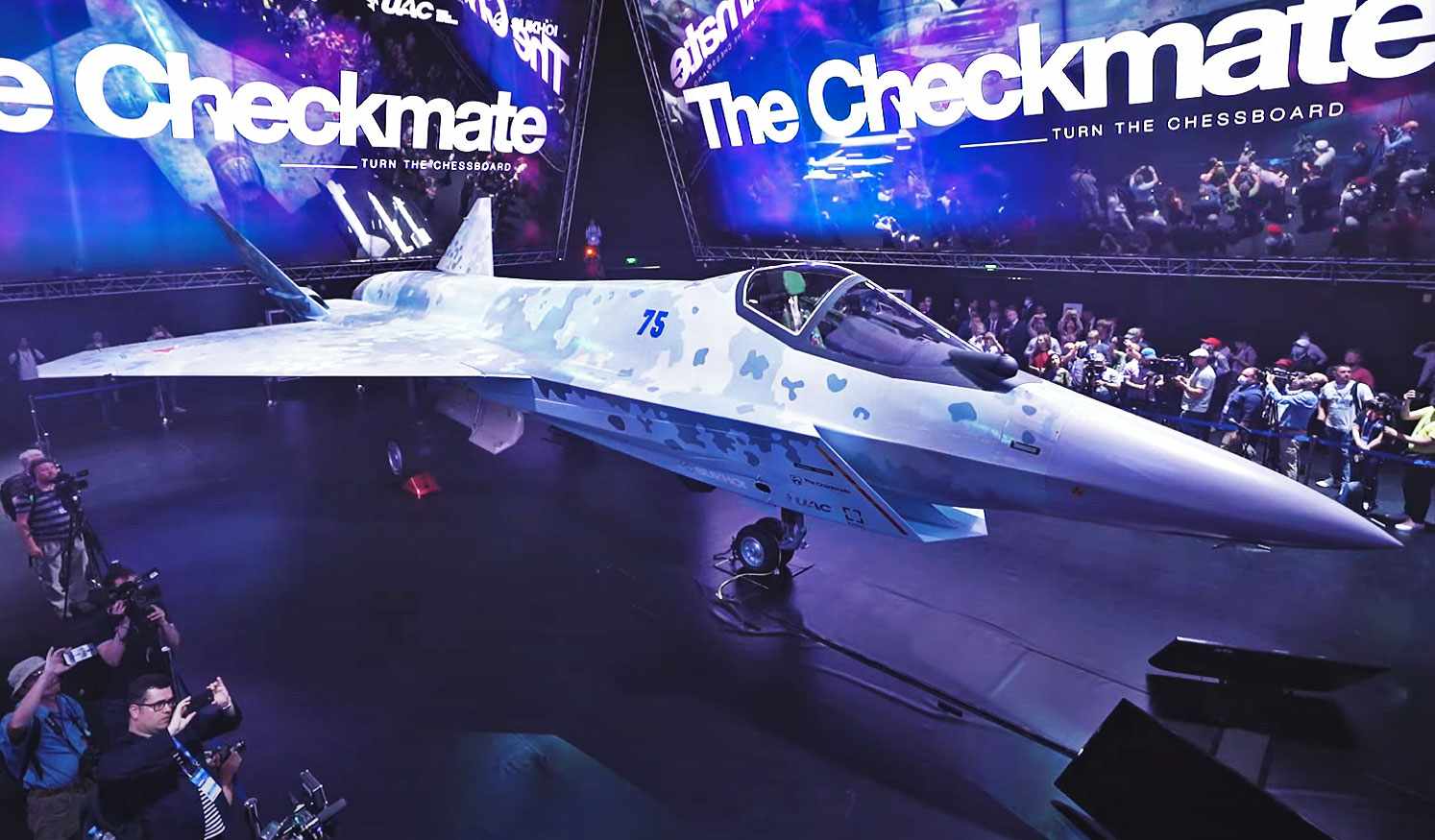
Russia used the Dubai Airshow 2025 to send its clearest signal in years that the Su-75 Checkmate is still very much alive.
After long periods of silence, shifting timelines and questions over funding, the single-engine stealth concept is now being positioned as “almost ready” for flight testing. For a programme that has slipped several times since its 2021 unveiling, this renewed confidence is notable, even if the detail remains thin.
Su-75 development moves into final assembly and rig testing
Russian officials say the prototype Su-75 is now in final assembly with bench and rig tests underway. These are the key pre-flight steps that typically precede taxi trials and envelope expansion.
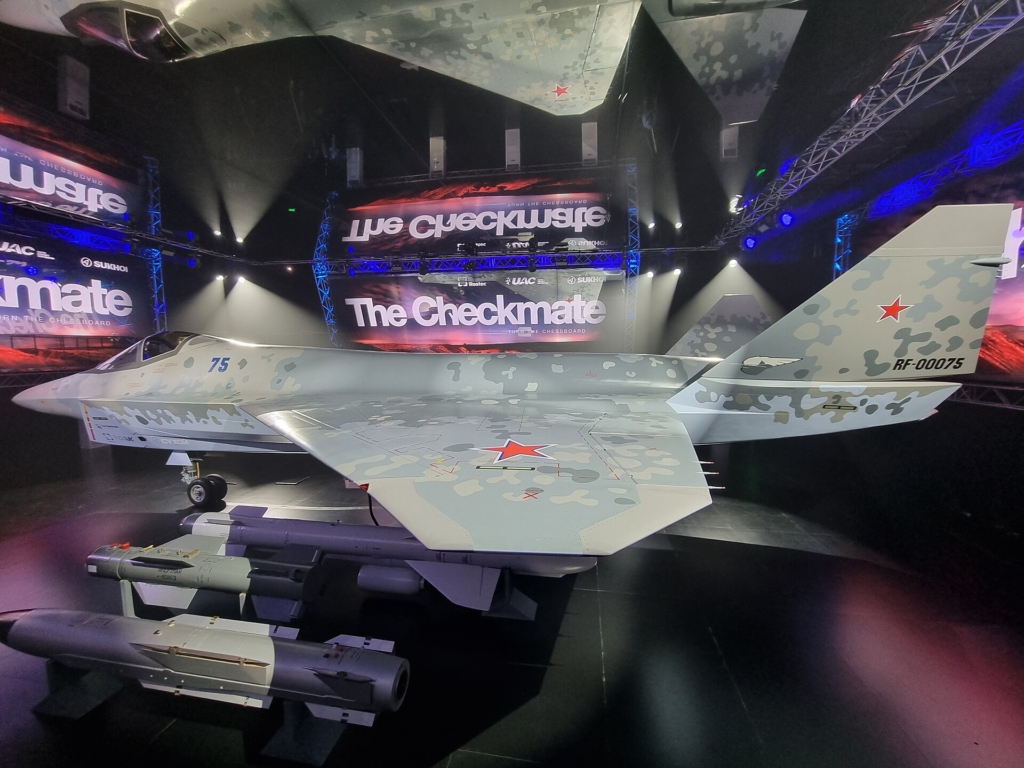
Although Russia originally promised a 2023 first flight, then 2024, then 2025, the current target is early 2026. Engineers close to the programme suggest that the aircraft is structurally complete and is now undergoing the painstaking integration work that has historically slowed Russian prototypes.
The messaging at Dubai was unusually aligned: the aircraft exists, it is in a workshop rather than on a slide deck, and its systems are being exercised for the first time. That alone is a more concrete update than the market has seen in years.
What Russia wants from the Su-75
The Checkmate is pitched as a lighter, more affordable sibling to the twin-engine Su-57, yet still retains many of the same design cues. The concept centres on:
- A single-engine, low-observable airframe
- An internal weapons bay
- A diverterless supersonic inlet
- V-tail configuration
- A claimed 3,000 km combat radius
- A payload of around 7,000 kg
Russia frames the aircraft as a cost-effective entry point to the fifth-generation market, targeted at nations priced out of heavier stealth fighters or politically restricted from Western programmes.
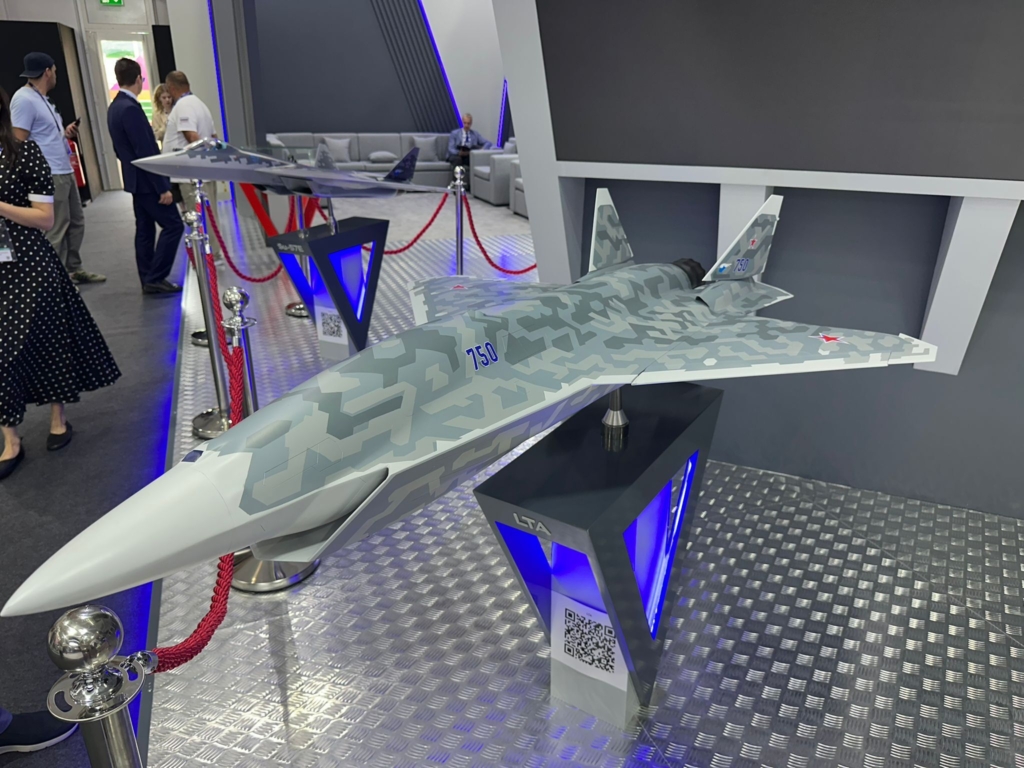
At Dubai, UAC also displayed a cockpit-less mock-up, hinting at planned uncrewed variants and a potential loyal-wingman role. This aligns neatly with global demand for cheaper unmanned or optionally manned combat aircraft.
Moscow’s export hopes
Every element of the Dubai presentation was clearly designed for export audiences. Russia has repositioned the Su-75 as a modular platform, offering joint production, custom avionics suites and optional unmanned upgrades.
Potential interest historically came from the UAE, India, Vietnam and several African states, though none have signed anything committing. Russia’s challenge is convincing customers that it can actually deliver an aircraft of this complexity under current sanctions and supply-chain conditions.
Still, the market for lighter stealth fighters is expanding. China has its J-35, Türkiye is advancing the KAAN, and several Western suppliers are exploring lower-cost offerings. If Russia can field a credible demonstrator, it will reinsert itself into a segment it risks losing entirely.
Read more: Russia’s fighter jet exports have collapsed – here’s why
Obstacles on the path to Su-75 realisation
The technical ambition is bold, but the road ahead remains steep. Key challenges include:
- Sanctions and supply chain limits, especially around electronics and precision manufacturing
- Competing priorities, given the demands of sustaining Russia’s active combat fleet
- Historical slippages on developmental programmes
- Absence of a launch customer, which makes scaling a production line far more difficult
- Scepticism over long-term support, particularly for software-heavy stealth aircraft
Even if the Su-75 flies in 2026, the true test will be translating a prototype into a stable production programme that international customers can rely on.
Why the Su-75 still matters
For all its delays, the Checkmate remains one of the most strategically interesting fighter concepts in development. If Russia can get it off the ground, it would reposition the country in the lightweight export fighter segment and offer a lower-cost stealth option at a time when defence budgets are under pressure.
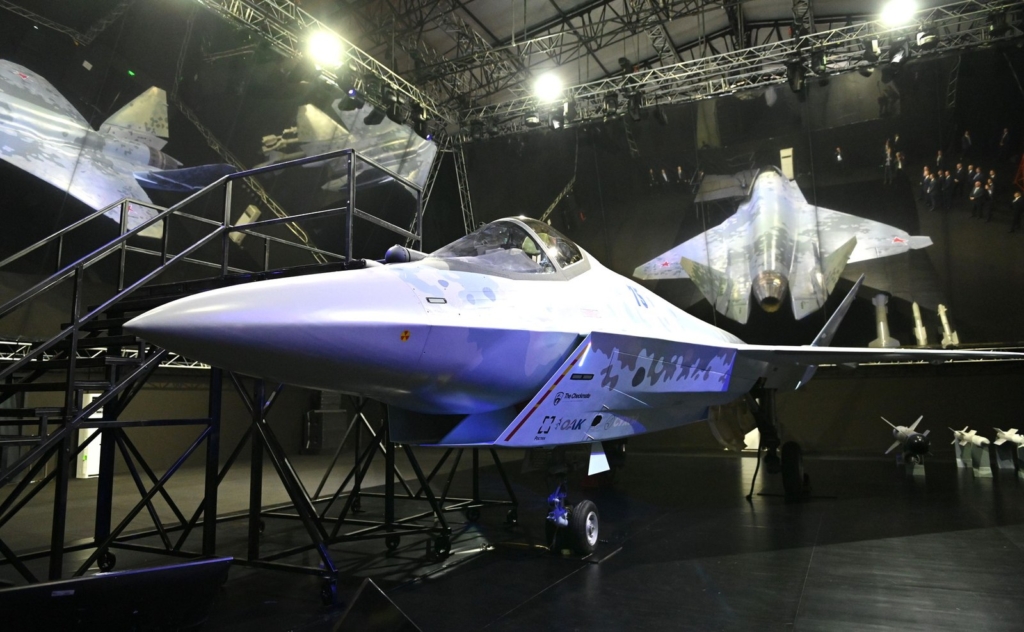
However, the gap between ambition and execution remains wide. The next 12–18 months, particularly whether the first flight happens on the new timeline, will determine whether Checkmate becomes a real aircraft or stays a glossy model wheeled between airshows.
For now, the Su-75 is edging its way out of the PowerPoint phase and into genuine hardware testing. Russia clearly wants to signal momentum, and the Dubai Airshow gave it a global stage to do so. But until a prototype actually takes off, the programme will continue to be judged less by its promises and more by its ability to meet the most basic milestone: leaving the ground.
Sign up for our newsletter and get our latest content in your inbox.


More from

September 27, 20263 min read

September 26, 20263 min read


September 25, 20264 min read


September 25, 20264 min read

September 24, 20262 min read