


The lesser-known IFC vendor powering Saudia’s new, fast and free in-flight WiFi
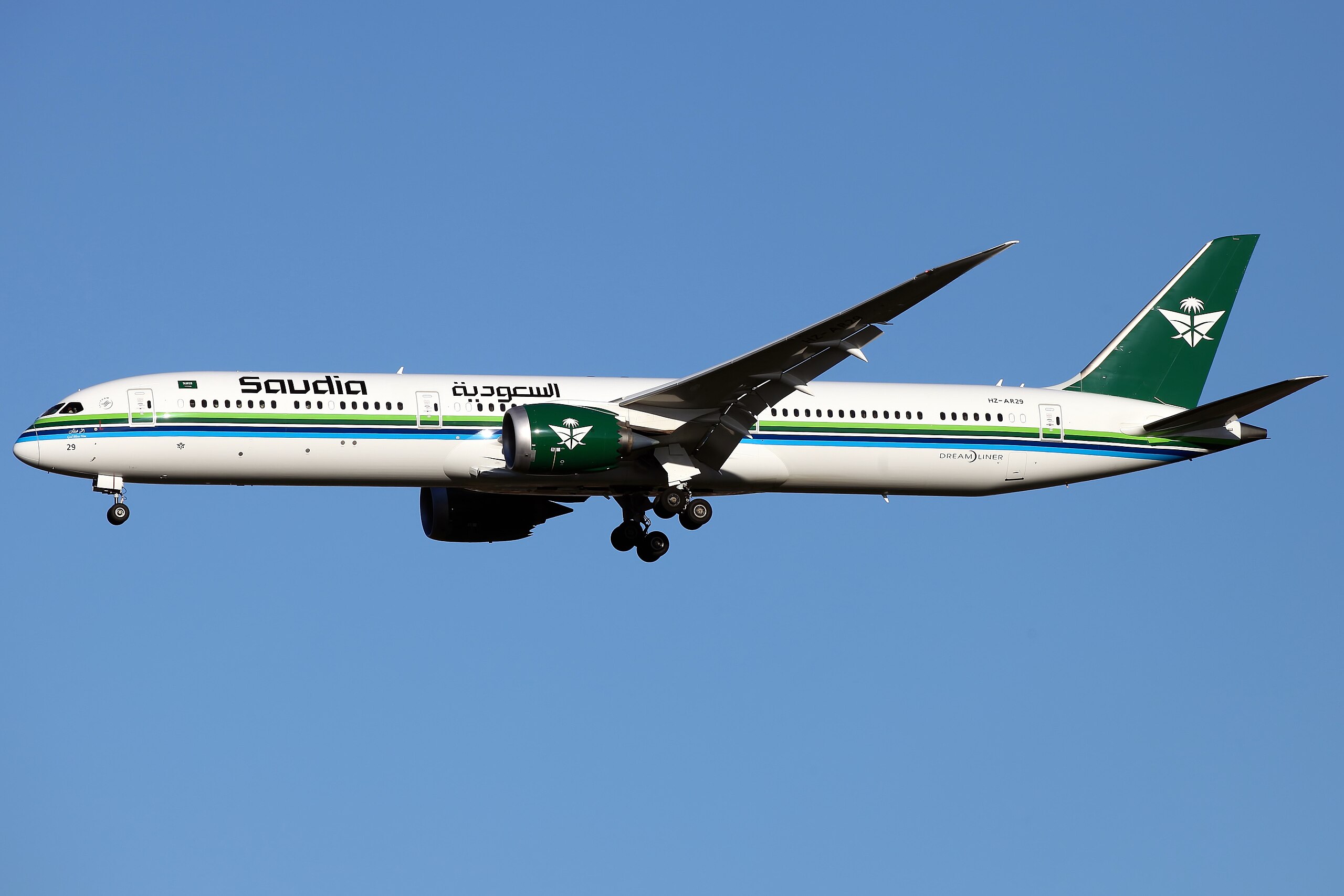
Saudi Arabia’s flag carrier Saudia has conducted a successful test flight of a new high-speed in-flight connectivity (IFC) service, marking a significant milestone in the kingdom’s push to digitalise its aviation sector.
According to the official Saudi Press Agency (SPA) release, the airline operated the demonstration flight SV1044 last Friday from King Abdulaziz International Airport in Jeddah (JED) to King Khalid International Airport in Riyadh (RUH).
Saudia’s new WiFi offers ground speeds at altitude
The Airbus A321 aircraft operating the flight carried senior officials, including Saleh Al-Jasser, Minister of Transport and Logistics Services and Chairman of Saudia, and Ibrahim Al-Omar, Director General of Saudia Group, who watched a live broadcast of a Saudi Pro League match during the flight at an altitude of 35,000 feet.
The IFC system maintained a stable, high-speed connection, allowing passengers to browse, stream video, and hold video calls throughout the journey. The airline said the service currently delivers speeds up to 300 Mbps, with upgrades planned to exceed 800 Mbps.
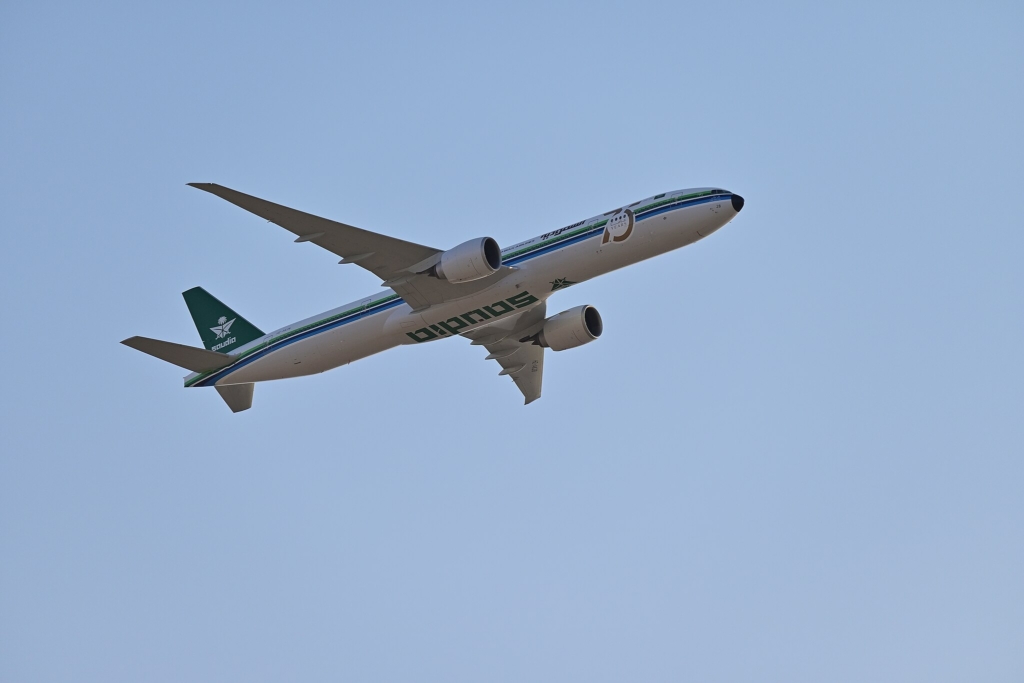
Saudia emphasised that the new WiFi service will be free of charge for all passengers, across all cabin classes, once the rollout reaches full scale. The latest WiFi also allows passengers to connect multiple devices simultaneously and switch between them during the flight without requiring re-authentication.
Who supplies Saudia’s new high-speed WiFi?
While the SPA announcement did not name the supplier, AGN reached out to the airline and industry sources to confirm the identity. While the airline did not respond to our enquiry, David Whelan, analyst at London-based Valour Consultancy, which specialises in tracking the in-flight entertainment and connectivity market, told us that the new system is powered by Neo Space Group (NSG) — a Saudi-based connectivity provider expanding across the global IFC market.
NSG operates under the Public Investment Fund (PIF) umbrella and does not maintain its own satellite network. Instead, it leases capacity from SES, the Luxembourg-based satellite operator, delivering broadband via the SES Open Orbits™ multi-orbit platform, which blends geostationary (GEO) and medium Earth orbit (MEO) coverage for low latency and high throughput.
This partnership enables NSG to offer “ground-like speeds” without owning satellites, positioning it as a systems integrator and airline-facing service provider, a similar model to rivals Panasonic Avionics and SITAONAIR (which has also provided connectivity on Saudia’s long-haul fleet).
From Riyadh to Bangkok: NSG’s growing airline roster
Whelan also notes that NSG “also has deals with Turkish, Thai Airways, and Uzbekistan Airways.” The company has confirmed these contracts in its announcements.
- Turkish Airlines – Announced in November of last year, NSG and SES signed a contract to deliver next-generation IFC with speeds “up to 200 Mbps” on Turkish Airlines’ new fleet of 14 Airbus A350 aircraft from 2026 onward.
- Thai Airways – Announced this April, the carrier’s IFC modernisation program will cover up to 80 aircraft, including Thai’s Boeing 777, Boeing 787 and Airbus A321neo aeroplanes. The Boeing 777s were expected to be retrofitted for connectivity beginning in the third quarter of this year, with the Airbus A321neo and Boeing 787 Dreamliner aircraft to be line-fitted during production. NSG will offer connectivity speeds of around 200 Mbps.
- Uzbekistan Airways – Also announced this April, the airline’s A321neo aircraft will be line-fitted with NSG-delivered SES connectivity as part of the carrier’s fleet renewal.
NSG has also explored deals in Europe and Southeast Asia as SES scales Open Orbits’ capacity and Ka/Ku-band coverage for commercial aviation.
Starlink talks preceded Saudia’s selection
Earlier in 2025, multiple outlets reported that Saudia was in advanced negotiations with Starlink to provide high-speed satellite internet across its fleet. Elon Musk’s Starlink has been gaining market share quickly in the in-flight connectivity space, including deals with Hawaiian Airlines, Qatar Airways and United Airlines.

No formal contract materialised, but the discussion suggests Saudia evaluated several next-generation IFC providers before settling on a domestic solution through NSG.
A recent Ookla analysis found that the top-performing airlines using Starlink achieved median download speeds of ~152 Mbps and latency as low as ~44 ms. That is far ahead of most legacy offerings, but still below Saudia’s aim for 300-800 Mbps download speeds.
The airline’s selection of NSG for its latest in-flight connectivy solution also aligns with Saudi Vision 2030, which prioritises digital sovereignty and the growth of home-grown technology ecosystems.
Featured Image: Colin Cooke | Wikimedia Commons


