MQ-9A Reaper launches Switchblade 600 loitering munition in first-of-its-kind trial

September 12, 2025
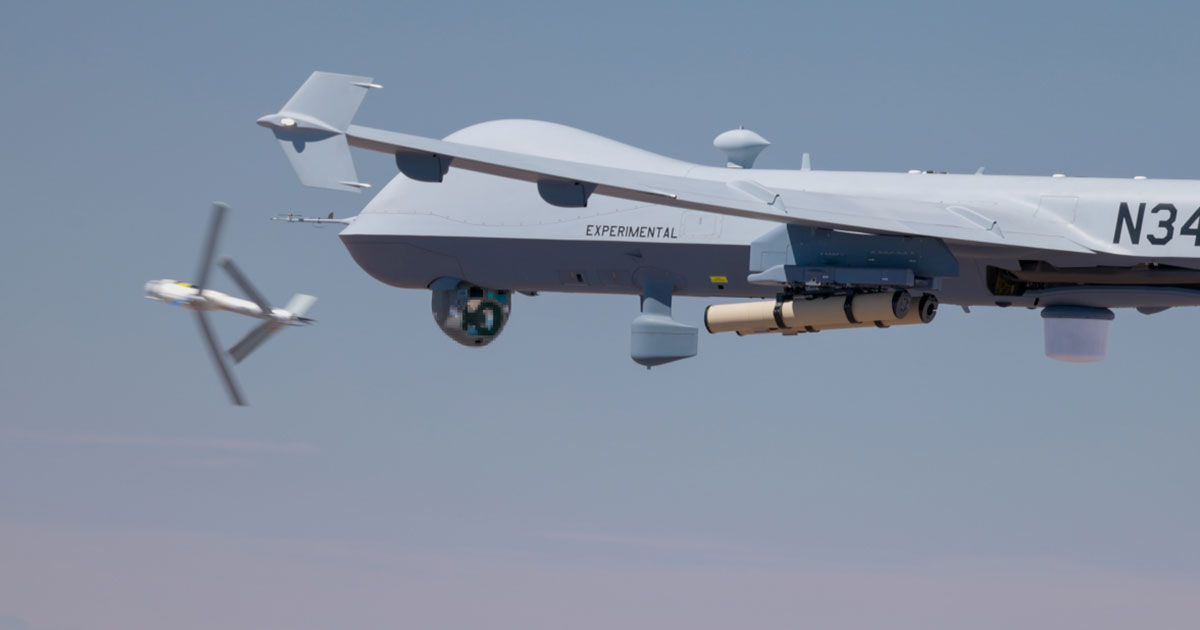
An MQ-9A Reaper has, for the first time, launched a Switchblade 600 loitering munition during trials in Arizona, expanding the aircraft’s role from long-endurance surveillance and strike to serving as a launch platform for smaller precision weapons.
The series of flights, carried out at the US Army’s Yuma Proving Grounds from July 22-24, marked a milestone in pairing two systems already in operational use. For armed forces, the development points to new ways of delivering long-range, flexible strike options while keeping high-value drones at safer standoff distances.
First integration of MQ-9 Reaper and Switchblade 600
The trial was a joint effort between General Atomics Aeronautical Systems (GA-ASI), manufacturer of the MQ-9A, and AeroVironment, which produces the Switchblade family of loitering munitions.
Over several days of testing, the team released two Switchblade 600s from a Block 5 MQ-9A, one inert and one live high-explosive round. Both launches validated the munition’s compatibility with the Reaper and confirmed the effectiveness of its updated guidance and navigation systems.

The live round hit its intended target, while the inert round was used to assess system integration and flight characteristics. Notably, the Switchblade 600 travelled more than 175 kilometres when released from 30,000 feet, significantly extending the reach of the MQ-9A without requiring it to fly close to enemy defences.
Beyond-line-of-sight control via satellite
The demonstration also tested the ability to transfer control of the munition between operators. After launch, control of the Switchblade was handed over from the MQ-9A’s ground control station to a separate operator positioned nearer to the operational area.
Satellite communications enabled beyond-line-of-sight operations, a critical feature in contested environments. This handover ensures ground forces can coordinate directly with airborne assets once the weapon is deployed, reducing delays and improving situational awareness.
Expanding the role of the MQ-9A Reaper
Traditionally, the MQ-9A has been used for intelligence, surveillance, and reconnaissance (ISR) missions, as well as direct strike with Hellfire missiles and guided bombs.
By demonstrating compatibility with loitering munitions, the platform’s role broadens to include serving as a “mothership” for airborne-launched effects.

“By using MQ-9A to carry the Switchblade, the MQ-9A is able to stand off farther from enemy weapons systems and increase the range of the SB600,” said GA-ASI President David Alexander. “This will provide greater access and options in contested airspace.”
Switchblade 600 loitering munition capabilities
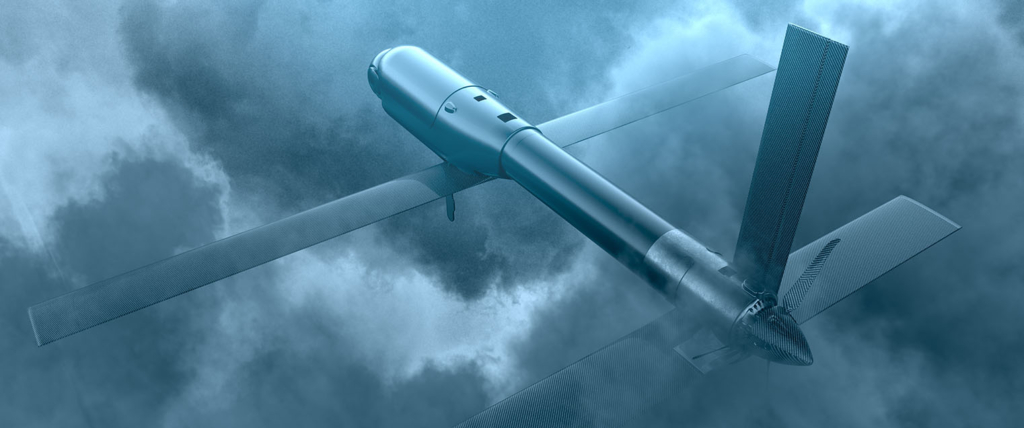
The Switchblade 600 combines reconnaissance, surveillance, and strike capabilities in a single system. It offers:
- More than 40 minutes of loitering endurance
- Precision EO/IR sensors
- An anti-armour warhead for hardened targets
- A patented “wave-off and recommit” feature to abort and re-engage
Compact and man-portable, it can be launched from ground units, vehicles, or airborne platforms such as the MQ-9A, giving commanders a versatile option for multi-domain operations.
“This integration is more than a technical achievement — it’s a clear demonstration of what’s possible when proven systems are combined to create new operational advantages,” said AeroVironment Executive Vice President Jimmy Jenkins.
Implications for distributed and multi-domain warfare
The Switchblade 600 is designed to provide precision strike against armoured targets and fortified positions, with the flexibility to loiter and engage targets of opportunity.
When paired with the MQ-9A, forces can project power across wider distances while reducing risk to larger unmanned platforms. Analysts say this aligns with the broader shift to distributed, networked warfare, where unmanned systems act in concert to extend reach and complicate adversary defences.
The Arizona trial not only demonstrated technical success but also hinted at the future of unmanned combat. Instead of conducting direct strikes, drones like the MQ-9A could increasingly deploy loitering munitions that search for and engage targets independently — extending airpower while preserving high-value assets.