


India rejects F-35 fighter jet deal as it pushes towards domestic defence manufacturing

5 min read
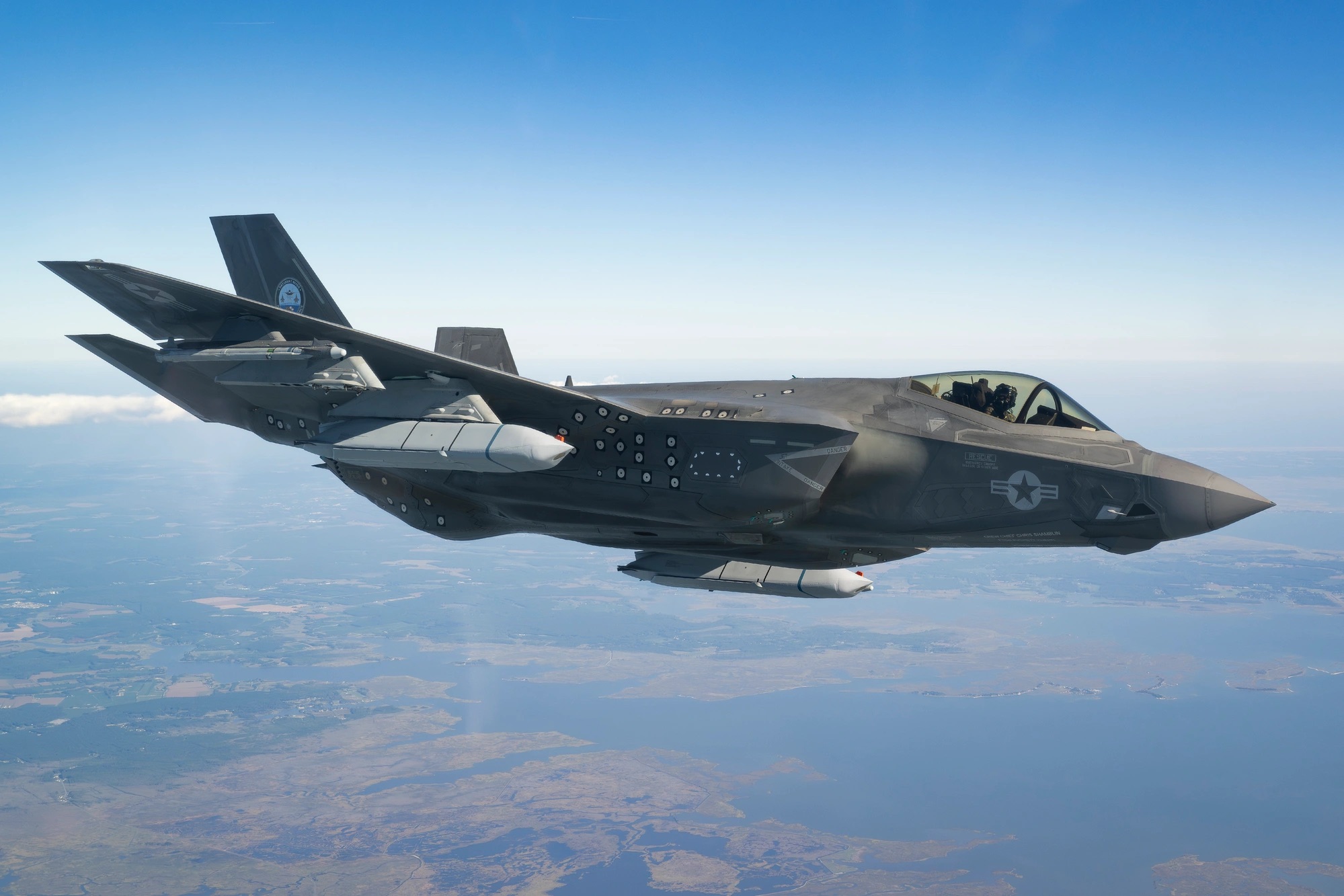
India has firmly signalled its disinterest in acquiring the US-made F-35 stealth fighter jet.
While neither side has officially confirmed the development, a Bloomberg report suggests that New Delhi has communicated its decision in recent months.
Although no formal proposal was ever made, Trump had used India’s Prime Minister Narendra Modi’s February visit to Washington to publicly advocate for the F-35 sale.
“We are paving the way to ultimately provide India with the F-35 stealth fighters,” Trump had said in a press conference at the White House, aiming to entice India away from its historic defence relationship with Russia.
But that pitch has now fallen flat. According to sources cited by Bloomberg, India has decided to pivot toward boosting domestic defence manufacturing and collaborative development, in line with its long-standing “Make in India” policy.
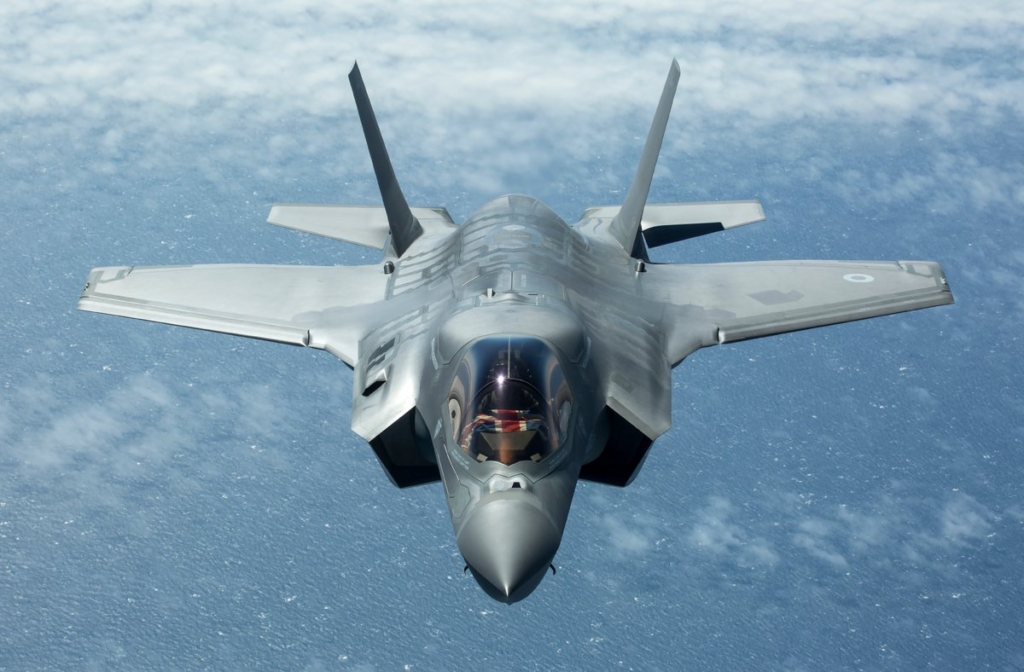
“The rejection underscores New Delhi’s growing disinterest in high-profile American military hardware without co-production guarantees and comes as bilateral ties are strained by widening trade and defence policy disagreements,” says a Delhi-based defence analyst.
The Indian Ministry of Defence has not issued a formal statement. Junior Minister for Defence Kirti Vardhan Singh told Parliament that “no formal discussions have been held as yet” on the F-35.
His comments were echoed by Chief of Air Staff, Air Chief Marshal AP Singh, who in March clarified that India had not considered the US fighter and no official offer had been made.
Why India doesn’t want the F-35
Despite public signals from the US, India’s rejection appears to stem from both operational and strategic concerns.
While the F-35 is the world’s only mass-produced 5th-generation stealth fighter, priced at approximately $80 million per unit, it poses interoperability challenges with India’s Russian-origin platforms. These include the Ilyushin Il-78 refuelling aircraft and the Integrated Air Command and Control System (IACCS).

India’s Air Force, currently operating only 31 active fighter squadrons against a sanctioned strength of 42, is actively seeking to modernise its fleet. Yet, the US has shown little interest in meeting India’s demands for technology transfer and local production, non-negotiables under the MRFA (Multi-Role Fighter Aircraft) programme, which seeks 114 new jets with a substantial domestic manufacturing component.
By contrast, Russia has offered India co-production of its fifth-generation Su-57 stealth fighter, a proposal aligned with India’s industrial goals and strategic autonomy.
India’s decision to close doors on the F-35 proposal comes amid President Donald Trump’s announcement of punitive tariffs on Indian imports, effective from 7 August 2025.
On 30 July, President Trump took to Truth Social to announce not only a 25% tariff on Indian imports but also additional, unspecified penalties related to India’s continued purchases of Russian energy and military systems.
“India’s tariffs are far too high – among the highest in the world,” Trump wrote, accusing India of engaging in minimal trade with the US despite being called a ‘friend.’
India’s Commerce Minister Piyush Goyal acknowledged the seriousness of the developments in Parliament, stating that “the implications of the recent developments are being examined.”
Russia steps in with the Su-57 and the temptation of co-production
As US defence offerings falter, Russia has seized the opportunity to reinforce its defence partnership with India.
In early July, Russian Ambassador to India Denis Alipov publicly pitched the Su-57 5th-generation fighter as a superior alternative.
“We’re offering our 5th-generation fighter. We have the best machine, the Su-57,” Alipov said. “It is very competitive; we are offering not only to sell but to co-produce. We offer technology sharing … with the creation of necessary industrial facilities.”

He emphasised flexibility on configurations and local assembly, positioning the offer as fully aligned with India’s “Make in India” goals.
India, however, has reason to tread carefully. Its earlier collaboration with Russia on the Fifth Generation Fighter Aircraft (FGFA), a programme based on the Su-57, ultimately collapsed due to technical disagreements, lack of transparency, and spiralling costs. That experience has left a lasting imprint on India’s defence planning circles.
Reinvesting in a Russian platform with a history of incomplete systems and opaque upgrade paths may not only be a strategic gamble but could also entrench the Indian Air Force in a long-term dependency on a defence ecosystem increasingly isolated and under strain due to global sanctions.
The French Connection: India’s broader strategic realignment
Alongside potential collaboration with Russia, India is deepening ties with France, planning to begin domestic production of Rafale fighter fuselages by 2028 at a rate of up to two units per month.
India’s growing defence relationship with France is increasingly viewed as stable, forward-looking, and aligned with its strategic objectives. Unlike Russia, France has consistently demonstrated openness to technology transfer and joint production, pillars of India’s self-reliance agenda.

“France isn’t just selling India fighter jets, it’s building long-term trust,” said the defence expert. “If India is flying French today and manufacturing French platforms tomorrow, that’s not just a transaction. That’s the foundation of a strategic partnership.”
For the first time, the main bodies of future Rafale fighter jets are being produced outside France. Some of the 26 Rafale Marine fighters ordered by India for its navy will come with locally produced fuselages.
India is left with no 5th-generation fighter jets for the foreseeable future
India’s indigenous AMCA project is gathering momentum, although it is unlikely to be operational within this decade.
Without access to 5th-generation fighters in the immediate term, the IAF may find itself stretched thin in the face of rising threats from regional adversaries, particularly China, which is aggressively scaling its stealth fighter capabilities.
Still, India’s decision to forgo the F-35 reflects more than just tactical calculation. It signals a clear assertion of strategic autonomy.
Whether navigating trade disputes, diversifying defence suppliers, or investing in indigenous capabilities, it appears that India is no longer willing to trade policy independence for short-term defence deals.
Sign up for our newsletter and get our latest content in your inbox.


More from


September 4, 20264 min read


