


Vertical Aerospace targets UK production after landmark Farnborough eVTOL flight
Vertical Aerospace has begun narrowing down potential UK locations for its first full-scale aircraft assembly and battery manufacturing facilities after completing the first public eVTOL transition flight at the Farnborough International Airshow.
The Bristol-based company is in advanced discussions with the UK Government over a support package that could include a further grant of up to £10 million. Vertical expects to select its preferred production sites before the end of 2026, with the facilities intended to manufacture its new Valo electric aircraft.
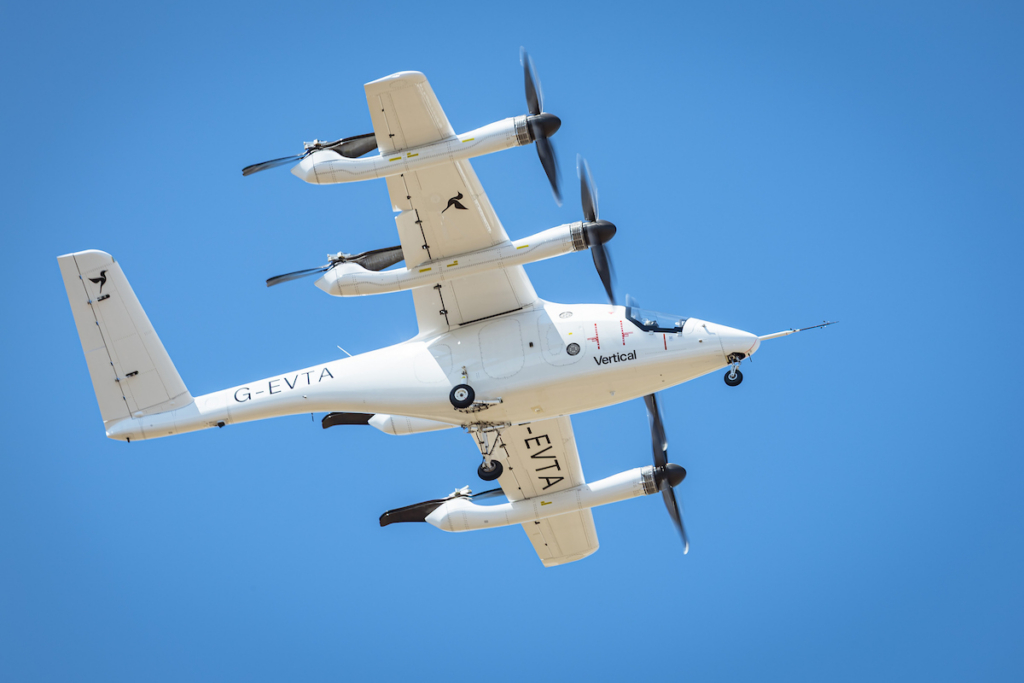
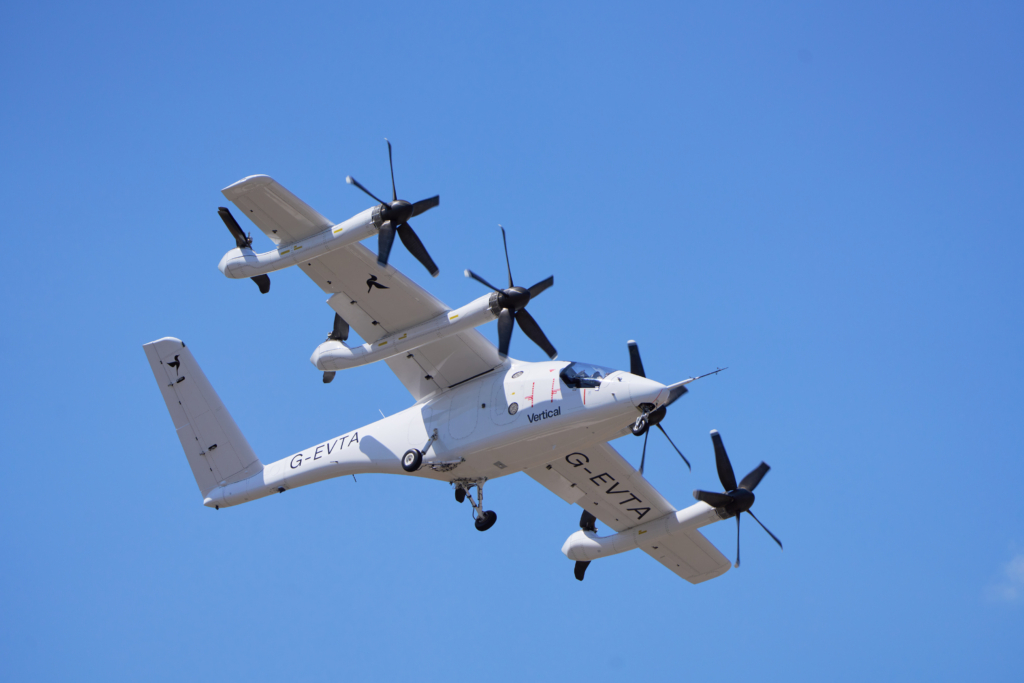
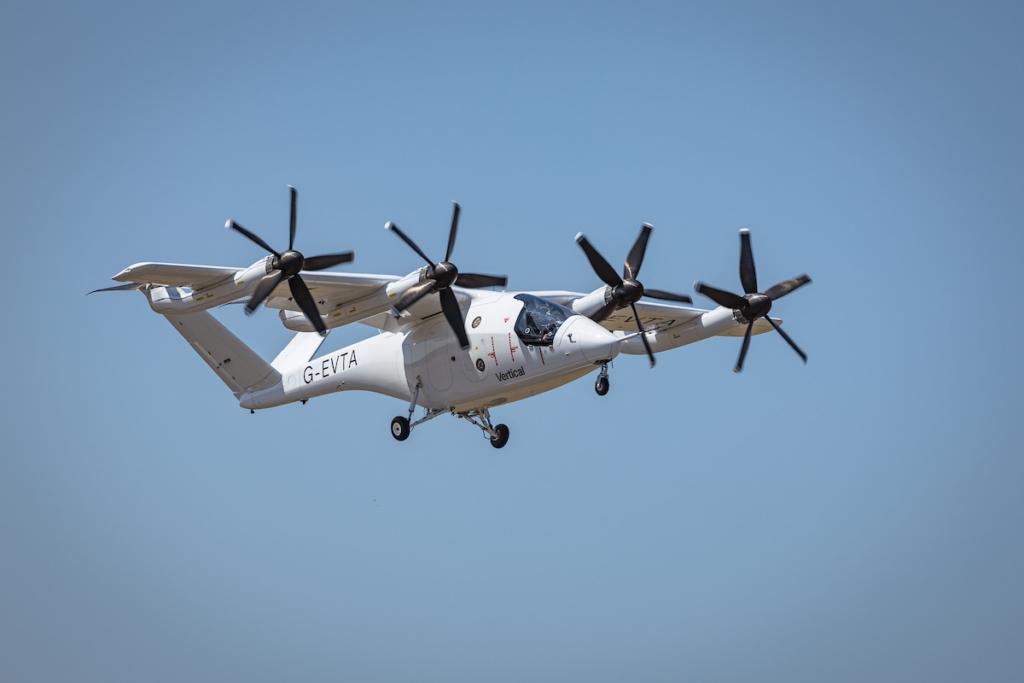
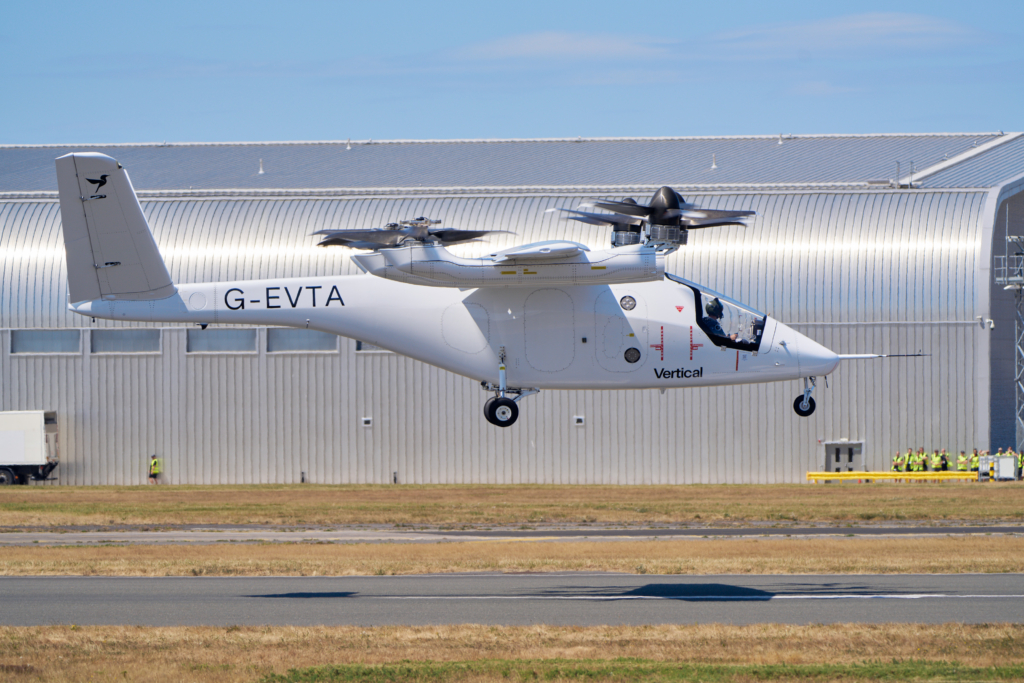
The announcement follows the first public transition flight by an eVTOL aircraft at Farnborough. Vertical’s full-scale piloted prototype took off vertically before transitioning into wingborne flight and returning to helicopter mode for a vertical landing.
The flight was conducted by chief test pilot Simon Davies at 13:46 on the opening day of the show.
Vertical completes public transition flight
Vertical chief engineer David King told Aerospace Global News that the demonstration followed the completion of the prototype’s envelope-expansion programme in April.
“We’ve been focused in the last couple of years, since the first flight of our full-scale prototype, on maturing the technology,” King said. “It was a rigorous envelope-expansion flight-test programme where, each step of the way, we correlated our models. That is now complete.”
The Farnborough appearance was therefore intended to demonstrate publicly a capability Vertical had already explored during its development testing.
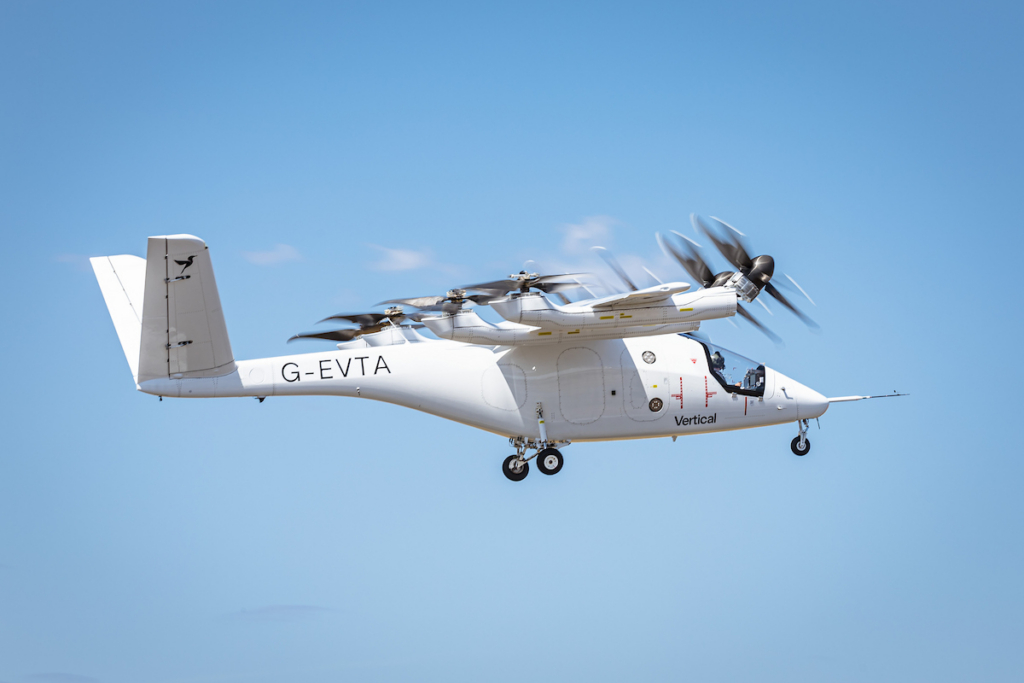
Transition is one of the defining technical challenges for a tiltrotor eVTOL. The aircraft must move from rotor-borne vertical flight into more efficient wingborne cruise before reversing the process for landing.
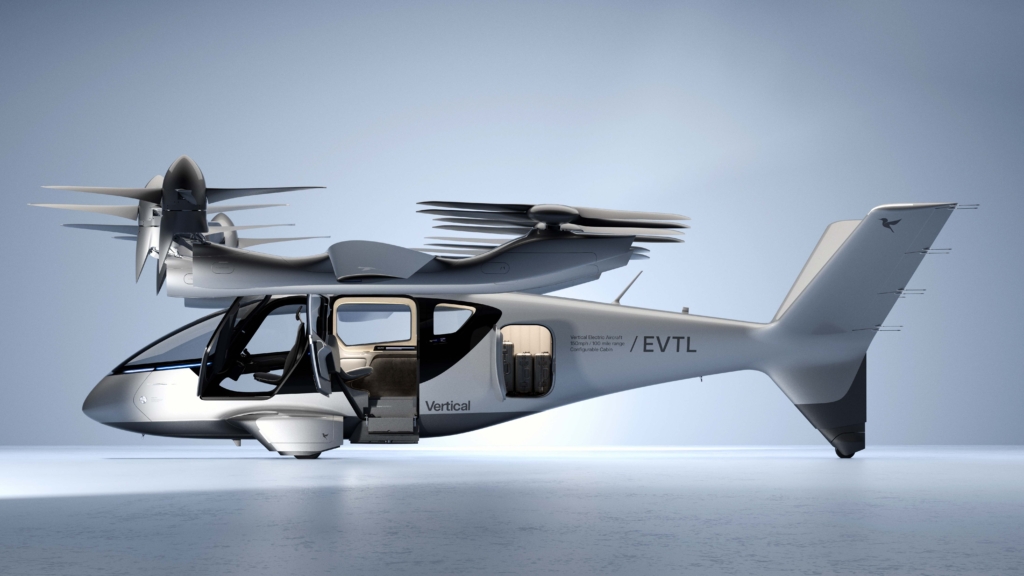
Vertical is now turning its attention to Valo, the production aircraft that will follow its current prototype.
King said the company was freezing the Valo design during 2026 and beginning to manufacture components for seven conforming aircraft. Parts and systems will be built, qualified and verified during 2027, followed by certification flight testing in 2028.
Vertical continues to target entry into service in 2029, although that timetable remains dependent on development and regulatory progress.
UK sites considered for Valo production
The next challenge will be moving from prototype development into serial production.
Vertical is considering UK locations for both aircraft final assembly and battery manufacturing. Its first full-scale facilities are expected to support approximately 700 direct skilled jobs outside London by 2030.
An economic assessment commissioned from Frontier Economics estimates that Vertical could support as many as 2,200 jobs and contribute £3 billion in annual gross value added to the UK economy by 2035. Those figures are projections based partly on information and assumptions supplied by Vertical.
The proposed government package includes up to £10 million from the Department for Business and Trade. If approved in full, it would bring direct UK Government grants awarded to Vertical to approximately £48 million.
However, the latest funding remains subject to legal work, subsidy control, due diligence and ministerial approval.
Vertical said locating production in the UK would allow its design and production organisation approvals to sit within the same Civil Aviation Authority regulatory framework, potentially simplifying the path through certification and industrialisation.
The company has also signed a non-binding memorandum of understanding with UK Export Finance to establish a framework for potential export and customer financing as it begins addressing its commercial pipeline.
Vertical claims approximately 1,500 Valo pre-orders from prospective customers including American Airlines, Avolon, Bristow, GOL and Japan Airlines, although these commitments are subject to differing conditions and some may be fulfilled through third-party agreements.
Defence interest strengthens Valo’s dual-use case
The proposed support package also includes government engagement around future flight, exports and defence.
The Ministry of Defence has confirmed its interest in potential applications for Vertical’s electric, hybrid-electric and autonomous technologies. No procurement commitment or funding award has been announced.
Vertical recently partnered with Near Earth Autonomy to explore the integration of autonomous flight technology into Valo for future defence and commercial operations.
King said the company’s dual-use approach would allow defence customers to benefit from an aircraft developed primarily through private investment, rather than funding an entirely new military platform.
“It’s really driven by the demand and the national security needs,” he said. “This is private investment for a commercial product, but what we can do with that product is add some systems to it, and then it can perform defence missions.”
Vertical is also developing a hybrid-electric Valo derivative incorporating a turbine-powered generator as a range extender. The aircraft would take off and land using electric power before operating its turbine during wingborne cruise.
The company is targeting a range of up to 1,000 miles for the hybrid version, opening possible applications in contested logistics where aircraft may need to operate between ships and austere locations without runways.
King said this could give governments access to a long-range vertical-lift platform without waiting a decade for a clean-sheet military development programme.
For Vertical, Farnborough has brought those different strands together: a public demonstration of the technology, a proposed pathway towards UK production and the emergence of defence as a potential additional market for the Valo platform.


