ZeroAvia and Hybrid Air Vehicles sign agreement to collaborate on zero-emission Airlander

November 11, 2025
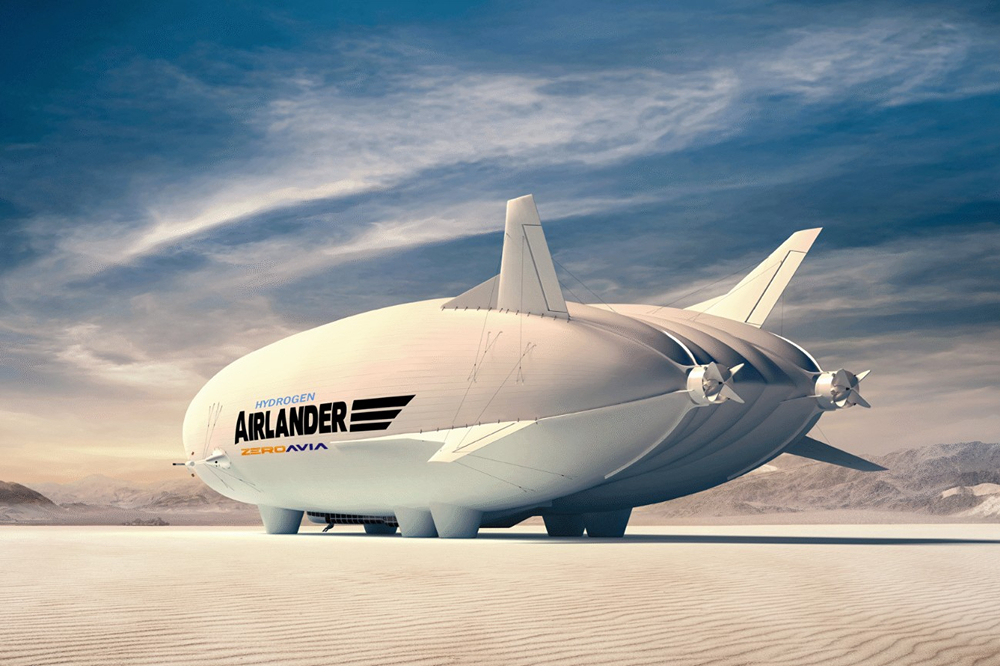
UK-based aerospace companies ZeroAvia and Hybrid Air Vehicles (HAV) have announced the signing of a Memorandum of Understanding that will see the companies partner on the development of a hydrogen-electric variant of HAV’s Airlander 10 aerial vehicle.
As part of the agreement announced on 10 November, the companies will also study the potential applicability of ZeroAvia’s hydrogen-electric technology to future larger aircraft developed by HAV and assess planned Airlander 10 operations to define the requirements for hydrogen fuel infrastructure.
Developing hydrogen-powered aviation
The signing of the LOI potentially marks a significant shift forward in the development of hydrogen-powered aviation between two of the world’s leading companies in this field. With the LOI in place, an acceleration of both partners’ projects is expected, as the companies share expertise and explore synergies.
The Airlander 10 is a new type of hybrid aircraft that will use a combination of aerostatic lift, aerodynamic lift, and vectored thrust to fly. The aircraft will combine the characteristics of a fixed-wing aircraft with airship technology. The aircraft is designed to carry a 10-tonne (22,046lbs) payload and have a maximum range of 4,000 nautical miles (7,408km).
The Airlander project is designed to produce a family of ultra-efficient aircraft capable of delivering multi-day, efficient flight across travel and tourism, logistics, regional mobility, and communications & surveillance.

According to HAV, the initial Airlander 10 will be powered by four diesel engines, “providing an emissions reduction of up to 90% when compared with comparable capacity aircraft.
Integrating ZeroAvia’s hydrogen-electric propulsion will deliver full zero-emission in-flight operations carrying 100+ passengers, as well as reduced maintenance costs,” added the company.
Meanwhile, ZeroAvia’s first-generation 600kW hydrogen-electric powertrain (known as the ZA600) has already passed several regulatory milestones towards certification with the FAA and CAA and has secured hundreds of pre-orders.
Several airline customers are already exploring how to embed the ZA600 platform into more traditional fixed-wing aircraft (mainly small and medium-sized turboprops) to lower operating costs and achieve more environmentally friendly flights.
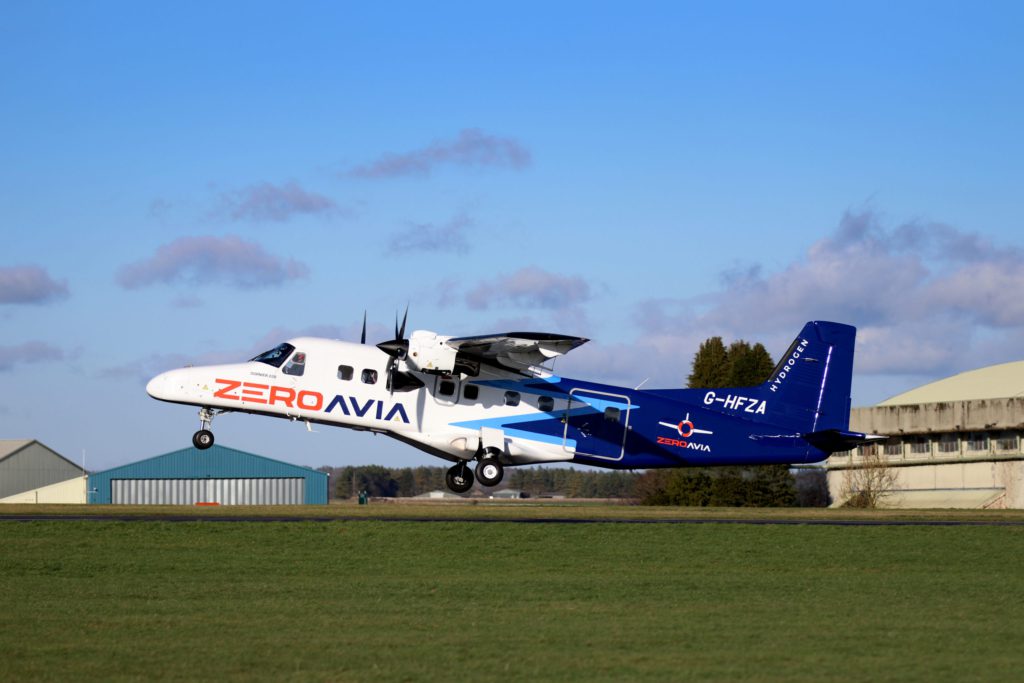
The company has been conducting flight testing of a prototype on board a 19-seat Dornier 228-200 testbed aircraft from its base at Kemble (Cotswold) Airport in the UK.
The HAV Airlander: An adaptable platform for hydrogen
“With ample space for hydrogen storage in the hull, the Airlander represents an excellent option for adopting the first generation of certified hydrogen technologies that are already close to market entry,” said an HAV statement.
“These include hydrogen storage, low-temperature fuel cell power generation, and electric propulsion systems that are well advanced in the certification journey. This partnership will build on HAV’s earlier research and development work to explore electric propulsion for Airlander,” the statement added.
“ZeroAvia has led the development of hydrogen-electric propulsion systems and made impressive progress commercially, technically, and with regulators,” said Tom Grundy, CEO of Hybrid Air Vehicles. “Our intention has always been to offer our customers a fully zero-emission variant of the Airlander, for efficiency and environmental reasons, and this partnership with ZeroAvia will help us in this direction.”

“Airlander is another exciting airframe for line-fit of our powertrains as it can open up a whole new market in air travel due to its range, efficiency, and ability to operate from almost anywhere,” added Val Miftakhov, the founder and CEO of ZeroAvia.
“Like ZeroAvia, Hybrid Air Vehicles is an aerospace innovator with exciting manufacturing and growth plans for the UK that can deliver hundreds of well-paid jobs in different regions in the UK. These are two businesses expanding UK footprints and manufacturing plans, with a broad array of strong use cases, including in the defence arena.”
HAV and ZeroAvia are enjoying recent successes
The signing of the LOI comes as both partner companies enjoy recent successes in their respective development programmes.
In October, HAV took a significant step into the defence market, announcing that it had received a reservation for three of its Airlander 10 aircraft from an undisclosed “innovative defence contractor”.
The announcement marked the platform’s first confirmed step into military-use territory, having previously been marketed primarily towards civilian applications, such as passenger/cargo transport and sustainable logistics operations.
While HAV did not disclose which defence contractor had reserved the three Airlander 10s, it did confirm that the undisclosed firm was “looking to deliver the unique capabilities of Airlander to its customers.”
While this reservation is not yet a firm commitment to take the Airlander 10s from HAV, the contract represented a significant milestone for HAV, with the deal forming part of the firm’s wider ambitions in the defence sector, which the company values at approximately $3.7bn.
Meanwhile, on 10 November, ZeroAvia announced that its application to the European Innovation Fund for a €21.4m ($24.6m) grant to support the introduction of hydrogen-electric aircraft in Norway has been selected for grant agreement preparation.

The project will support the retrofit of 15 Cessna Caravan aircraft with the ZA600 hydrogen-electric powerplant and the establishment of the supporting airport hydrogen fuel technologies, with operations planned to commence in 2028.
The Innovation Fund, financed by EU Emissions Trading System revenues, is one of the world’s largest funding programs for the demonstration of innovative low-carbon technologies.
The Fund focuses on highly innovative clean technologies and big flagship projects with European added value that can bring significant emission and greenhouse gas reductions.