Mona Luna passes ESA driving test as Venturi Space advances sustainable lunar exploration

December 16, 2025
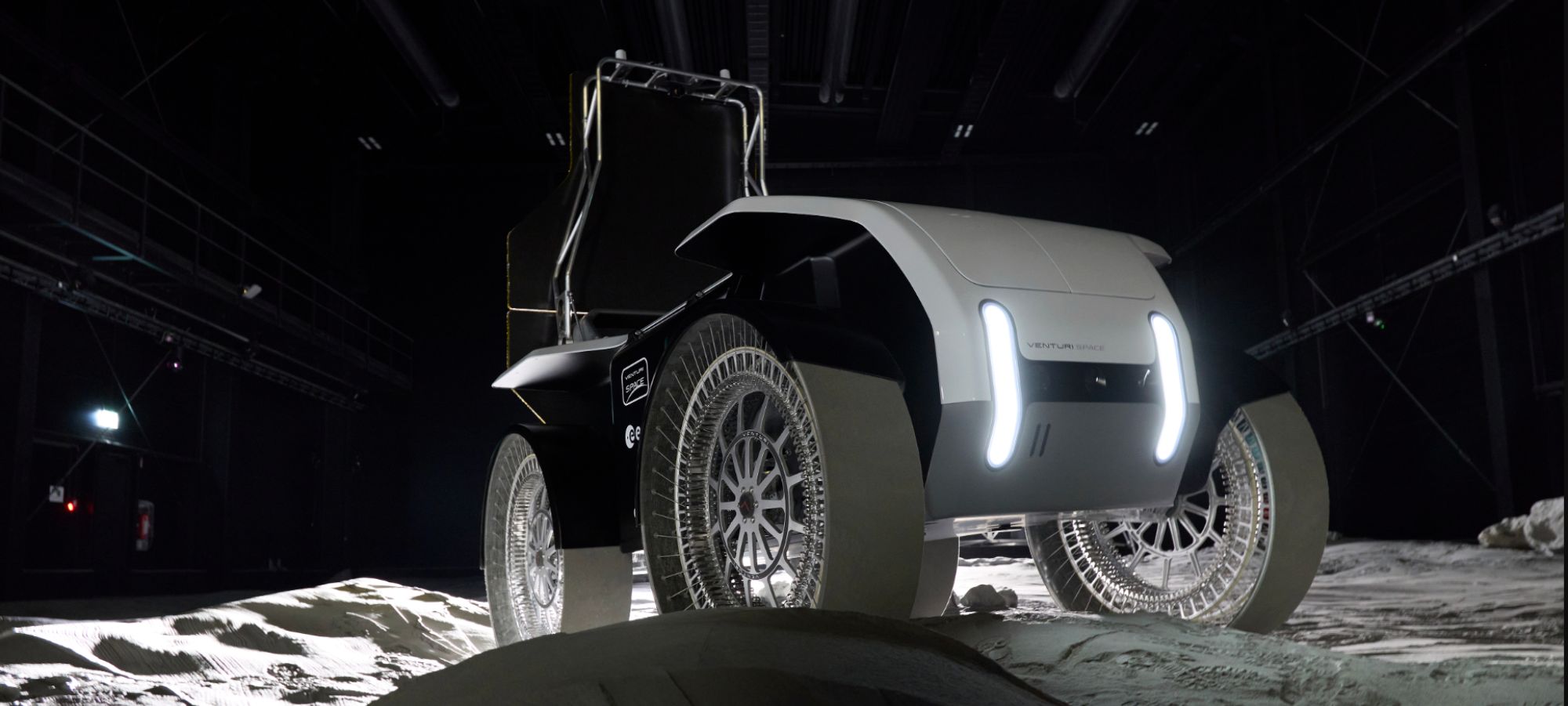
Venturi Space’s Mona Luna has completed its first driving tests, advancing Europe’s ambitions for sustainable exploration of the Moon. The lunar rover was unveiled earlier this year in June at the Paris Air Show.
The tests, which were conducted at the European Space Agency’s (ESA’s) Luna centre in Cologne, Germany, mark a milestone for the vehicle as well as for Europe’s role in lunar exploration. The trials confirm Mona Luna’s ability to operate on loose soil, slopes and rocky obstacles.
Testing Mona Luna’s mobility on simulated lunar terrain
Dr Antonio Delfino, Director of Space Affairs at Venturi Space told Aerospace Global News, the main objective of Mona Luna’s first driving tests, was to “validate the rover’s mobility in conditions representative of a lunar surface, with a particular focus on the interaction between its hyper-deformable wheels and a highly realistic regolith simulant.”
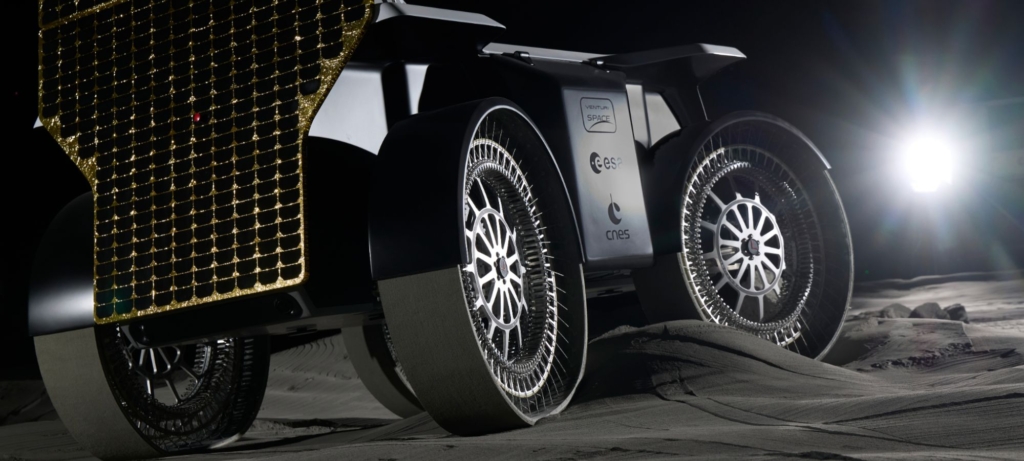
The Mona Luna is designed to operate in extreme temperatures and carry large payloads, including drilling equipment. Travelling at speeds up to 20km/h it covers longer ranges than smaller rovers and could also be used in an emergency to carry an astronaut. French lunar mobility specialist Venturi Space is overseeing the rover’s development from its base in Toulouse.
Weighing 750kgs, the Mona Luna features extended mobility to navigate the moon’s surface and the often loose lunar soil. Its mission is twofold: to explore the lunar surface and to validate critical technologies for sustainable lunar mobility.
How Mona Luna’s performance exceeded expectations
The trials conducted at ESA’s facility subjected the rover to a range of dynamic manoeuvres, including acceleration, braking, turning, obstacle negotiation and steep inclines.
“These tests were designed to confront our numerical models and unit tests – notably those carried out with NASA – with real-world, four-wheel dynamic behaviour,” explained Delfino.
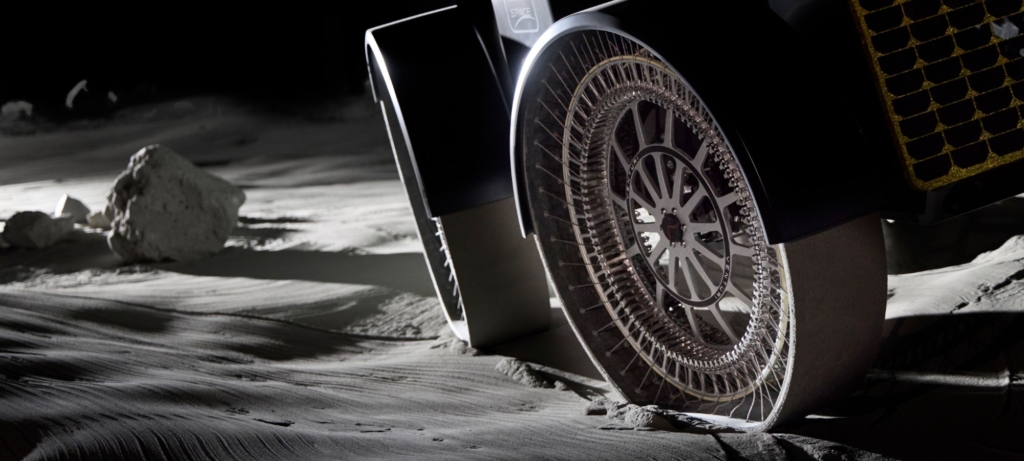
The results exceeded expectations. “The rover successfully climbed slopes of up to 33 degrees with very limited slip, whereas our initial targets were more conservative. These tests demonstrate Mona Luna’s ability to “float” on loose soil rather than sink into it – a critical requirement for reliable mobility on the moon.”
The test results also confirmed the rover’s ability to cross large rocky obstacles effortlessly, its dynamic stability on slopes, while the onboard electronic systems demonstrated excellent operational performance.
A foundation for sustainable lunar exploration
Mobility, said Delfino is a “key enabler of sustainable lunar exploration.” He added that a “rover capable of moving reliably, efficiently and repeatedly allows missions to fully exploit their potential, secure payloads and extend operational lifetimes.”
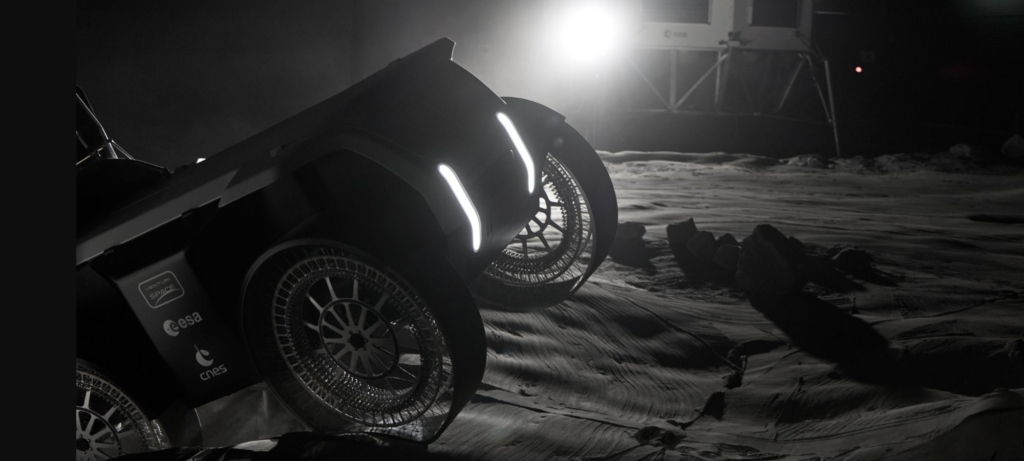
Mona Luna’s tests clearly illustrate this vision. “Thanks to an extremely low and evenly distributed ground pressure, the rover limits wear, reduces the risk of immobilisation and preserves the terrain. This approach supports a model of responsible, long-term exploration, with vehicles designed to survive multiple lunar day-night cycles and operate in extreme environments over extended periods,” continued Delfino.
What Mona Luna’s progress means for Europe’s space ambitions
Developed to support the ambitions of ESA and France’s Centre National d’Etudes Spatiale (CNES), Mona Luna integrates technologies set to operate on the Moon as early as next summer. Initially, these technologies will be integrated on a different rover, Flip.
Flip is being developed by North American firm Venturi Astrolab, one of Venturi Space’s strategic partners and developer of Flex – the Artemis campaign’s lunar terrain vehicle.
Flip will feature the same hyber-deformable wheels, batteries, heating systems and temperature sensors as its European counterpart. It will also benefit from another mechanical system developed by Venturi Space, which enables the rover to deploy from its lunar lander.

For Venturi, Mona Luna’s successful driving test demonstrates that Europe is a key player in delivering credible and innovative solutions for lunar mobility.
“Mona Luna could become a strategic asset for international lunar missions, particularly within the framework of ESA’s ambitions,” said Delfino. “A rover such as Mona Luna can, for example, complement or de-risk a lander by taking responsibility for payload mobility, transporting instruments or equipment towards more favourable areas, such as regions with improved solar exposure.”
In the longer term, he advocated this type of vehicle can play a key role in both robotic missions and in preparing or supporting human exploration, by moving equipment, scientific instruments or resources over distances of several tens of kilometres.
Surviving the long lunar nights
With its first driving tests now complete, the next step for Mona Luna, explained Delfino, is to “continue maturing the technology, particularly in terms of endurance, thermal management and the ability to survive multiple lunar nights”.
While temperatures on the moon can reach a blistering 120° Celsius in the day, at night they can plummet to -130° Celsius.
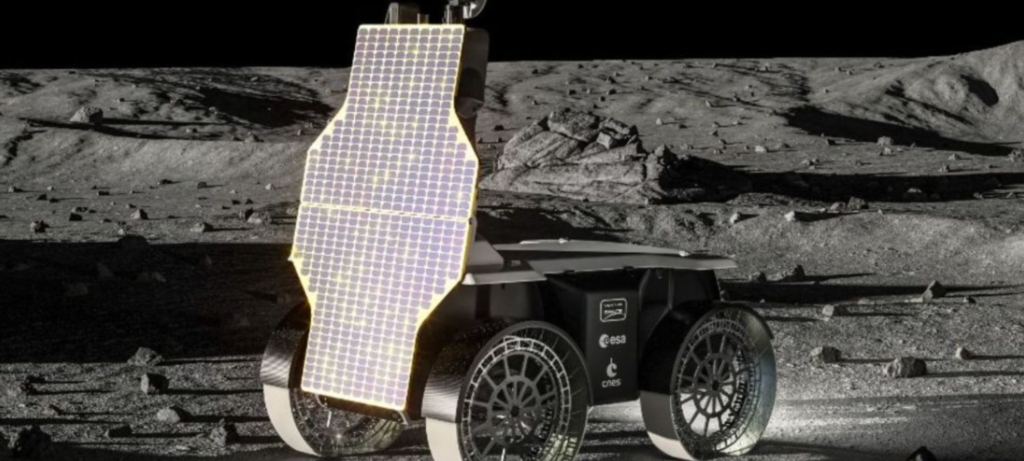
“We will also keep refining certain subsystems and consolidating the performance observed during the recent driving tests,” concluded Delfino. “The main challenge today lies in integrating the rover into a complete lunar mission, in coordination with a lander and within institutional timelines.
“Access to the Moon is a collective endeavour, dependent on international partnerships and programme schedules. Realistically, our ambition is to contribute to lunar missions before the end of the decade, in line with ESA’s current roadmaps.”