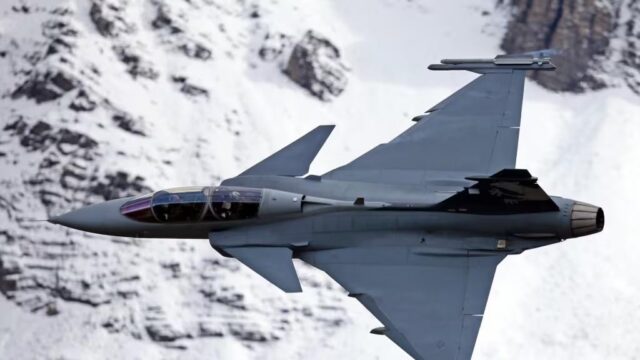
US Navy F/A-18 Super Hornets make bold incursion near Venezuela in the most provocative flight of 2025 so far

December 10, 2025
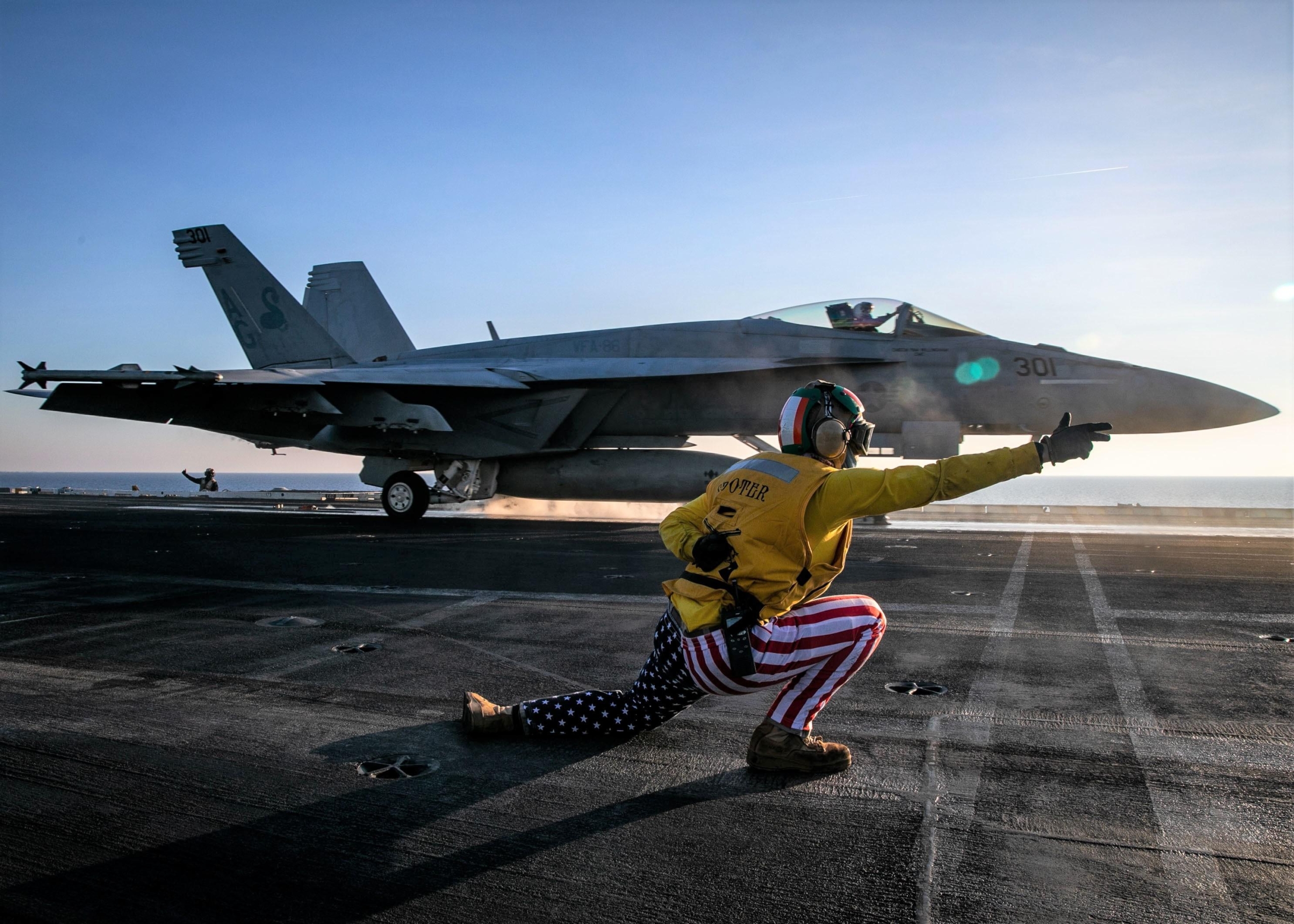
A pair of US-operated F/A-18 Super Hornets flew deep into the Gulf of Venezuela yesterday, seemingly unfazed by the Russian-supplied S-300 air defence systems the country possesses.
It’s the latest show of force by the US against the Maduro regimen, which has previously seen activity from B-52 Stratofortress aircraft and B-1 bombers.
US Navy F/A-18 Super Hornets fly over Gulf of Venezuela
Yesterday, various flight trackers showed two US Navy F/A-18 Super Hornets flying into the centre of the Gulf of Venezuela, where they stayed for around 40 minutes at an altitude of 25,000 feet. They flew over the northern tip of Lake Maracaibo.
Well I arguably think this is a more striking show of force than any of the B-52 or B-1 flights. https://t.co/Yxvfnw26Pb pic.twitter.com/vRGfvKBuOt
— SA Defensa (@SA_Defensa) December 9, 2025
This may be the most brazen US military flight around Venezuela so far since troops started massing in the region. Or at least the most brazen of the flights that had the tracking beacon turned on.
The F/A/18s had callsigns Rhino 11 and Rhino 12. It appears they remained in international airspace during their sortie, although it’s difficult to be sure of that.

Additionally, a pair of EA-18G Growler electronic warfare jets (callsigns Grizzly 1 and Grizzly 2) also flew in orbits over waters north of the Gulf of Venezuela. A Navy MQ-4C Triton maritime surveillance drone flew further out. It’s unclear if there were more aircraft flying with transponders turned off.
The flight took them less than 100 miles from Venezuela’s second-largest city of Maracaibo. The area is home to some 150 billion barrels of crude oil, with the aircraft flying between the Zulia and Falcon states, two key Venezuelan oil states.
EA-18Gs are precisely the type of aircraft you would need in order to suppress Venezuelan air defenses in the event of an aerial campaign.
— TheIntelFrog (@TheIntelFrog) December 9, 2025
The electronic warfare aircraft is based on the F-18 and is designed to blind/jam/destroy air defenses. https://t.co/f54NwJd96Q
As an unrelated side point, Lake Maracaibo is famous for Catatumbo lightning and has the highest density of lightning in the world.
Get the latest aerospace defence news here on AGN.
A new escalation in the US pressure on Venezuela
ONSINT account, SA Defensa posted, “Well, I arguably think this is a more striking show of force than any of the B-52 or B-1 flights.” The War Zone stated, “The sorties represent a new escalation in the maximum pressure campaign against Venezuelan dictator Nicolas Maduro.”

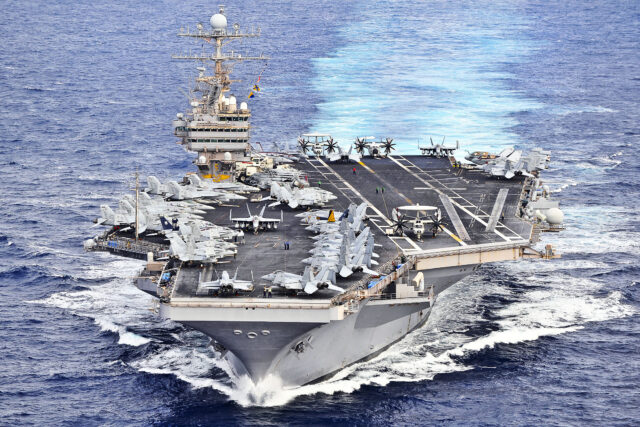
The US has been flying B-1 Lancers and B-52 Stratofortresses near Venezuela in recent months in shows of force. It has built up a large military presence, including deploying the USS Gerald R. Ford aircraft carrier strike group.
The Gulf of Venezuela is a distinctive and smallish body of water surrounded on three sides by Venezuela. The War Zone noted that US forces are known to have previously probed Venezuela’s air defence in that gulf.
Venezuela’s limited military options
On paper, the Venezuelan military is one of the most capable in South America. However, decades of corruption, neglect, sanctions, and the lack of funds have harrowed the force.

Venezuela does have Russian-supplied S-300 SAMs and Su-30s, but to what degree these are operational or much of a threat to US forces is another matter.
OSINT account, Latin American Military Aviation, has analysed available images released by Venezuela over the last two months. Over this time, Venezuela has made an effort to show its aircraft flying and ready to counter any US attack.
Latin’s best guess is that the Venezuelan Air Force (officially Bolivarian Military Aviation of Venezuela) has 7-10 flying Su-30s and 5-7 flying F-16s. It is another question entirely how many of these are combat-worthy.
Based on these latest images and the two months worth of images we've seen since tensions escalated, the best guess is 7-10 Su-30's and 5-7 F-16's in flyable condition. 3/ pic.twitter.com/HwXplJBhyq
— Latin American Military Aviation (@LatinMilAv) December 5, 2025
In the event of US air raids, it’s unclear if these jets would attempt to take off at all. In April, Israel attacked Iran, and despite years of Iranian propaganda about its air force, it doesn’t appear that the Iranian Air Force was active.
During the 1991 Gulf War, hundreds of Iraqi aircraft fled to Iran rather than confront US-led air power.
Featured Image: Boeing