US airspace overhaul begins as FAA moves to modernise ATC infrastructure

December 5, 2025

The Federal Aviation Administration has appointed US technology contractor Peraton to manage the large-scale modernisation of the country’s air traffic control (ATC) infrastructure.
Supported by a $12.5 billion initial federal investment, the Brand New Air Traffic Control System (BNATCS) programme is intended to replace ageing telecommunications, radar and software systems that underpin the current US National Airspace System (NAS).
Peraton awarded National Airspace System upgrade contract
Transportation Secretary Sean P Duffy described the award as a key step in accelerating a programme the Trump administration wants completed by the end of 2028.
“We are thrilled to be working with Peraton because they share President Trump’s drive to modernise our skies safely at record speed,” he said.
Rather than contracting individual technologies, the FAA will position a single systems “integrator” to coordinate development, procurement and deployment across hundreds of sites nationwide.
BNATCS represents a more centralised approach than the FAA’s previous NextGen initiative, which over 15 years introduced satellite navigation, data-driven procedures and digital tower tools, but left core infrastructure largely intact.

The FAA says the existing system remains fundamentally safe, yet relies on legacy communications networks and analogue equipment prone to failure, requiring controllers to slow traffic flows when issues occur.
FAA Administrator Bryan Bedford said the initial funding should be followed by further investment: “The One Big Beautiful Bill gave us a strong $12.5 billion down payment to start this modernisation effort. But to finish the job – and deliver the safer, more efficient system travellers deserve – we’re going to need another $20 billion.”
Scale of the Brand New Air Traffic Control System
The FAA’s planning documents outline a broad set of technical upgrades to support the programme’s objectives.
More than 5,000 high-speed network links will replace legacy copper connections with fibre, satellite and wireless capacity, alongside the installation of 27,625 new radios and 462 digital voice switches.
Radar coverage will be expanded through 612 new systems, including replacement surface radars at 44 airports.
Surveillance and data tools are also set for wide deployment, with Surface Awareness Initiative technology at 200 airports and new Terminal Flight Data Manager systems at 89 locations.
Across the tower network, 435 facilities will receive Enterprise Information Display Systems and 113 will be equipped with new tower simulators to support training.
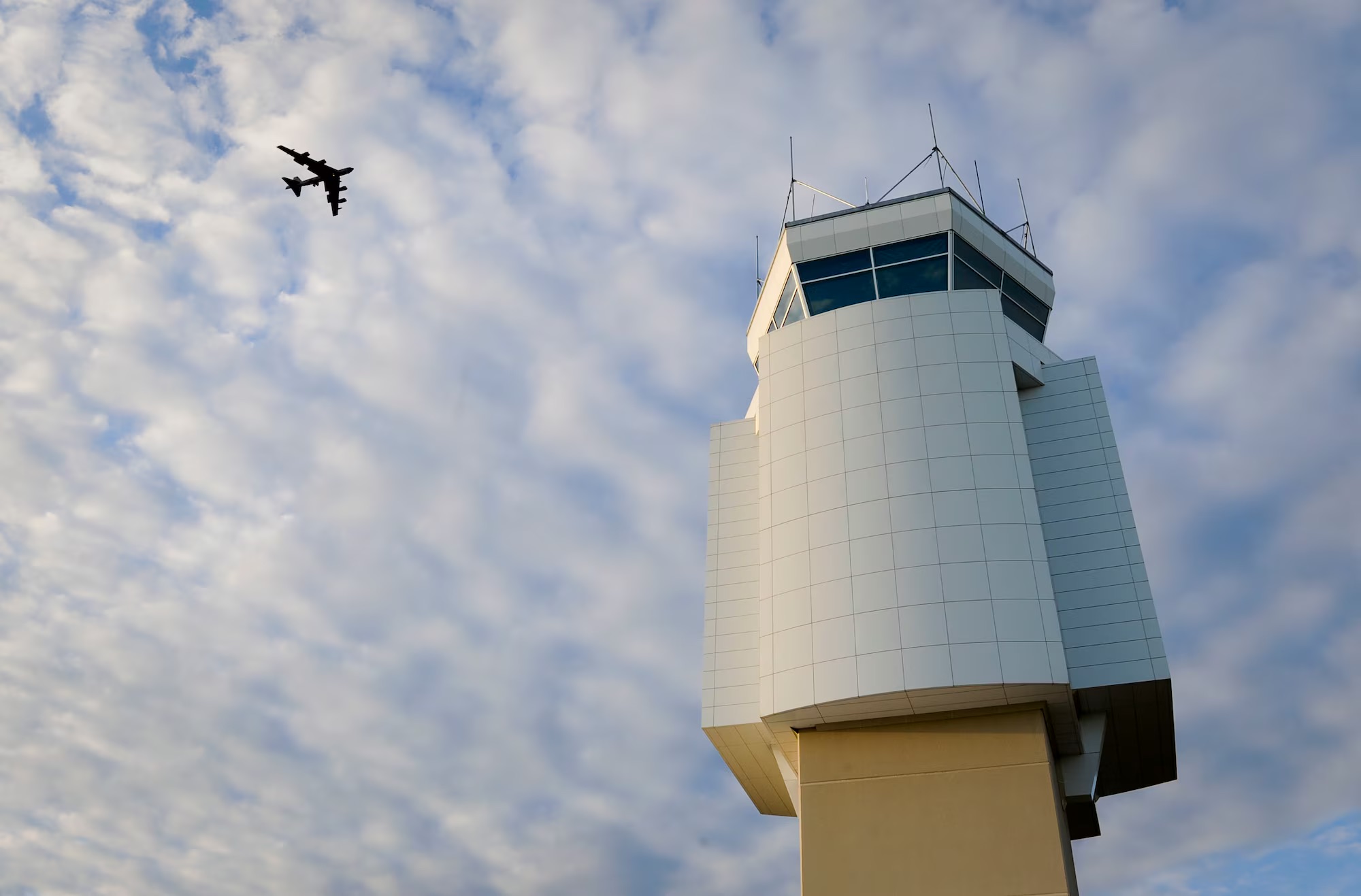
The plan also includes consolidation of key operations, with a new Air Route Traffic Control Center – the first since the 1960s – and a new Terminal Radar Approach Control facility.
In Alaska, the FAA intends to strengthen weather reporting infrastructure through 110 additional weather stations and 64 weather camera sites.
A single lead integrator
Appointing Peraton as ‘Prime Integrator’ places responsibility for overall architecture, deployment sequencing and technical coordination with one organisation, which is expected to manage a complex group of suppliers.
The contract includes performance incentives and penalties, intended to reduce the risk of delays and cost escalation.
The approach reflects practices used in major defence programmes, where a lead contractor oversees multiple subcontractors under a single design plan.
Peraton, which supports national security, space and federal IT missions, says its experience integrating complex systems is well-suited to the NAS.
Chairman, president and CEO Steve Schorer said: “Today, the United States government has entrusted Peraton with a historic opportunity to fundamentally transform America’s air traffic control system. We will work tirelessly to deliver on our commitment to the American people.”
Schorer said the company would “lead America into a new Golden Age of air travel—ushering in a new era of safety, efficiency, and innovation”.
The company will draw on engineering capability from Peraton Labs, formerly Bell Labs, to support research in areas such as artificial intelligence for decision support, secure communications, digital twin simulation environments and resilient cloud-native systems intended for safety-critical operations.
Programme rationale and existing upgrades
Pressures on the NAS continue to grow. The US handles more than 45,000 flights per day, and emerging aircraft types, from remotely piloted systems to regional electric aircraft and advanced air mobility concepts, are expected to increase demand on ATC services.
While NextGen paved the way for digital procedures and surveillance tools, the FAA says renewed investment is needed to address the underlying infrastructure.

The agency has already begun work in several areas. According to DOT figures, one-third of the copper-based communications network has been transitioned to fibre, satellite and wireless links.
The first next-generation voice switch is operational at Allegheny Tower, surface awareness systems have been installed at 44 airport towers, and electronic flight strips are now in use at 13 towers.
These updates provide controllers with real-time data tools to support ground movement, flight planning and coordination.
BNATCS will expand this work by replacing core systems across the NAS, including telecoms networks, radar stations and supporting software.
The programme will also establish a digital command centre to oversee deployment and manage integration activities over the multi-year schedule.
An ambitious timeline for ATC reform
The administration’s target date of 2028 is an ambitious timeline for a programme of this scale.
The DOT accelerated the procurement process to appoint the integrator, using a contract structure designed to reduce early-stage delays.
The FAA must also balance modernisation with day-to-day operations in a system that runs continuously.
The controller workforce, already under staffing pressure in some facilities, will require training on new digital systems, potentially adding further complexity to the rollout.
The US approach contrasts with the gradual modernisation seen in Europe.
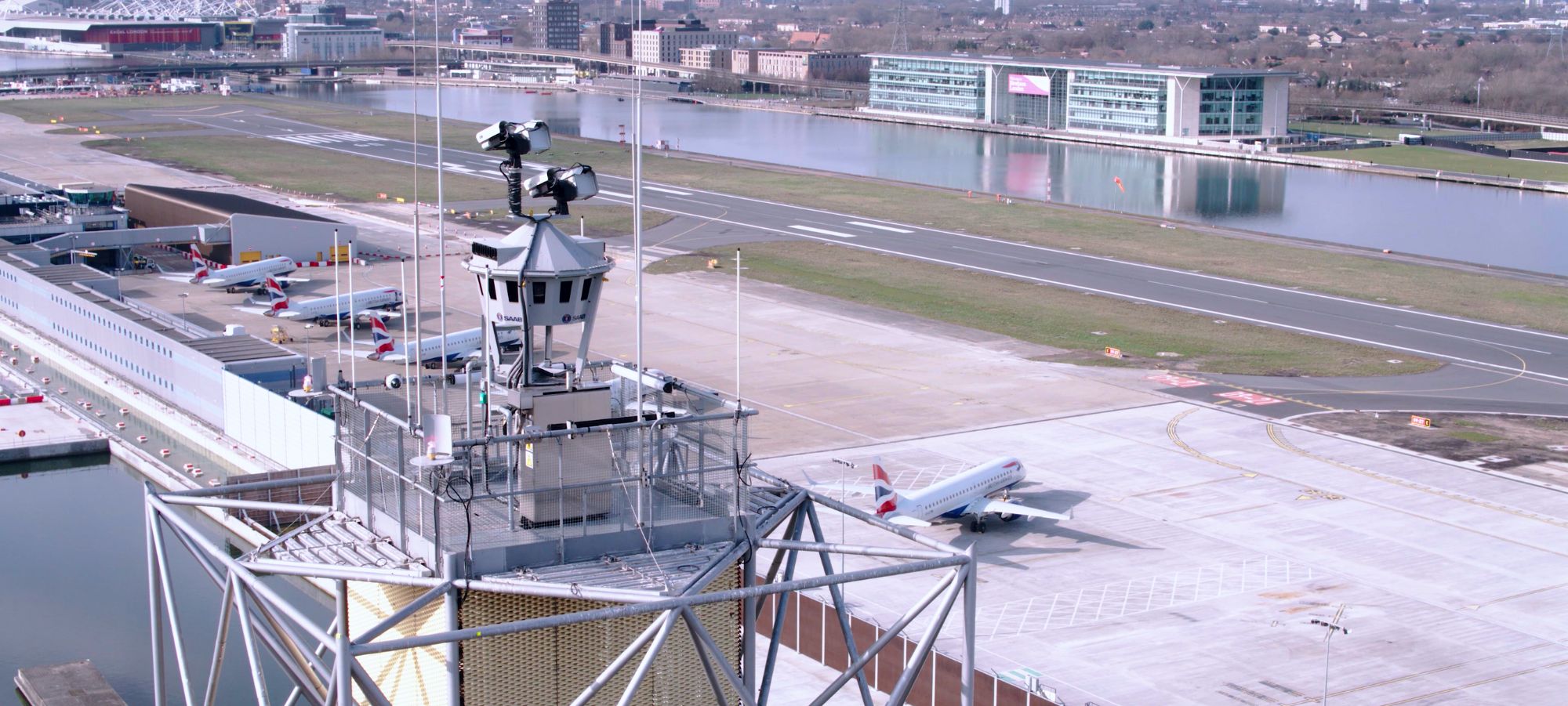
The SESAR framework and work led by NATS in the UK have focused on phased upgrades – digital towers (such as at London City Airport, pictured below), updated arrival and departure procedures, and integration of uncrewed aircraft systems.
By comparison, BNATCS seeks a more comprehensive rebuild coordinated through a single integrator rather than through multiple programmes.
Industry expectations
Outcomes will be closely watched within the aviation sector. If BNATCS achieves its objectives – reduced outages, improved efficiency, and a platform capable of integrating new aircraft types – it could set a benchmark for how large air navigation service providers approach digital transformation.
For now, Peraton will begin early work under the contract, prioritising the remaining transition from copper networks and building the digital command centre that will coordinate the programme.
Additional procurement for radar systems and development work on next-generation facilities will follow, in line with the infrastructure roadmap outlined in federal legislation.
Featured image: Real_life | stock.adobe.com