US Air Force F-35As arrive at Misawa as Japan becomes hub for Indo-Pacific airpower

March 30, 2026
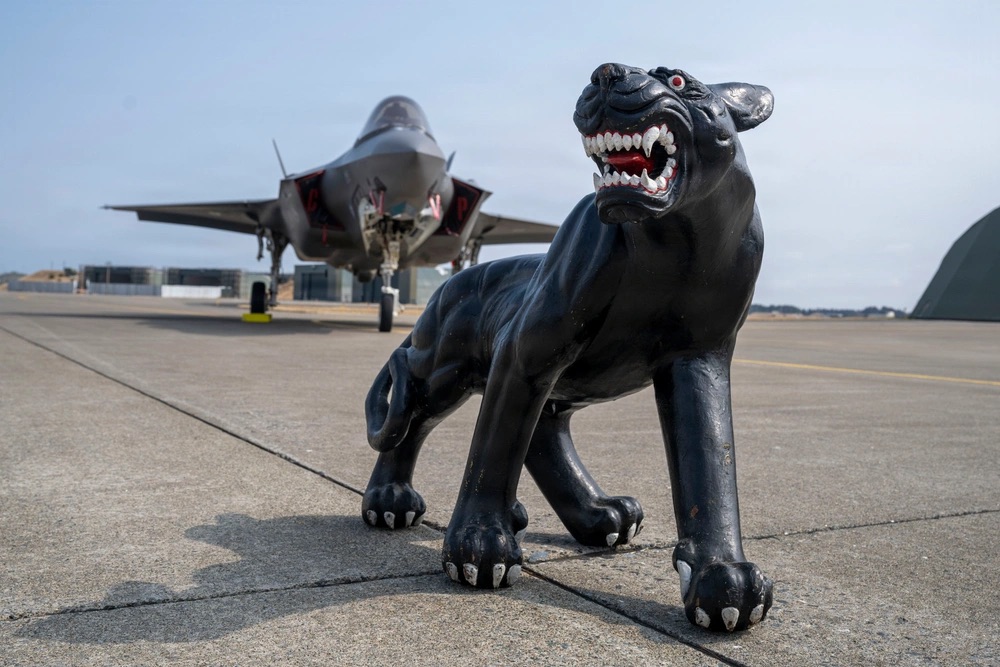
The arrival of US Air Force F-35A Lightning II fighters at Misawa Air Base marks more than a routine platform upgrade.
It signals a decisive shift in how airpower will be projected, integrated and sustained across one of the world’s most contested regions.
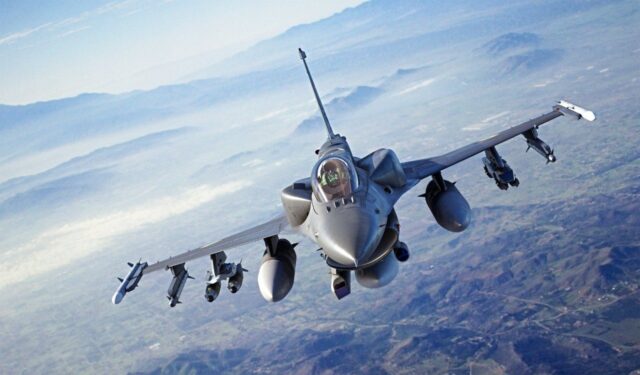
Aircraft assigned to the 13th Fighter Squadron touched down at the base on 28 March, beginning the transition from fourth-generation F-16s to fifth-generation capability in northern Japan.
The move forms part of a broader US force realignment agreed with Tokyo, under which 48 F-35As will eventually replace the ageing F-16 fleet at Misawa.
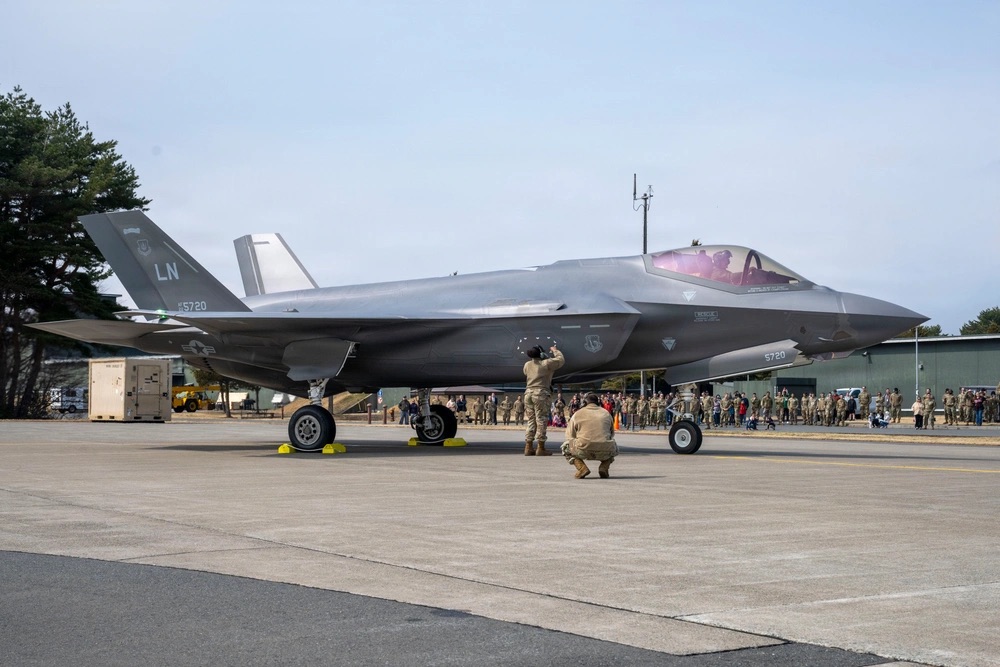
For Washington, the message is as much strategic as it is operational.
“Bringing the F-35 to Misawa underscores our long-standing commitment to Japan and the region,” said Colonel Paul Davidson, commander of the 35th Fighter Wing. “It strengthens our ability to respond quickly and operate seamlessly with our Japanese partners.”
Misawa Air Base evolves into US Air Force F-35 hub in Japan
Misawa’s geography has always mattered. Positioned at the northern tip of Honshu, it offers rapid access to the Sea of Japan, the Korean Peninsula and the wider Western Pacific. What changes now is the quality of capability operating from that location.
The base is evolving into what the Air Force describes as a fighter integration wing, where US and Japanese aircraft operate with increasing commonality.
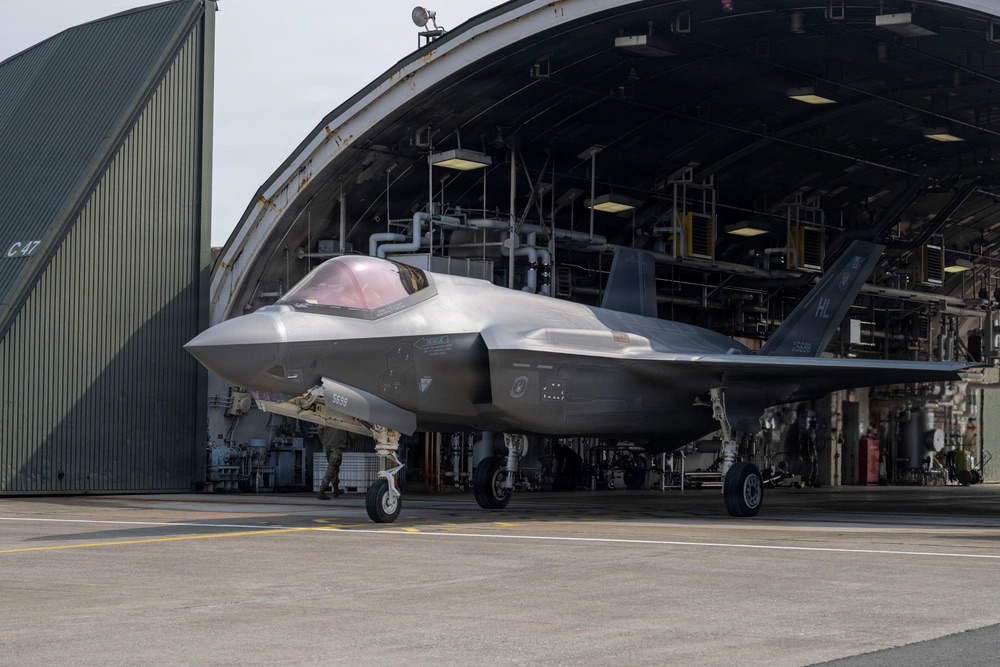
Japan has already fielded its own F-35A fleet at Misawa since 2018, and the co-location of similar platforms is expected to deepen interoperability at both tactical and operational levels.
Colonel Jeromy Guinther, commander of the 35th Operations Group, framed the transition in operational terms. “The Wild Weasels stand ready to defeat any threat in our area of responsibility and beyond,” he said during the arrival ceremony, underlining the unit’s long-standing focus on suppressing enemy air defences.
F-35A replaces F-16 at Misawa with advanced sensor fusion and SEAD capability
The shift from the F-16 to the F-35 is not simply a generational upgrade. It reflects a broader change in how air combat is conceived.
Lieutenant Colonel John Widmer, commander of the 13th Fighter Squadron, described the aircraft as purpose-built for the suppression of enemy air defences mission.
“Where legacy platforms performed the Wild Weasel mission with bolted-on sensors or weapons, the F-35 was built from the ground up as a sensor platform with the sensor fusion and quarterback capability we bring to the fight,” he said.
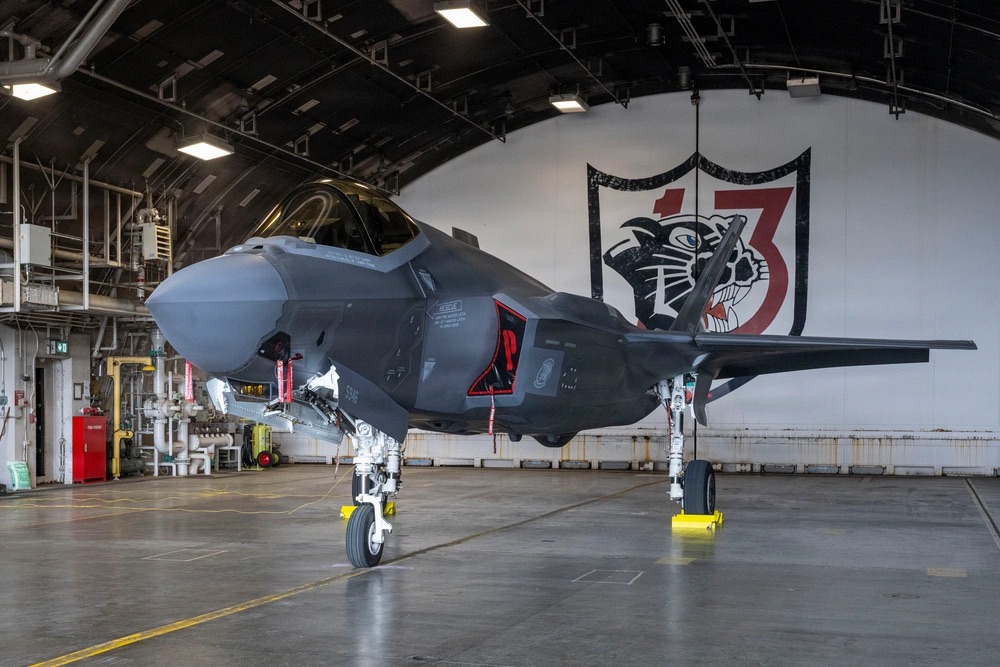
That “quarterback” role is central. The F-35 is designed not only to strike targets but also to gather, fuse, and distribute information across a networked battlespace.
According to its manufacturer, it carries the most advanced suite of sensors of any fighter and acts as a node linking air, land and maritime forces.
Widmer pointed to the practical effect of that capability. “The sensor package we bring to the fight allows us to sense the threat and manage the entire spectrum of what the enemy is fielding at us,” he said, adding that the platform is continually updated as new threats emerge.
US F-35A deployment to Japan strengthens Indo-Pacific deterrence
The deployment also fits into a wider pattern of US and allied airpower activity across the Indo-Pacific. Rotational F-35 deployments to bases such as Kadena in Okinawa have already demonstrated how the aircraft can be rapidly positioned and integrated with other assets.
“Our mission is to ensure air dominance whenever and wherever we’re called,” said Major John Toner, a deployed operations director, noting that regular sorties and exercises underpin that readiness.
“Every training event and every sortie strengthens our ability to deliver combat airpower and ensure stability across the Pacific.”
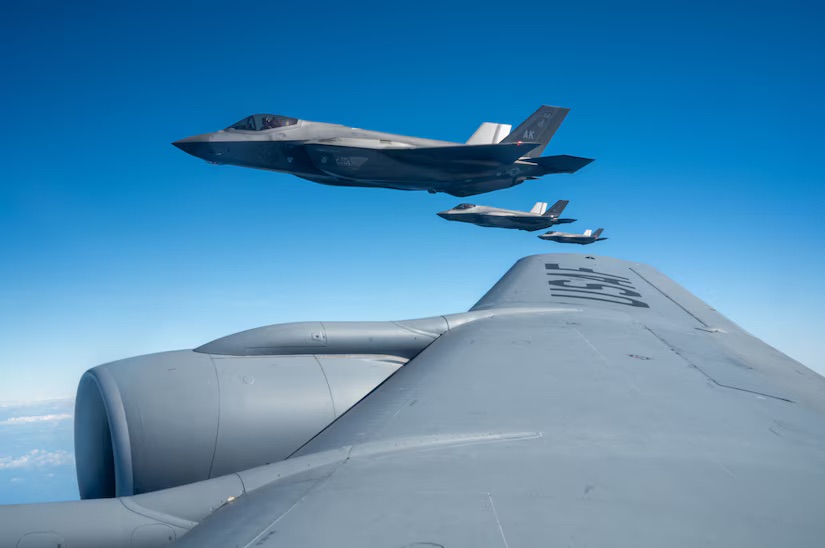
Exercises involving US, Japanese and Australian aircraft have increasingly centred on fifth-generation platforms, with a focus on shared tactics, data exchange and command-and-control integration.
These activities, often conducted over the East China Sea and surrounding airspace, are designed to translate partnership into operational capability.
Lockheed Martin has projected that more than 300 F-35s from the United States and allied nations will be based across the Indo-Pacific by 2035, reflecting a deliberate effort to build a distributed yet interconnected force posture in the region.
Why the Indo-Pacific is central to US airpower strategy
The Indo-Pacific has become the central theatre for US defence planning, shaped by rising military modernisation in China, persistent tensions on the Korean Peninsula and broader strategic competition.
Positioning advanced aircraft at forward bases like Misawa is intended to shorten response times while complicating an adversary’s planning. It also reinforces a layered approach to deterrence, combining presence, interoperability and technological advantage.
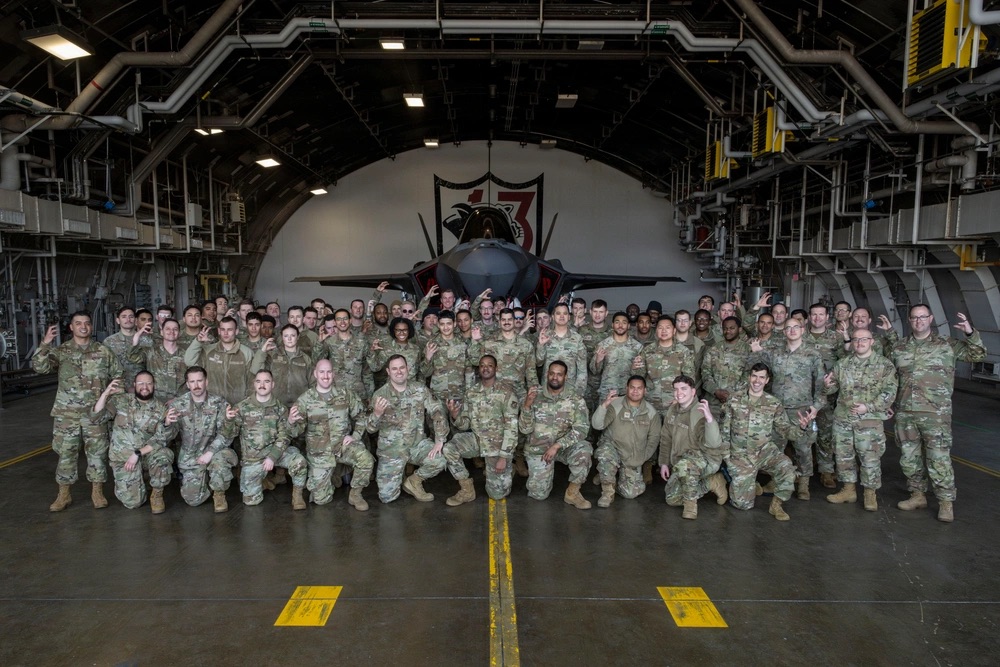
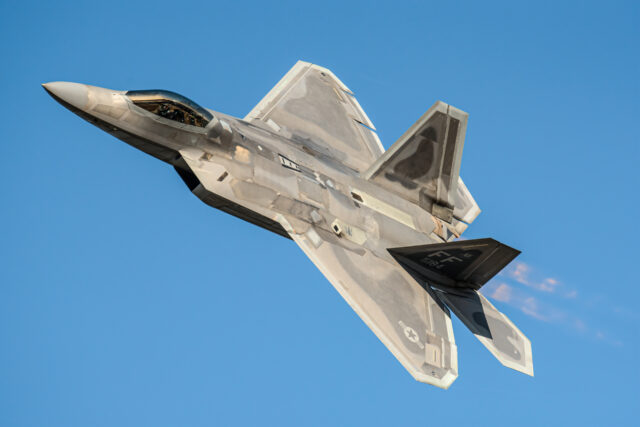
The F-35’s ability to operate in contested environments is central to that approach. Its low observable design, combined with electronic warfare and data-sharing capabilities, allows it to survive in heavily defended airspace while supporting other assets across the force.
As Air Force Captain Ryan Beveridge, an F-35 squadron pilot, puts it, “We’re getting on the same sheet of music and operating at a common level [of understanding],”
“Integrating with our allied partners out here has been invaluable. That kind of trust and understanding is what makes deterrence real.”
US Air Force F-35 transition at Misawa continues as Japan realignment progresses
The arrival at Misawa is only the opening phase of a broader transition.
Infrastructure upgrades, training pipelines and sustainment arrangements are still being built out to support a permanent fifth-generation presence.
The Department of War has already committed significant funding to the wider realignment effort in Japan, which includes additional aircraft deployments and supporting units aimed at strengthening regional deterrence.
For now, the sight of F-35s on the Misawa flight line marks a visible shift. What follows will be less obvious but more consequential: the steady integration of systems, people and partnerships that define modern airpower.
Featured image: Senior Airman Patrick Boyle / USAF