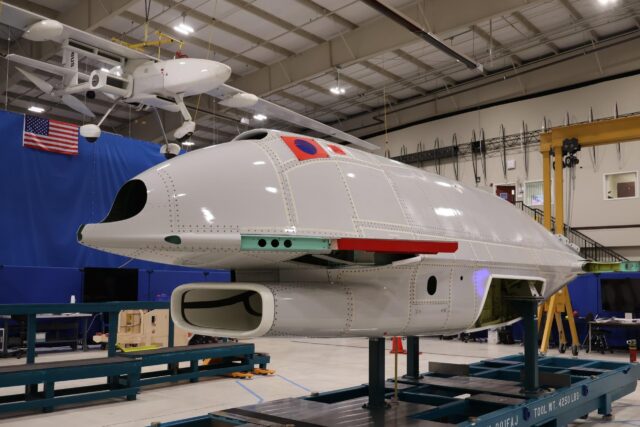
UK Royal Navy’s Proteus uncrewed helicopter moves toward first flight as Leonardo completes ground trials

December 3, 2025
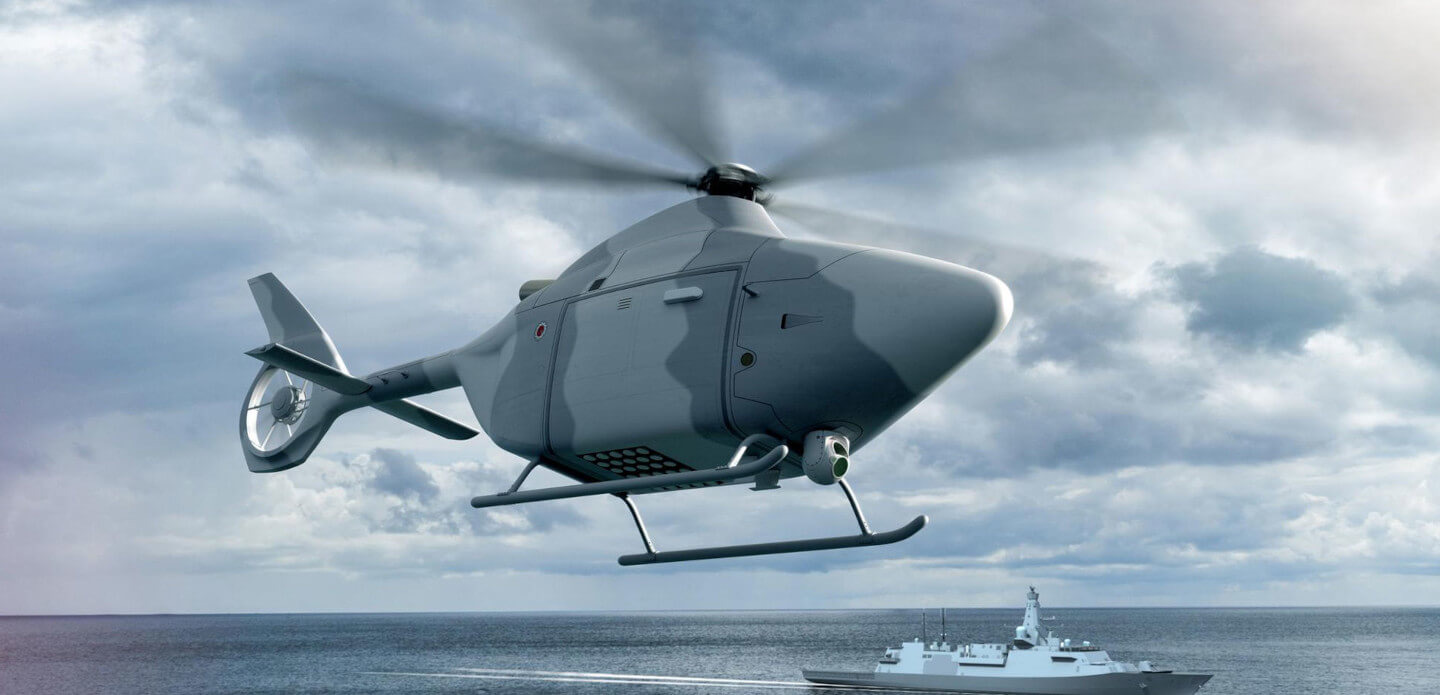
The Royal Navy’s first full-size autonomous helicopter is one step away from its maiden flight after Proteus, a large pilot-optional aircraft developed by Leonardo, completed a series of ground runs in Yeovil.
The tests, which verified the demonstrator’s engines, onboard systems and rotor assemblies, mark an early milestone for a project intended to reshape how the UK conducts maritime surveillance, anti-submarine warfare and at-sea logistics.
Built in less than two and a half years under a £60 million programme, Proteus is among the world’s first helicopter-scale autonomous aircraft designed for front-line military missions.
Royal Navy tests Proteus autonomous helicopter as UK accelerates naval UAV development
Proteus forms part of a wider effort to understand what a new generation of Vertical Take-off and Landing drones could deliver for the fleet. While similar work is underway abroad, the UK has not previously developed an uncrewed aircraft in this weight class.
The project aims to give designers and naval planners a practical view of how autonomous systems might operate alongside crewed aircraft, either independently or as part of a mixed hybrid air wing.

Senior officers and Ministry of Defence officials visited Leonardo’s Yeovil site to see the aircraft “flashed up” for the first time and to receive briefings on the avionics, mission-management software and AI-driven decision-making underpinning the design.
Captain David Gillett, head of Maritime Aviation and Carrier Strike in the Royal Navy’s Develop Directorate, called the programme “a huge pleasure to work on,” adding that it draws on lessons from recent conflicts, blends them with new technology, and carries “enormous potential to shape the Royal Navy’s future hybrid air wing.”
Leonardo advances Proteus flight systems to support UK’s next-generation naval aviation
Leonardo’s UK helicopter division is acting as lead industrial partner and system architect. The company says Proteus is equipped with advanced onboard software, a suite of sensors and a decision-making capability that allows it to sense its environment and act within preset limits.

Nigel Colman, Managing Director, Helicopters UK, said the aircraft is designed to operate in the extreme conditions that define naval operations, including high sea states, strong winds and complex electromagnetic environments.
All processing takes place on board, reducing reliance on continuous external command links. An operator will always remain in control, but the aircraft is intended to execute significant portions of its mission autonomously while adhering to strict rules of engagement.
Proteus drone helicopter designed for heavy payloads and long-duration maritime missions
With a payload bay capable of carrying up to a tonne of equipment, the demonstrator is being developed to explore mission types beyond its initial anti-submarine role. Potential applications include airborne surveillance, search and rescue, ship-to-ship resupply, intelligence collection and, in the future, weapon delivery.
The Navy hopes that large uncrewed helicopters will allow it to cover wider areas of ocean for longer periods without the fatigue limits that constrain human crews, freeing crewed platforms for missions that specifically require pilots on board.
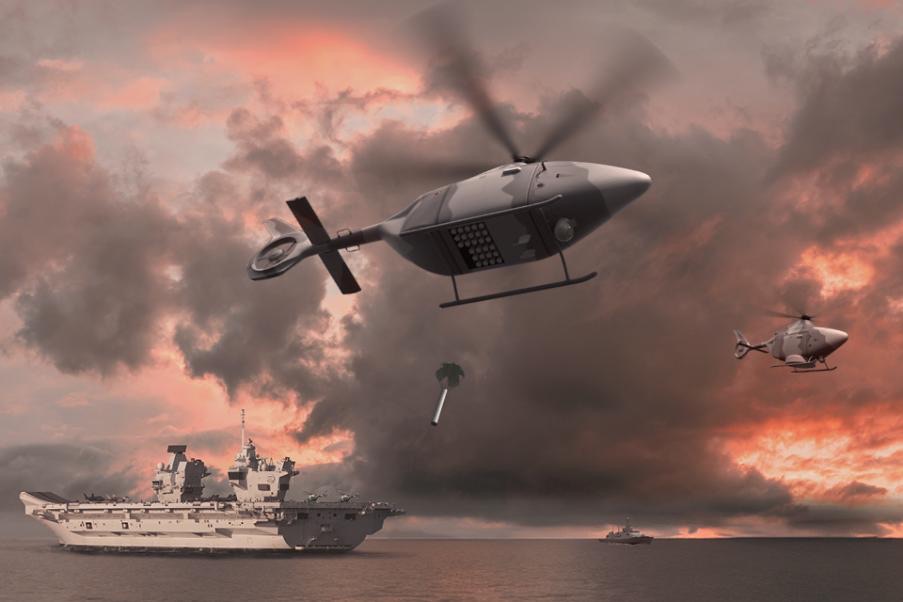
Proteus, named after the mythological Greek sea god, is due to make its first flight shortly. Once airborne, it will begin generating the data needed to inform long-term investment decisions under the UK’s Defence Rotary Strategy.
Royal Navy explores autonomous anti-submarine operations with large uncrewed helicopter
The Royal Navy is initially evaluating how systems like Proteus could enhance anti-submarine operations, an area of renewed strategic pressure.
Under the concept of operations, Proteus would patrol designated ocean areas using data from allied ships, submarines, maritime patrol aircraft and sonar networks. It will deploy sonobuoys, listen for acoustic signatures and relay information to mission commanders.
Using uncrewed aircraft for this role aims to widen the Navy’s search footprint, reduce strain on specialist aircrew and keep crewed helicopters free for higher-priority assignments.

The demonstrator is being delivered under a four-year contract intended to test how large uncrewed helicopters might serve UK forces in the 2030s and beyond.
The MOD says this work is essential as global threats evolve and as allied militaries increasingly rely on autonomous systems for surveillance, logistics and battlefield support.
If successful, Proteus could become the basis for future platforms designed to support naval and wider defence tasks, including medical evacuation, resupply operations and complex maritime intelligence missions.
The global push for uncrewed helicopter assets
The Royal Navy’s work sits within a fast-accelerating global push toward uncrewed helicopter capability.
In the United States, Sikorsky has already demonstrated the potential of large autonomous rotorcraft. An optionally piloted UH-60 Black Hawk equipped with the MATRIX autonomy system flew a series of pilotless missions in 2022, and continues to be tested by the US Marines ahead of integration.
More recently, Sikorsky has gone a step further by converting a surplus UH-60L into the fully autonomous U-Hawk, removing the cockpit entirely and fitting a fly-by-wire, autonomy-driven control suite ahead of a planned first flight in 2026.

Similar advances are unfolding worldwide. China has certified the world’s first unmanned commercial helicopter and flown larger autonomous designs such as the T1400.
Airbus Helicopters is progressing crewed–uncrewed teaming concepts and trialling rotary-wing drones from front-line bases, while its Flexrotor continues to attract orders. Even within the UK, the Royal Navy has already introduced smaller systems such as the Peregrine and Malloy heavy-lift drones into service.
Together, these developments show that Proteus is emerging at a moment when uncrewed rotorcraft are moving from experimental curiosities to credible frontline assets across multiple defence and commercial sectors.