US tanker fleet departs Spain after Madrid restricts Iran strike support

March 3, 2026
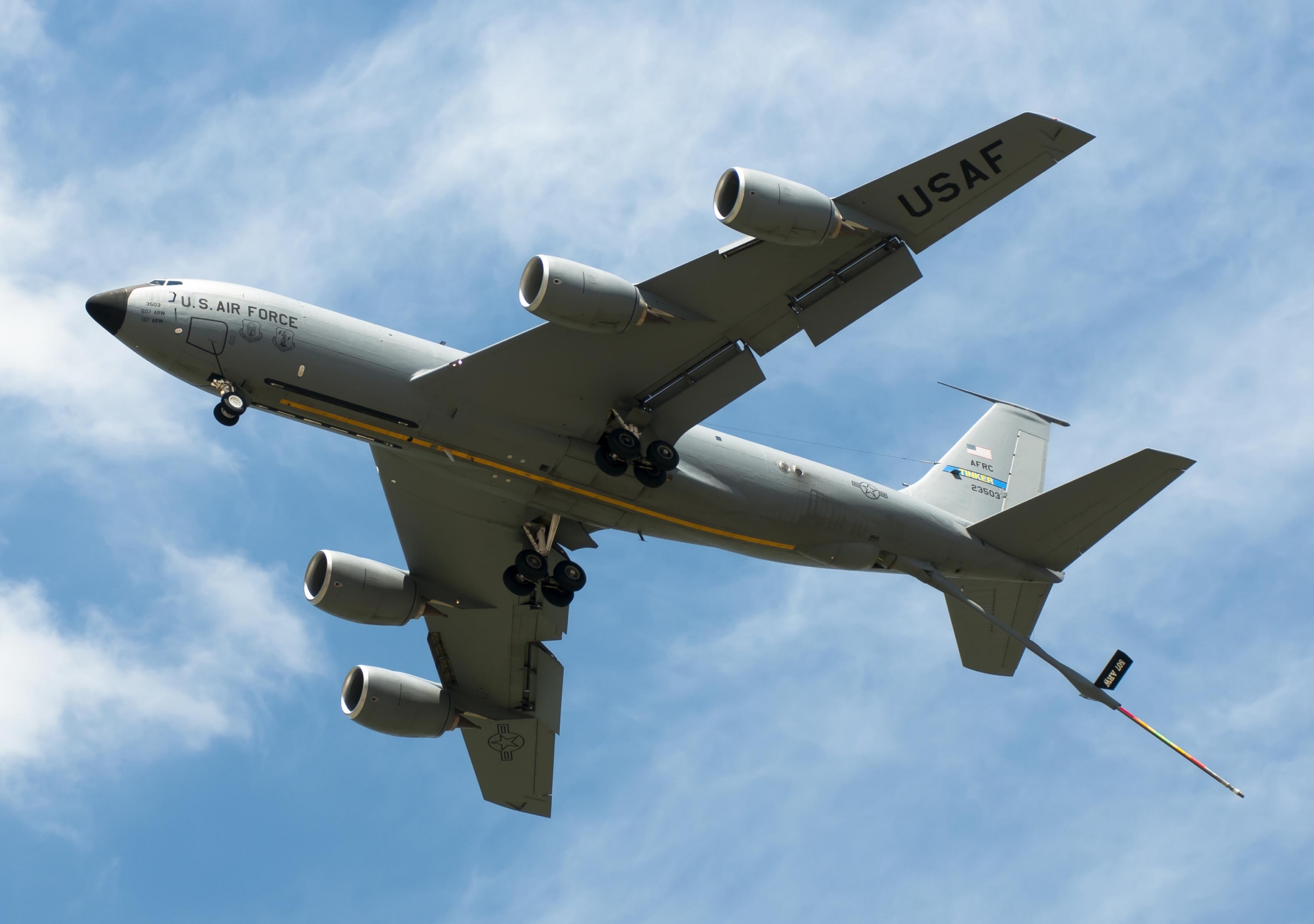
As US air strikes on Iran intensify, a clear fault line has opened inside Europe. Within hours of each other, Madrid and London made sharply divergent decisions on whether to support Washington’s campaign.
The United Kingdom has lifted its restrictions on American strategic bombers using British bases, but Spain has now refused to allow US tanker aircraft to continue operating from its territory.
Spain blocks US tankers from using airbases for Iran strikes
US tanker aircraft typically form an aerial bridge between North America and the Middle East, refuelling over the Portuguese Azores in the Atlantic before topping up again over southern Spain en route to the Gulf. Spain’s decision threatens to disrupt one of the most established logistical corridors supporting long-range US air operations.
BREAKING: Has Spain ordered the US tanker fleet there to leave? #FreeIran
— DefenceGeek 🇬🇧 (@DefenceGeek) March 1, 2026
— Operation LION & SUN / ROARING LION / EPIC FURY —
What started as possible move of around half a dozen tankers from Spain to Ramstein Airbase in Germany, now appears to be a full-on withdrawal of… pic.twitter.com/0wF2D8mQcb
Yesterday, Reuters reported, “Foreign Minister Jose Manuel Albares said Spain would not allow its military bases, which are jointly operated by the U.S. and Spain but under Spanish sovereignty, to be used for attacks on Iran, which Spain has condemned.”
Spain’s news outlet, El País, wrote, “Spain maintains a different position from France, the United Kingdom, and Germany because it believes that Trump is acting desperately, without considering the very serious consequences.”
In operational terms, the impact appears limited. Tanker aircraft have relocated to bases in France and Germany, allowing the United States to maintain its refuelling architecture across Europe.

The widening conflict is nonetheless drawing in more regional actors. Saudi Arabia has threatened retaliation against Iranian oil infrastructure if attacks continue against its own facilities.
Neighbouring Qatar reported it shot down two Iranian Su-24 Fencer fighter bombers.
Meanwhile, the United Kingdom, France and Greece are reinforcing their regional posture, with Athens deploying F-16 fighters to Cyprus to bolster air defence against potential Iranian strikes.
US deploys B-2 and B-1B bombers in Iran strike campaign
On March 2, open-source tracking indicated that four B-2 Spirit stealth bombers checked in with Seville Control while returning westbound from strike missions over Iran. The formation, operating under the callsign PETRO41, was supported by an extensive aerial refuelling network, with more than 28 tanker aircraft positioned along the return route.
#PETRO41 flt (x4 B-2) checking in with Seville Control at 0800z this morning on their way back west from Iran.
— EISNspotter (@EISNspotter) March 1, 2026
They were supported by some 28+ tankers, #RCH1745 (KWRI), #RCH065 (LPLA), #RCH023 (LERT), #RCH015 (LBSF), #RCH083 (LPLA), & #TEAM71 (KWRI). https://t.co/mKUburRgEV pic.twitter.com/JvSgqzRmBu
Since those sorties, it has been confirmed that the United States is also employing B-1B Lancer bombers in strikes against Iran. The B-1B offers higher payload capacity and faster turnaround for sustained conventional operations, though it lacks the B-2’s low-observable penetration capability.
It remains unclear whether B-52H Stratofortress bombers will be committed. While the aircraft can deliver large volumes of stand-off munitions, its non-stealth profile makes it more dependent on assured air superiority and robust suppression of enemy air defences before entering contested airspace.
USAF mass tanker deployment sees 169 aircraft supporting Iran operations
On March 3, open-source analyst DefenceGeek reported a dramatic expansion of the US aerial refuelling posture supporting operations against Iran.
“As of this morning, I have 169 tankers on my list as either in CENTCOM, in EUCOM, or en route from the United States to one of these areas.”
USAF Tanker Fleet Update – 03/03/2026 0745Z #FreeIran
— DefenceGeek 🇬🇧 (@DefenceGeek) March 3, 2026
— Operation EPIC FURY —
As of this morning, I have 169 tankers on my list as either in CENTCOM, in EUCOM, or en-route from the United States to one of these areas. The majority of the new additions are headed to Prince… pic.twitter.com/FDePpzJtAU
According to the tracking breakdown, 65 aircraft were operating in the “Red Zone” under US Central Command, 35 in the “Orange Zone” across the Mediterranean and southern Europe, and 53 in the “Green Zone” covering northern Europe, the UK and the Azores. A further 16 were classified as in transit.
If accurate, the figure represents one of the largest visible tanker concentrations in recent years. By comparison, the Royal Air Force operates 14 Voyager tanker aircraft, meaning the current US deployment is roughly ten times the size of the UK fleet alone and exceeds the combined aerial refuelling capacity of most European air forces.
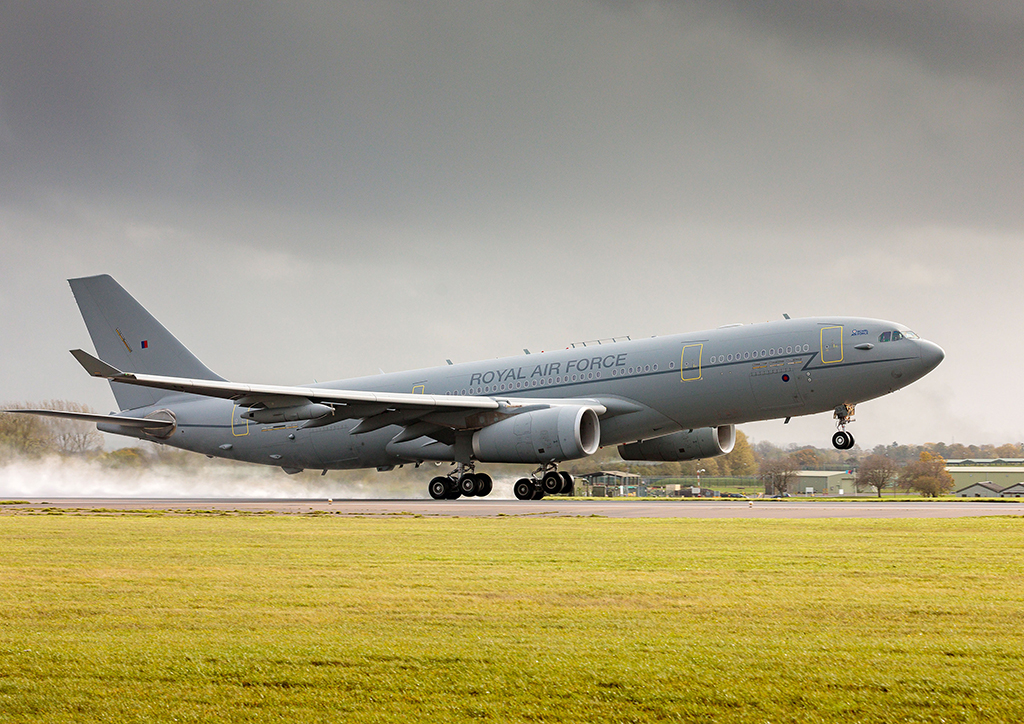
Aerial refuelling is the backbone of long-range airpower. Without it, sustained bomber operations from the continental United States to the Middle East would be impossible at scale. The USAF’s ability to mobilise and reposition such a large tanker force at short notice highlights one of Washington’s enduring strategic advantages: unmatched logistical depth.
While RAF Voyager aircraft are not participating in offensive strikes, they are understood to be heavily engaged in defensive air policing and regional protection missions, including refuelling allied fighter aircraft tasked with countering incoming drones and missiles.
Featured Image: Boeing