Spain set to become final operator of AV-8B Harrier II as service life extended to 2032

March 27, 2026
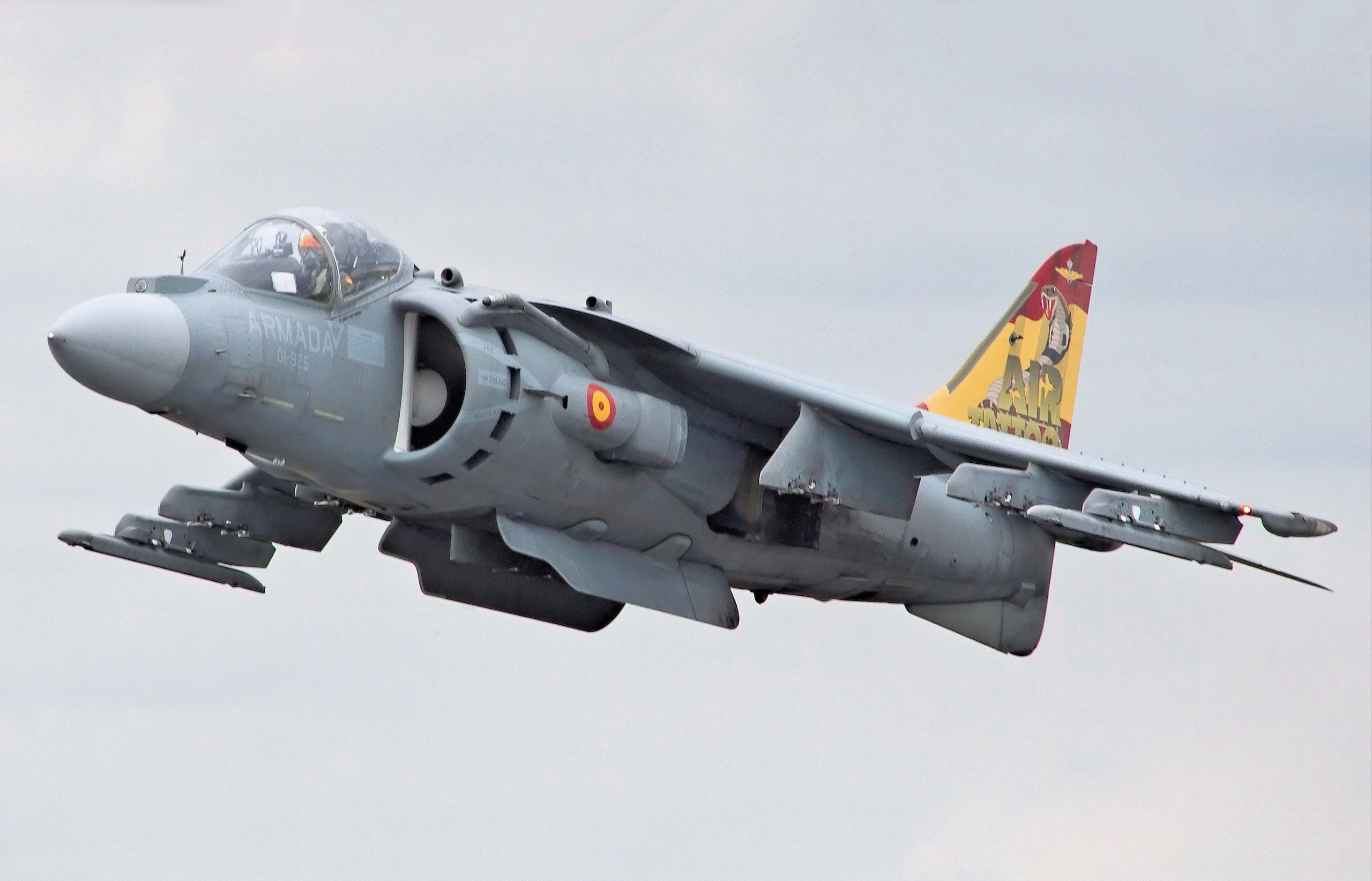
Spain is to extend the service life of its legacy F/A-18 Hornets and AV-8B Harrier II jump jets. These are expected to remain in service until around 2040 and 2032, respectively, and will make Spain the final operator of one or both of the aircraft types.
Spain to be final AV-8B Harrier II operator
Spain’s decision to extend the life of its ageing fleet of 12 McDonnell Douglas AV-8B Harrier IIs is expected. Last year, Spain ruled out purchasing the F-35 following geopolitical tensions with the Trump Administration.

The Harrier’s days are now in their twilight years. The remaining AV-8Bs will be retired from US Marine Corps service in June, and Italy is in the process of retiring its final Harriers.
There was a chance that Italy’s Harriers would get an epilogue as it is transferring the now-retired Giuseppe Garibaldi aircraft carrier to Indonesia. However, Indonesia appears to plan to operate the carrier as a drone and helicopter flattop.
This will leave Spain as the final operator of the old Harrier. The only direct replacement for the Harrier is the F-35B fighter jet, as that is the only STOVL fighter jet on the market.
A Spanish Navy AV-8 Harrier operates from USS Wasp (LHD 1) during a cross-deck evolution as part of Baltic Operations 2024 (BALTOPS 24) in the Baltic Sea. June 15, 2024 pic.twitter.com/H2dDztuOxg
— Virtual Bayonet (@VirtualBayonet) June 18, 2024
It is unclear how Spain plans to replace its Harriers when they eventually retire in 2032. Spain may return to the F-35B programme, perhaps under a future government or seek to switch to a carrier advanced drone system.
Extending the life of legacy F/A-18 Hornets
Spain is now intending to extend the service life of its old Hornets to around 2040, which is much longer than their previously planned retirement date of around 2030.
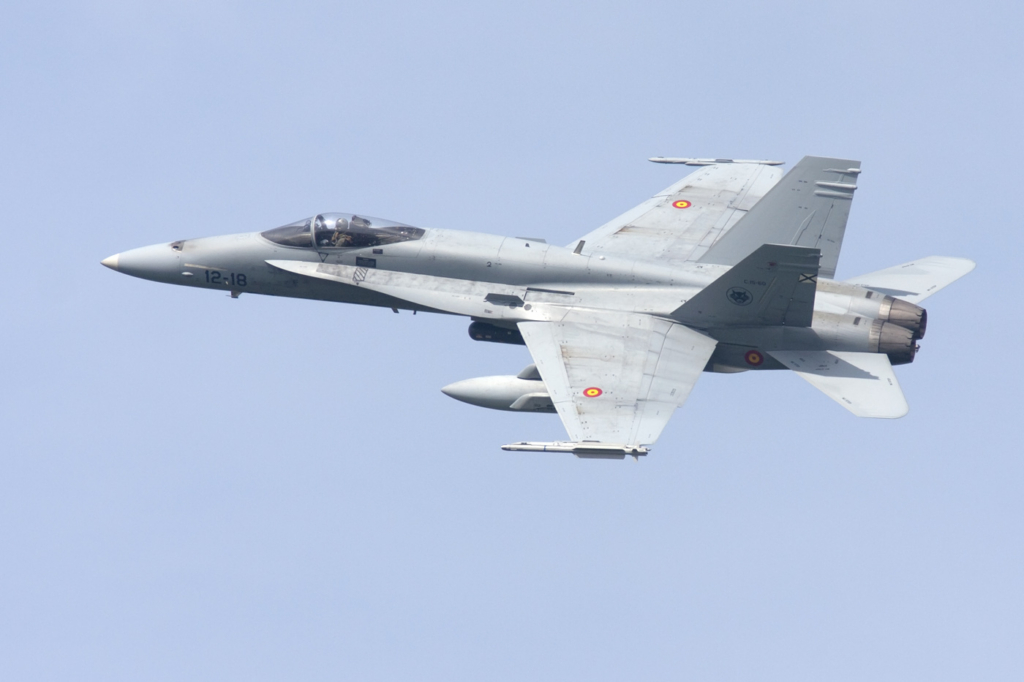
Spain purchased new 72 Hornets, including 60 EF-18A single-seaters and 12 EF-18B two-seaters. It was the first European country to select the jet in 1982, and the first arrived in Spain in 1986, with the last delivered in 1990.
Spain also received at least 24 ex-US Navy Hornets in the 1990s, bringing its total to around 96 aircraft. According to the FlightGlobal 2026 review of world air forces, Spain has 69 F/A-18 Hornets remaining in service.
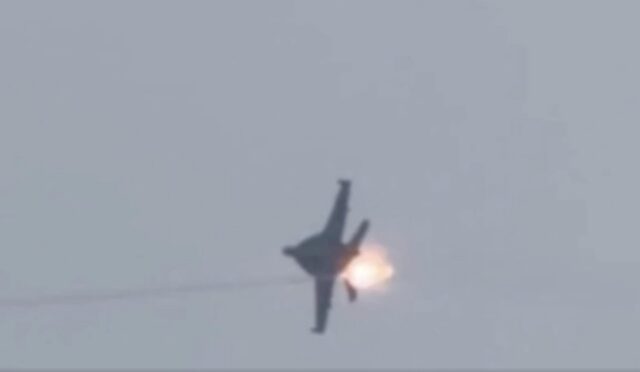
#Breaking: It has now turned out the EF-18M pilot of the Spanish Air Force performed an evasive maneuver during the Gijón airshow after detecting a flock of birds. He saved his Hornet, the birds, and the public. pic.twitter.com/0ZOBNLFBAt
— Babak Taghvaee – The Crisis Watch (@BabakTaghvaee1) July 28, 2025
Australia has fully replaced its old Hornets with Super Hornets and F-35As. The US Navy has also retired its legacy Hornets and is set to receive the last of its new-build Super Hornets in 2027.
Canada, Finland, and Switzerland all operate legacy Hornets, and these are set to be replaced by F-35As.
Future of the Spanish Air Force
Spain is one of the three members of the 6th-generation Future Combat Air System (FCAS) with France and Germany. However, disagreements between partners have put the future of the programme in doubt.

Even if FCAS remains in its current form, it is not expected to enter service until the 2040s, a few years after the rival Tempest/GCAP programme is expected in 2035.
It is unclear what Spain will do if FCAS falls apart, as many industry experts are expecting. It could work on a German-led programme or serve as a partner to a French-led programme. It could also purchase GCAP or purchase another aircraft like Turkey’s Kaan fighter.

With its Harriers and Hornets now ageing, the backbone of the Spanish tactical fleet is 67 Eurofighter Typhoons. It has another 45 Eurofighters on order. Spain is one of the member countries of the Eurofighter Consortium and has a 13% share.
Featured Image: Wikimedia Commons