Ryanair aircraft boarded by bailiffs ‘over unpaid passenger compensation claim’

March 15, 2026

A Ryanair aircraft was reportedly boarded by Austrian bailiffs last week after the low-cost carrier apparently declined to pay a passenger compensation in a legal dispute over a delayed flight.
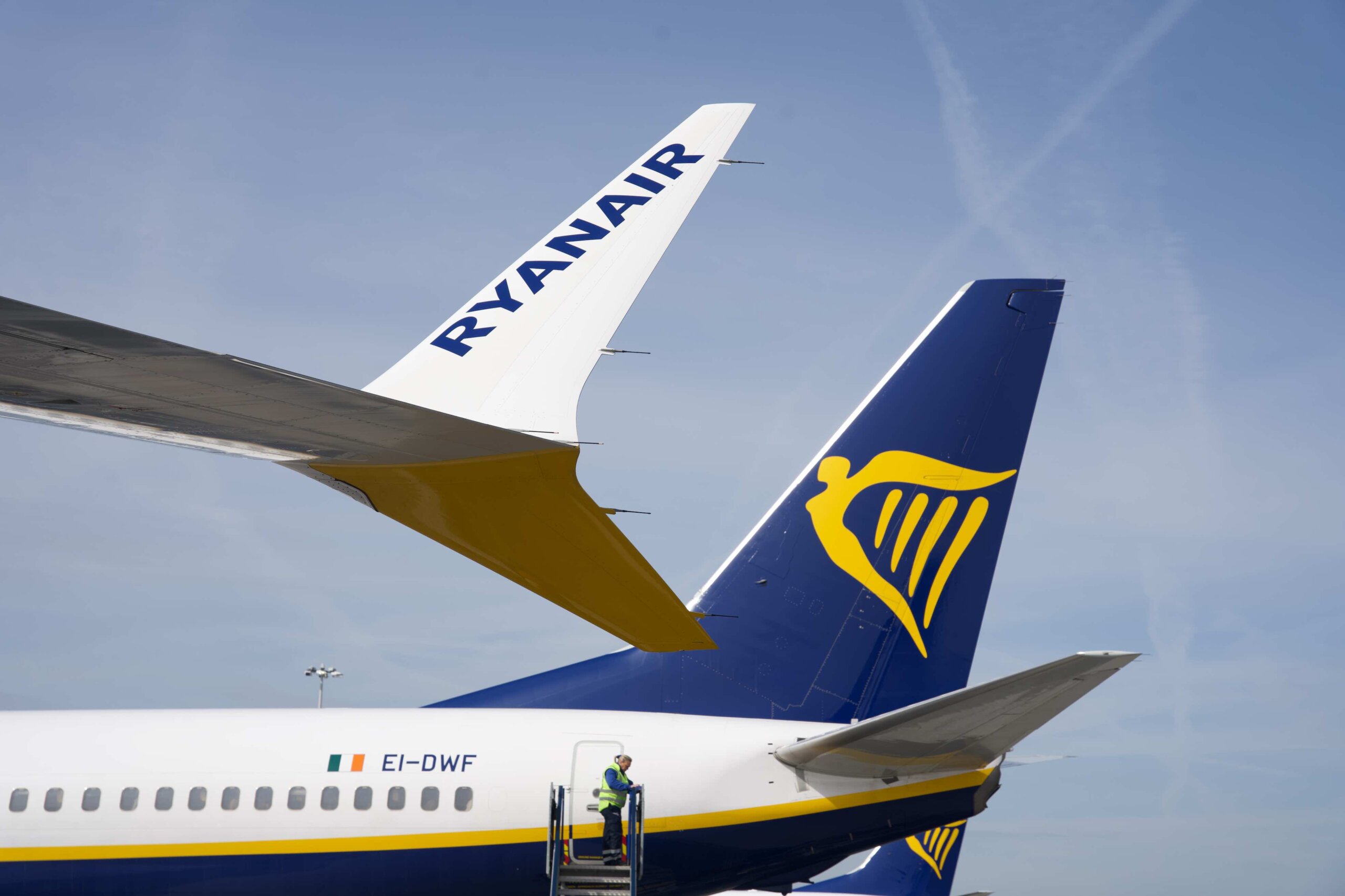
The incident, which has been widely reported but has yet to elicit a response from the airline, took place last week while one of their Boeing 737s was parked at Linz Airport.
A spokesperson for the airport said a bailiff entered the aircraft over a “pending claim against Ryanair in court”.
Ryanair faces action over compensation claim
According to the Irish Times, the dispute centres on a flight from Linz to Mallorca in 2024, which was reportedly delayed by 13 hours.
A passenger onboard had opted to take another flight and asked Ryanair to pay the costs plus compensation.
Ryanair allegedly refused to pay, so the passenger took her case to court, which ordered the airline to pay the amount claimed, plus interest and legal costs.
When Ryanair still failed to respond, she asked the Austrian authorities to enforce the judgment.

Bailiff at Linz Airport demands hundreds of euros
The ruling apparently prompted officials to dispatch a bailiff to the aircraft. The bailiff demanded that the crew surrender the €890, but they were unable to do so since Ryanair operates cashless flights.
A seizure notice was said to have been affixed to the cabin wall, and the flight then continued to London.
A spokesperson for Linz airport said: “We were informed that there was a pending claim against Ryanair in court and that a bailiff has been instructed by the district court of the city of Traun to carry out an official act.
“We accompanied the bailiff to the aircraft, where the bailiff carried out his official duties.”
Ryanair’s dispute with pilots over strike action
The compensation claim is not the first legal dispute involving the Irish carrier.
In 2025, the British Airline Pilots Association (BALPA) said it had achieved a “significant legal achievement” against Ryanair, securing a previously disputed court ruling that the low-cost carrier effectively blacklisted its pilots who exercised their legal right to strike.
Following a BALPA-initiated strike among Ryanair pilots in 2019, Ryanair responded by threatening to “revoke concessionary travel benefits for employees who participated in the action,” explained the union.
“True to its warning, the airline removed these benefits for 12 months, effectively punishing pilots for exercising their legal right to strike,” Balpa said.

The 2019 strike, which was held across two 48-hour periods in August and September, had been initiated following concerns over pay and conditions.
It also followed warnings of job cuts from CEO Michael O’Leary, who cited a “challenging summer” for the carrier.
Although a separate legal challenge saw Ireland-based pilots prevented from striking, their UK counterparts continued with their industrial action as planned.
With BALPA’s backing the affected pilots took the case to an employment tribunal, claiming that Ryanair’s actions constituted a breach of the Employment Relations Act (Blacklists) Regulations 2010.
The pilots won their case in 2020, and when Ryanair appealed to the Court of Appeal, it ruled in the pilots’ favour.
Italy’s competition authority imposes huge fine
Separately, in December, Italy’s competition authority imposed one of its largest ever penalties on an airline, fining Ryanair more than €255 million for what it describes as an abuse of a dominant market position in its dealings with travel agents and online booking platforms.
The ruling immediately drew a sharp response from Europe’s largest low-cost carrier, which vowed to appeal and described the decision as legally flawed.
The Italian watchdog (AGCM) argued that Ryanair used its market power to restrict how travel agencies could sell its flights when those flights were bundled with other airlines or additional services such as hotels or car hire.
According to the authority, the airline adopted a series of measures that made it harder for intermediaries to include Ryanair flights in wider travel packages.
Among the practices cited were the introduction of facial recognition procedures, restrictions on payment methods used by online travel agencies (OTAs), and the requirement for travel agents to sign partnership agreements that limited how Ryanair flights could be offered to consumers.
The regulator concluded that these steps collectively reinforced Ryanair’s control over distribution and reduced competition in travel services.
In response, the carrier pointed to a January 2024 ruling by the Milan Court of Appeal, which it says explicitly endorsed its approach to selling tickets directly to customers.
According to Ryanair, that court decision found that reserving ticket sales to its own channels did not amount to an abuse of dominance and that the model delivered lower fares by eliminating distribution costs.
Featured image: kitmasterbloke / Wikimedia