Gateway to the Levant: Inside Royal Jordanian’s fleet and network strategy

February 27, 2026
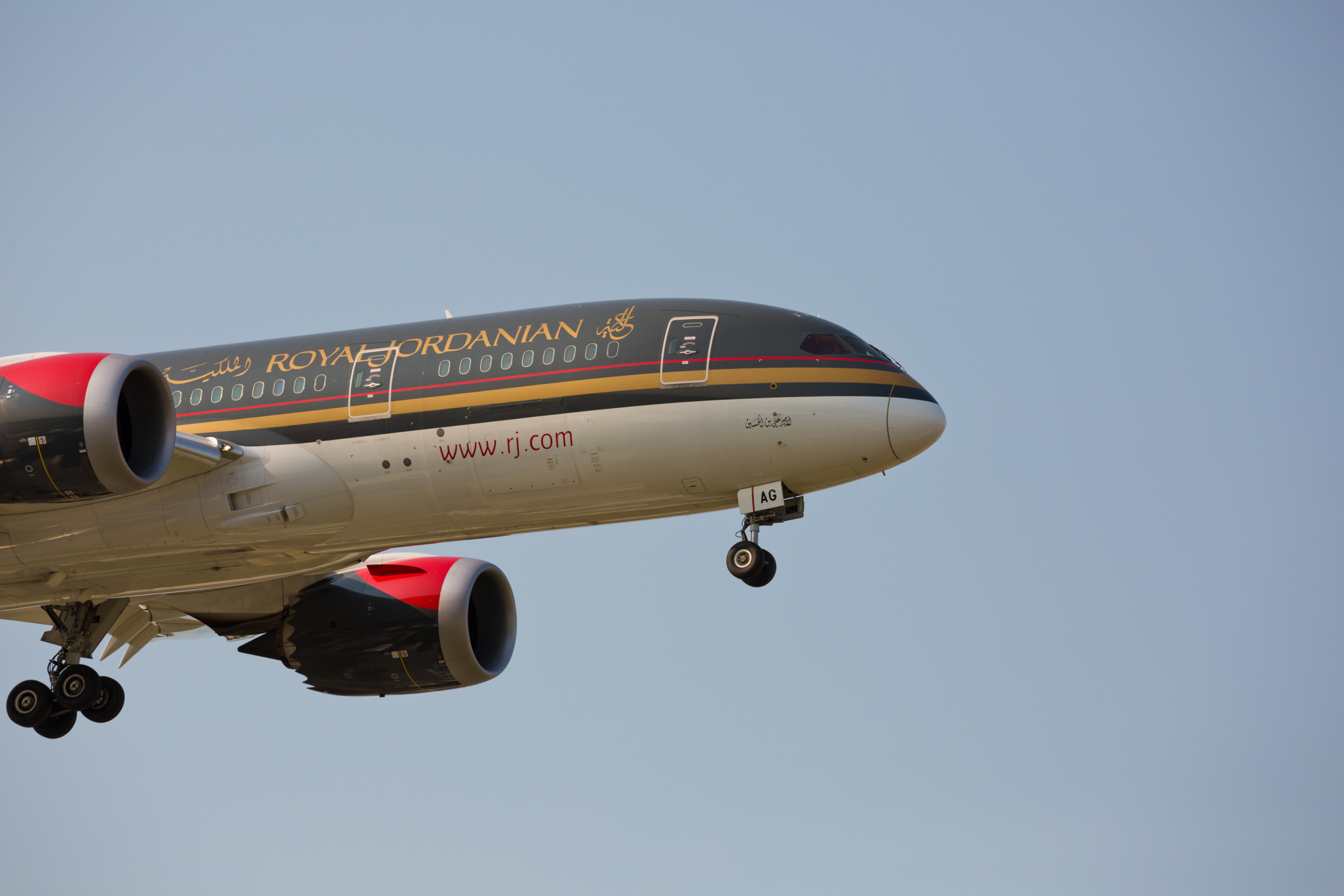
With the first of six new Boeing 787-9s scheduled for delivery in the first quarter of 2026, Royal Jordanian is on a mission to expand operations while positioning Jordan as a gateway to the Levant region.

With global aviation recalibrating amid shifting demand patterns and geopolitical realities, Royal Jordanian is capitalising on this shift, positioning itself as a connector of trade and tourism for the region, according to Eyad Birouti, director of network management and alliances at Royal Jordanian.
The pillars of Royal Jordanian’s network expansion
Jordan sits at a natural crossroads, Birouti noted during this year’s Connect Aviation, which took place in Lublin, Poland 17-19 February. “Our geographic position enables us to connect the Levant, the Gulf, Europe and North America efficiently through Amman,” he said.
Operating from its hub at Queen Alia International Airport in Amman, and rather than competing directly with mega-carriers in the Gulf region such as Emirates and Qatar, Royal Jordanian is positioning itself as a national carrier for the region. Birouti explained that the airline’s focus is on right-sized connectivity, offering access to cities in the region that are often underserved by larger carriers.

“We aim to reach seven million passengers by 2028, two million of which will be inbound visitors travelling to Jordan and close to 100 destinations by 2028,” Birouti said. He explained that network planning today is about understanding flows, where demand originates, where it connects, and ensuring the airline can serve that traffic sustainably.
Royal Jordanian’s growth is driven by fleet modernisation
Fleet renewal is central to that ambition, with Royal Jordanian in the midst of a fleet modernisation programme designed to improve efficiency, passenger comfort and operational flexibility. By the end of 2026, the airline will operate a fleet of 35 aircraft.
The Boeing 787s being delivered this year will complement the fleet of eight Embraer E195-E2 aircraft, which the Amman-based carrier began receiving in 2024. The airline also confirmed an order for up to 20 Airbus A320neos in 2023 (including 10 firm orders and 10 additional options).
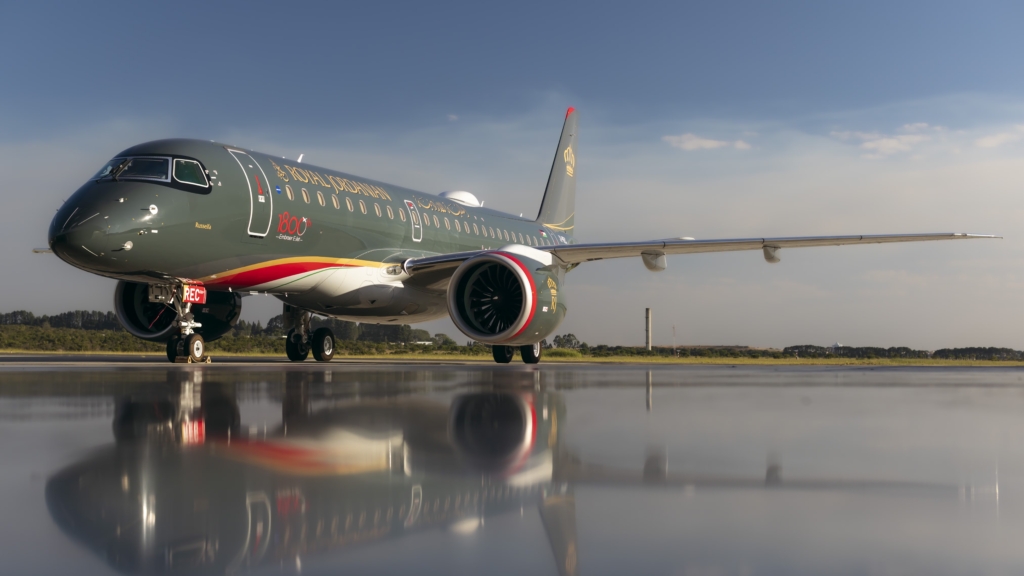
“The new-generation aircraft we are introducing allow us to match capacity and frequency of services more precisely to demand,” Birouti said.
The airline has been integrating newer narrowbody and widebody aircraft types to support both regional expansion and long-haul growth. For Birouti, fleet and network strategy are inseparable: “You cannot talk about route expansion without talking about aircraft capability. The fleet determines where you can profitably and sustainably fly.”
This flexibility also enables the airline to explore new point-to-point opportunities while reinforcing existing regional routes that form the backbone of the airline’s network.

“The Boeing 787-9s will enable us to broaden our transatlantic services and will feature an enhanced business class,” said Birouti. The airline currently flies to Chicago, New York, Detroit, Montreal and Toronto. It also introduced links with Washington last year and will add Dallas-Fort Worth to our network this year – a route Birouti anticipates will be “hugely profitable” given the airport’s role as a hub for Royal Jordanian’s Oneworld partner American Airlines.
Tourism and alliances driving Royal Jordanian’s growth
As a member of the oneworld alliance, Royal Jordanian extends its global footprint far beyond its own metal.
Alliances are fundamental to the airline’s model, Birouti explained. Codeshare agreements and strategic partnerships enable the airline to tap into key international markets such as those in North America and Asia, feeding traffic into Amman and onward across the Middle East.
Tourism remains a key pillar of the airline’s strategy, enhanced by the launch of its EXPLORJORDAN campaign, which aims to promote the country and its wide appeal from adventure, sun, sea and sand to sustainable ecotourism, wellness and relaxation, art and lifestyle. From Petra to the Dead Sea, Jordan’s globally recognised heritage and cultural assets continue to appeal to an international audience, but accessibility is critical, reiterates Birouti.

“Our role as the national carrier is to ensure Jordan remains visible and accessible,” Birouti said. “We want to boost both the airline and the country in terms of economy and tourist traffic.”
By increasing frequencies on high-demand European routes and maintaining transatlantic services, Royal Jordanian aims to support inbound leisure and business travel alike.
With this year’s Connect Aviation taking place in Poland, Birouti revealed that Warsaw is one of the airline’s target destinations. “We want to engage with tour operators directly and build connectivity from Warsaw to Jordan as a gateway to the wider Levant region.”
Growing competition in RJ’s home region
The Middle East aviation market is among the world’s most competitive, with Birouti acknowledging the presence of powerful regional players. However, he also believes that, as an airline, Royal Jordanian offers strategic agility.
“We are focused on sustainable growth,” he said. He underlined that measured expansion, disciplined capacity management that reflects demand and strategic partnerships define Royal Jordanian’s growth.

For Birouti, the airline’s vision for the future is straightforward: “We want to build up new and emerging markets, but our primary focus is on connecting Jordan and the Levant region to the world and bringing the world to Jordan.”
Featured image: Carlos Yudica / stock.adobe.com