Loyal wingman? Ukraine’s battle-hardened Raybird drone eyes F-35 teaming and NATO buys

September 18, 2025

Ukraine’s battlefields have forged a new generation of drones that are now knocking on NATO’s door. At the front of the pack is Raybird, a battle-hardened unmanned aerial system (UAS) developed by Kyiv-based Skyeton.
With more than 350,000 combat flight hours and a proven record of precision strikes, Raybird is positioning itself not only for the UK Army’s Project CORVUS but also for future roles as a loyal wingman alongside fighters like the F-35.
Through a new joint venture with Britain’s Prevail Partners, Skyeton plans to manufacture Raybird in the UK, creating 160 jobs and anchoring its place in the UK–Ukraine defence partnership. The move could open a pathway to NATO adoption, and signals how combat-tested Ukrainian technology is reshaping Western procurement.
Raybird’s combat-proven credentials
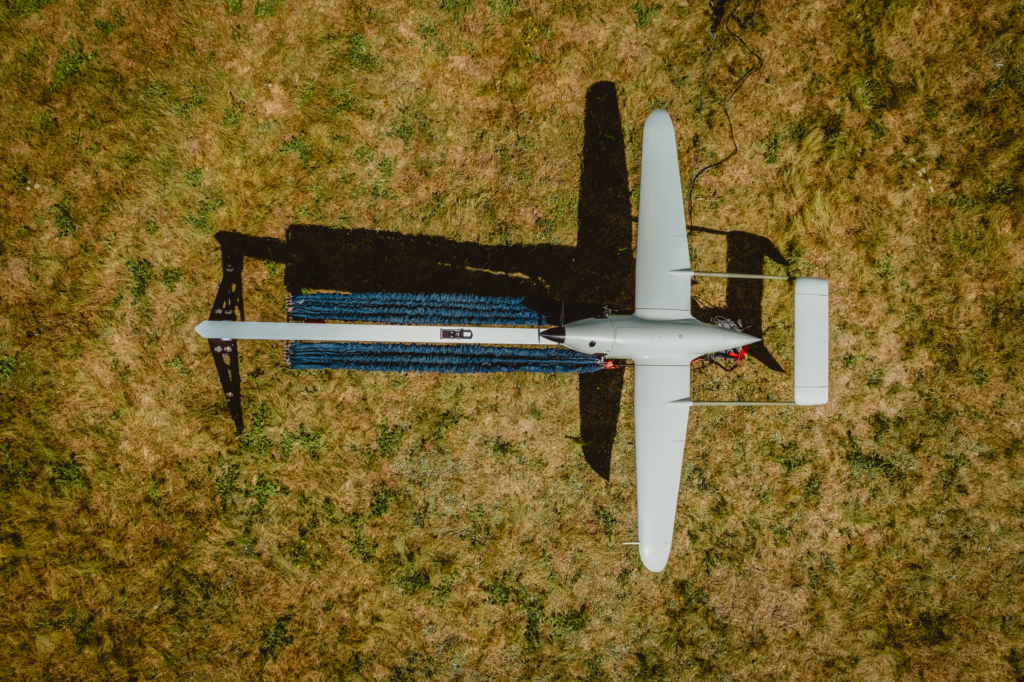
Raybird’s credibility rests on its battlefield record. A 23 kg (50 lb) NATO Class I UAS, it is catapult-launched and parachute-recovered, able to operate from austere sites with a 25-minute deployment time. With an endurance of 28 hours and an operational ceiling of 10,000 m, it has become a system of choice for Ukrainian forces needing persistent ISR.
“Raybird has been incredibly effective under the most demanding conditions on the Ukrainian battlefield,” said Pavlo Shevchuk, International CEO at Skyeton. “By forming an alliance with a respected British company … we expect the utility of our unmanned aerial system to grow globally and exponentially.”
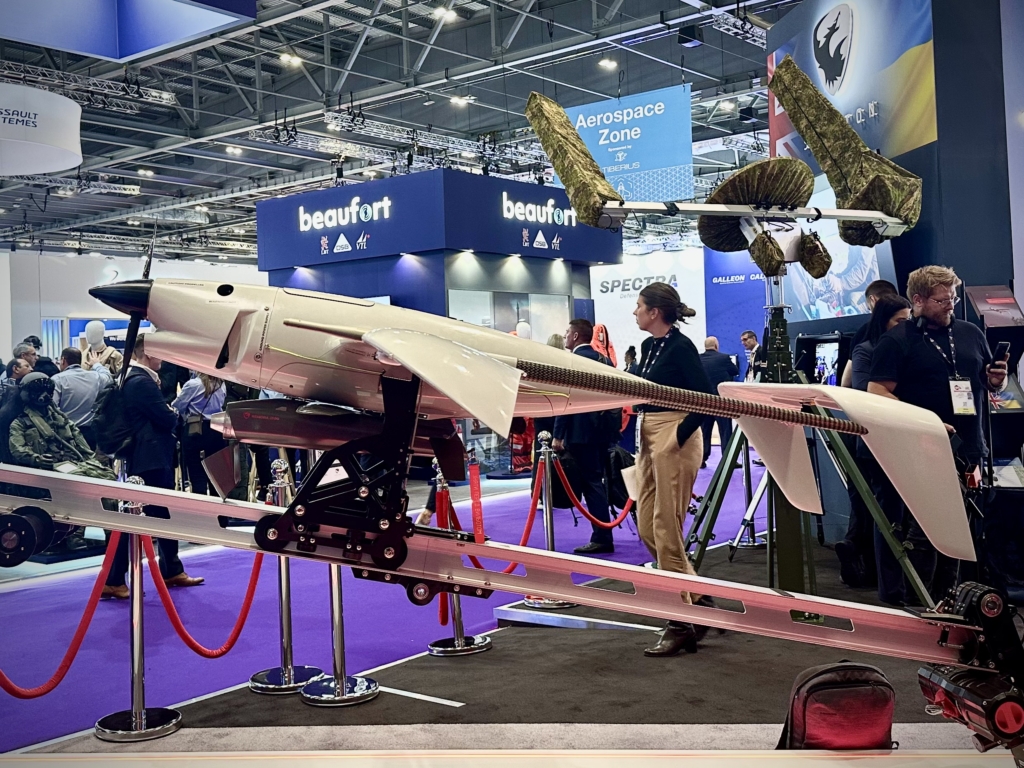
One of Raybird’s most significant advantages is its laser target designator, a device that paints a target with a coded laser spot so laser-seeking munitions, sensors, and other platforms can home in on it.
“The laser designator has brought a major change to the battlefield, increasing the efficiency of precision strikes from below 20% for GPS-guided munitions to over 80% efficiency,” Shevchuk told AGN on the sidelines of DSEI 2025. “Our platform has helped destroy more high-value targets than any other.”
That precision has contributed to billions of dollars of enemy hardware losses, with extremely low attrition rates compared to other UAVs in theatre. Skyeton claims survivability of the platform on 90% of missions, and a durability of up to 200 flights.
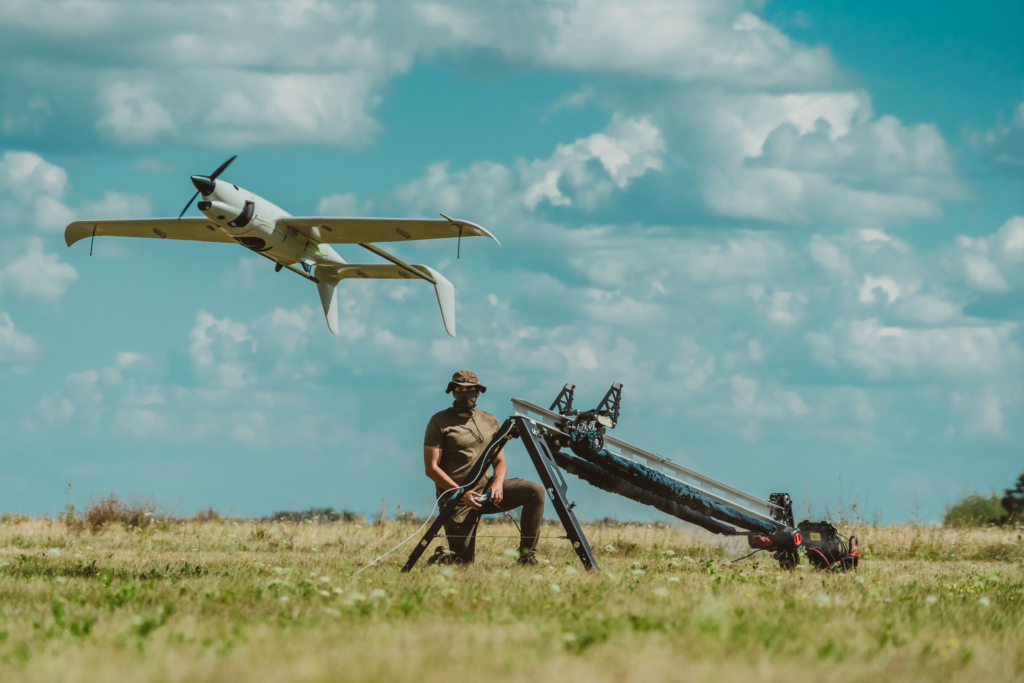
Skyeton has integrated a wide range of payloads into Raybird, making it more than just an ISR asset. These include:
- EO/IR gimbals for day/night surveillance.
- Synthetic aperture radar (SAR) for imaging in poor weather or darkness.
- ELINT/RF locators for tracking enemy emitters.
- Laser designators for target marking.
- First-person-view (FPV) quadcopters deployable from the mothership.
- Gliding munitions for direct strike missions.
This modular, tool-free payload system means Raybird can switch roles rapidly in the field. The strike options – both FPV drones and glide bombs – give it capabilities usually reserved for larger, more expensive UAVs.
Plymouth to benefit from UK–Ukraine joint venture
At DSEI 2025, Skyeton and Prevail announced the creation of Skyeton Prevail Solutions Ltd, a UK-based joint venture to fast-track Raybird production. A new production facility, planned for Plymouth in the south west UK, will begin with assembly and testing before expanding into full localisation of supply chains.
“We identified Raybird as a world-leading aircraft with capabilities well beyond those of other Class I UAS,” said Justin Hedges OBE, Chairman of Prevail Partners. “As a result, we sought a joint venture with Skyeton to build Raybird in the UK, help develop its integration into the UK’s and NATO’s battlefield operations and maritime security, and thereby answer some of the challenges that the Strategic Defence Review presented.”
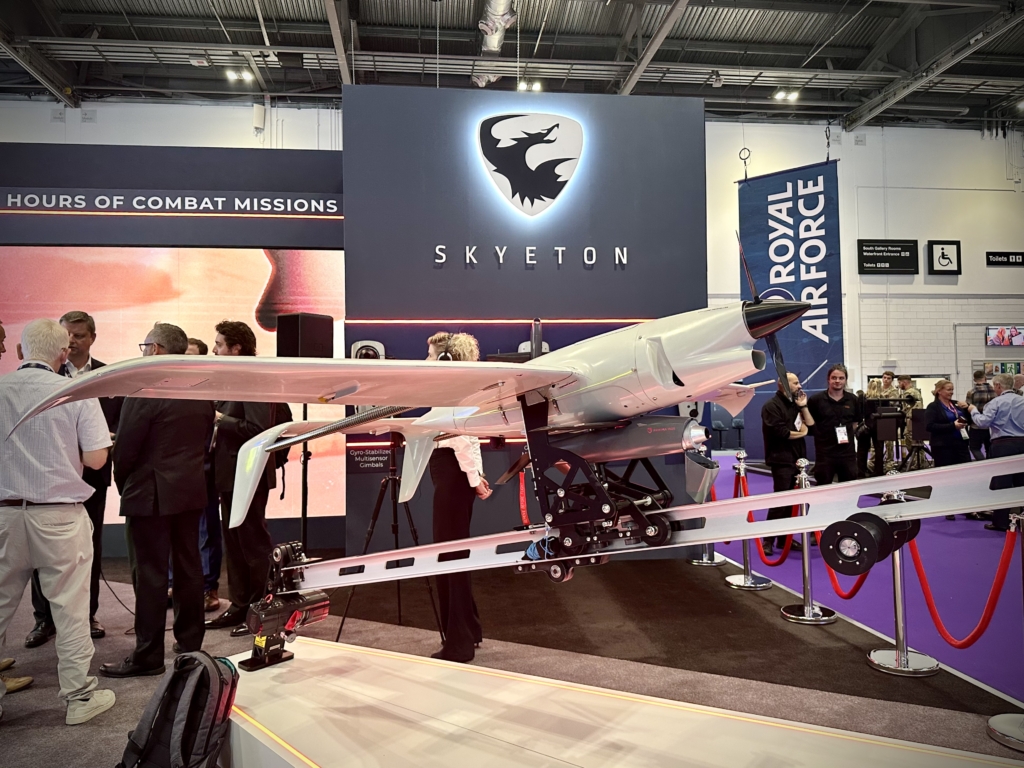
The initiative reflects the 100-year UK–Ukraine strategic partnership signed by Prime Minister Keir Starmer and President Volodymyr Zelenskyy, which prioritised collaboration on drones and emerging technologies. Former Conservative leader Sir Iain Duncan Smith offered political backing, describing the JV as “an important step in developing Britain’s long-range drone manufacturing capabilities.”
For Plymouth, the line could deliver 160 skilled jobs and embed British SMEs in composites, electronics, and machining into Raybird’s supply chain. Skyeton’s Slovakia plant was established in around one year; executives say a UK site could be “as fast, if not faster.”
Project CORVUS: the near-term target for Skyeton’s drone
Raybird’s first test in the UK market will be the Army’s Project CORVUS, a competition to replace the Watchkeeper UAV. The requirement, worth up to £156 million, covers a five-year base contract with an option to extend for another five years. According to MOD timelines, award is unlikely before May 2026, though officials have spoken of a “stretch target” to achieve initial capability earlier.
Officially scoped as an ISR requirement, CORVUS does not mandate a strike capability. Raybird, however, brings one as an inherent feature.
“There wasn’t a single ISR mission where I wouldn’t quite like to have had the option of strike,” said Hedges, reflecting on his time in Afghanistan. “Many times we had aircraft without munitions and desperately needed them.”
Skyeton Prevail has already cleared the MOD’s revenue threshold for pre-qualification, ensuring it will be at the table when the tender launches. The company acknowledges it faces stiff competition from larger primes, but argues that battlefield-validated technology should weigh heavily in the evaluation.
A drone with loyal wingman potential
Beyond land forces, Raybird is being positioned for air force applications, notably as a low-cost loyal wingman.
“This relatively low-cost asset can be 200 kilometres in depth from the laser target designator, and an F-35 can lob a laser-guided bomb from behind the air defence risk zone,” Hedges explained. “In my mind, that’s what a loyal wingman is doing.”
The platform’s modularity also allows it to carry RF intercept payloads. Skyeton has partnered with Scandinavian and British firms to extend the detection of hostile air defence systems by over 100 km. This not only improves survivability for fast jets but also enhances NATO’s ability to conduct precision strikes from standoff ranges.

The idea of a Class I UAS as a loyal wingman is unconventional, but Raybird’s combat pedigree and low operating cost make it attractive for experimentation. Unlike larger, unproven projects, it offers NATO a ready-now collaborative platform with deep operational data behind it.
The UK is aggressively pushing forward with ACP (Autonomous Collaborative Platform) drones as a core part of its future air combat architecture. Under its Strategic Defence Review (June 2025), it affirmed that the RAF must “stay at the leading edge of combat air’s evolution” by transitioning from exclusively crewed aircraft to a mixed force that includes crewed, uncrewed, and increasingly autonomous platforms.
In May, it delivered StormShroud Mk1, the first ACP loyal wingman-type system, into service.
More recently, in July, the MoD issued a Preliminary Market Engagement Notice (PMEN) for ACP Tranche 2, asking industry for information on four classes of systems as well as estimates of cost, readiness, timelines, and industrial capability.
The timeline suggests tenders may open around April 2026, with contract award and deployment between 2027-2029.
NATO interest and export opportunities
Raybird has already been exported beyond Ukraine, with sales to Malaysia, Ethiopia, and the UAE, and test systems are currently with several NATO nations. Hedges argues that a UK production base could unlock larger orders across Europe and beyond.
“We are poised with a hair trigger based on genuine acquisition plans from the UK to open production here,” he said, “and we see ourselves as the trailblazer for the strategic 100-year partnership between the UK and Ukraine.”
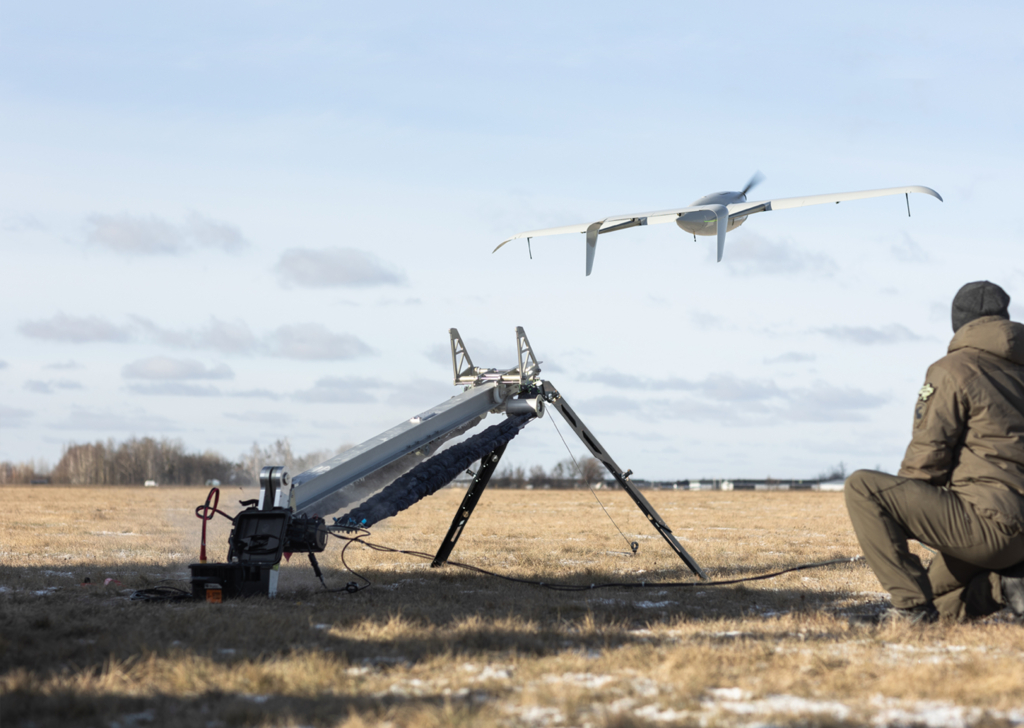
For NATO, the attraction lies in acquiring a system that has been refined under the most intense combat conditions of the 21st century. In Ukraine, Raybird has become central to ISR, target acquisition, and precision strike operations. Its adoption would bring battle-proven credibility to Western air forces seeking rapid capability gains.
“Skyeton is offering and delivering to NATO allies a battle-proven and battle-hardened system with extended capability on a small-class UAV,” Shevchuk noted. “Once it’s in service [with NATO], we will see exponential growth.”