RAT55: Secretive USAF NT-43A spy plane supports Artemis II lunar launch

April 2, 2026

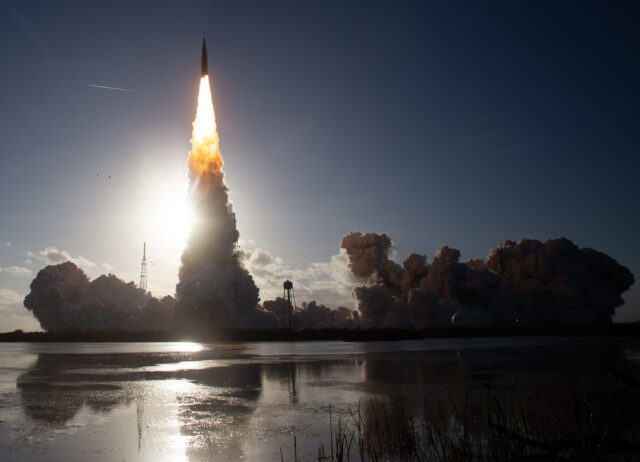
The Artemis II lunar space mission finally launched yesterday, and the astronauts have now begun their nine-and-a-half-day-long trip around the moon. As part of the launch, the US Air Force Materiel Command deployed its highly secretive NT-43A aircraft based on a Boeing 737-200.
USAF’s NT-43A spy plane watches Artemis launch
The story was reported by The War Zone (TWZ), which described the aircraft as a “highly unique and notoriously shy plane.”

Very little is known about this heavily modified Boeing 737-200, and it is often just referred to by its callsign RAT55. The aircraft is used as an airborne signature measurement platform and supports work related to the development of stealthy military aircraft.
TWZ wrote, “during a high-stakes space launch, its two huge radar arrays, modular electro-optical and infrared sensors, and other capabilities would likely be well-suited [for the Artemis launch].”
World’s Most Secretive 737 Is Supporting NASA’s Historic Artemis II Launch
— Tyler Rogoway (@Aviation_Intel) April 1, 2026
It is rare to see the unique NT-43A aircraft at all, let alone flying over Florida ahead of the first crewed lunar space mission in decades.https://t.co/8yjZDD36jh
Ahead of the Artemis II launch, the aircraft was seen flying above Melbourne in Florida, with the callsign NASA522. It took off from MacDill Air Force Base and flew in an oval-shaped orbit in restricted airspace around the Kennedy Space Center’s Launch Complex 39B.
After the mission, it returned to MacDill.
What is known about the NT-43A spy plane
The NT-43A is readily identifiable thanks to its heavily modified nose and the massive radome fitted to the rear of its fuselage.
Information about the NT-43A, which OSINT accounts have gleaned from the aircraft, suggests that it is based at Tonopah Test Range Airport (TTR). Tonopah is famous for the Air Force’s black box programmes and other secretive projects.
It is also often seen around Area 51 in Nevada and at Edwards Air Force Base in California. Many experimental aircraft are tested at Edwards.
BREAKING 🇺🇸 “The Ghost of Area 51” just showed up at the Artemis II launch.
— Prime (@nucleusprime) April 2, 2026
The USAF’s NT-43A callsign RAT55 was spotted flying over Kennedy Space Center yesterday.
A converted Boeing 737-200, she’s the world’s most secretive radar testbed.
Aircraft callsign Radar Airborne… pic.twitter.com/MVBHIPWTgv
The aircraft is one of the few Boeing 737 Original generation airliners still flying. The 737-200 has an extended fuselage compared with the 737-100, and the variant first entered service in 1968. The last scheduled passenger flight in the United States with the 737-200 ended in 2008.
According to Boeing’s data, 1,114 Boeing 737-200s were delivered.
New roles for the NT-43A
TWZ’s article attracted the attention of the US Air Force, which then reached out. In a statement, the Air Force said, “After decades of flights supporting the Air Force in various roles, the NT-43A Radar Test Bed is being transitioned to start the next phase of its career.”
Check out the first pictures of the #Artemis II launch from our remote cameras. Keep checking back for more! 📷 https://t.co/0AEy2WWeQo pic.twitter.com/gOTItZnucJ
— NASA HQ PHOTO (@nasahqphoto) April 2, 2026
The USAF spokesperson also said, “Beginning with data collection during the upcoming launch of Artemis II, the NT-43A Radar Test Bed will continue its legacy of excellence in supporting some of our nation’s most important and technologically advanced capabilities.”
Meanwhile, during the Artemis II launch, NASA was also flying one of its WB-57F research planes. The WB-57F is based on the modified Martin B-57 Canberra, and NASA has three in inventory, one of which had a hard wheels-up landing in Texas in January.
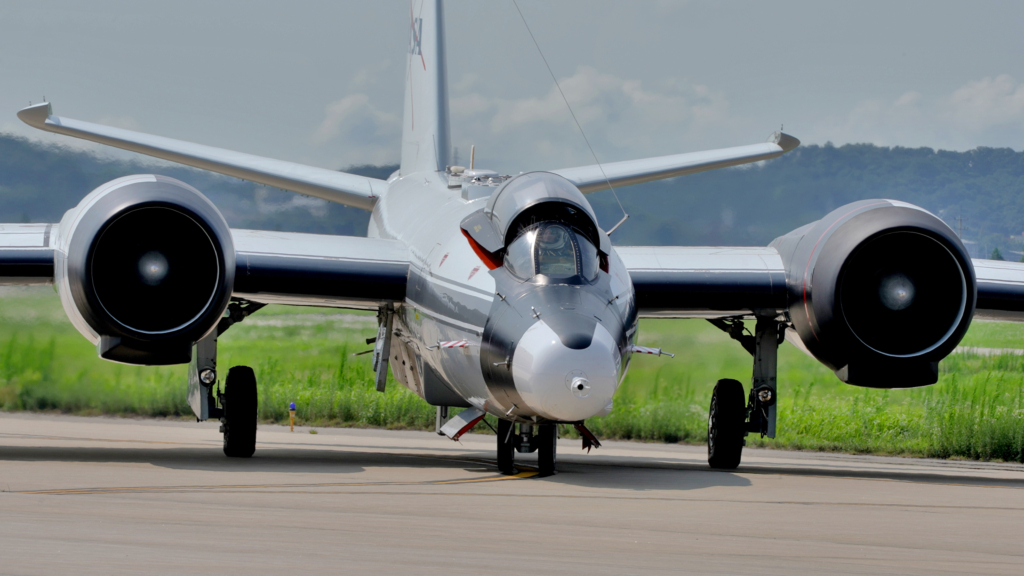
The Air Force would not provide more information about the aircraft and its future role, and the TWZ is waiting for NASA to reply to its plans for the aircraft.
Still, it is very unusual for the Air Force to provide the level of information about the aircraft as they did.