NASA’s WB-57 Canberra spies on Artemis II launch from 45,000 feet

April 3, 2026
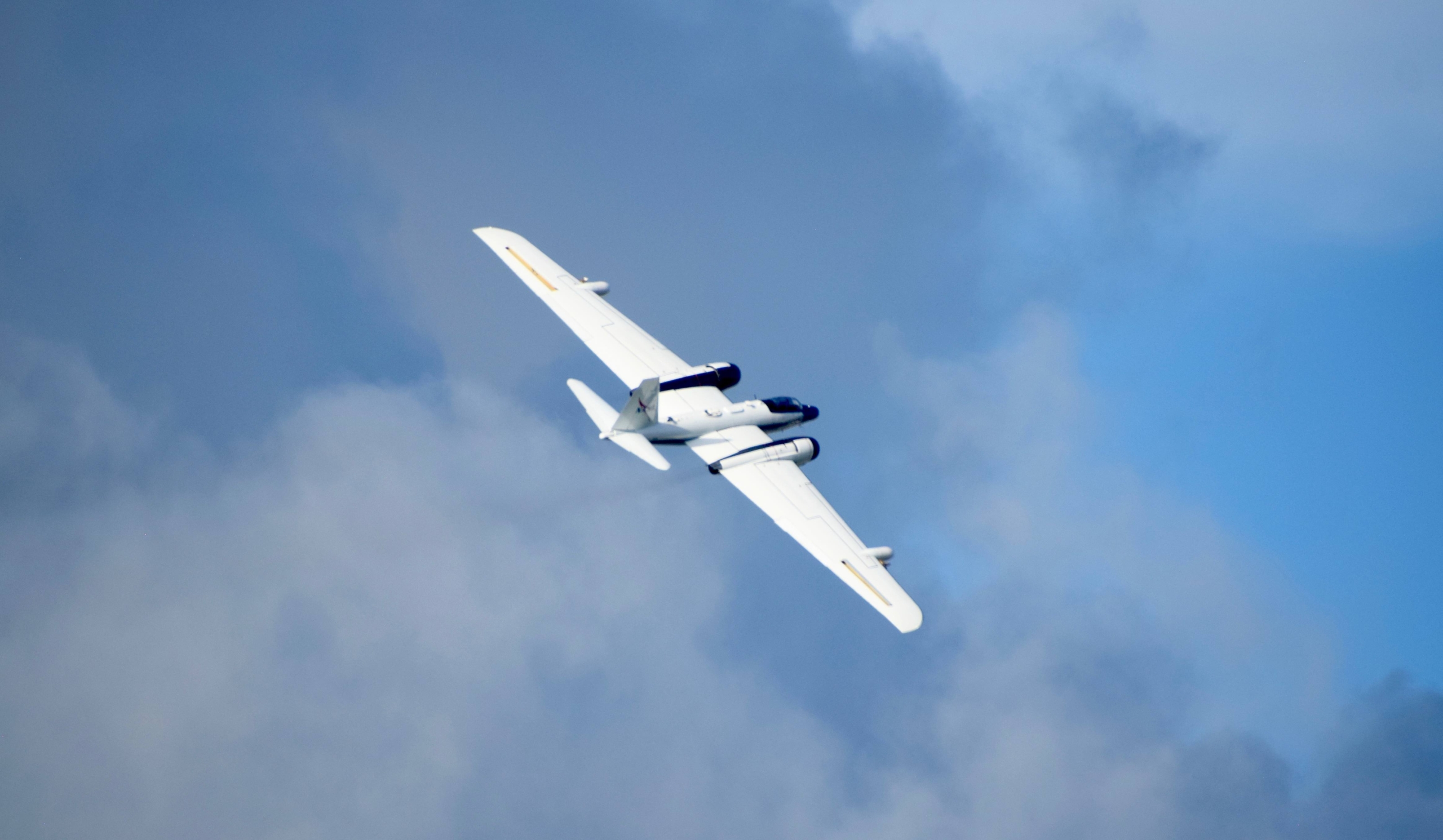
The launch of NASA’s Artemis II was observed and monitored by some of the US’s most unique and old aircraft. Not only did the Air Force use its secretive RAT55 spy plane, but NASA also used its old WB-57 converted bombers.
The WB-57 Canberra is the aircraft supplying the real-time video and “airborne view” on TV of NASA rockets as they launch into space.
NASA’s WB-57 watches over Artemis II launch
NASA’s WB-57 Canberra took off from the Shuttle Landing Facility around 57 minutes before the scheduled launch of Artemis II. The aircraft flew at an altitude of around 45,000 feet and maintained a speed of around 350 miles per hour as it filmed the historic mission.
🚨🇺🇸#BREAKING | NEWS ⚠️
— Todd Paron🇺🇸🇬🇷🎧👽 (@tparon) April 2, 2026
NASA’S Martin WB-57 Canberra aircraft, taking amazing photos and video of the Artemis II launch from the Kennedy space center heading towards the moon’s orbit moments ago, they will be in orbit for about 11 days before returning to earth🌎🌗 pic.twitter.com/iNbYlNjUMA
The aircraft (registered N926NA) was 63 years old, making it one of the oldest aircraft still in operational service.
Todd Panousgr posted on X (formerly Twitter) videos of the WB-57 taking off for the Artemis II launch, saying, “NASA’S Martin WB-57 Canberra aircraft, taking amazing photos and video of the Artemis II launch from the Kennedy space center heading towards the moon’s orbit moments ago.”
WB-57 tracking…#ArtemisII pic.twitter.com/4R920kGIgW
— DutchSpace (@DutchSpace) April 1, 2026
The same aircraft was seen conducting rehearsal flights shortly before the launch. Separately, NASA’s WB-57s also supported the US Army Dark Eagle hypersonic missile test carried out on the 26th of March. While NASA attempted to hide its participation in that test, open source accounts on X (Twitter) still found and identified it.
NASA’s WB-57 Canberra reconnaissance aircraft
NASA says of its aging WB-57s, “The WB-57 is a mid-wing, long-range aircraft capable of operation for extended periods of time from sea level to altitudes in excess of 63,000 feet. Two crew members are positioned at separate tandem stations in the forward section of the fuselage. “
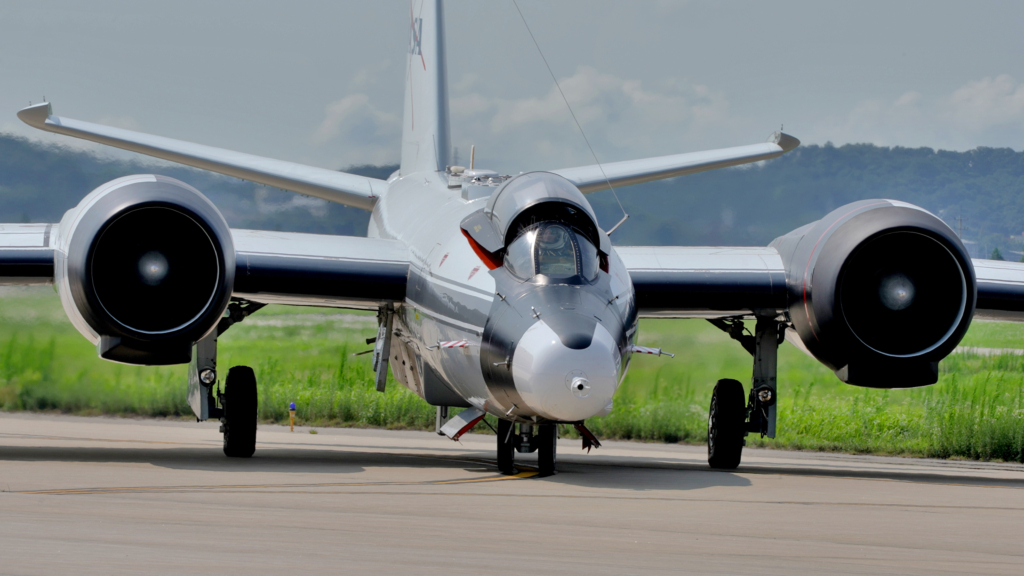
The space agency has a fleet of three WB-57s, and these are the only Martin B-57 Canberras still flying today. These are designated #926, #928, and #927.
They are fitted with various sensors and other modular payloads and are overall somewhat similar to the Air Force’s fleet of Lockheed U-2 Dragon Lady spy planes. NASA also has a pair of U-2 designated ER-2s.
The WB-57 is a modified version of the B-57. “B” stands for “bomber”, “W” stands for “weather reconnaissance.”
January WB-57 belly landing
In January 2026, AGN reported that one of NASA’s three WB-57 aircraft was forced to make a belly landing at Houston’s Ellington Field, and this raised questions about whether NASA would be able to monitor the Artemis II launch with these aircraft.
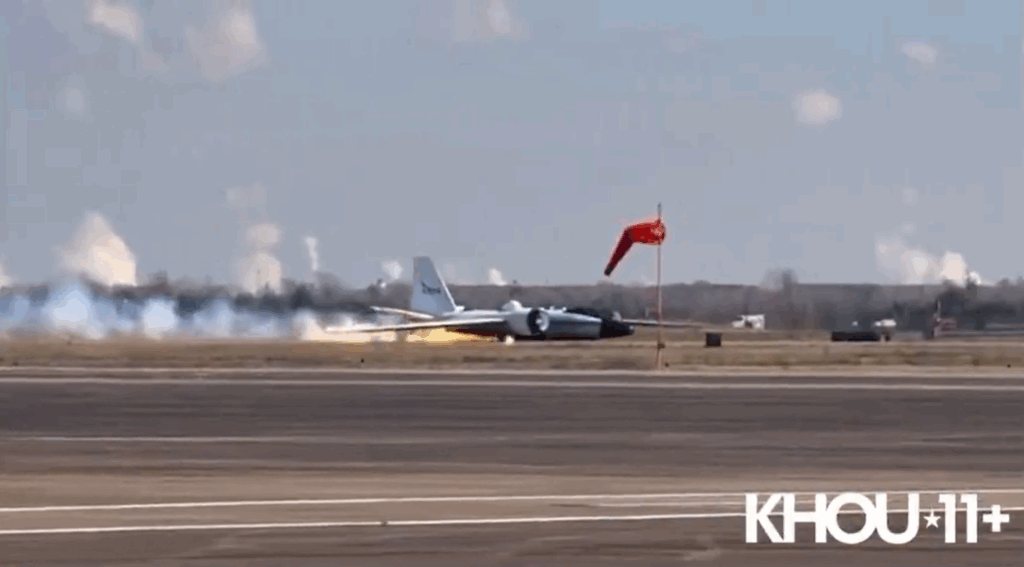
Fortunately, NASA did have its WB-57’s employed for the historic mission that will see astronauts return for a flight around the moon.
As of the time of writing, NASA lists #926 and #927 as active, while #928 is under “Major Inspection On Indefinite Hold” until the end of the year.
That aircraft (#927) was added to NASA’s fleet in 2013, marking the 50th anniversary of the WB-57F model. The aircraft had been stored at the Davis-Monthan boneyard for 41 years, and it took two years to restore.
Featured Image: NASA