Which airlines are running Middle East repatriation flights and how travellers can get a seat

March 4, 2026
Efforts are ramping up to repatriate thousands of overseas citizens from the Middle East as the Iran conflict enters its fifth day. Despite ongoing airspace closures across much of the region, a limited number of flights are now being permitted, allowing some travellers from the UK and other countries to return home after days of disruption.
Air travel across the Middle East has been severely disrupted since Saturday, when US and Israeli strikes on Iran triggered a major escalation in the region, prompting widespread airspace closures on safety grounds.
Although much of the Gulf region’s airspace remains closed to commercial aviation, authorities are now allowing a small number of scheduled and charter flights to depart, as governments and airlines begin the complex task of repatriating stranded travellers.
Prime Minister Keir Starmer said on 2 March that the UK was “working on all options” to support citizens in the region. Officials estimate that around 300,000 British nationals are currently in Middle Eastern countries affected by the crisis.
According to the UK Foreign Office, approximately 130,000 British nationals have already signed up to the government’s Register Your Presence programme, which is currently active in Bahrain, Israel, Kuwait, Palestine, Qatar and the United Arab Emirates.
Which airlines are operating Middle East repatriation flights?
A small number of airlines have begun operating limited repatriation flights from the region, mainly from the United Arab Emirates and Oman, where authorities have permitted some departures.
Several flights to the UK departed on 3 March, with more planned in the following days.
The airlines currently operating or planning repatriation services include:
| Airline | Departure points being used | What’s operating |
|---|---|---|
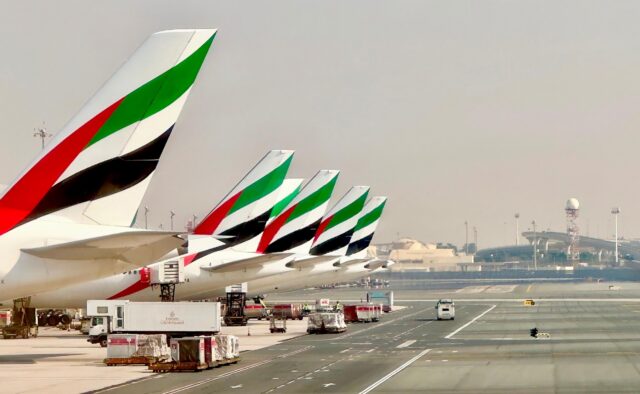
| Emirates | Dubai (DXB) | Limited passenger services authorised to move stranded travellers. Availability varies by day and approvals. |
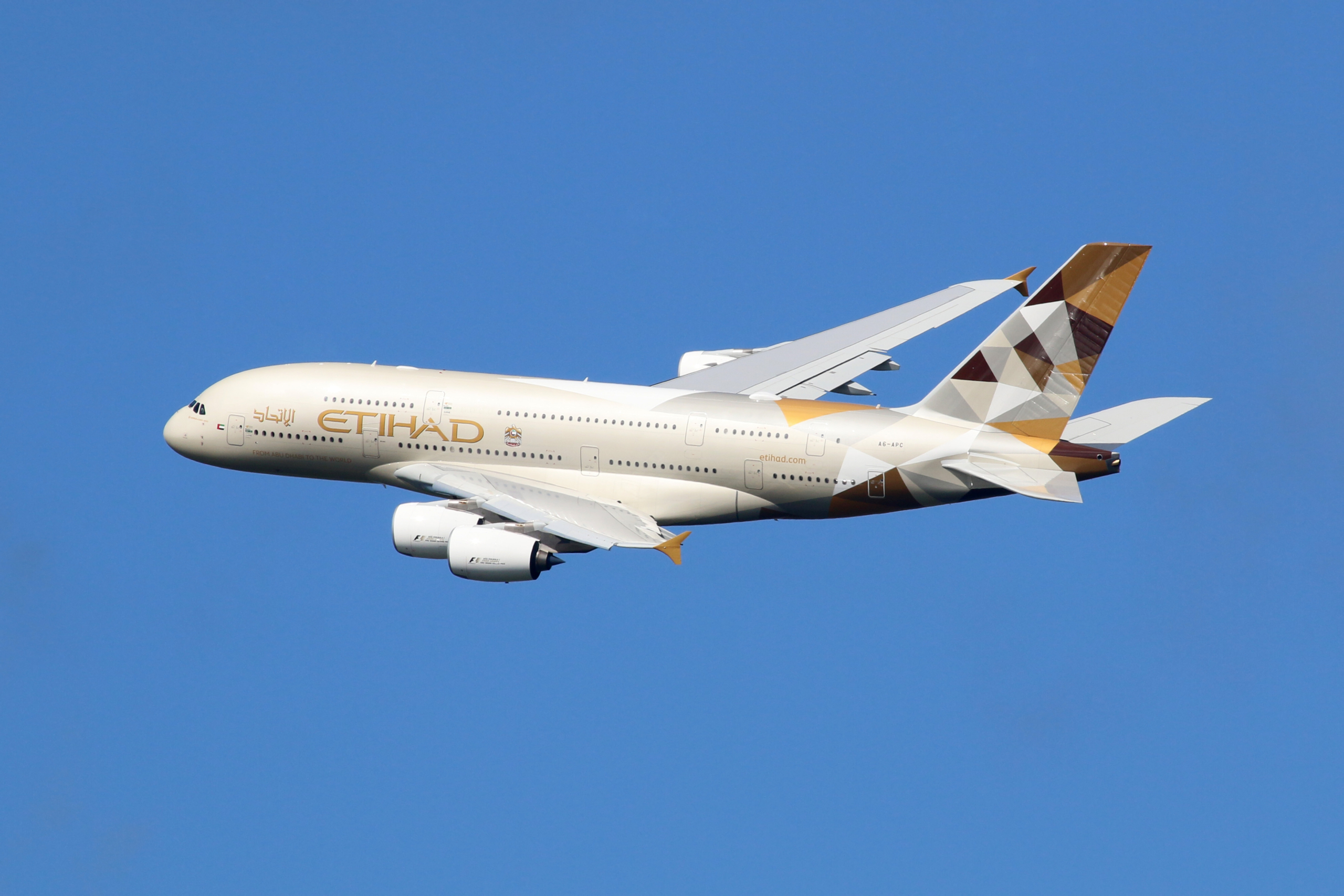
| Etihad Airways | Abu Dhabi (AUH) | Limited departures permitted under restrictions. Schedules may change at short notice. |
| flydubai | Dubai (DXB) | Restricted services operating during the disruption. Some flights may be special approvals rather than normal schedules. |
| Virgin Atlantic | Dubai (DXB) | One-off or limited services to support stranded passengers returning to the UK. |
| British Airways | Muscat (MCT) | One-off repatriation flight from Oman to London Heathrow. Operated from Muscat rather than BA’s usual regional network. |
| Lufthansa (charter) | Riyadh, Muscat | Government-chartered flights for vulnerable citizens. Seats typically allocated via embassies, not standard ticket sales. |
Emirates
Seven flights are scheduled to operate from Dubai International Airport (DXB) to London Heathrow (LHR) on 4 March.
Etihad Airways
Etihad has scheduled two flights from Abu Dhabi’s Zayed International Airport (AUH) to Heathrow on 4 March. One of the first services was already airborne at the time of writing, operated by Boeing 787-9 A6-BLE as flight EY65.
Virgin Atlantic
The airline has said it will operate a single repatriation flight from Dubai to Heathrow.
British Airways
British Airways has announced a one-off repatriation flight from Muscat in Oman to Heathrow. The flight is scheduled to depart Muscat International Airport (MCT) at 02:30 local time on 5 March (22:30 GMT on 4 March). While BA has not resumed its regular services to the region, the airline is using Oman as a relatively safe operating point. Muscat lies across the Gulf of Oman from southern Iran and is around 1,200 miles (1,900km) from Tehran.
Lufthansa
The German government is planning chartered Lufthansa flights from Riyadh and Muscat to repatriate vulnerable citizens.
How to get on a repatriation flight out of the Middle East
For most travellers stranded in the Middle East, securing a seat on a repatriation flight will depend on coordination between airlines, embassies and national governments.
Unlike normal commercial flights, repatriation services are typically organised in partnership with governments and are often prioritised for specific groups of citizens.

Passengers hoping to leave the region are generally advised to follow several key steps.
- Register with your embassy or government travel programme: Most countries operate emergency registration systems that allow authorities to contact citizens during crises. Travellers are strongly encouraged to register their presence with their embassy or consulate so officials know they are in the region. These lists are often used to determine who may be eligible for evacuation flights.
- Monitor airline announcements: In some cases, airlines are operating limited commercial or special flights out of the region when airspace conditions allow. Carriers such as Emirates, Etihad and other Gulf airlines have been operating a small number of services from the UAE and nearby countries. Travellers should check airline websites and official social media channels regularly for updates.
- Follow embassy guidance: Seats on government-organised evacuation flights are usually allocated through embassies or foreign ministries. Passengers are typically contacted directly once space becomes available. Authorities generally advise travellers not to go to the airport unless instructed, as flights are often arranged on short notice and passenger lists are tightly controlled.
- Be prepared to travel to another airport: Because many countries in the region have closed their airspace, evacuation flights may depart from alternative locations that are still considered safe to operate. In the current crisis, some repatriation flights have been departing from Oman and Saudi Arabia, meaning travellers may need to make their own way to those airports if they are offered a seat.
- Expect limited seats and prioritisation: Most governments prioritise vulnerable citizens when organising evacuation flights. This can include families with children, elderly travellers, people with medical conditions and those stranded without accommodation. Other travellers may need to wait for additional flights to be organised or for normal commercial services to resume.
UK government one-off charter flight from Muscat
Alongside the limited scheduled services operating from the region, the UK government has arranged its first dedicated charter repatriation flight.
The flight is currently scheduled to depart Muscat International Airport (MCT) at 23:00 local time on 4 March (19:00 GMT).
British nationals, along with their spouse or partner and children under the age of 18, will be eligible to travel, although the government says the most vulnerable passengers will be prioritised.
The Foreign Office has said it will contact eligible passengers directly and has urged people not to travel to the airport unless instructed.
According to the BBC, British nationals who had previously registered their presence in the UAE but are currently in Oman are being asked to urgently complete an application form if they wish to secure a seat.
Dependents who are not British citizens must hold valid travel documents, such as a visa or permission to remain in the UK granted for more than six months.
Muscat lies around 280 miles (450km) from Dubai, where many British travellers are currently located, meaning those selected for the charter flight will need to make their own way to Oman. At the time of writing, the UK government had not disclosed the operator or aircraft type that will be used for the flight.
What about repatriation flights to other countries?
Other governments are also beginning to organise evacuations for their citizens, although many are still relying heavily on commercial airlines.
| Country | Estimated citizens in region | Current repatriation plan | Flights / transport being used |
|---|---|---|---|
| United Kingdom | ~300,000 | Government charter evacuation and coordination with airlines. | Charter flight from Muscat plus limited commercial services via Emirates, Etihad and Virgin Atlantic. |
| Germany | ~30,000 | Government charter flights prioritising vulnerable travellers. | Two Lufthansa charter flights planned from Riyadh and Muscat. |
| France | ~400,000 | Preparing evacuation flights while encouraging commercial travel where possible. | Charter flights expected from UAE and Egypt for vulnerable nationals. |
| Spain | Not disclosed | Evacuations coordinated through airlines and diplomatic channels. | Passengers already returning on Etihad flights from Abu Dhabi, with more via Istanbul. |
| Italy | Not disclosed | Government-arranged charter flights. | Charter flight from Oman already returned citizens to Rome. |
| Australia | ~115,000 | Monitoring situation, evacuation difficult while airspace closed. | Citizens advised to leave using commercial flights when available. |
| United States | Not disclosed | No dedicated evacuation flights announced so far. | Citizens advised to leave using available commercial transport. |
| Switzerland | ~4,400 | No government evacuation flights planned at present. | Citizens advised to seek commercial routes out of the region. |
According to Reuters, Germany has said the tourism industry is responsible for bringing home most of the roughly 30,000 Germans stranded in the region. However, the government plans to charter two Lufthansa flights, one from Riyadh and another from Muscat, to repatriate vulnerable citizens, including children, pregnant women and people with disabilities.
German tour operator TUI said it is working to return thousands of cruise passengers using flights on Gulf carriers, including Emirates, Etihad and Qatar Airways.
France, which estimates it has around 400,000 citizens in the region, said scheduled flights remain the preferred route home, but authorities are preparing charter flights to prioritise vulnerable travellers.

Italy has already operated at least one evacuation flight. A charter aircraft carrying 127 Italian citizens stranded in Oman or relocated there from Dubai landed at Rome’s Fiumicino Airport late on 2 March, according to Reuters. Passengers reported that seats on the charter flight cost around €1,500.
Spain has also begun evacuating its citizens. Foreign Minister José Manuel Albares said more than 175 Spaniards returned on 3 March aboard an Etihad flight from Abu Dhabi, with further flights expected via Istanbul.
Switzerland has taken a different approach, saying it does not currently plan to organise evacuation flights for the roughly 4,400 Swiss citizens travelling in the region.
Australia, which estimates around 115,000 citizens are in Middle Eastern countries affected by the crisis, has said evacuations will remain difficult while much of the region’s airspace remains closed.
Similarly, the US State Department has urged Americans to leave more than a dozen countries in the region using available commercial flights, but has not yet announced any dedicated repatriation services.
More repatriation flights likely
Authorities expect additional flights to be authorised in the coming days if the security situation allows.
The small number of services that have already departed the region have operated successfully and without incident, which could encourage regulators to allow more departures.
However, with hundreds of thousands of travellers still stranded across the Middle East, officials say the process of returning them home is likely to take weeks rather than days.
Featured image: Markus Mainka / stock.adobe.com