Lufthansa to retrofit 130 Airbus A320s with real-time trajectory technology

December 18, 2025

Lufthansa Group is preparing a major digital upgrade of its short-haul fleet, committing to retrofit Airbus A320-family aircraft with advanced real-time flight trajectory technology.
The retrofit programme of more than 130 aircraft is aimed at cutting fuel burn and improving punctuality in congested airspace.
Beginning in 2026, the airline group – which recently unveiled a new livery to mark its centenary – will equip 134 A320s with the FANS-C (Future Air Navigation System – Controller) digital datalink system, enabling aircraft to automatically transmit detailed four-dimensional flight path data to air traffic control.
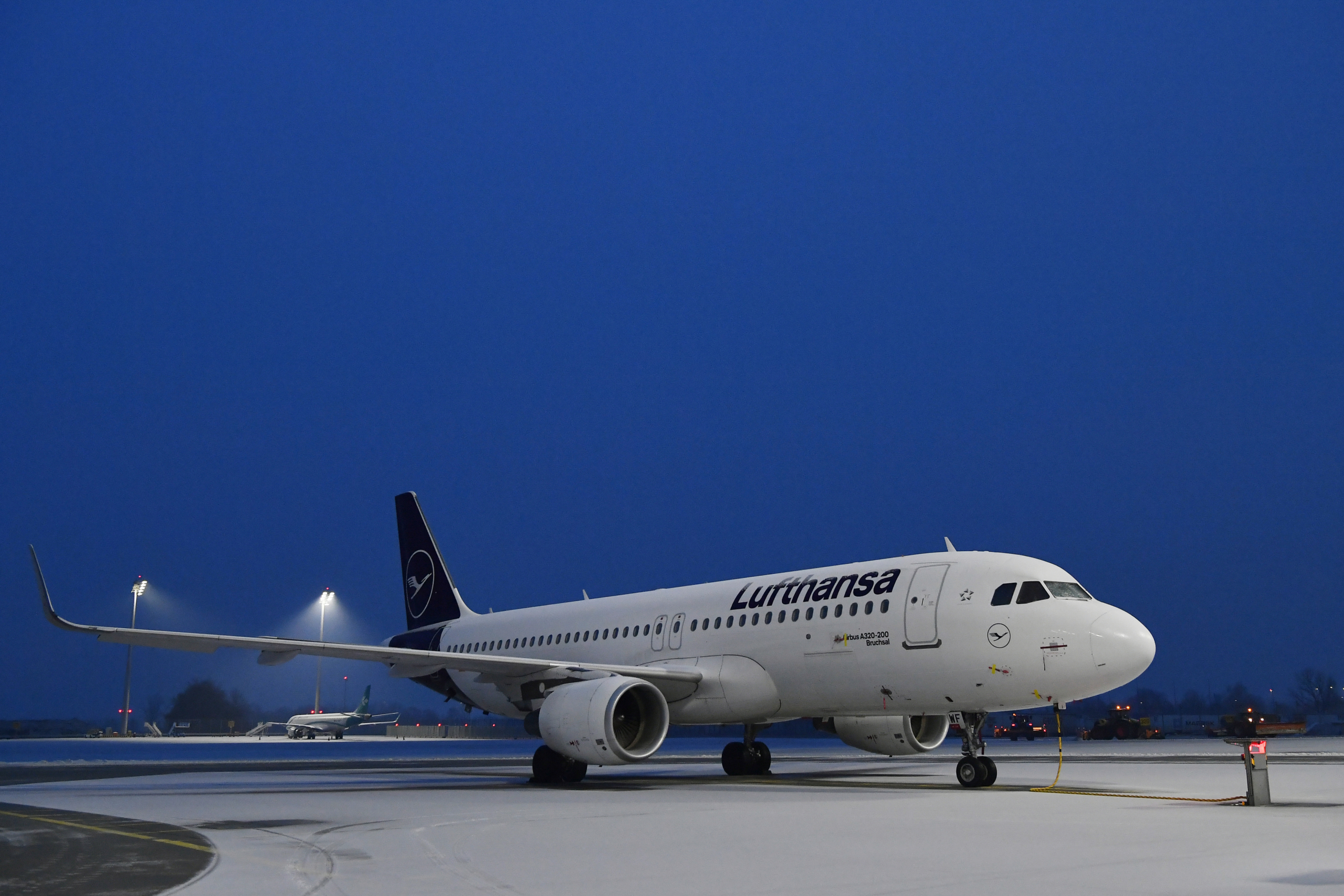
Lufthansa said the programme represents one of the most substantial fleet-wide retrofits yet undertaken in Europe to support the transition towards more data-driven airspace management.
The upgrade centres on ADS-C EPP (Automatic Dependent Surveillance – Contract Extended Projected Profile) capability.
By continuously sharing information on an aircraft’s position, altitude, speed and predicted trajectory over time, the system gives controllers far greater visibility of how flights are intending to move around their airspace, allowing them to manage traffic flows more efficiently and with fewer interventions.
Lufthansa embraces major upgrade of its A320 fleet
Traditional air traffic management relies heavily on pre-filed flight plans and voice communication, limiting the ability to adapt routes as conditions change.
ADS-C EPP, by contrast, draws directly from the aircraft’s flight management system and updates controllers in near real time.
This allows routes to be refined to reflect weather, congestion or operational constraints, potentially reducing track miles and holding.
Lufthansa says the result will be more fuel-efficient trajectories, lower emissions and improved on-time performance.
The technology is already being used operationally in Maastricht Upper Area Control Centre (MUAC) airspace, which currently stands as the only European airspace fully equipped to support this level of trajectory sharing.
Lufthansa is working with other air navigation service providers to expand its application, including conducting flight trials with French air traffic control.
Moving ahead of regulation
Under European Union mandates, ADS-C EPP capability will be required as standard on all newly delivered aircraft and relevant ground systems from 2028.
By 2028, the group expects to have nearly 200 A320-family aircraft operating with the upgraded digital communications suite, combining retrofitted aircraft with new deliveries.
The European Commission is supporting the programme through the Connecting Europe Facility, covering up to 50% of the retrofit costs.
The technology is currently certified for Airbus A320-family aircraft and the A330neo.

“We are focusing on digitalisation to make flying even more efficient,” said Grazia Vittadini, chief technology officer of the Lufthansa Group.
“The retrofitting of our Airbus A320 fleet is a strong sign of innovation and responsibility. We are delighted that the EU is taking this step together with us.
‘Only if all partners in the industry make their systems fit for the future in time will Europe soon be able to benefit from a better-connected and thus more sustainable airspace.”
Foundation for trajectory-based operations
ADS-C EPP is widely viewed as a key enabler of trajectory-based operations (TBO), a concept that shifts air traffic management away from fixed routes towards continuously optimised flight paths agreed between airlines, controllers and network managers.
According to figures presented at the Global TBO Symposium at EUROCONTROL’s headquarters in June 2024, the changes would effectively double average sector capacity, increasing throughput from around 45 flights per hour in many sectors to as many as 97, while halving the average controller working time required to manage 100 flights.

Europe is also leading globally in the phased deployment of TBO, with the so-called Flight and Flow Information for a Collaborative Environment (FFICE) Release 1 scheduled to be implemented across the region in a matter of weeks, from 31 December 2025.
The move entails a fundamental overhaul of the flight plan format, requiring airspace users to provide more detailed data to support far more accurate trajectory calculation.
For Lufthansa, TBO is a priority; the group views the A320 retrofit as a step that will allow more sophisticated optimisation techniques as European airspace infrastructure matures.
Featured image: Lufthansa/Airbus